
Entrepreneurship in ActionFree preview
Build a working product with AI,and learn to run it like a founder.
Chapter 1 of the self-paced course, free to read, at your own pace.Anything you write here saves on this device and carries into Day 1.
- Say what AI changes in business, and what it cannot copy.
- Name a venture, research it and put its homepage on the internet.
- Find your first customers and sell to them.
- Build the product with AI tools your age allows, and pitch it.
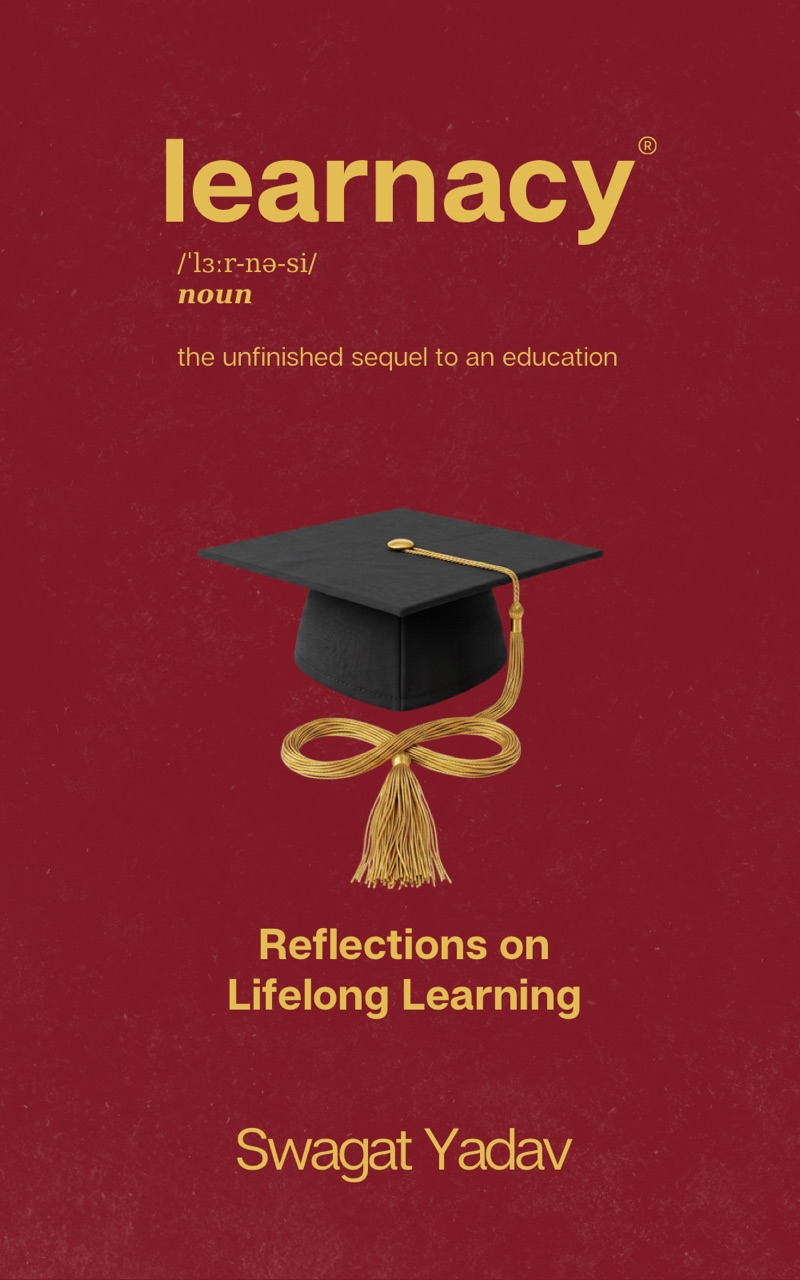 With Swagat YadavFounder and CEO, One Young India, and author of Learnacy
Entrepreneurship in Action is One Young India's programme for school students. Products and companies named here are examples for study; none of them endorses or sponsors the course.
The moat is drying up
A business used to be safe if it was hard to copy.AI is making many things easy to copy.
- A moat is whatever makes a business hard to copy, like the water around a castle.
- AI wears away the moats that were about effort: code, a big team, being first with an app.
- Moats about people last longer: trust, a brand people remember, customers who come back, your own taste.
- So build something people care about, not only something hard to build.
The memo that said nobody has a moat
Picture a castle. Around it, a ditch full of water. An army can see the castle and want it, and still not get in. The investor Warren Buffett used that picture for businesses: the best ones, he said, have a wide moat, an advantage that keeps rivals out for years.
In May 2023, a document written by a researcher inside Google leaked onto the internet. Its title was blunt: "We Have No Moat, And Neither Does OpenAI." The argument was that free, open AI models built by small teams were catching up with the giants, fast. Was the writer right about everything? People still argue. SemiAnalysis, which published it, called it one employee's opinion, not the company's. Even so, look at what worried someone inside one of the richest companies in the world. If that is the worry there, what about a small business?
Then, in February 2025, the computer scientist Andrej Karpathy gave a name to something many people were already doing. He called it vibe coding: you describe what you want in plain words, the AI writes the code, and you keep steering until it works. By November, Collins Dictionary had named it its word of the year.
Sources: Buffett's 2007 letter to Berkshire Hathaway shareholders; The leaked memo, as published by SemiAnalysis, 4 May 2023; What is vibe coding, MIT Technology Review; Collins Word of the Year 2025, Euronews
What AI wears away
Think about what used to stop a teenager from starting a software business. You needed to know how to code. You needed money to hire people who did. You needed months. Each of those was a moat, and each protected the businesses already there.
Is knowing how to code still a moat? Much less than it was. Is a team of twenty engineers? For a small product, not really. Is being first with an app? Only for a few weeks, because the next person can copy your idea by describing it to an AI.
So what is left? The things that are about people rather than effort. A brand someone remembers. Trust built over many orders. Customers who come back every week because they like you. A community. A licence that took a year to get. And your taste, knowing what good looks like when the AI offers you ten versions.
One more thing is left: doing an old thing better. Electric cars were on the road long before Tesla. Rockets had been reaching orbit for decades before SpaceX. On 30 March 2017, SpaceX launched a satellite on a booster that had already flown to space and landed itself, the first time such a booster flew to orbit again. Neither company invented its category. The founder's point in class: most businesses improve on someone else's work, or tell its story better.
Sources: The history of the electric car, US Department of Energy; SpaceX's first reflight, TechCrunch, 30 March 2017
Moat or puddle?
Each card is an advantage a business might count on. Does AI wear it away, or does it still hold? Tap your answer to see why.
What about your idea?
If your venture works, someone will copy it within a month. What would they not be able to copy? If your answer is "nothing", you have learnt something important while changing course still costs little.
Check your understanding
Five questions. Pass with 4 right; try as often as you like. Each answer comes with its reason.
When anyone can build the same product, what protects a business is what people trust and remember.
Write the one thing about your venture that a rival with the same AI could not copy in a weekend.
That was chapter 1 of Day 1
Next in Day 1: brand names and stories, naming your venture, model and harness, research, your project folder, the stack, a company run with AI, SWOT, one segment, and a homepage on the internet.Then growth and sales, building and shipping, and your founder's pitch.
Booked a batch? Continue with chapter 2.