
Early EntrepreneursFree preview
Turn an idea into something that exists, and pays for itself.
Why do so many clever inventions sit in a drawer?How do you test an idea in a week before spending months on it?And how can a business show a profit on paper while running out of cash?This course shows how to spot a real problem, build something useful, and make the numbers work.
- Spot a real problem, interview people without leading them, and run a small, honest test.
- Understand who your first customer is, what creates value, and how to set a fair price.
- Read revenue, fixed and variable costs, break-even, unit economics and cash flow.
- Pitch an idea clearly in sixty seconds, and plan a safe, ethical one-person business.
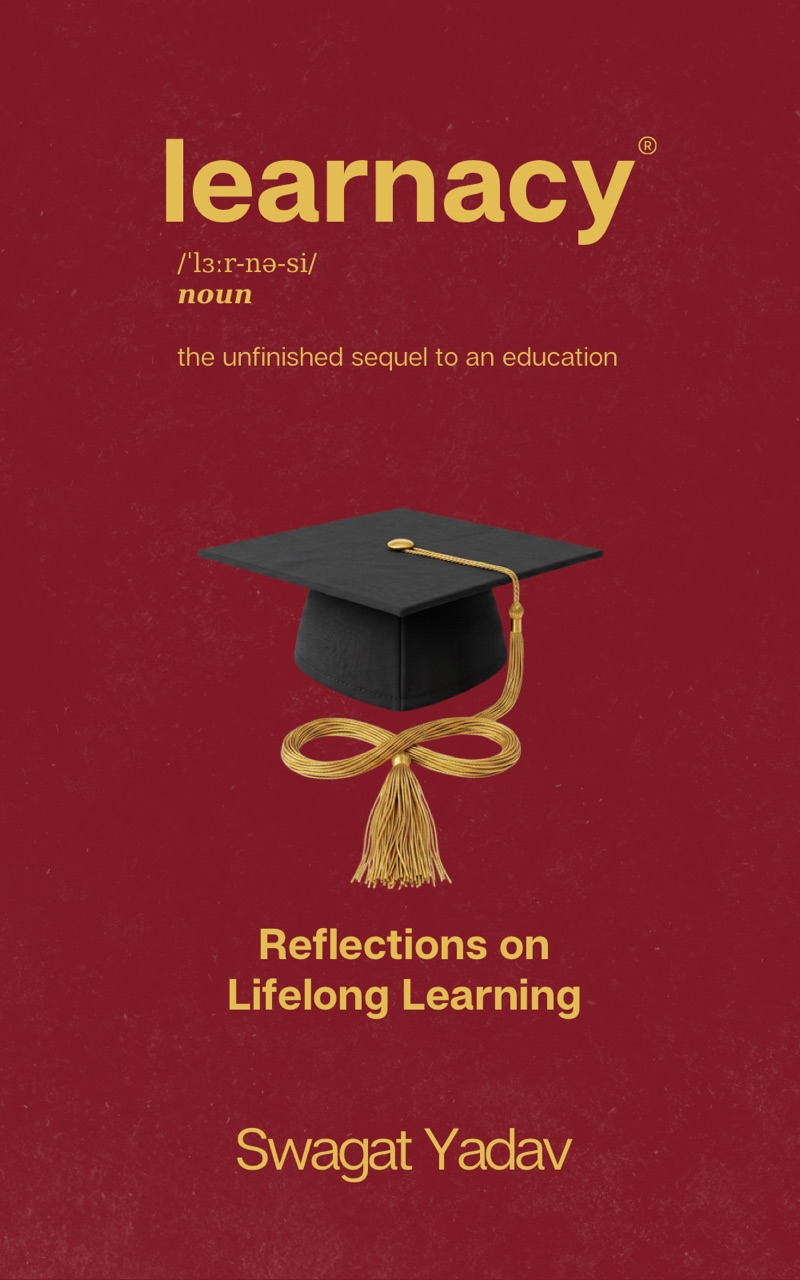 With Swagat YadavFounder and CEO, One Young India, and author of Learnacy
This course is for learning. It is not investment, tax or legal advice, and it names no startup, brand or app to praise or judge. Ask a parent or a professional before any money or legal decision.
The problems you already notice
Every day you spot queues, wasted effort and tools that do not quite work.This course shows how to turn one of those complaints into something that exists, and pays for itself.
- Every enterprise begins with a real problem people already feel, not a clever gadget.
- This course pairs problem-solving with the arithmetic of value, price, cost and cash flow.
- Examples are made up and say so; real rules and figures are sourced, and money or legal decisions always involve a parent or professional.
A queue outside the gate
Have you ever stood in a long queue and thought, "Somebody should fix this"? Most people have. Then the bell rings, the queue moves, and the thought disappears by dinner time.
What is the difference between a complaint and an enterprise? A complaint notices what is wrong and stops there. An enterprise notices what is wrong, asks why it is that way, builds a small fix, and checks whether the fix pays for itself. You do not need a factory or a suit to think this way. You already notice friction in your school, your lane and your town every single day. This course gives that habit a method and a set of numbers.
What does your gut say?
Before we start, answer three quick questions with your gut. Why do this before learning the rules? Because seeing where your first instinct was right or wrong makes the lesson stick. There is no score, and your answers stay on this device until we compare them in the wrap-up.
How this course works
Four parts and 26 chapters, then a wrap-up, about 12 hours, at your own pace. Each chapter has:
- a made-up story from everyday life, an interactive tool to drive, and a debate with strong lines on both sides,
- an "In short" box at the top so you can see the main points first,
- a link into Entrepreneurship and New Ventures and other subjects in World 101, plus Learnacy Labs to play with,
- a note for your notebook, and
- a five-question check. Pass it with 4 right, as often as you need.
Pass every chapter check and the final round, and you earn a certificate of completion with a link anyone can use to verify it.
Three promises. First, this course is for learning, not investment, tax or legal advice: whenever a real money or legal rule comes up, ask a parent or a professional. Second, we name no startup, brand or app to praise or judge; every worked example is made up and says so, while every real-world figure comes from a checked source. Third, any one-person business we discuss is safe, honest and legal for a student.
One rule runs through every chapter: questions are more important than answers. In enterprise, asking "who actually has this problem?" before you build saves months of wasted work.
Explore in World 101
Start on the map before you start on an idea. Open Business Models in World 101 and follow one link that surprises you. Then ask of what you read: who had the problem, and what did somebody build for them?
An entrepreneur is not someone who loves their own idea; it is someone who cares enough about a problem to test a fix honestly.
One problem in my neighbourhood I would like to understand better by the end of this course.
Start with a problem, not a product
It is easy to fall in love with a thing you want to build.It is much harder, and much more useful, to fall in love with the problem someone actually has.
- Failed ventures usually run out of money in the end, and behind that there is often a deeper cause: too few people wanted what was built.
- A problem describes who is struggling, how often, and what it costs them; a product is only one possible fix.
- Painkillers solve urgent, recurring friction; vitamins are easy for buyers to postpone.
- Opportunity cost is what you give up when you spend your limited hours building the wrong thing.
The solar pencil sharpener
A made-up student spends three months of evenings building a solar-powered pencil sharpener with a small fan and a brass switch. On Saturday she sets it on a table outside the school library, proud of every soldered wire. Forty students walk past. Two stop to admire the switch. Nobody buys one. Why? Because a ₹5 plastic sharpener in every pencil box already sharpens a pencil in four seconds, even when the sun is behind a cloud.
Meanwhile, ten metres away, thirty students are standing in a twelve-minute queue at a single photocopy machine to print their lab sheets before the 4:00 pm bell. The student with the solar sharpener walked past that queue every afternoon for three months and never saw it. She was looking at her gadget, not at the room.
What an entrepreneur actually does
What does the word entrepreneur mean? The economist Richard Cantillon, in his Essay on the Nature of Trade in General (published in French in 1755), used it for people who buy at a certain, known price and sell at an uncertain price, living with the risk that buyers may not come at the price they hoped for.
Notice what sits at the centre of that job: not inventing a machine for its own sake, but meeting a real need under uncertainty. When post-mortem studies look at why new ventures fail, the problem is rarely that the product could not be built. Running out of money is the most common final cause, but behind it often sits a deeper one: not enough people wanted what was built. The research firm CB Insights studied 431 venture-backed startups that shut down from 2023 onwards; among the 385 whose reasons could be identified, 70% ran out of capital and 43% had poor product-market fit, meaning they built something not enough people wanted.
Ask three short questions before you sketch a single logo. Is someone struggling with a task today? Yes or no. Are they already spending time, money or effort trying to work around it? Yes or no. If both answers are no, you do not have a problem yet. You have a hobby.
I am not saying hobbies are bad. Building a solar sharpener for the joy of wiring it is a wonderful Saturday afternoon. I am saying you should not confuse the joy of making a thing with a reason for someone else to pay for it.
Painkillers, vitamins and opportunity cost
Founders often sort ideas into two kinds, and the easiest way to see the difference is to put them side by side:
- A painkiller solves an urgent, frequent problem that hurts right now, like a punctured bicycle tyre two kilometres from home.
- A vitamin is something mildly nice to have when you remember it, like a prettier cover for a notebook that already has a cover.
Why does this matter even more when you are a student or a solo builder? Because of opportunity cost: the true cost of choosing one project is the best alternative project you gave up with those same hours and rupees. At home, spending your two free Saturday hours building a gadget nobody wants means giving up the chance to fix the photocopy queue or rest before Monday's test. In a nation's economy, when thousands of enterprises chase flashy ideas nobody needs, scarce skill and capital are locked away from real bottlenecks in food, transport and repair.
Problem, or solution in search of a problem?
Before you spend an hour building, train your eye to separate a real problem from a disguised product pitch. Below are five made-up notes from a student notebook. Sort each one.
The 2D version of every Learnacy lab is free with a Learnacy account.
Should a student founder only tackle problems they have felt themselves?
Many mentors tell young builders to start only with problems from their own daily life. Others disagree.
When you solve a problem you live with every day, you cannot easily fool yourself about how often it happens or why existing fixes fail. You are your own first test user.
If everyone only solved their own problems, students in comfortable neighbourhoods would build twenty kinds of stationery organisers while ignoring urgent problems faced by shopkeepers, farmers or elderly neighbours down the road.
A hard case. A sixteen-year-old who wants to help street vendors keep vegetables fresh in summer heat, despite never having run a cart.
Spend one hour observing and listening before deciding. What can you learn only by watching the vendor's cart for an afternoon that you could never guess from your desk?
Explore in World 101
Every new venture starts by choosing which problem is worth scarce time and effort. Open Entrepreneurship and New Ventures in World 101 and note one question that could anchor the venture memo you write at the end of this course.
Find the number
Walk through your home, school or street for fifteen minutes today with a small notepad. Count how many distinct workarounds you see people using (for example, a stone holding a door, a handwritten sign over a broken bell, a long queue at one counter). Write your count and describe the clearest one.
Check your understanding
Five questions. Pass with 4 right; try as often as you like. Each answer comes with its reason.
Fall in love with the problem and the people who have it, not with your first idea for a gadget.
One workaround I saw someone using today, and the problem hiding underneath it.
That was chapter 1 of 26
Next: talking to customers without being lied to, the smallest test of an idea, value and pricing, revenue, cost and break-even, cash flow, pitching in sixty seconds, and building a one-person business. Four parts, about 12 hours, then the final round and your completion certificate.
Already a member? Continue in part 1. The check you passed here carries over when you are logged in. Course home