

Everyday EconomicsFree preview
Read the economy.Manage your money.
Why does a ₹10 note buy less every year?Why did tomatoes once cost more than petrol?And why does a ₹999 price tag work so well?This course answers questions you meet every day, with real Indian numbers.
- Explain inflation and interest, and why the RBI moves its repo rate.
- Read a price, a GDP headline and a trade story, and say what each one misses.
- Build your own budget, see compounding at work and spot a money scam.
- Catch the tricks that steer your choices, and argue both sides of a policy.
 With Swagat YadavFounder and CEO, One Young India, and author of Learnacy
This course is for learning. It is not financial advice, and it names no bank, fund, coin or app. Talk to a parent or guardian before any money decision.
Economics is about choices
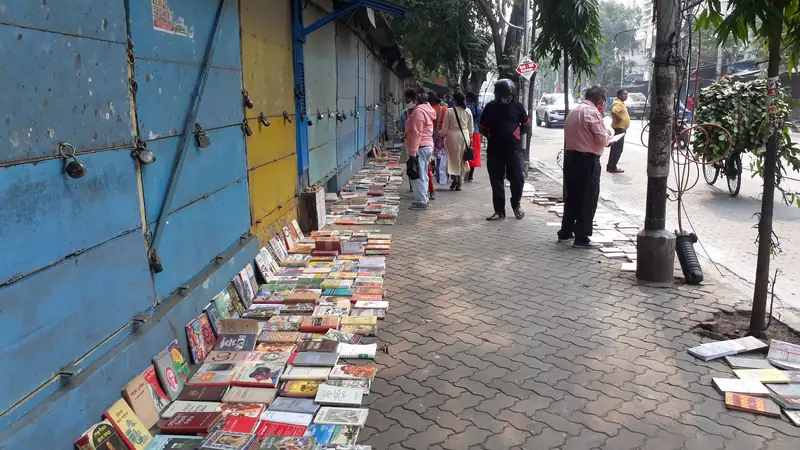
You have ₹100 and two things you want. You can buy one.That small moment is where economics begins.
Books for sale along College Street in Kolkata. Choosing one book means leaving the others, and everything else that money could buy.Photo: Pinakpani, CC BY-SA 4.0, via Wikimedia Commons.
- Economics is about choices, not only money.
- The real cost of anything is what you give up to get it.
- Each chapter ends with a five-question check. Pass every chapter check and the final round for your certificate.
Before you read: you have ₹100. A book, or a cinema ticket with a friend? You can buy one.
Your answer
Anonymous: we count answers, nothing else.
The book that cost an evening
Economics sounds like it belongs to bankers and finance ministers. Does it even make sense for you to study it?
Is it about money? Partly. Mostly it is about choices.
You have ₹100. You want a book, and you want a cinema ticket with a friend. You can buy one. Say you choose the book. What did the book cost you? ₹100? That is the price tag. What you really gave up is the evening with your friend. That evening is the real price of the book.
Economists call it opportunity cost: the cost of anything is the best thing you give up to get it. A family choosing between a new phone and a school trip faces it. So does a government choosing between a new road and a new hospital. Home and nation, the same question.
Same price, lighter packet?
Pick up a packet of chips. The price on it may be the same as last year. Now look at the weight. Is it the same? Often it is not. The packet is lighter, and the price has not moved.
Somebody made a choice there too. Who? And why would a company rather sell you less than charge you more? By the end of chapter 3 you will know. That is the kind of question this course is built on: small things you see every day, and the big ideas behind them.
What do you think already?
Three quick questions before we begin. There is no score, and your answers stay on this device. Answer with your gut; at the end of the course you will see your first answers next to what you know by then.
How this course works
Four parts and 25 chapters, then a wrap-up, about 12 hours, at your own pace. Each chapter has:
- in most chapters, a story, something to try and a question to argue about,
- an "In short" box at the top, so you can see the main points before you read,
- a note for your notebook at the end, and
- a five-question check. Pass it with 4 right, as often as you need.
Pass every chapter check and the final round, and you get a certificate of completion with a link anyone can use to verify it.
The course ends with a question of your own: you choose one to write on, and you can draft it in the Writing Studio. Publication depends on review and is not guaranteed.
One rule for the whole course: questions are more important than answers. If something does not make sense, that is not a failure. That is where learning starts.
Explore in World 101
Each part of this course connects to World 101, Learnacy's map of what the world knows. Choose a subject below and stay with it for five minutes. Look for a choice someone had to make, and what it cost them. Turn what you find into a question and note it. It may make the cut when the course ends and you choose your question.
Every choice has a cost: the best thing you gave up to make it.
Write one choice your family made this year, and what it gave up.
What money is
A ₹10 note is a piece of paper.So why does everyone accept it?
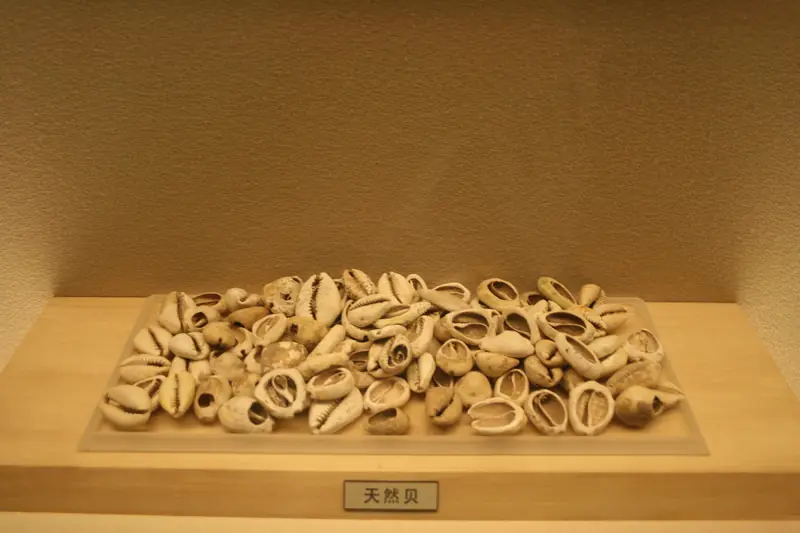
Cowrie shells once used as money, in the coin gallery of the Shanghai Museum. Shells like these were money in many lands around the Indian and Pacific Oceans.Photo: Gary Todd, CC0, via Wikimedia Commons.
- Money solves the double coincidence of wants: you sell to anyone and buy from anyone.
- Money does three jobs: a medium of exchange, a unit of account and a store of value.
- Good money is durable, portable, divisible, uniform, scarce and accepted.
The potter, the farmer and the weaver
Picture a village market with no money. You are a potter, and you want cloth for a new shirt.
You find the weaver. Does he want a pot? No. He wants wheat. So you find the wheat farmer. She wants a pot, but all she has is wheat, and you do not want wheat. Round and round you go, carrying your pots, while the cloth gets sold to someone else.
Economists call this the problem of the double coincidence of wants: to swap, you must find someone who has what you want and wants what you have, at the same moment.
In a market of three people it is hard. In a country of a billion people it is impossible. Money solves it. You sell your pot to anyone who wants a pot, and buy cloth from anyone who sells cloth.
Three jobs, one note
What is money? Define it by what it does. Money does three jobs.
- A medium of exchange. People accept it for almost anything.
- A unit of account. You can put a price on anything in it, so you can compare a pot with a shirt.
- A store of value. It keeps its worth until you spend it next week, or next year.
Anything that does all three well can be money. Anything that fails one job struggles. Is a cricket card money? It might be a store of value, but try buying rice with it. Test your instinct.
Game: is it money?
Decide for each one, then see which of the three jobs it actually does.
The six properties of good money
Anything that wants to be money has to pass these tests.
Explore in World 101
Money is one thread in a much bigger story: banks, credit and trust. Open Money, Banking and Credit in World 101 and follow its thread to Ancient Civilizations. Why does a loan depend on trust?
The 2D version of every Learnacy lab is free with a Learnacy account.
Find the number
How much money is out there in rupee notes and coins? Find the RBI's latest figure for currency in circulation, in ₹ crore, in its weekly statistical supplement. Write the number and the date.
Check your understanding
Five questions. Pass with 4 right; try as often as you like. Each answer comes with its reason.
Money is whatever people trust enough to swap for real things.
One thing other than rupees that people I know trust enough to trade, and which of money's three jobs it does best.
That was chapter 1 of 25
Next in part 1
- From gold to paper
- How India measures inflation
- Who wins and who loses
- The RBI and the repo rate
- When money breaks
Then
- Why prices move in markets
- Your own budget and the power of compounding
- What GDP misses
- The tricks that steer your choices
- Why countries trade
Four parts, about 12 hours, then the final round and your completion certificate.
Already a member? Continue in part 1. The check you passed here carries over when you are logged in. Course home