
Model NITI AayogFree preview
Learn to make policy,and write a white paper of your own.
Chapter 1 of the self-paced course, free to read, at your own pace.Anything you write here saves on this device and carries into Day 1.
- Explain what public policy is, and map who makes it in India.
- Turn a vague worry into a sharp problem, and find and judge the evidence.
- Read the Economic Survey and the Budget, and trace how one decision ripples across ministries.
- Write a white paper and pitch it in two minutes to a panel.
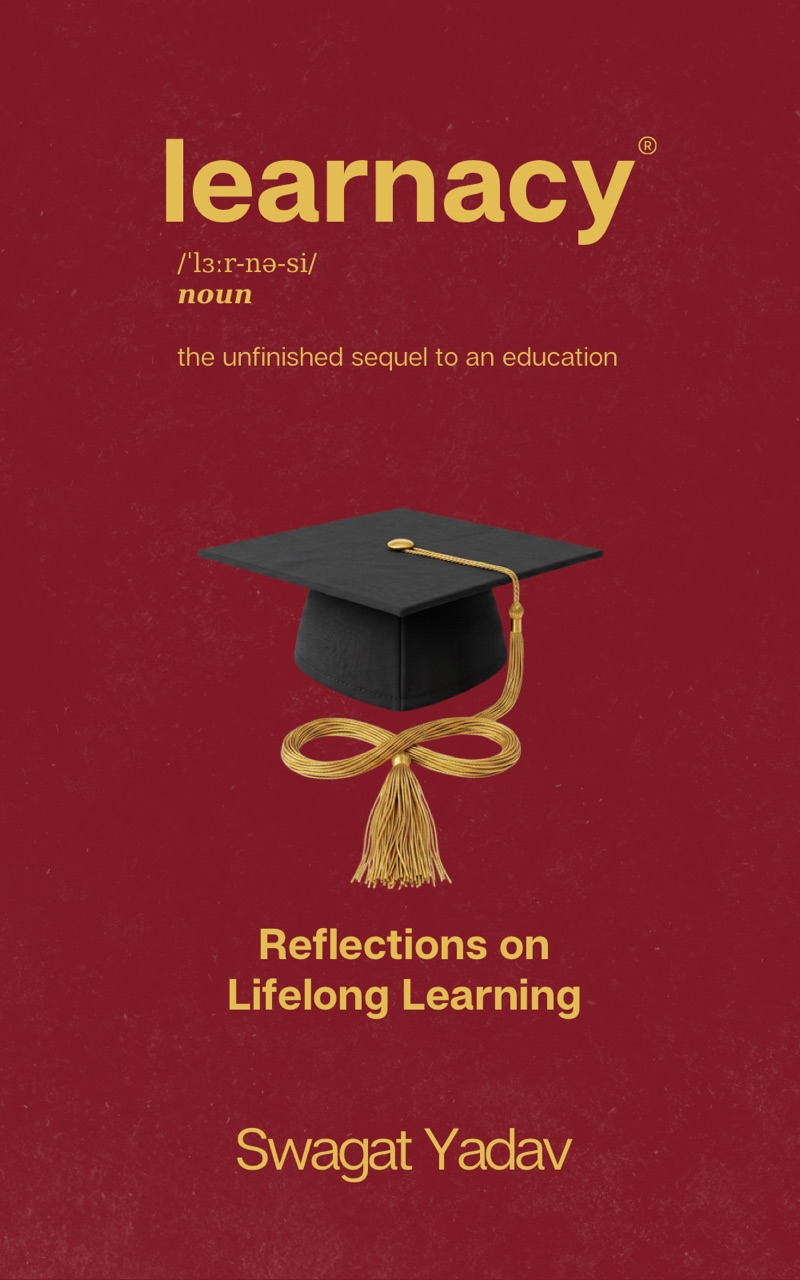 With Swagat YadavFounder and CEO, One Young India, and author of Learnacy
Model NITI Aayog is One Young India's simulation of policy work. It is not affiliated with NITI Aayog or any government body.
What is public policy?
Not a dusty document.It is every decision a government makes about how we live together, even the decision to do nothing.
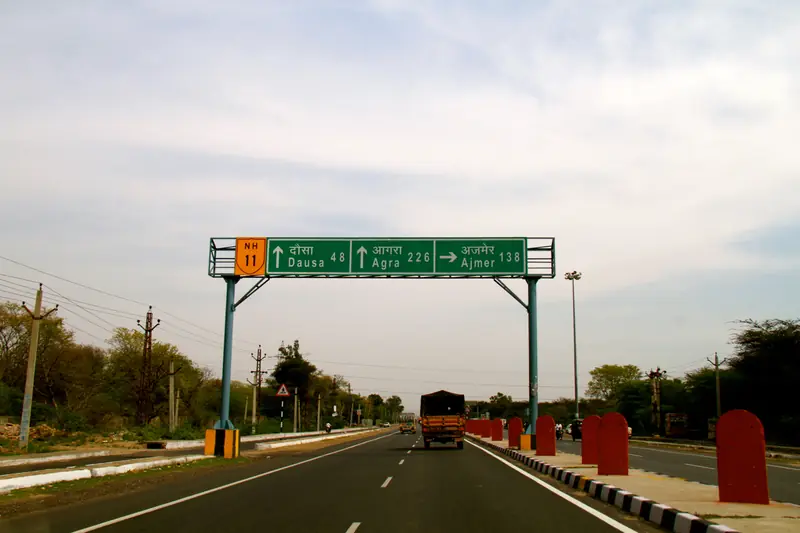
A national highway in Rajasthan. The road, its lanes and its signs in Hindi and English were all decided by someone: that is public policy you can see.Photo: TeshTesh, CC BY-SA 4.0, via Wikimedia Commons.
Your day, governed
Trace one ordinary school day first, and tap each moment to see the policy hiding inside it.
Try it: define a pencil
Before we define public policy, define something you have held almost every day of your life. In one sentence: what is a pencil?
Test your sentence against four answers that come up every time.
Tap each answer to see where it falls short.
Each answer describes a feature. None names the principle. A pencil works by friction: as you drag it across paper, tiny flakes of the core rub off and cling to the surface of the page. The mark sits on top, so an eraser can lift it off. Ink from a pen soaks into the paper, so it stays.
A sharper definition: a pencil is a writing tool whose core rubs off onto paper by friction, leaving a mark on the surface that can be erased.
The features change from pencil to pencil. The principle does not. I use a phrase for this habit: principles before personalities. Understand why a thing works before you describe what it looks like. And choose every word with care: one careless word, like cylindrical, makes a definition wrong.
Your turn. In 12 words or fewer, define public policy. Do not search for it. Write the principle, not a list of features.
Now read on and compare yours with one of the most quoted definitions in the field. Which of your words did Dye leave out? And which four words did he include that you may have missed?
"Whatever governments choose to do or not to do."
Thomas R. Dye, Understanding Public Policy (1972)
What does the government actually do: a law, a tax, a scheme, a ban, a campaign, or silence?
Which problem is it trying to solve, and whose idea of a better life does it serve?
Through which tools, which people and which money does the decision reach real lives?
When does a government choose to do nothing?
Dye's definition has four small words that change everything: or not to do. Silence is a decision, and it has consequences.
Think of the Covid-19 pandemic. In March 2020 the Union government ordered a nationwide lockdown. When the second wave struck in 2021, it did not order another; states imposed their own. When the Omicron wave came in early 2022, with most adults vaccinated and hospitals better prepared, there was no national lockdown at all. The same virus met three different decisions, and the last was a decision not to use the strongest tool.
Governments usually hold back because a problem may fix itself, or because acting would cost more than it saves. Sometimes nobody in power has noticed the problem, or it is too politically risky to touch.
Two kinds of policy: big P and small p
In her TEDxToronto talk of 2012, the Canadian policy researcher Vass Bednar draws a line worth writing in your notebook.
Big P policy is the formal kind: bills, laws and acts, usually regulated and made by people with official power. Even big P can be daring. In 2011 Iceland drafted a new constitution in public, posting each draft online and inviting citizens to comment. In 2012 about two-thirds of voters in an advisory referendum backed using it as the basis of a new constitution, though Iceland's parliament has not adopted it.
Small p policy is the informal kind: a standard, or a better way of doing something, usually unregulated and often invented by ordinary people. Her examples: Rocket Radar, an app built by a private developer that told Toronto riders to the minute when the next tram was coming, possible only because the city's transit agency opened its data; and clinics that text you when it is your turn, so you are not stuck for hours in a waiting room. Small p, she says, is a sandbox for the public good. And when small p works, big P often takes note.
Her third P is play. In 2011, players of an online puzzle game called Foldit helped solve the structure of a protein from a monkey virus related to HIV, a problem that had stumped scientists for more than a decade. It took them about three weeks. In 2007, Americans played World Without Oil, a game that asked them to imagine an oil shortage and invent ways to live through it. No government ordered either.
That is the idea behind Model NITI Aayog: policy is not only for officers and ministers. You can play your way into it.
Policy or not?
Public policy is made by public authorities, for the public. Tap your answer for each.
One law, one charger
Up to the iPhone 14, Apple used its own Lightning charging port. From the iPhone 15 in 2023, it switched to USB-C, the port most other phones use. Why would a company that size give up its own design? A policy. In 2022 the European Union passed a law requiring a common USB-C charging port on new phones sold there from the end of 2024, to cut electronic waste and spare buyers a drawer full of chargers. A rule made in Brussels changed a phone sold in Bengaluru.
Whatever career you choose, business included, decisions made in rooms far away will shape it.
Home has its own policies
Economics has microeconomics and macroeconomics. Policy splits the same way. Macro policy is made by governments, for a country, a state or a city: that is public policy. Micro policy is made by families, schools and companies: your curfew, your school's rules on phones and AI, who decides tonight's menu when guests arrive. Usually there are many stakeholders and only one or two decision makers. And every rule, at home or in a country, is trying to do one of the same four jobs.
Change behaviour
Make people do, or stop doing, something.
Organise
Decide who does what, when and how.
Distribute
Hand out something valuable: money, food, seats, time.
Extract
Collect something from people: taxes, fees, effort.
Check your understanding
Five questions. Pass with 4 right; try as often as you like. Each answer comes with its reason.
Public policy is in your water, your ride, your lunch and your phone: every choice a government makes about how we live together, including the choice to do nothing.
Write one sentence about your topic that starts: "Right now, the government chooses to..." If the honest ending is "nothing", begin there.
That was chapter 1 of 41
Next in Day 1: why we have governments, who makes policy in India, NITI Aayog, the policy cycle and the toolkit.Then evidence and the white paper, the economy and the Budget, delivery, the world and your final pitch.
Next batches
- 24-27 Dec · Online
- 7-10 Jan 2027 · Online
Booked a batch, or in Learnacy Essential since before 1 November 2026? Continue with chapter 2.