
Sync with ScienceCredits
Picture, video and data credits
Every picture, video and dataset in this course:who made it, where it comes from and the licence that lets us show it.Thank you to everyone who shares their work freely.
The course home
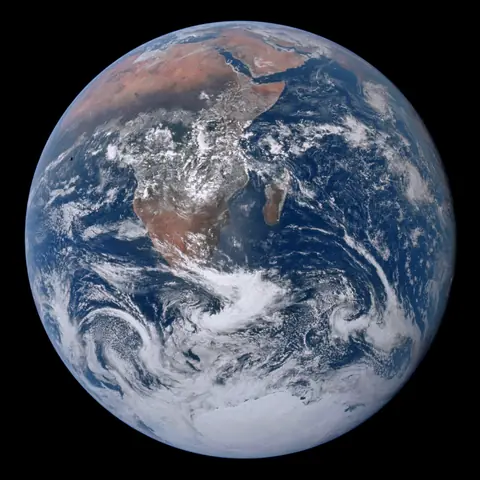 | The whole Earth, photographed from space by the crew of Apollo 17.Photo: NASA/Apollo 17 crew, public domain (US government work, NASA), via Wikimedia Commons. |
Part 1: How science knows, and a warming world
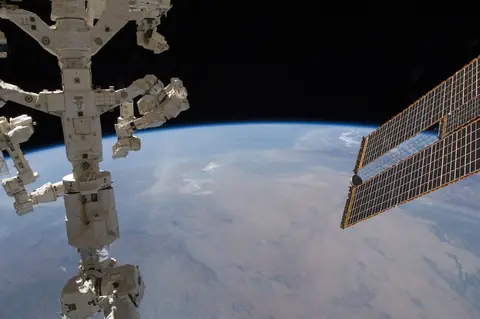 | India from the International Space Station, past the station's robotic arm.Photo: Earth Science and Remote Sensing Unit, Lyndon B. Johnson Space Center, public domain (US government work, NASA), via Wikimedia Commons. |
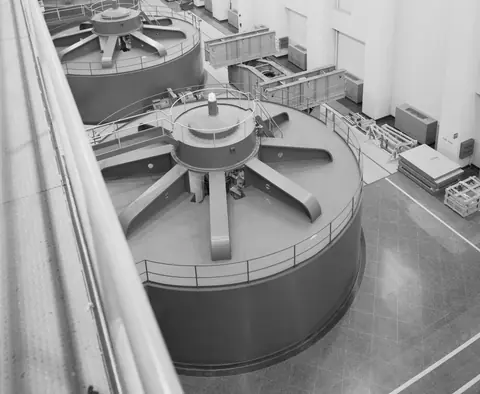 | Generators in the hall of a hydroelectric power station in the United States.Photo: Jet Lowe, public domain (US government work, National Park Service), via Wikimedia Commons. Cropped by One Young India. |
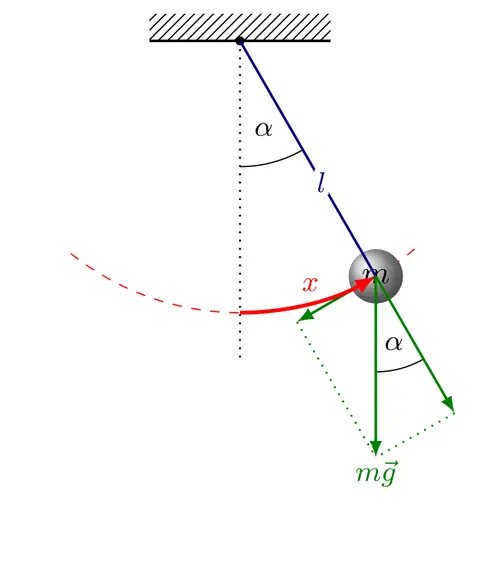 | Animated PendulumAnimation: And1mu, CC BY-SA 4.0, via Wikimedia Commons. |
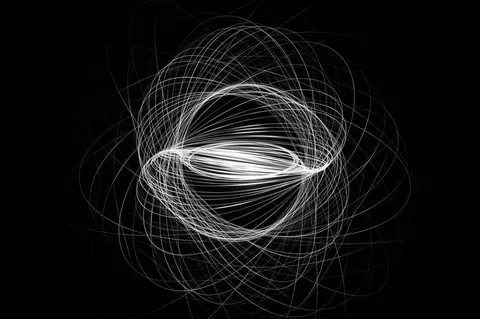 | A pendulum carrying a small light, photographed with the shutter left open: each swing leaves a loop of light.Photo: Subhrajyoti07, CC BY-SA 4.0, via Wikimedia Commons. |
| Video | How Do Greenhouse Gases Actually Work?From the channel MinuteEarth. Watch the full video. |
| Data | Carbon dioxide in the air at Mauna Loa, Hawaii, yearly averageData: NOAA Global Monitoring Laboratory, Mauna Loa Observatory (1958 to 1974 from C. David Keeling, Scripps Institution of Oceanography), free to use with credit (NOAA GML data use statement). Drawn by One Young India. |
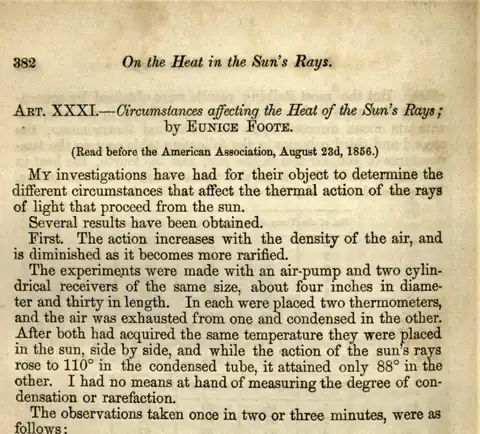 | Eunice Foote's paper, read in 1856: she set glass cylinders of gases in sunlight.Scan: Eunice Newton Foote, public domain (author died more than 70 years ago), via Wikimedia Commons. Cropped by One Young India. |
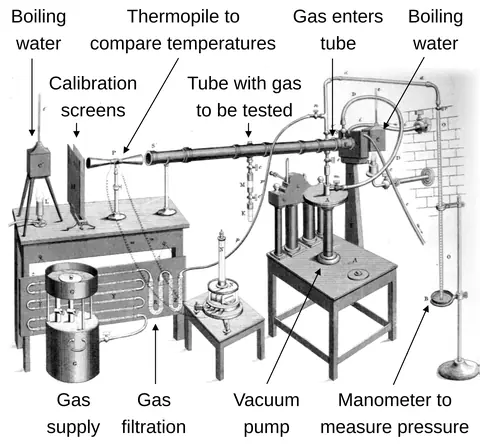 | John Tyndall's apparatus, from his lecture of 1861, measured how much heat each gas absorbs.Diagram: John Tyndall, public domain (author died more than 70 years ago), via Wikimedia Commons. |
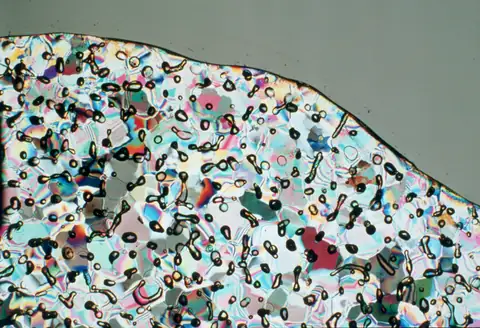 | A sliver of Antarctic ice under polarised light.Photo: "CSIRO ScienceImage 518 Air Bubbles Trapped in Ice" by CSIRO, CC BY 3.0, via Wikimedia Commons. |
Part 2: The new space race
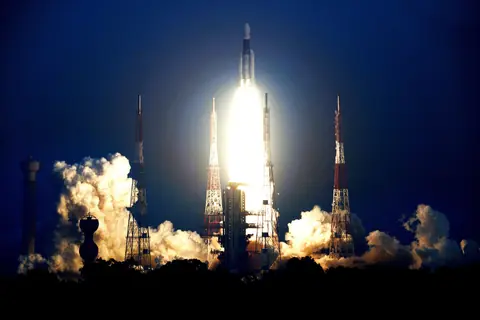 | A GSLV Mk III rocket lifts off from the Satish Dhawan Space Centre at Sriharikota.Photo: Indian Space Research Organisation (GODL-India), GODL-India, via Wikimedia Commons. |
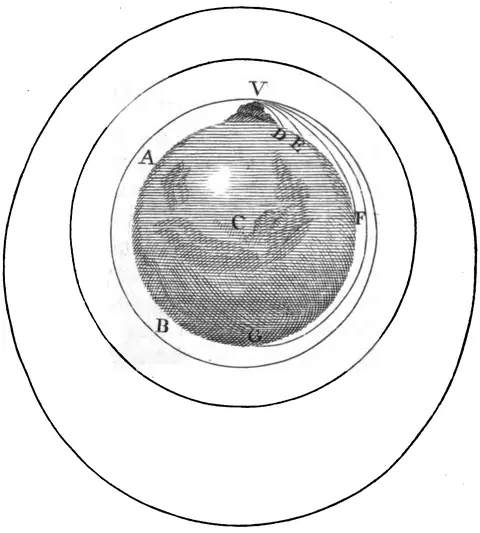 | Newton's drawing, printed in A Treatise of the System of the World in 1728: the faster a shot leaves the mountain, the further it falls around the Earth.Drawing: Isaac Newton, public domain (author died more than 70 years ago), via Wikimedia Commons. |
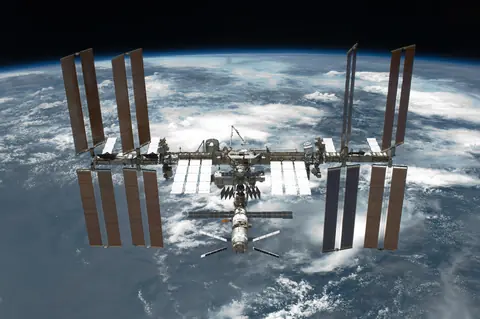 | The International Space Station, photographed from the space shuttle Endeavour as it pulled away.Photo: NASA, public domain (US government work, NASA), via Wikimedia Commons. |
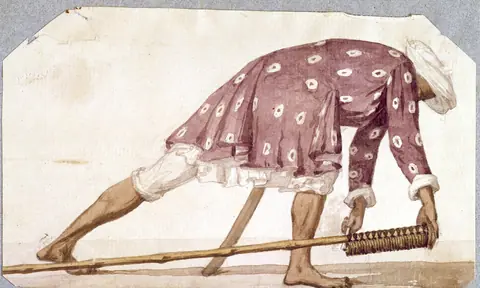 | A Mysore rocket man, painted by Robert Home: a soldier of Tipu Sultan's army lights a rocket bound to a bamboo pole.Painting: Robert Home, public domain (author died more than 70 years ago), via Wikimedia Commons. Cropped by One Young India. |
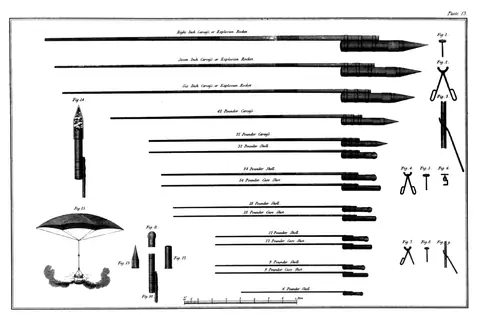 | Congreve's rockets in many sizes, from his treatise on the rocket system he developed.Engraving: Sir William Congreve, 2nd Baronet, public domain (author died more than 70 years ago), via Wikimedia Commons. |
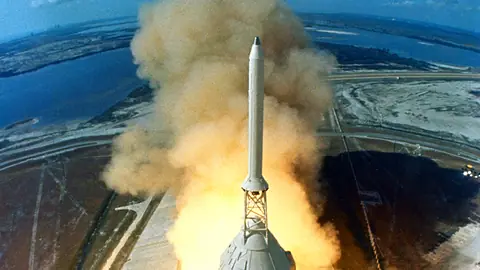 | Apollo 11's Saturn V rocket lifting off, seen from its launch tower.Photo: NASA; restored by Michel Vuijlsteke, public domain (US government work, NASA), via Wikimedia Commons. Cropped by One Young India. |
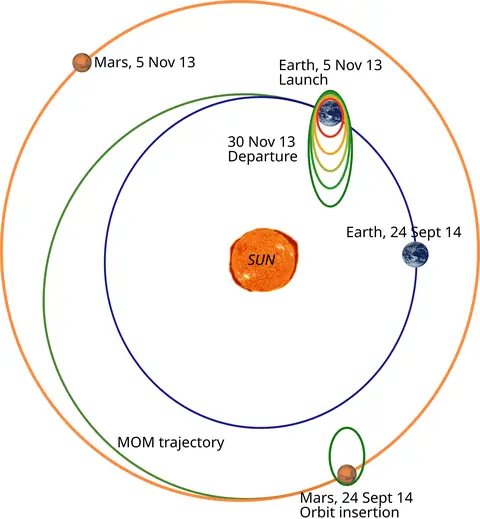 | The Mars Orbiter Mission's path, in a diagram not drawn to scale.Diagram: "Mars Orbiter Mission ISRO English" by Nesnad, CC BY-SA 3.0, via Wikimedia Commons. |
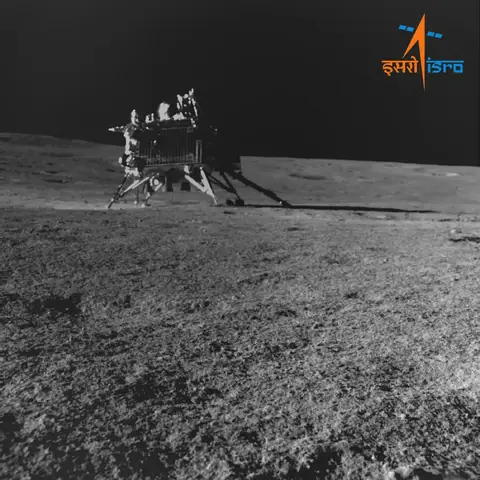 | The Vikram lander near the Moon's south pole, photographed by its own rover, Pragyan.Photo: Indian Space Research Organisation (GODL-India), GODL-India, via Wikimedia Commons. |
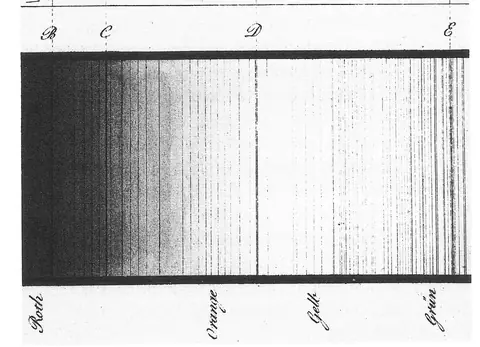 | Joseph von Fraunhofer's drawing of the Sun's spectrum, published in 1817.Engraving: Joseph Ritter von Fraunhofer (1787 to 1826), public domain (author died more than 70 years ago), via Wikimedia Commons. Cropped by One Young India. |
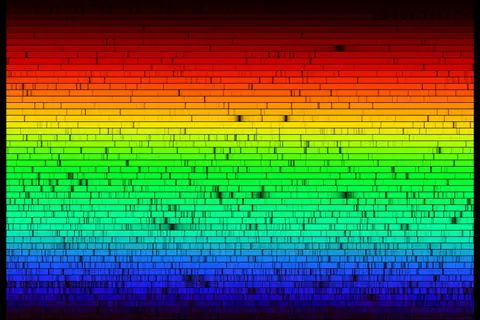 | Sunlight spread out finely, row after row, from red to violet.Image: NOIRLab, CC BY 4.0, via Wikimedia Commons. |
| Video | The Fermi Paradox — Where Are All The Aliens? (1/2)From the channel Kurzgesagt. Watch the full video. |
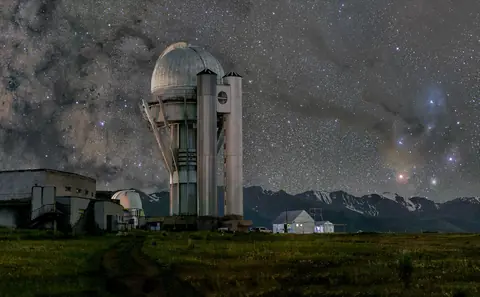 | An observatory under the centre of the Milky Way, in a composite photograph.Photo: Astrobond, CC BY-SA 4.0, via Wikimedia Commons. |
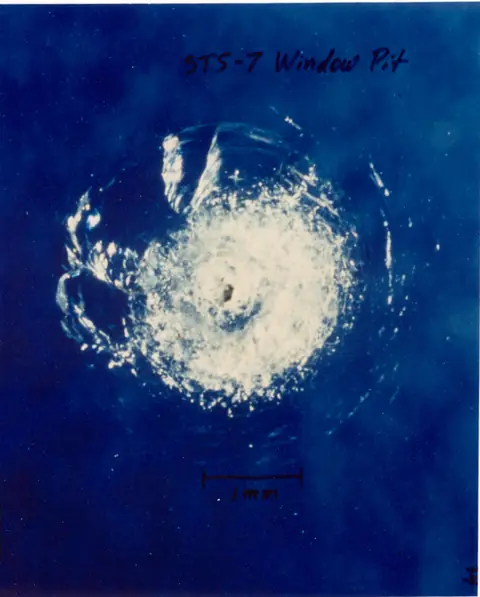 | A pit in a window of the space shuttle Challenger, left by a collision with a fleck of paint in orbit.Photo: NASA, public domain (US government work, NASA), via Wikimedia Commons. |
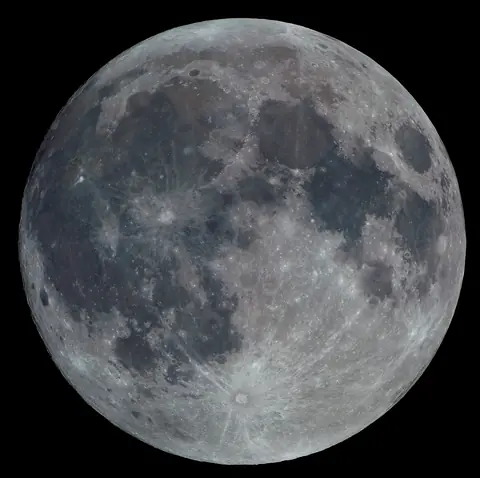 | Under the Outer Space Treaty of 1967, no country can claim it.Photo: "2019-01-20 21-58MEZ Vollmond LRGB" by Rolf-Hempel, CC BY 3.0, via Wikimedia Commons. |
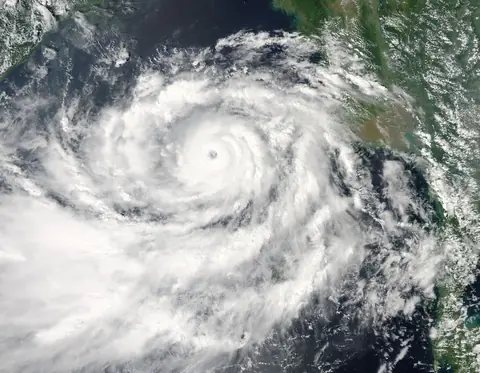 | Cyclone Phailin over the Bay of Bengal in October 2013, photographed from a NASA satellite.Photo: National Aeronautics and Space Administration, LANCE/EOSDIS Rapid Response, captured on Aqua satellite, public domain (US government work, NASA), via Wikimedia Commons. |
Part 3: Genes, germs and the body
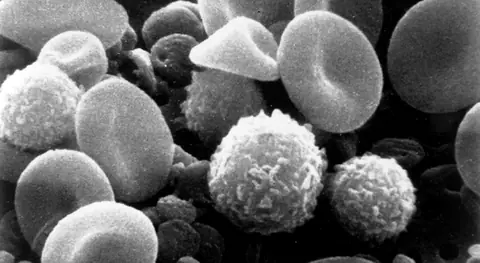 | Human blood under a scanning electron microscope: red cells, white cells and platelets.Micrograph: Bruce Wetzel (photographer). Harry Schaefer (photographer), public domain (US government work), via Wikimedia Commons. Cropped by One Young India. |
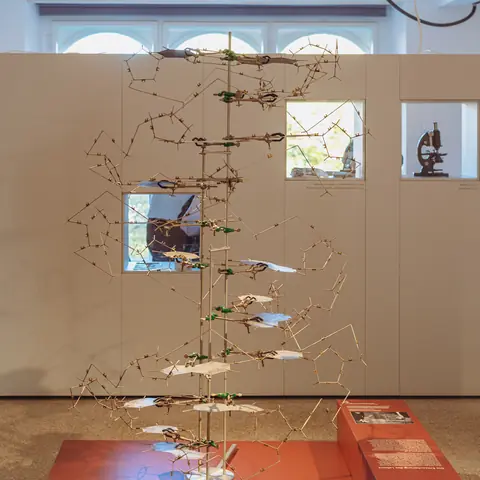 | A replica of Watson and Crick's double-helix model, in the Berlin Museum of Medical History.Photo: Flocci Nivis, CC BY 4.0, via Wikimedia Commons. |
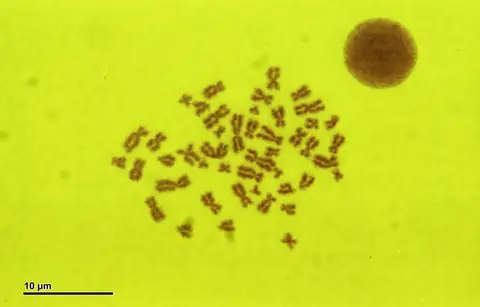 | The chromosomes of one human cell, stained and photographed under a microscope.Micrograph: "Human karyotype (259 32) Karyotype Human 46,XX (woman)" by Doc. RNDr. Josef Reischig, CSc., CC BY-SA 3.0, via Wikimedia Commons. |
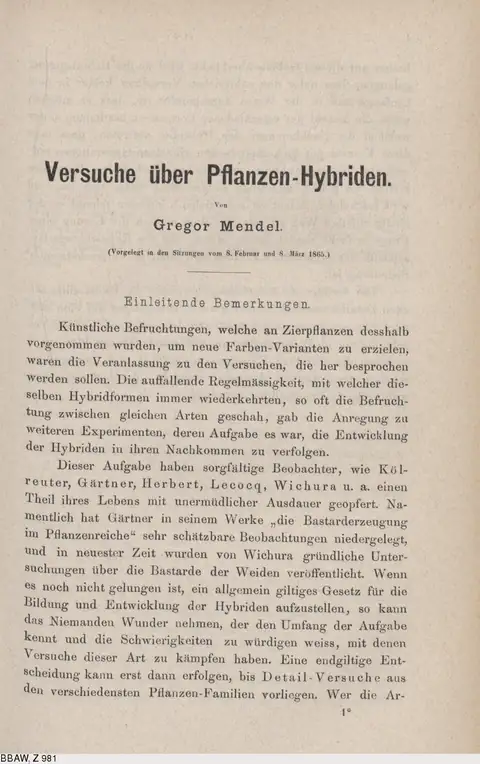 | The first page of Mendel's paper, Versuche über Pflanzen-Hybriden (Experiments on Plant Hybridization), in the journal of the natural history society in Brünn.Scan: Gregor Mendel, public domain (author died more than 70 years ago), via Wikimedia Commons. |
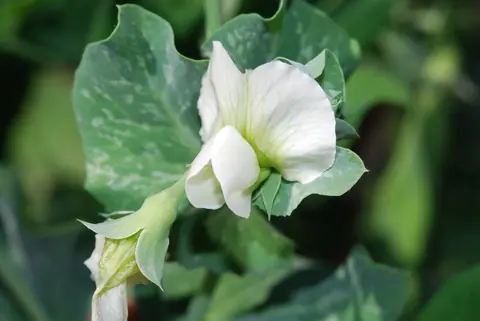 | Mendel counted thousands of pea plants to find the hidden pattern behind them.Photo: "Pisum sativum flower" by Dyorkey, CC BY-SA 3.0, via Wikimedia Commons. |
| Video | How CRISPR lets you edit DNA - Andrea M. HenleFrom the channel TED-Ed. Watch the full video. |
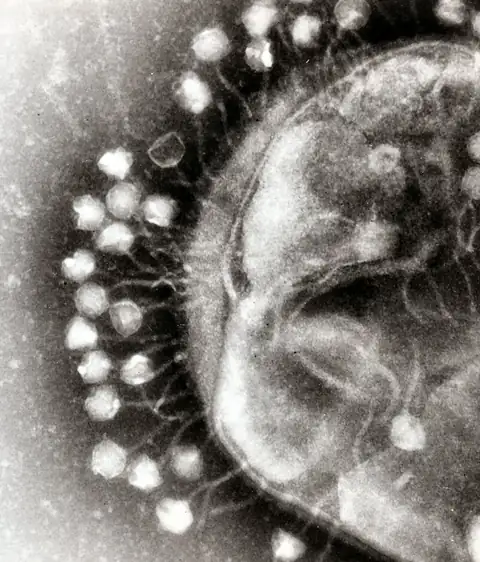 | Viruses called bacteriophages attached to the wall of a bacterium, under an electron microscope.Micrograph: "Phage" by Professor Graham Beards, CC BY-SA 3.0, via Wikimedia Commons. |
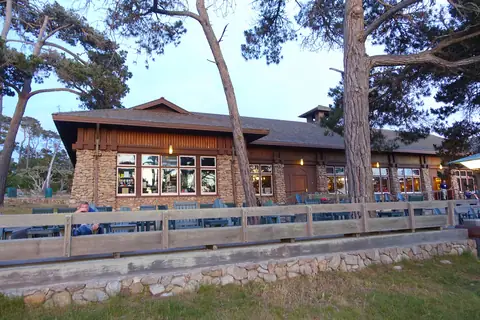 | Scientists met here in February 1975 to agree safety rules before their new work went on.Photo: Daderot, CC0, via Wikimedia Commons. |
| Video | How does your immune system work? - Emma BryceFrom the channel TED-Ed. Watch the full video. |
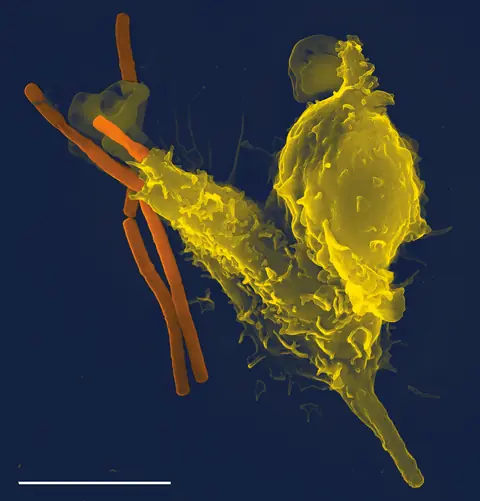 | A white blood cell called a neutrophil engulfing bacteria: one of the hunters that swallow germs whole.Micrograph: "Neutrophil with anthrax copy" by Volker Brinkmann, CC BY 2.5, via Wikimedia Commons. |
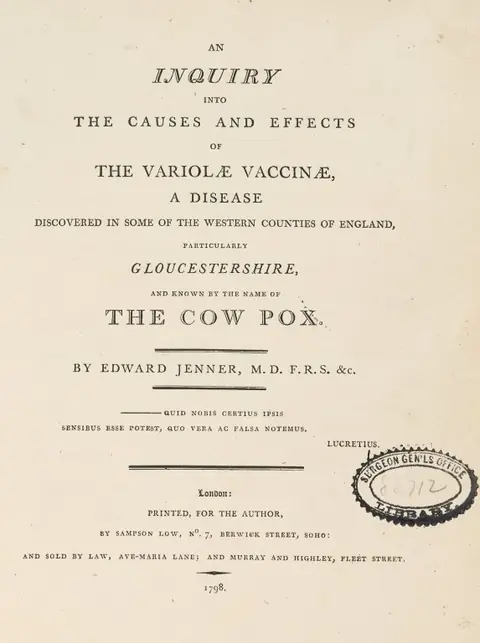 | The title page of Edward Jenner's book on cowpox, An Inquiry into the Causes and Effects of the Variolae Vaccinae, published in 1798.Scan: Edward Jenner, public domain (author died more than 70 years ago), via Wikimedia Commons. |
| Video | How do vaccines work? - Kelwalin DhanasarnsombutFrom the channel TED-Ed. Watch the full video. |
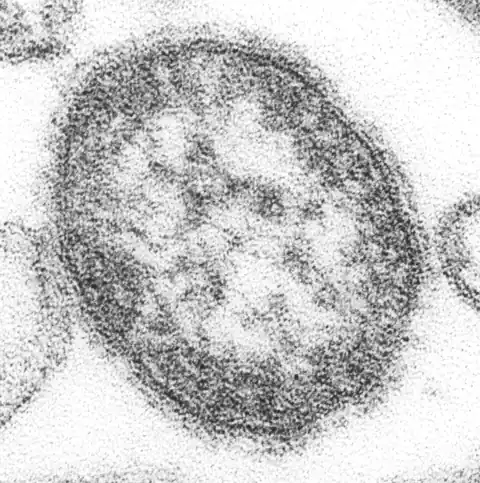 | One measles virus particle under an electron microscope.Micrograph: Cynthia S. Goldsmith and William Bellini, CDC, public domain (US government work), via Wikimedia Commons. |
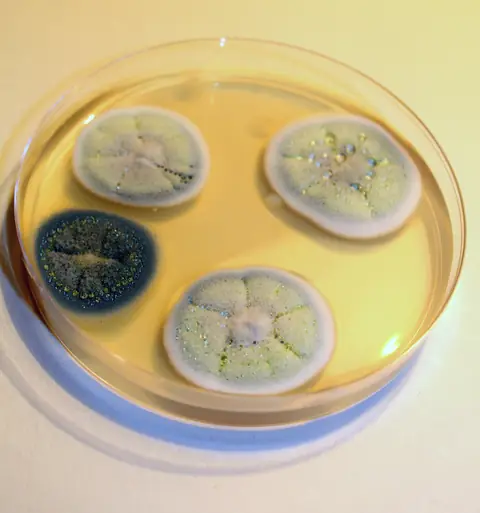 | Penicillium moulds growing on a dish.Photo: Convallaria majalis, CC BY-SA 4.0, via Wikimedia Commons. |
| Video | What causes antibiotic resistance? - Kevin WuFrom the channel TED-Ed. Watch the full video. |
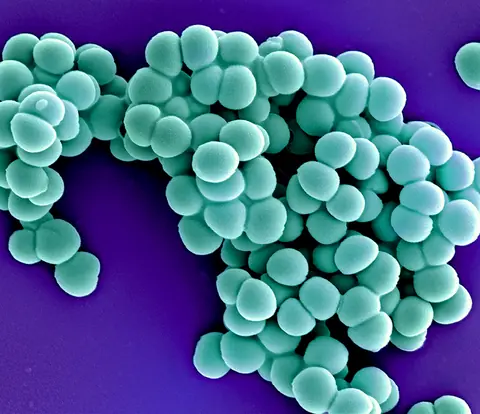 | Drug-resistant Staphylococcus aureus bacteria (MRSA) under a scanning electron microscope, coloured to show them.Micrograph: "Methicillin-Resistant Staphylococcus Aureus (MRSA) Bacteria colorized scanning electron micrograph - 22" by NIAID, CC BY 2.0, via Wikimedia Commons. |
Part 4: Energy, breakthroughs and your question
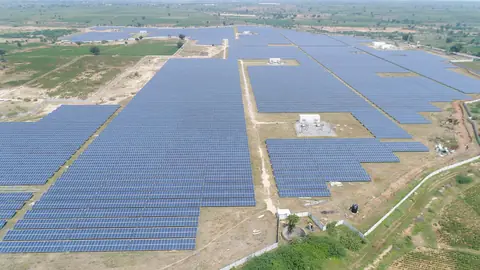 | A solar power plant in Telangana, seen from the air.Photo: Thomas Lloyd Group, CC BY-SA 4.0, via Wikimedia Commons. |
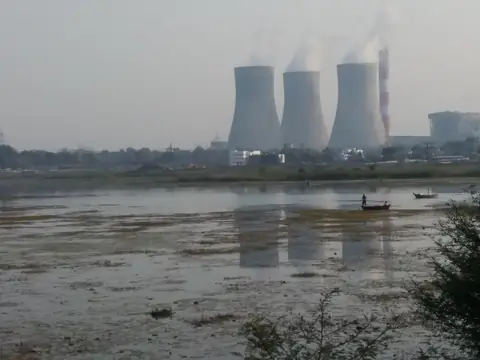 | A thermal power station near Nagpur, Maharashtra.Photo: Yann Forget, CC BY-SA 4.0, via Wikimedia Commons. |
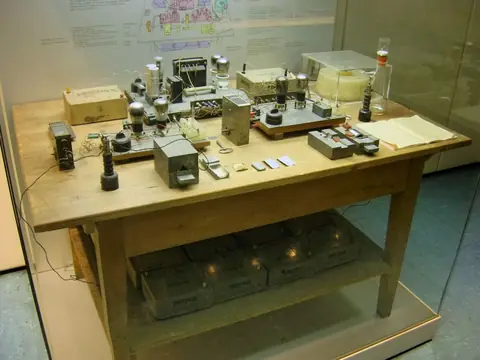 | The apparatus with which Otto Hahn and Fritz Strassmann found fission in 1938, now in the Deutsches Museum, Munich.Photo: "Nuclear Fission Experimental Apparatus 1938 - Deutsches Museum - Munich" by J Brew, CC BY-SA 2.0, via Wikimedia Commons. |
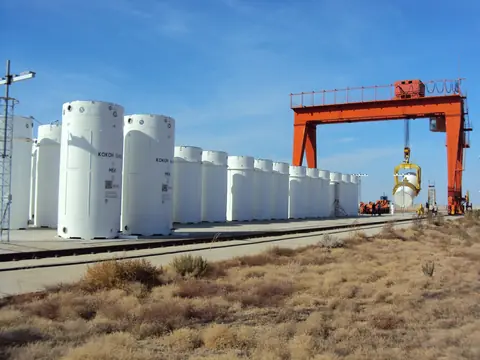 | Used nuclear fuel stored in dry casks at a site in the United States, photographed by the country's nuclear regulator.Photo: "Massive containers hold spent nuclear fuel (15420175144)" by Nuclear Regulatory Commission from US, CC BY 2.0, via Wikimedia Commons. |
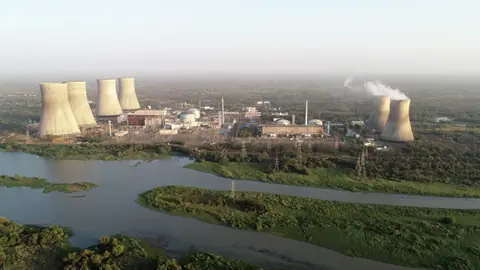 | The Kakrapar Atomic Power Station, one of India's nuclear power stations.Photo: DAE (GODL-India), GODL-India, via Wikimedia Commons. |
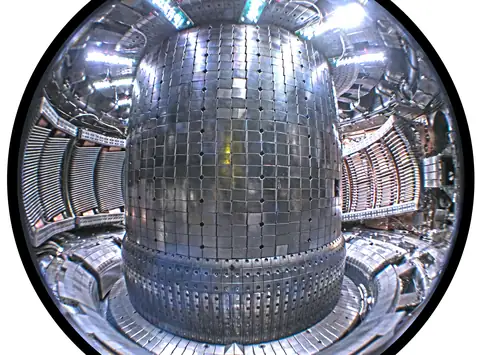 | Inside the Alcator C-Mod tokamak at the MIT Plasma Science and Fusion Center: the ring-shaped chamber in which magnets hold the plasma away from the walls.Photo: "Alcator C-Mod Tokamak Interior" by Mike Garrett, CC BY 3.0, via Wikimedia Commons. |
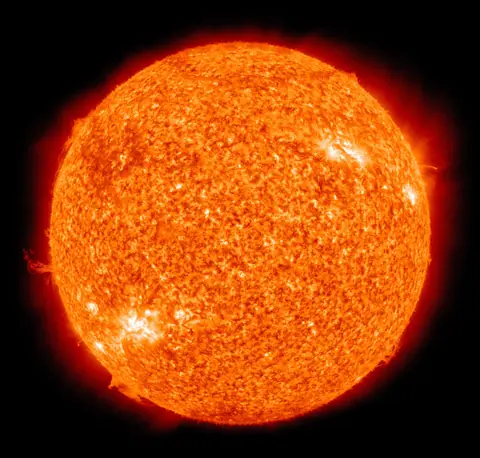 | The Sun in false colour, from NASA's Solar Dynamics Observatory.Image: NASA/SDO (AIA), public domain (US government work, NASA), via Wikimedia Commons. |
| Video | How do solar panels work? - Richard KompFrom the channel TED-Ed. Watch the full video. |
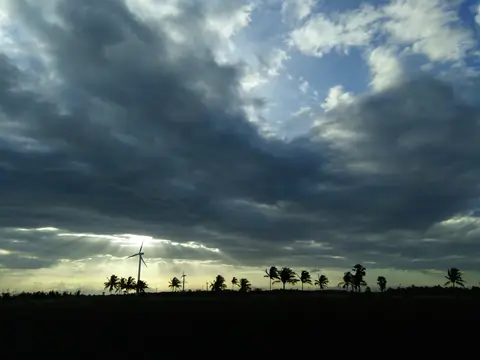 | Wind turbines between Palladam and Pollachi in Tamil Nadu, under sun and cloud.Photo: "Sun and wind power turbines TN ph 03" by T. R. Shankar Raman, CC BY-SA 3.0, via Wikimedia Commons. |
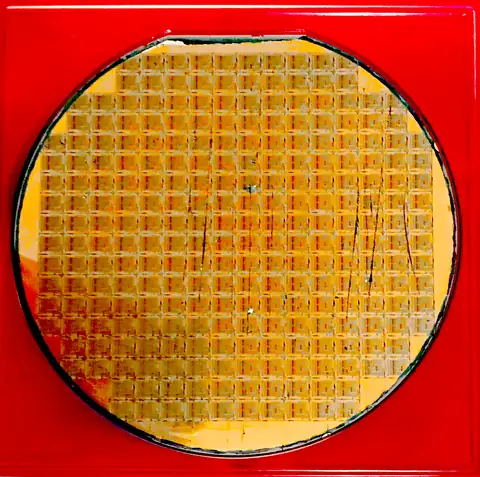 | A silicon wafer partway through the making of a couple hundred computer chips.Photo: "486 Wafer" by Bill Smith, CC BY 2.0, via Wikimedia Commons. |
| Video | How false news can spread - Noah TavlinFrom the channel TED-Ed. Watch the full video. |
The free preview
| India from the International Space Station, past the station's robotic arm.Photo: Earth Science and Remote Sensing Unit, Lyndon B. Johnson Space Center, public domain (US government work, NASA), via Wikimedia Commons. |
| Generators in the hall of a hydroelectric power station in the United States.Photo: Jet Lowe, public domain (US government work, National Park Service), via Wikimedia Commons. Cropped by One Young India. |
| Animated PendulumAnimation: And1mu, CC BY-SA 4.0, via Wikimedia Commons. |
| A pendulum carrying a small light, photographed with the shutter left open: each swing leaves a loop of light.Photo: Subhrajyoti07, CC BY-SA 4.0, via Wikimedia Commons. |
Pictures are public domain or under a Creative Commons licence that allows reuse with credit; each one links to its licence and its source. Charts are drawn by One Young India from the data named under them. Videos play from their own channels.
Something wrong or missing?
Write to info@oneyoungindia.com.