
Sync with ScienceFree preview
Science, from the lab to the launchpad.
How can a gas that is a tiny part of the air warm a whole planet?How does a rocket push against nothing?And how does a vaccine teach your body without making you ill?This course brings you up to date with the science and technology shaping your decade.
- Explain how science knows what it knows, and how sure it is.
- Read the climate: the greenhouse effect, the oceans, tipping points and the choices ahead.
- Follow the new space race, and the physics that makes it possible.
- Explain genes, gene editing, immunity and vaccines, and weigh the ethics fairly.
- Compare the ways to power the world, and read a breakthrough headline with care.
 With Swagat YadavFounder and CEO, One Young India, and author of Learnacy
This course is for learning. It is not medical advice: health and vaccines are taught from official guidance and reviewed science. It names no company to praise or blame, and takes no side in party politics.
Science you already live by
You trust science many times before breakfast.This course shows you how it knows, and how sure it is.
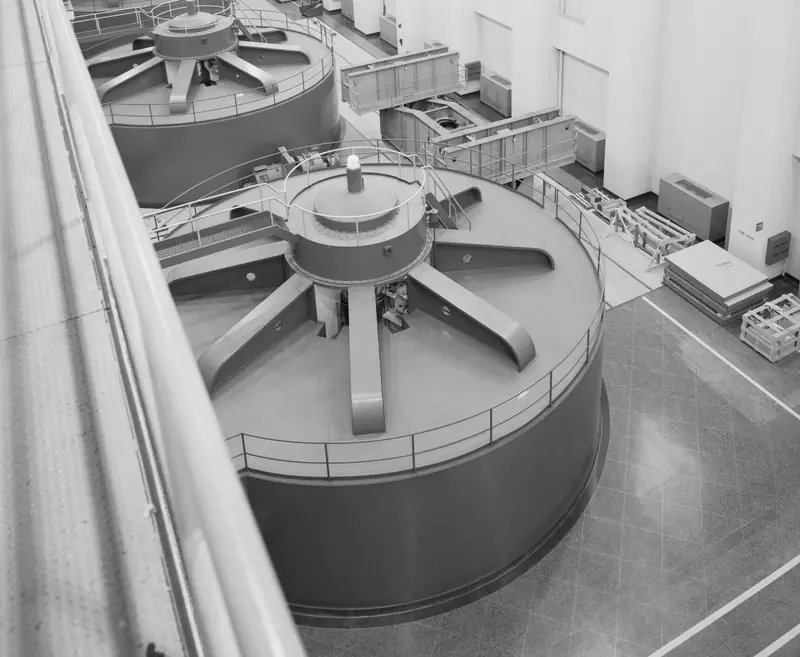
Generators in the hall of a hydroelectric power station in the United States. Inside each one, magnets turn past coils of wire to make electricity.Photo: Jet Lowe, public domain (US government work, National Park Service), via Wikimedia Commons. Cropped by One Young India.
- You trust science many times a day: in your switch, your forecast, your water and your vaccines.
- This course asks how science knows what it knows, and how sure it is.
- Real figures carry their sources, made-up examples say so, and nothing here is medical advice.
What you trusted without seeing
How much of your day runs on science? Some of it, at school? Then think about this morning.
Did you switch on a light? Somewhere far away, a magnet turned inside a coil of wire to make that electricity. Did you check the weather? A satellite watched the clouds over your city, and a computer turned what it saw into a forecast.
Did you drink water from a tap or a bottle? Someone tested it for germs you cannot see. Were you ever given a vaccine? Then you trusted a trial you never saw, run on people you never met.
Science is in your switch, your sky, your glass of water and your arm, and in the laboratory too. You use it all day. This course asks a harder question: how does science know what it knows, and how sure is it?
What does your gut say?
Three quick questions before we begin. There is no score, and nothing leaves this page. At the end of the course you will see your first answers next to what you know by then.
How this course works
Four parts and 27 chapters, then a wrap-up, about 12 hours, at your own pace. Each chapter has:
- a story, something to try and a question to argue about,
- an "In short" box at the top, so you can see the main points first,
- a link into World 101, Learnacy's map of what the world knows, and often a Learnacy Lab to play with,
- a note for your notebook, and
- a five-question check. Pass it with 4 right, as often as you need.
Pass every chapter check and the final round, and you get a certificate of completion with a link anyone can use to verify it.
Three promises. Every figure from the real world carries its source, and every made-up example says it is made up. Health and vaccines are taught from official guidance and reviewed science; nothing here is medical advice, and nothing here tells you what is wrong with you. And on questions where people disagree, like editing genes or building power stations, you will hear the best case on each side before you decide.
One rule for the whole course: questions are more important than answers. In science, "how do we know?" is the most useful question there is. And "I do not know" is not a failure. It is where every discovery starts.
Explore in World 101
Before chapter 1, open The Scientific Method in World 101 and look around for five minutes. Note one question that catches you: it may become the question you write on at the end of the course.
Science is not only in the laboratory; it is in the decisions I make every day.
One thing I use every day whose science I would like to understand.
How do we know?
Every family has a remedy that "always works".Science is a way of finding out whether it does, by trying hard to prove yourself wrong.
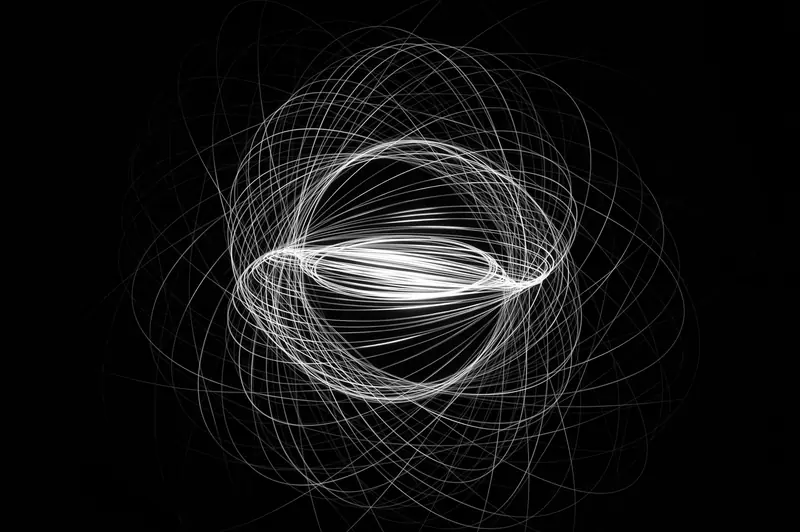
A pendulum carrying a small light, photographed with the shutter left open: each swing leaves a loop of light.Photo: Subhrajyoti07, CC BY-SA 4.0, via Wikimedia Commons.
- Science is a way of finding out: observe, guess, predict, test, revise.
- A hypothesis is a guess that a test could show wrong; a claim that no test could ever show wrong is not scientific.
- A test that could fail, and does not, is worth more than ten that never could.
- We remember hits and forget misses, so a fair test counts both.
The remedy that always works
Every family has one. Here is a made-up one: your grandmother says a glass of warm turmeric milk at night ends a cold in three days. She has seen it work many times. Your cousin swears by ginger tea instead. Who is right?
Start with the cold itself. Does a cold usually get better on its own? Yes, in a few days. So when you drank the milk and got better, was it the milk? Maybe. Or maybe you would have got better anyway.
Did anyone count the times the milk did not work? Probably not. We remember the hits and forget the misses.
Your grandmother's evidence cannot tell the milk apart from time. She could still be right; this is not advice about colds. But to know, you need a different kind of evidence. What kind? That question runs through this whole course.
Your grandmother has seen the milk work many times. Tap each card: which list is her evidence drawn from?
How science finds out
Science is not a pile of facts. It is a way of finding out, and of checking what we think we know. Its steps are simple to say:
- Observe: notice something. Colds seem to end after turmeric milk.
- Guess: a hypothesis is a guess that could turn out to be wrong. "Turmeric milk makes colds end sooner."
- Predict: if the guess is right, what should we see? People who drink it should recover sooner than similar people who do not.
- Test: compare, fairly. Two groups, alike in every way except the milk.
- Revise: if the prediction fails, change the guess. If it holds, test it again, in other ways.
The claim no test can touch
The opposite of a scientific claim is not a false one. A false claim can still be scientific, because a test can show it is false. The opposite is a claim that no test could ever show wrong.
Take the milk again: "The milk works, but only for people who truly believe, and it never shows up in any test." No evidence could ever count against that, so it is not a scientific claim at all.
The philosopher Karl Popper argued that a claim counts as scientific only if some possible observation could show it to be false. This idea is called falsifiability.
Find the hidden rule
A made-up rule sorts sets of three numbers. The set 2, 4, 8 fits it. Test any sets you like, then choose what you think the rule is.
A made-up rule. The set 2, 4, 8 fits it. Type any three whole numbers and test them, as many times as you like.
When you think you know the rule, choose it:
Why we test the easy way
Suppose you see 2, 4, 8 and guess "each number doubles". Then you test 3, 6, 12. It fits. You test 5, 10, 20. It fits. You feel sure. But every one of those tests was chosen to fit your guess, so none of them could have failed.
The tests that teach you the most are the ones you expect to fail. Try 1, 2, 3. Does it fit? If it does, "doubling" was never the rule. One test that could fail, and did not, is worth more than ten tests that never could.
We test the easy way because it feels good to be right, and scientists feel that too. Science has habits to protect us from ourselves: other people repeat the test, and good scientists go looking for the result that would prove them wrong.
This puzzle is our own version of a well-known experiment on how people test their own ideas. In 1960 the psychologist Peter Wason gave people the set 2, 4, 6 and asked them to find the hidden rule by testing sets of their own. Most kept testing sets that fitted their first guess, not sets that could prove them wrong. Only 6 of the 29 people named the real rule, any three numbers that go up, without first naming a wrong one.
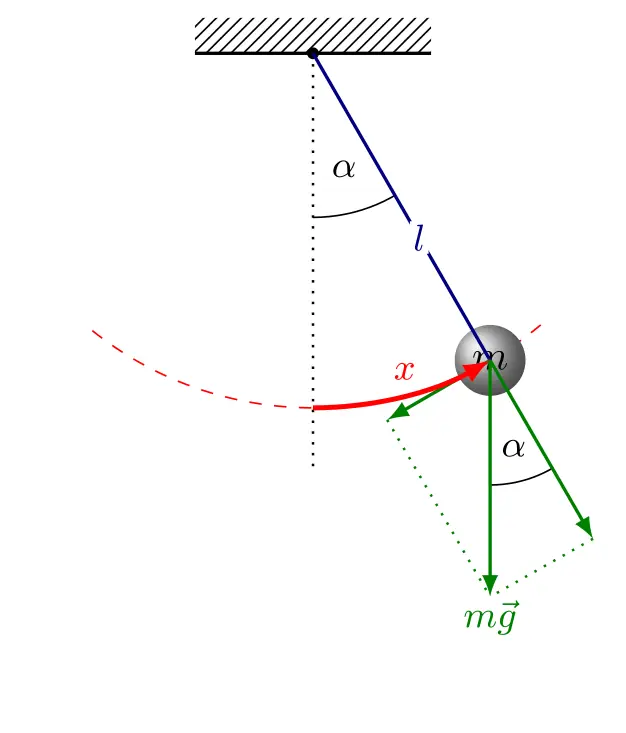
A test you can do: the pendulum
Does a heavier weight on a string swing more slowly? You do not need to trust anyone on this. You can test it.
- Tie a key to a piece of string about as long as your arm.
- Pull it a little to one side and let go. Count ten swings while a timer runs.
- Tie on a second key, with the same string and the same pull, and count ten swings again.
What happened? If the time is about the same, the guess has failed a fair test. Try a shorter string next. What changes? Science at its smallest is one guess, one change at a time, and a result you can check with your own hands.
Before you read the two sides. Should one surprising result change what we believe?
Your answer now
Anonymous: we count answers, nothing else.
Should one surprising result change what we believe?
Now and then a single study reports something astonishing. Should we change our minds at once?
Many big ideas in science began as one surprising result that went against what everyone believed. If we always wait for many studies, we may ignore something important for years.
Single results are often wrong: a small sample, a mistake, a fluke. If every surprising study changed what we believe, we would change our minds every week and end up trusting nothing.
A hard case. A single study finds that a common food may be harmful to young children. Do you warn parents now, or wait for it to be repeated?
Ask one more thing before you decide: has anyone else, working separately, found the same result? Write down what kind of repeat would convince you.
After the debate. Should one surprising result change what we believe?
Your answer after the debate
Anonymous: we count answers, nothing else.
Explore in World 101
The scientific method is how every field in this course knows what it knows. Open The Scientific Method in World 101, pick one subject it links to, and ask: what would a fair test look like there?
Find the number
Do the pendulum test. Time ten swings with a short string, then ten with a string twice as long. Write both times in seconds, and what you changed. Did the longer string take longer? About how much longer?
The 2D labs need a free Learnacy account. Log in or sign up.
Check your understanding
Five questions. Pass with 4 right; try as often as you like. Each answer comes with its reason.
I learn the most from the test that could prove me wrong.
One belief of mine I would like to test fairly, and how I would do it.
That was chapter 1 of 27
Next
- How sure is sure
- The greenhouse effect
- Oceans and tipping points
- Orbits and rockets
- India's road to the Moon
- DNA and gene editing
- Immunity and vaccines
- Fission, fusion and renewables
- How to read a breakthrough
Four parts, about 12 hours, then the final round and your completion certificate.
Already a member? Continue in part 1. The check you passed here carries over when you are logged in. Course home