
One Young India
Math MagiciansThe self-⁠paced course
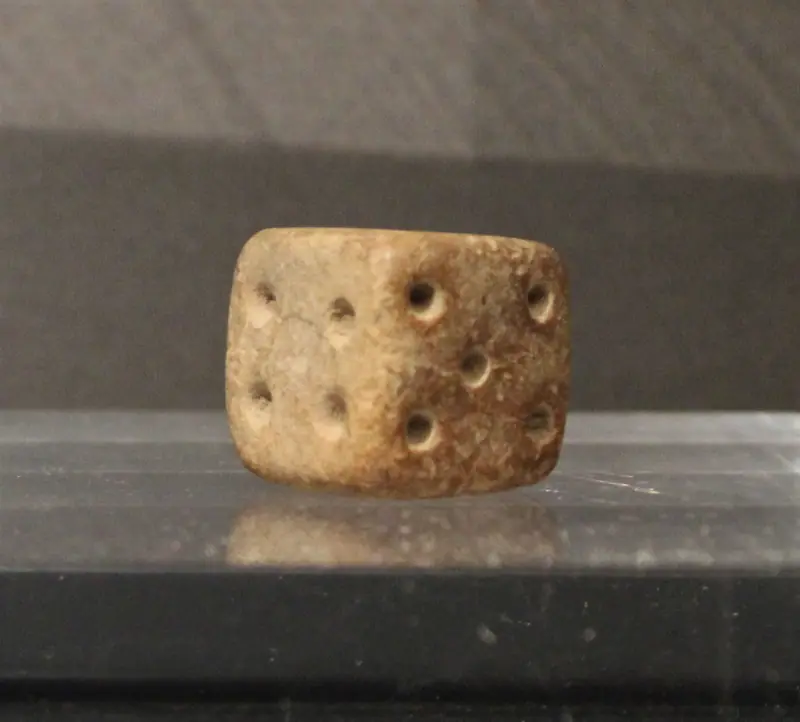
A small cube-shaped die of fired clay, its numbers marked by round pits, on a dark museum shelf.
A die from Mohenjo-⁠daro, now in the Ashmolean Museum. Unusually for an Indus die, its opposite faces add up to seven, as on dice today.Photo: Zunkir, CC BY-⁠SA 4.0, via Wikimedia Commons.

Math MagiciansThe self-⁠paced course

Meet the mathematics under everyday decisions,and learn to ask: how would I know?

26 chapters in four parts, about 12 hours, at your own pace.

At the end you take a number, chart or claim that reached your family, and write up what it says and what it hides.Every claim and figure was checked against its source.

Start freeOpen the courseThe welcome and chapter 1 are free. Learnacy Essential opens every chapter.
Included in Learnacy Essential₹1,499 for the year, including GST. One payment, no automatic renewal.

Not sure yet? Start free. Already a member? Log in.

1LearnEach chapter starts with a question from ordinary life and the story behind it, then hands you a simulator, a sorter or a puzzle to work through.
2PractiseEvery chapter ends with five questions.Pass with 4 right, as often as you need, and each answer comes with its reason.
3FinishPass every chapter check and the final round for a certificate of completion with a link anyone can use to verify it.

What the course covers

Part 1Chance: the mathematics of probabilityChances, counting, coincidences, the long run, expected value, tests that say yes, and risk

7 chaptersAbout 3 hoursChapter 1 free

Not started

See the chapters in part 1
  1. Before you beginWelcome: the maths you already useDo you use mathematics outside the classroom?Free10 min
  2. 1What are the chances?Why does a 7 come up more often than a 12?Free25 min
  3. 2Counting the waysHow many outfits can you make from a few clothes?25 min
  4. 3Coincidences are not that rareIn a class of thirty, would two people share a birthday?25 min
  5. 4The long run, and the gambler's mistakeAfter five heads in a row, is tails due?25 min
  6. 5Expected value: is it worth it?Why does the stall at the fair always make money?25 min
  7. 6When a test says yesIf a test that catches 99 of 100 cases says yes, are you probably ill?25 min
  8. 7Risk in real lifeIf something doubles your risk, should you worry?25 min
Open part 1

Part 2Statistics, and how to spot a lieAverages, spread, samples, correlation, fair tests, charts that shout, and percentages

7 chaptersAbout 3 hours

Not started

See the chapters in part 2
  1. 8Mean, median and the tea stallCan everyone at a tea stall get richer without earning a rupee more?25 min
  2. 9Spread: what an average hidesTwo classes have the same average mark. Are they the same?25 min
  3. 10Asking a few to learn about manyCan asking a thousand people tell you what a billion think?25 min
  4. 11Correlation is not causationDoes eating ice cream make people drown?25 min
  5. 12Fair testsHow would you show that something works?25 min
  6. 13Charts that shoutCan a chart lie without a single false number?25 min
  7. 14Per cent, points and paradoxesIf a rate goes from 4% to 6%, has it risen by 2% or by 50%?25 min
Open part 2

Part 3Growth and strategyDoubling, compound growth, how things spread, games, the prisoner's dilemma, cooperation and voting

7 chaptersAbout 3 hours

Not started

See the chapters in part 3
  1. 15Doubling: the grains on the chessboardWhat happens if you keep doubling?25 min
  2. 16Compound growth and the rule of 70How long does it take something growing at 7% a year to double?25 min
  3. 17How things spreadWhy do illnesses, rumours and trends spread slowly, then suddenly?25 min
  4. 18Thinking ahead: games and strategyHow do you choose well when the result depends on someone else's choice?25 min
  5. 19The prisoner's dilemmaCan two sensible people both choose well and both end up worse off?25 min
  6. 20Playing again: trust and the commonsWhy do people cooperate, if betraying pays?25 min
  7. 21The maths that decides who winsCan the same votes choose three different winners?25 min
Open part 3

Part 4Secrets, data and your questionCiphers, primes, passwords, how computers store everything, when data decides, and the question you will write on

5 chaptersAbout 2½ hours

Not started

See the chapters in part 4
  1. 22Secret messages, from Caesar to todayHow do you send a message only one person can read?25 min
  2. 23The primes that guard the internetHow can you send a secret to a stranger you have never met?25 min
  3. 24Strong passwords, by the numbersWhat makes a password strong: length, symbols or something else?25 min
  4. 25Everything is a numberHow does a computer store a photo, a song or a word?25 min
  5. 26When data decidesCan a computer be unfair if it only follows the data?25 min
  6. The wrap-upYour question, and what nextSo, coming back: do you use mathematics outside the classroom?30 min
Open part 4
Your certificate

A certificate of completion, issued when you pass every chapter check and the final round while logged in. It names the course and its length, about 12 hours. It is not a grade, an examination result or an accreditation.

Math Magicians is a course for learning. Every game of chance in it uses made-up points, never money. It names no company or app to praise or blame, and takes no side in party politics.