
Math MagiciansCredits
Picture, video and data credits
Every picture, video and dataset in this course:who made it, where it comes from and the licence that lets us show it.Thank you to everyone who shares their work freely.
The course home
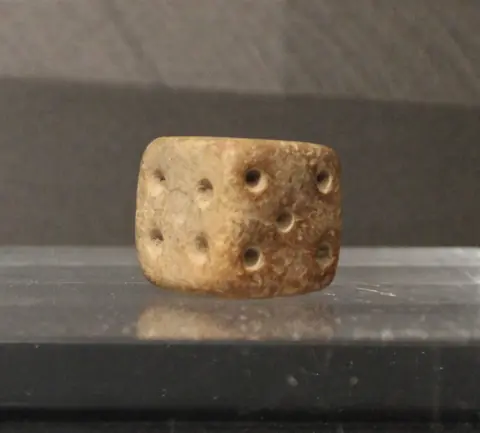 | A die from Mohenjo-daro, now in the Ashmolean Museum.Photo: Zunkir, CC BY-SA 4.0, via Wikimedia Commons. |
Part 1: Chance: the mathematics of probability
 | Monsoon clouds low over Anushaktinagar, in Mumbai.Photo: "Down come the clouds @ Anushaktinagar" by S.J.Saravanan, CC BY-SA 3.0, via Wikimedia Commons. |
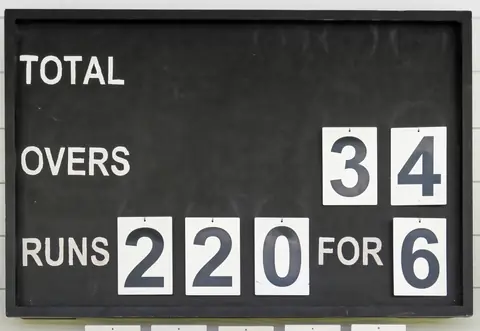 | A cricket scoreboard with number cards hung by hand, at a club in Essex, England.Photo: Acabashi, CC BY-SA 4.0, via Wikimedia Commons. Cropped by One Young India. The crop is shared under the same licence. |
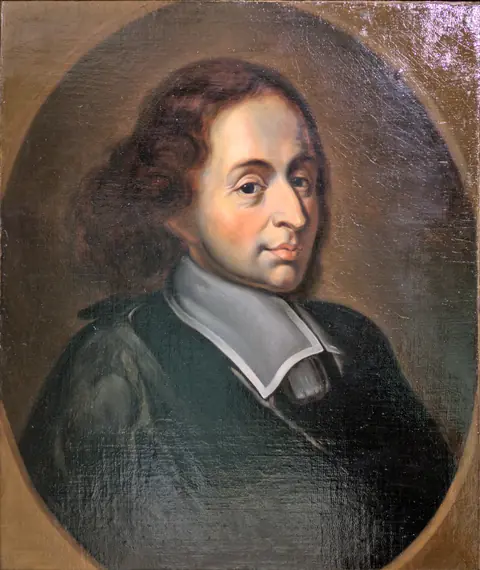 | Blaise Pascal, who wrote from Paris, in a portrait by Louis Devedeux.Photo: Romainbehar, CC0, via Wikimedia Commons. |
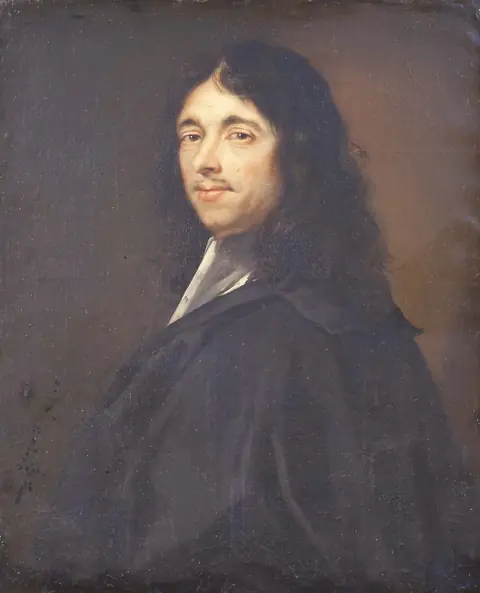 | Pierre de Fermat, who wrote from Toulouse, painted by Rolland Lefebvre.Painting: Rolland Lefebvre, public domain (author died more than 70 years ago), via Wikimedia Commons. |
| Video | The last banana: A thought experiment in probability - Leonardo BarichelloFrom the channel TED-Ed. Watch the full video. |
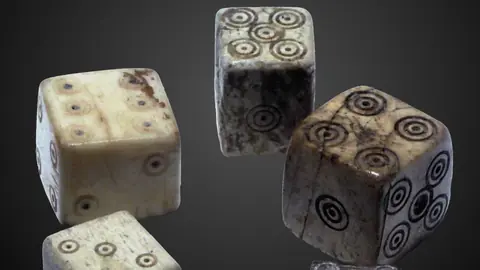 | Roman-era dice carved from bone, in the Musée Saint-Raymond, Toulouse's museum of antiquities.Photo: "Set of dice-Saint Raymond-IMG 0107-gradient" by Rama, CC BY-SA 3.0 fr, via Wikimedia Commons. Cropped by One Young India. The crop is shared under the same licence. |
| Video | How many ways can you arrange a deck of cards? - Yannay KhaikinFrom the channel TED-Ed. Watch the full video. |
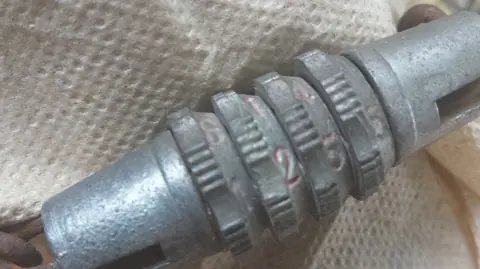 | A bicycle lock with four code wheels and six numbers on each.Photo: Arlo Barnes, CC0, via Wikimedia Commons. Cropped by One Young India. |
| Video | Check your intuition: The birthday problem - David KnuffkeFrom the channel TED-Ed. Watch the full video. |
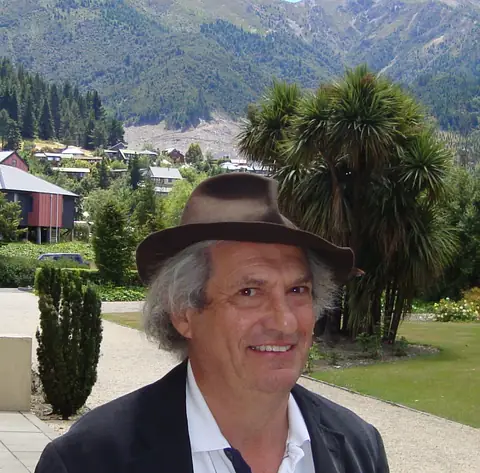 | Persi Diaconis, a statistician at Stanford University, in 2010.Photo: "Persi Diaconis 2010" by Søren Fuglede Jørgensen, CC BY-SA 3.0, via Wikimedia Commons. Cropped by One Young India. The crop is shared under the same licence. |
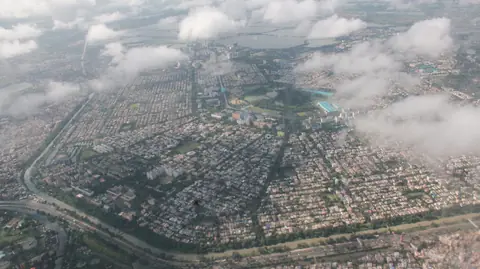 | Salt Lake City in Kolkata, seen from an aircraft.Photo: Sumita Roy Dutta, CC BY-SA 4.0, via Wikimedia Commons. Cropped by One Young India. The crop is shared under the same licence. |
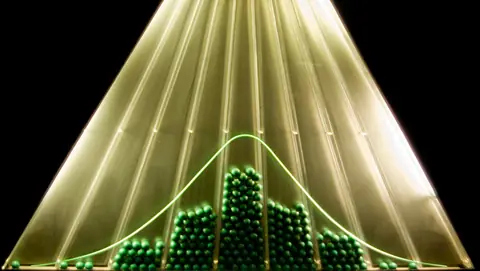 | A Galton board: balls drop through rows of pins into slots.Photo: "Planche de Galton" by Antoine Taveneaux, CC BY-SA 3.0, via Wikimedia Commons. Cropped by One Young India. The crop is shared under the same licence. |
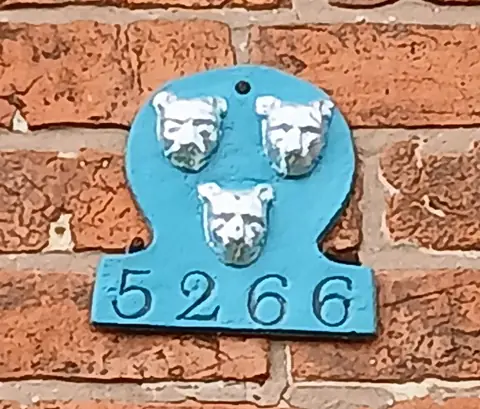 | A fire insurance plaque, number 5266, on the wall of a house.Photo: "Fire Insurance plaque - The Cottage" by Richard Law, CC BY-SA 2.0, via Wikimedia Commons. Cropped by One Young India. The crop is shared under the same licence. |
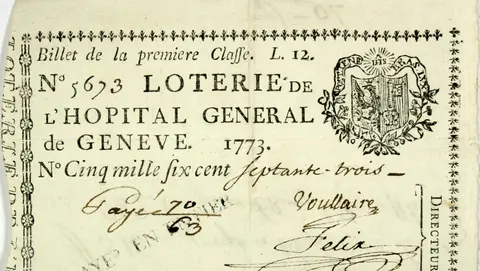 | A ticket from a lottery held in Geneva in 1773 for the city's General Hospital.Scan: Lottery of the General Hospital of Geneva, public domain (author died more than 70 years ago), via Wikimedia Commons. Cropped by One Young India. |
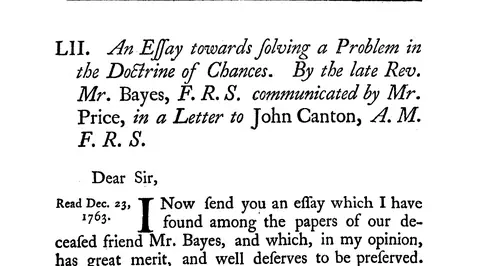 | The first page of Thomas Bayes's essay, as Richard Price sent it to the Royal Society, where it was read in December 1763.Scan: Thomas Bayes and Richard Price, public domain (author died in 1791), via Internet Archive. Cropped by One Young India. |
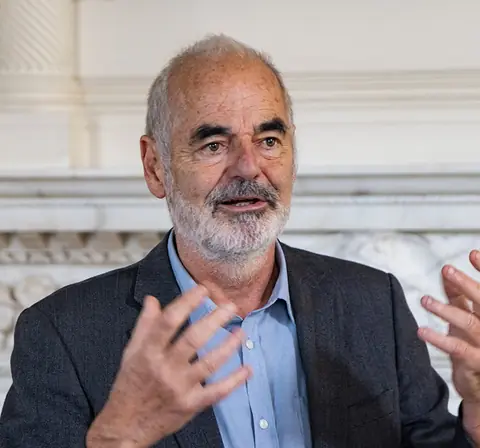 | David Spiegelhalter, the statistician who advises stating a risk as how many out of 100 people like you would be affected.Photo: Paul Clarke, CC BY-SA 4.0, via Wikimedia Commons. Cropped by One Young India. The crop is shared under the same licence. |
| Data | People killed in road accidents in India, year by yearData: Ministry of Road Transport and Highways, Road Accidents in India 2024, Table 1.6, figures from a Government of India report, credited. Drawn by One Young India. |
| Data | People killed in road accidents in 2024, by state and union territoryData: Ministry of Road Transport and Highways, Road Accidents in India 2024, Table 5.6, figures from a Government of India report, credited. Drawn by One Young India. |
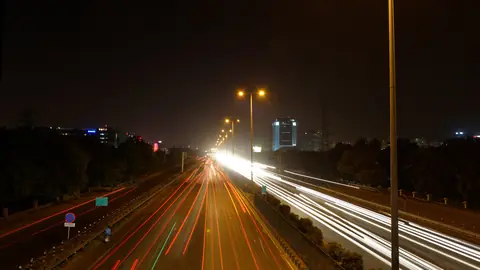 | Traffic on NH48 in Gurgaon at night, turned into streaks of light by a long exposure.Photo: Slyronit, CC BY-SA 4.0, via Wikimedia Commons. Cropped by One Young India. The crop is shared under the same licence. |
Part 2: Statistics, and how to spot a lie
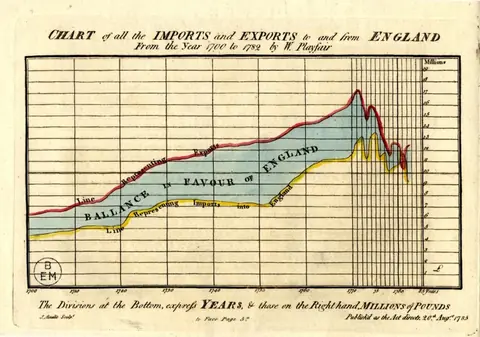 | William Playfair's chart of England's imports and exports, from his Commercial and Political Atlas of 1786.Scan: William Playfair, public domain (author died more than 70 years ago), via Wikimedia Commons. |
| Data | India: the mean and the median, in dollars a dayData: World Bank Poverty and Inequality Platform (2026), processed by Our World in Data, CC BY 4.0. Drawn by One Young India. |
| Data | India's average temperature, month by month, in 2025Data: Copernicus Climate Change Service, ERA5 monthly averages, processed by Our World in Data, Contains modified Copernicus Climate Change Service information (2026). Drawn by One Young India. |
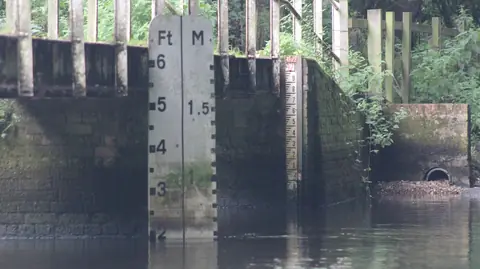 | Depth gauges at a ford on the Blackwater river, between Hampshire and Berkshire in England.Photo: Martinvl, CC BY-SA 4.0, via Wikimedia Commons. Cropped by One Young India. The crop is shared under the same licence. |
| Video | Pros and cons of public opinion polls - Jason Robert JaffeFrom the channel TED-Ed. Watch the full video. |
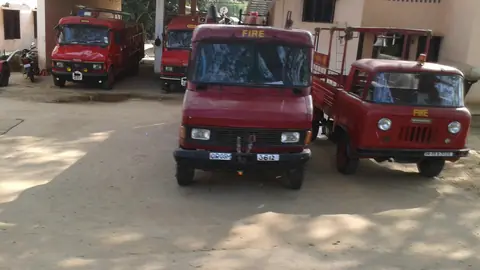 | Fire engines at the fire station in Jajpur, Odisha.Photo: "Andola, Odisha 755007, India" by Deepak das, CC BY 3.0, via Wikimedia Commons. Cropped by One Young India. |
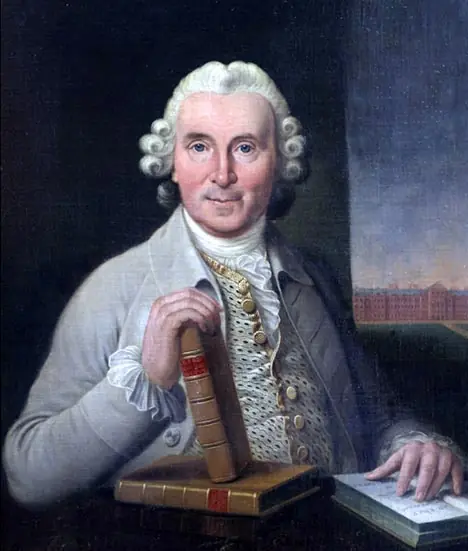 | James Lind, painted by George Chalmers in 1783.Painting: George Chalmers, public domain (author died more than 70 years ago), via Wikimedia Commons. |
| Video | Esther Duflo: Social experiments to fight povertyFrom the channel TED. Watch the full video. |
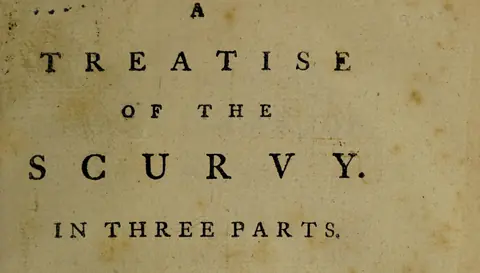 | The title page of James Lind's A Treatise of the Scurvy, printed in Edinburgh in 1753.Scan: James Lind, public domain (author died in 1794), via Internet Archive. Cropped by One Young India. |
| Video | How to spot a misleading graph - Lea GaslowitzFrom the channel TED-Ed. Watch the full video. |
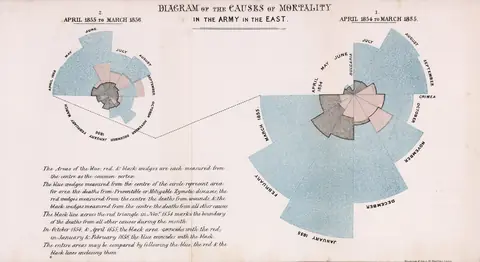 | Florence Nightingale's 1858 diagram of the causes of death in the army in the East, drawn to make a case.Diagram: Florence Nightingale, public domain (author died more than 70 years ago), via Wikimedia Commons. |
| Video | How statistics can be misleading - Mark LiddellFrom the channel TED-Ed. Watch the full video. |
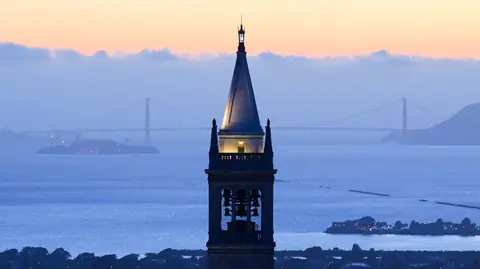 | Sather Tower on the campus of the University of California, Berkeley, whose graduate admissions figures for autumn 1973 are a famous real case of Simpson's paradox.Photo: "Bay Blue" by Joe Parks from Berkeley, CA, CC BY 2.0, via Wikimedia Commons. Cropped by One Young India. |
Part 3: Growth and strategy
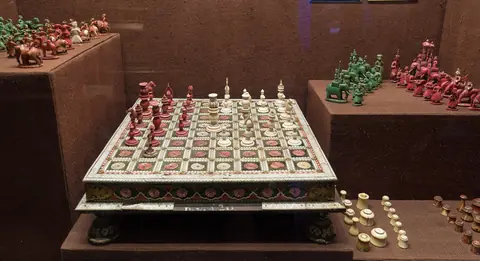 | An ivory chess set made in Maharashtra in the 18th century, now in the Raja Dinkar Kelkar Museum, Pune.Photo: Alexkom000, CC BY 4.0, via Wikimedia Commons. Cropped by One Young India. |
| Data | Transistors on one microprocessor, 1971 to 2021Data: Karl Rupp, Microprocessor Trend Data (2022), processed by Our World in Data, CC BY 4.0. Drawn by One Young India. |
| Video | Exponential growth: How folding paper can get you to the MoonFrom the channel TED-Ed. Watch the full video. |
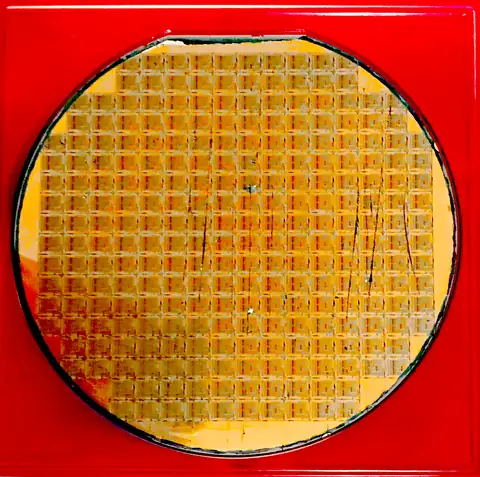 | A silicon wafer of microprocessor chips, a couple hundred of them on one disc.Photo: "486 Wafer" by Bill Smith, CC BY 2.0, via Wikimedia Commons. |
| Data | India's population, 1950 to 2023Data: UN World Population Prospects (2024), with HYDE and Gapminder, processed by Our World in Data, CC BY 4.0. Drawn by One Young India. |
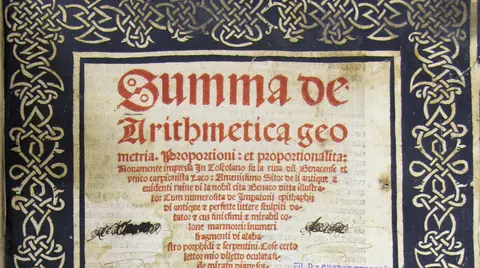 | The title page of Luca Pacioli's Summa de arithmetica, in its 1523 edition.Scan: "Titelbladet till "Summa de arithmetica ..."" by Stockholms Universitetsbibliotek from Stockholm, Sweden, CC BY 2.0, via Wikimedia Commons. Cropped by One Young India. |
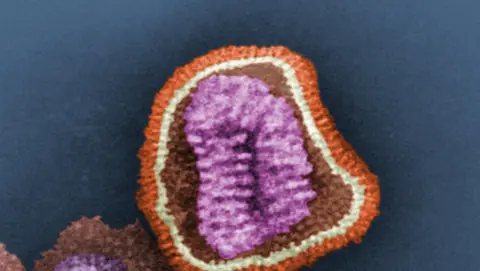 | An influenza virus seen through an electron microscope, coloured to show its parts.Photo: Cynthia Goldsmith, CDC, public domain (US government work), via Wikimedia Commons. Cropped by One Young India. |
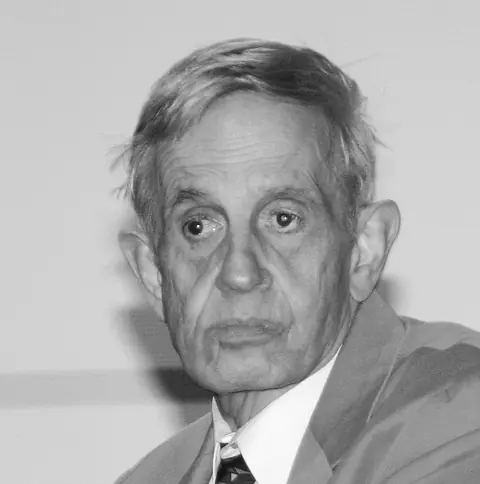 | John Nash in 2006.Photo: "John f nash 20061102 3" by Elke Wetzig (Elya), CC BY-SA 3.0, via Wikimedia Commons. Cropped by One Young India. The crop is shared under the same licence. |
| Video | Game theory challenge: Can you predict human behavior? - Lucas HustedFrom the channel TED-Ed. Watch the full video. |
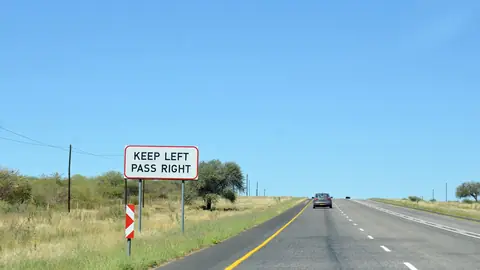 | A Keep left sign on the B2 road in Namibia, which drives on the left, as India does.Photo: Olga Ernst, CC BY-SA 4.0, via Wikimedia Commons. Cropped by One Young India. The crop is shared under the same licence. |
| Video | How to outsmart the Prisoner’s Dilemma - Lucas HustedFrom the channel TED-Ed. Watch the full video. |
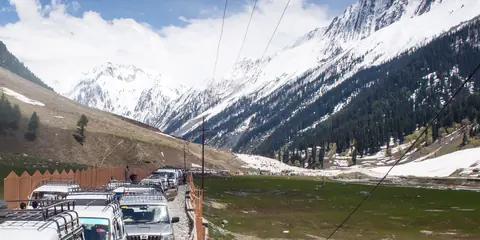 | Jeeps queued nose to tail on a mountain road at Saribal.Photo: "Traffic Jam at Saribal" by Mike Prince from Bangalore, India, CC BY 2.0, via Wikimedia Commons. Cropped by One Young India. |
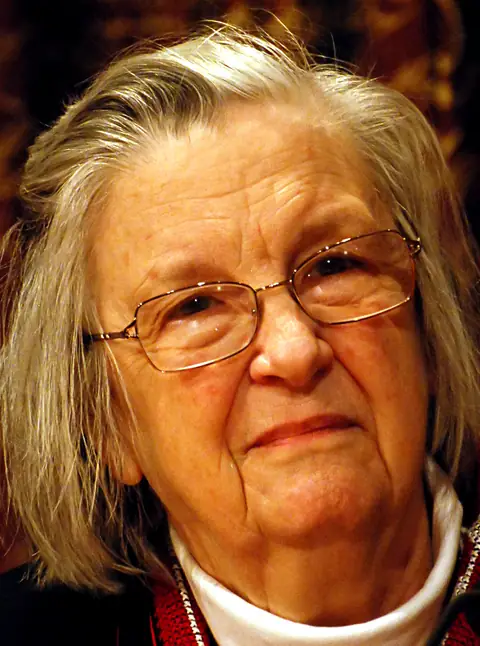 | Elinor Ostrom in 2009, the year she shared the economics prize given in memory of Alfred Nobel.Photo: "Elinor Ostrom close-up (cropped)" by © Holger Motzkau 2010, Wikipedia/Wikimedia Commons (cc-by-sa-3.0), CC BY-SA 3.0, via Wikimedia Commons. Cropped by One Young India. The crop is shared under the same licence. |
| Video | What is the tragedy of the commons? - Nicholas AmendolareFrom the channel TED-Ed. Watch the full video. |
 | A fishing boat on Chilika Lake at Satpada, among the stakes of fish traps.Photo: Phadke09, CC BY-SA 4.0, via Wikimedia Commons. |
| Video | Which voting system is the best? - Alex GendlerFrom the channel TED-Ed. Watch the full video. |
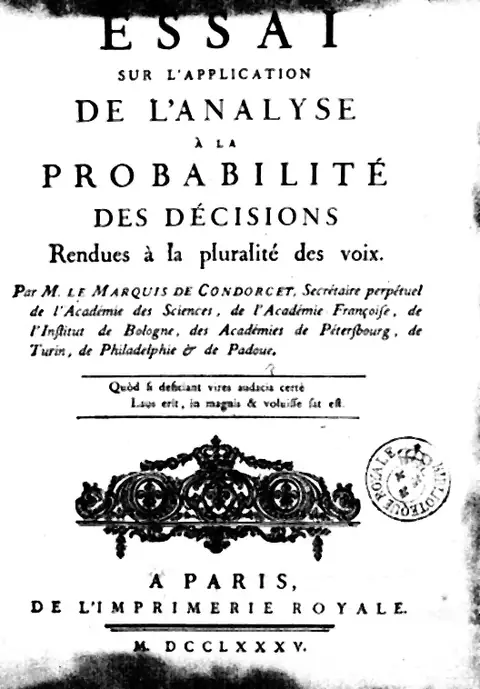 | The title page of Condorcet's essay of 1785, where he showed that majority votes can go round in a circle.Scan: Nicolas de Condorcet, public domain (author died more than 70 years ago), via Wikimedia Commons. |
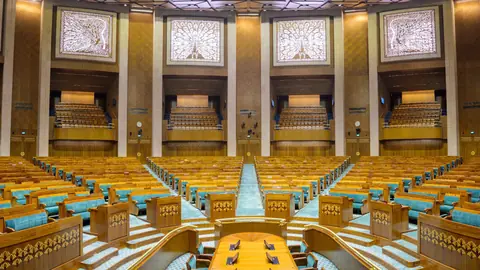 | The Lok Sabha chamber in the new Parliament building, New Delhi, where the members chosen in India's 543 constituencies sit.Photo: Ministry of Parliamentary Affairs, GODL-India, via Wikimedia Commons. Cropped by One Young India. |
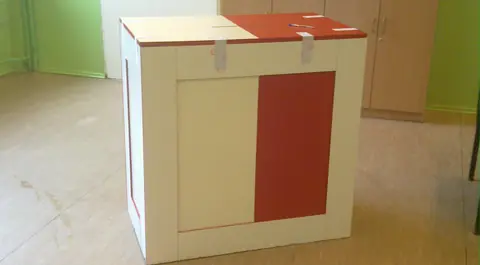 | A sealed ballot box at a polling station in Poland, for the 2010 election.Photo: "2010 Poland elections round 2 ballot box" by Piotrus, CC BY-SA 3.0, via Wikimedia Commons. Cropped by One Young India. The crop is shared under the same licence. |
Part 4: Secrets, data and your question
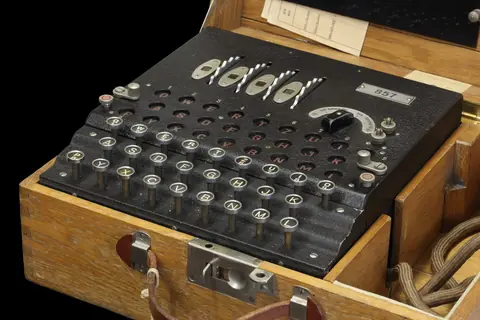 | An Enigma cipher machine from the cryptography collection of the Swiss Army.Photo: "Enigma-IMG 0487-black" by Photograph by Rama, Wikimedia Commons, Cc-by-sa-2.0-fr, CC BY-SA 2.0 fr, via Wikimedia Commons. |
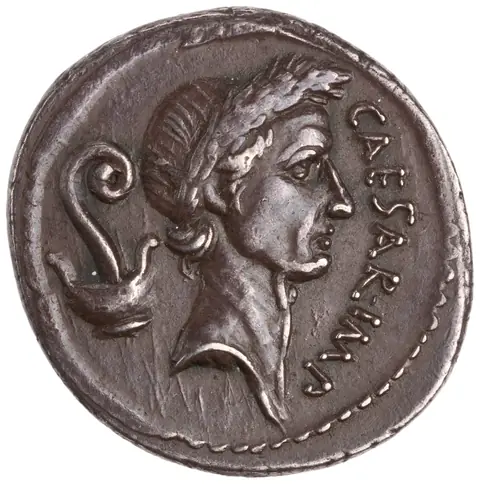 | A silver coin of Julius Caesar, struck in 44 BC, with his portrait and the words CAESAR IMP.Photo: American Numismatic Society, CC0, via Wikimedia Commons. |
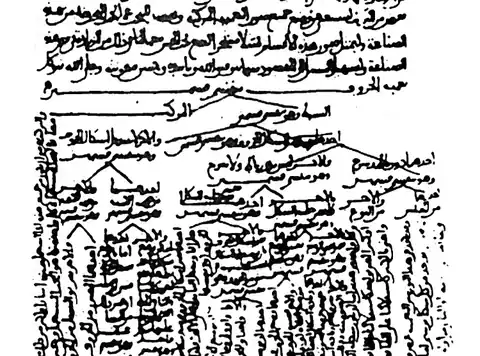 | Part of a page of al-Kindi's treatise on deciphering messages, in a manuscript kept in the Süleymaniye Library, Istanbul.Scan: Al-Kindi, public domain (author died more than 70 years ago), via Wikimedia Commons. Cropped by One Young India. |
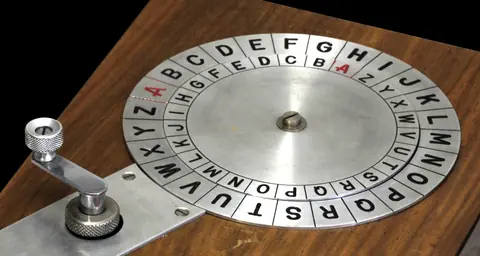 | A cipher wheel from the Swiss Army's collection: turn the inner ring and every letter shifts at once, as in Caesar's cipher.Photo: "Cryptographic wheel-IMG 0530 cropped" by Rama, CC BY-SA 2.0 fr, via Wikimedia Commons. |
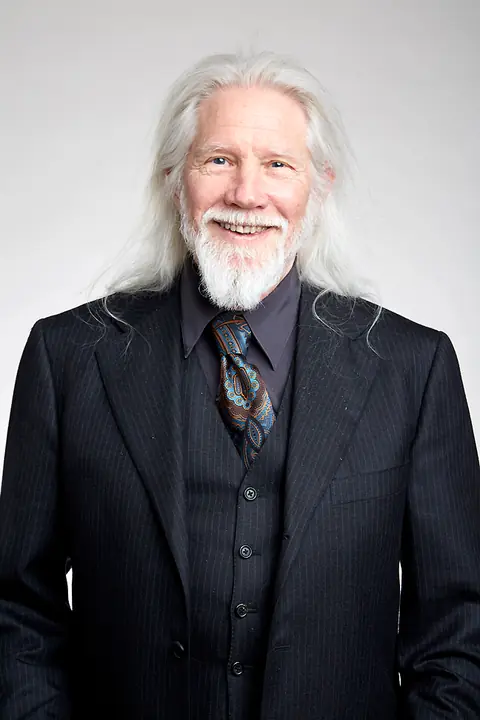 | Whitfield Diffie, who set out public-key cryptography with Martin Hellman in 1976.Photo: Duncan.Hull, CC BY-SA 4.0, via Wikimedia Commons. |
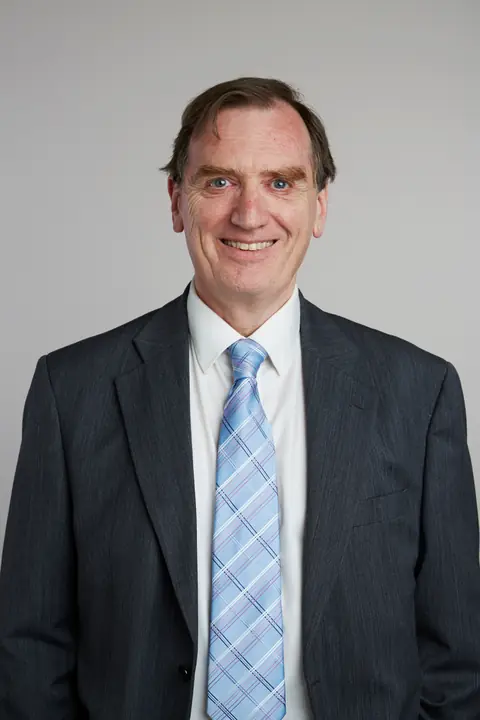 | Clifford Cocks, who found an equivalent method at GCHQ in 1973, kept secret until 1997.Photo: The Royal Society, CC BY-SA 4.0, via Wikimedia Commons. |
| Video | Public Key Cryptography - ComputerphileFrom the channel Computerphile. Watch the full video. |
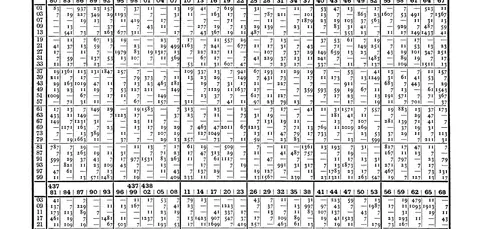 | Part of a page of J. W. L. Glaisher's Factor table for the fifth million, printed in 1880, long before computers could find factors for us.Scan: James Whitbread Lee Glaisher, public domain (author died in 1928), via Internet Archive. Cropped by One Young India. |
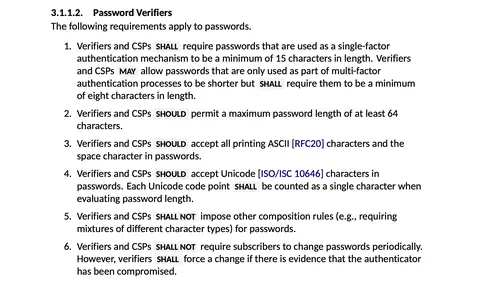 | From NIST's guidelines of July 2025: a password used on its own must be at least 15 characters long.Scan: National Institute of Standards and Technology, public domain (US government work, NIST), via NIST. Cropped by One Young India. |
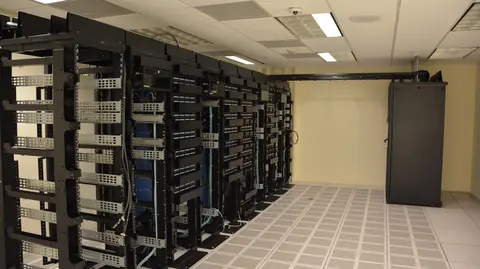 | Server racks in a data centre.Photo: "Datacenter Server Racks" by Carl Lender from Sunrise, USA, CC BY 2.0, via Wikimedia Commons. Cropped by One Young India. |
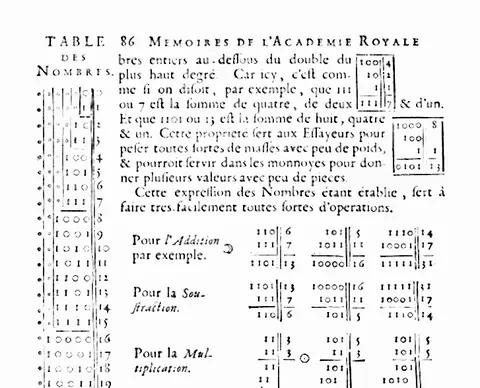 | Part of Leibniz's paper on binary arithmetic, published in 1703, with numbers written in 0s and 1s only.Scan: Gottfried Wilhelm Leibniz, public domain (author died more than 70 years ago), via Wikimedia Commons. Cropped by One Young India. |
| Video | How exactly does binary code work? - José Américo N L F de FreitasFrom the channel TED-Ed. Watch the full video. |
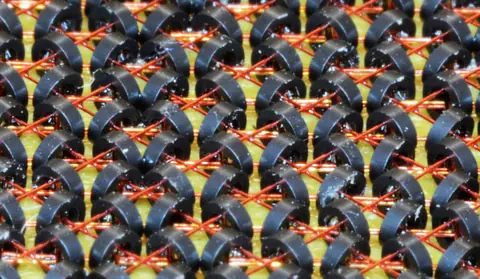 | Magnetic-core memory close up.Photo: Bubba73 (Jud McCranie), CC BY-SA 4.0, via Wikimedia Commons. |
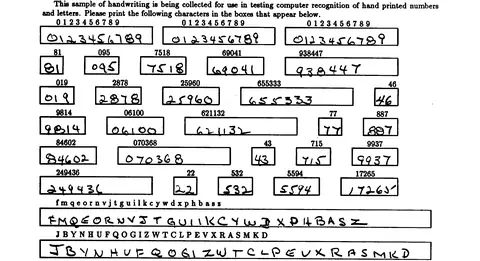 | Part of a form filled in by hand for a US government collection of handwritten digits and letters.Scan: NIST, public domain (US government work), via Wikimedia Commons. Cropped by One Young India. |
The free preview
| Monsoon clouds low over Anushaktinagar, in Mumbai.Photo: "Down come the clouds @ Anushaktinagar" by S.J.Saravanan, CC BY-SA 3.0, via Wikimedia Commons. |
| A cricket scoreboard with number cards hung by hand, at a club in Essex, England.Photo: Acabashi, CC BY-SA 4.0, via Wikimedia Commons. Cropped by One Young India. The crop is shared under the same licence. |
| Blaise Pascal, who wrote from Paris, in a portrait by Louis Devedeux.Photo: Romainbehar, CC0, via Wikimedia Commons. |
| Pierre de Fermat, who wrote from Toulouse, painted by Rolland Lefebvre.Painting: Rolland Lefebvre, public domain (author died more than 70 years ago), via Wikimedia Commons. |
| Video | The last banana: A thought experiment in probability - Leonardo BarichelloFrom the channel TED-Ed. Watch the full video. |
| Roman-era dice carved from bone, in the Musée Saint-Raymond, Toulouse's museum of antiquities.Photo: "Set of dice-Saint Raymond-IMG 0107-gradient" by Rama, CC BY-SA 3.0 fr, via Wikimedia Commons. Cropped by One Young India. The crop is shared under the same licence. |
Pictures are public domain or under a Creative Commons licence that allows reuse with credit; each one links to its licence and its source. Charts are drawn by One Young India from the data named under them. Videos play from their own channels.
Something wrong or missing?
Write to info@oneyoungindia.com.