
One Young India
Curious ComputingThe self-⁠paced course
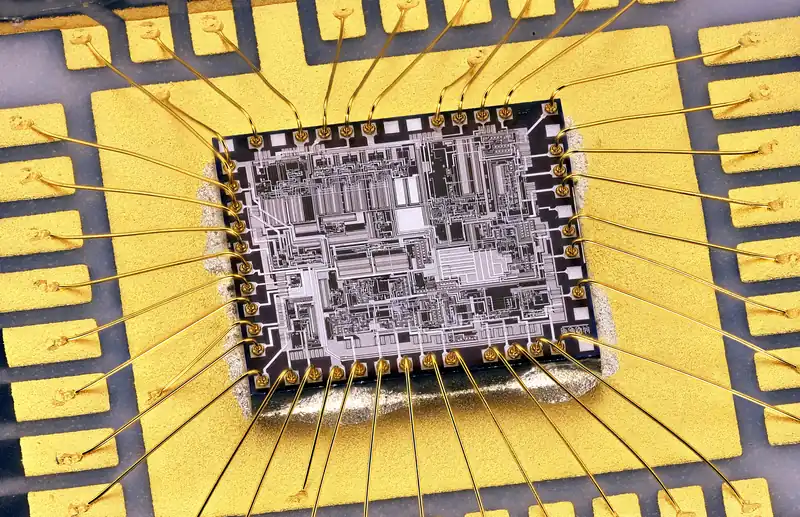
A small silicon chip under magnification, its circuits visible, joined by fine gold wires to the pads of its opened case.
A chip opened up under magnification: its circuits in the middle, and fine gold wires joining it to the pins that connect it to the rest of a machine.Photo: Mister rf, CC BY-⁠SA 4.0, via Wikimedia Commons.

Curious ComputingThe self-⁠paced course

How does it actually work?Open up the machines and ideas rewriting the world.

26 chapters in four parts, about 12 hours, at your own pace.

In the wrap-⁠up, you explain how a machine, app or rule in the lives of people you know works underneath, and who it might miss.Every claim and figure was checked against its source.

Start freeOpen the courseThe welcome and chapter 1 are free. Learnacy Essential opens every chapter.
Included in Learnacy Essential₹1,499 for the year, including GST. One payment, no automatic renewal.

Not sure yet? Start free. Already a member? Log in.

1LearnEach chapter picks up a question about the machines in your day, tells a story, and then hands you the controls: a network to break, a program to trace, a model to train.
2PractiseEvery chapter ends with five questions.Pass with 4 right, as often as you need, and each answer comes with its reason.
3FinishPass every chapter check and the final round for a certificate of completion with a link anyone can use to verify it.

What the course covers

Part 1How the internet actually worksPackets, addresses, cables under the sea, shared rules, the web, speed, and who runs it all

7 chaptersAbout 3 hoursChapter 1 free

Not started

See the chapters in part 1
  1. Before you beginWelcome: the machines you already useHow many computers have you used today?Free10 min
  2. 1A message in piecesHow does a photo reach a friend's phone in a second?Free25 min
  3. 2Addresses and namesHow does your phone find a website it has never visited?25 min
  4. 3The internet is not in the skyWhere is the internet, really?25 min
  5. 4Rules everyone agrees onHow can machines made by strangers understand each other?25 min
  6. 5The web is not the internetWhat is a web page, really?25 min
  7. 6Why is it slow?Why does a video stall even when your connection is fast?25 min
  8. 7Who runs the internet?If nobody owns the internet, who decides how it works?25 min
Open part 1

Part 2Code, algorithms and their trade-⁠offsInstructions, logic, reading code, bugs, searching, sorting, and the trade-⁠offs every algorithm makes

7 chaptersAbout 3 hours

Not started

See the chapters in part 2
  1. 8A recipe a machine can followCan you give instructions so exact that a machine could follow them?25 min
  2. 9Can switches decide?How can a pile of switches make a decision?25 min
  3. 10Reading code like a sentenceCan you read a program even if you have never written one?25 min
  4. 11Why programs breakWhy does an app that worked yesterday crash today?25 min
  5. 12Finding a needle fastHow can a computer find one name among millions in a moment?25 min
  6. 13Putting things in orderIs there a best way to put things in order?25 min
  7. 14Fast, cheap or bestWhen is the best answer not worth finding?25 min
Open part 2

Part 3What AI is, and is notRules against learning, how machines learn, neural networks, machines that write, their limits, and who is responsible

6 chaptersAbout 2½ hours

Not started

See the chapters in part 3
  1. 15Is it intelligent?What makes a machine "intelligent", and is that even the right word?25 min
  2. 16How a machine learns from examplesHow can a machine learn something that nobody told it?25 min
  3. 17Inside a neural networkWhat is actually inside the "brain" of an AI?25 min
  4. 18Machines that writeWhen a chatbot writes a paragraph, what is it actually doing?25 min
  5. 19Where AI breaks, and what it costsIf AI is so powerful, why does it still fail in silly ways?25 min
  6. 20Who answers for an AI's decision?When an AI system gets it wrong, who is to blame?25 min
Open part 3

Part 4Your data, your security and your questionYour data trail, the myth of anonymous data, privacy by design, threats, attacks, defences, and the question you will write on

6 chaptersAbout 3 hours

Not started

See the chapters in part 4
  1. 21Where your data goesWhen you use a free app, what are you actually giving away?25 min
  2. 22Can data be anonymous?If your name is removed, can anyone still find you in the data?25 min
  3. 23Privacy by designCan a system learn about a group without learning about you?25 min
  4. 24Thinking like an attackerWho would want to break into your school's systems, and why?25 min
  5. 25How attacks actually workHow does one careless click turn into a locked hospital?25 min
  6. 26Locks, layers and the people who test themWhat does the little padlock in your browser actually promise?25 min
  7. The wrap-upYour question, and what nextSo, coming back: how many computers have you used today?35 min
Open part 4
Your certificate

A certificate of completion, issued when you pass every chapter check and the final round while logged in. It names the course and its length, about 12 hours. It is not a grade, an examination result or an accreditation.

Curious Computing is for learning. It never asks for a password or any real personal data, and no company or app in it is praised or blamed by name. It favours no party in politics.