
Reproductive Health | CBSE Class 12 Biology Notes
On this page
This note covers reproductive well-being, reproductive and child health programmes, population growth, contraception, medical termination of pregnancy, amniocentesis, sexually transmitted infections, infertility and assisted reproductive technologies.
What does reproductive health include?
Definition: Reproductive health means total well-being in the physical, emotional, behavioural and social aspects of reproduction.
The World Health Organisation (WHO) gives reproductive health this broad meaning. Healthy reproductive organs and their normal functioning are part of it, but emotional and social aspects also matter. Reproductive health therefore concerns both individuals and their interactions with others.
A society whose members have physically and functionally normal reproductive organs, together with normal emotional and behavioural interactions in sex-related matters, might be called reproductively healthy. The word “might” matters: the description brings together several aspects of well-being.
How do awareness and services work together?
India was amongst the first countries to begin national action plans for reproductive health as a social goal. Family planning programmes began in 1951 and were assessed periodically. Their wider successors are called Reproductive and Child Health Care (RCH) programmes.
RCH programmes have two major tasks: creating awareness about reproduction and providing facilities and support for a reproductively healthy society. Information and medical assistance belong together because people need both an understanding of reproductive matters and access to appropriate care.
Implementation requires infrastructure, professional expertise and material support. Medical assistance covers pregnancy, delivery, menstrual problems, birth control and difficulty in having children. Better techniques and new strategies are also needed from time to time to improve care.
Signs of improvement include more medically assisted deliveries, better care after childbirth, reduced deaths among mothers and infants, more couples with small families, and improved detection and cure of sexually transmitted diseases. Increased medical facilities for sex-related problems are another indicator.
How can education and responsible care improve reproductive health?
Sex education provides accurate information about reproductive organs and changes during adolescence, the period of development towards reproductive maturity. It helps discourage myths and misconceptions. Parents, relatives, teachers and friends have important roles, alongside governmental and non-governmental agencies using print and audio-visual media.
Sexually transmitted infections (STIs) are infections passed through sexual intercourse. They are also called sexually transmitted diseases (STDs). Education about these infections, safe and hygienic sexual practices, and reproductive changes can help people, especially adolescents, lead reproductively healthy lives.
Education for fertile couples and people of marriageable age includes birth control, care during pregnancy, and post-natal care, meaning care after childbirth. Breastfeeding and equal opportunities for male and female children are also important in bringing up socially conscious, healthy families of desired size.
What is the proper role of amniocentesis?
Amniocentesis involves taking some amniotic fluid, the fluid associated with the developing foetus, and analysing foetal cells and dissolved substances. A foetus is the developing offspring within the mother. The procedure can test for certain genetic disorders, conditions involving hereditary material, and help determine foetal survivability, meaning the ability of the foetus to survive.
Its use for sex determination is banned to check female foeticide, the termination of female foetuses. Distinguish the diagnostic purpose of the procedure from its misuse for choosing whether a pregnancy should continue on the basis of foetal sex.
Awareness must also address sex abuse, sex-related crimes and the problems of uncontrolled population growth. Child immunisation, meaning protection against disease through vaccination, is another reproductive-health programme activity. These measures connect medical care with social responsibility.
Research supports new methods and improvements to existing ones. Scientists at the Central Drug Research Institute (CDRI) in Lucknow developed Saheli, an oral contraceptive, meaning a medicine taken by mouth to prevent pregnancy.
Why are population stabilisation and contraception important?
Improved health facilities and better living conditions contributed to rapid population growth. Probable reasons include falling death rates, reduced maternal mortality rate (MMR), a measure of maternal deaths associated with pregnancy and childbirth, reduced infant mortality rate (IMR), a measure of deaths among infants, and more people of reproductive age.
The historical figures below show the scale of growth. They retain approximate descriptions where appropriate; they are historical population figures rather than estimates for the present day.
| Population | Time | Size |
|---|---|---|
| World | 1900 | Around 2 billion, or 2,000 million |
| World | 2000 | About 6 billion |
| World | 2011 | 7.2 billion |
| India | Independence | Approximately 350 million |
| India | 2000 | Close to one billion |
| India | May 2011 | More than 1.2 billion |
Rapid growth could create scarcity of food, shelter and clothing despite progress in providing them. Encouraging smaller families through contraception is an important response. Incentives for couples with small families and raising marriageable ages are other measures associated with population stabilisation.
What should an ideal contraceptive be like?
Contraception means preventing pregnancy. An ideal contraceptive should be user-friendly, easily available, effective and reversible, with no or least side effects. It should not interfere with sexual drive, desire or the sexual act.
Contraceptives help avoid unwanted pregnancies and delay or space pregnancies for personal reasons. They are not regular requirements for maintaining reproductive health. Their widespread use also has a significant role in checking uncontrolled population growth.
Available categories include natural or traditional methods, barriers, intrauterine devices, oral pills, injections, implants and surgery. Selection and use should always involve consultation with qualified medical professionals. The method's action, effectiveness, reversibility and possible side effects all matter.
How do natural methods prevent conception?
Natural methods aim to avoid the meeting of the ovum, the female reproductive cell, and sperm, the male reproductive cell. These cells are called gametes. Their fusion is fertilisation, producing a zygote, the first cell of a new individual.
Periodic abstinence means avoiding coitus, or sexual intercourse, from day 10 to day 17 of the menstrual cycle. The menstrual cycle is the recurring sequence of reproductive changes in females. During this period, ovulation, the release of an ovum, could be expected.
Chances of fertilisation are very high in this fertile period, so avoiding coitus then could prevent conception. The wording “could be expected” does not identify an invariable day of ovulation for every person.
Withdrawal, also called coitus interruptus, involves withdrawing the penis from the vagina just before ejaculation. The vagina is the female passage involved in intercourse and childbirth; ejaculation is the discharge of semen, the fluid containing sperms. Withdrawal aims to avoid insemination, the introduction of semen.
How does lactational amenorrhoea work?
Lactational amenorrhoea means absence of menstruation during intense lactation, or milk production, after parturition, meaning childbirth. Menstruation is the periodic shedding of the uterine lining with blood. The uterus is the organ where the developing offspring is supported.
- Consider the period of intense lactation following childbirth when the mother fully breastfeeds her child.
- During this period, ovulation and therefore the menstrual cycle do not occur.
- As long as the mother fully breastfeeds the child, the chances of conception are almost nil.
- The reported effective period extends only to a maximum of six months after childbirth.
Natural methods use no medicines or devices, so their side effects are almost nil. Their chances of failure are also high. Neither “almost nil” nor the maximum six-month period should be turned into a claim of guaranteed protection.
How do barrier methods and intrauterine devices differ?
Barrier methods physically prevent sperm and ovum from meeting. Condoms are thin rubber or latex sheaths that cover the penis or the vagina and cervix before intercourse. The cervix is the lower, narrow part of the uterus opening into the vagina.
Condoms prevent ejaculated semen from entering the female reproductive tract. Male and female condoms are disposable, can be self-inserted and give privacy. Nirodh is a male condom brand. Condoms also protect users from contracting STIs, including infection associated with AIDS.
AIDS means acquired immunodeficiency syndrome, a condition associated with damage to the body's defence system. It results from infection with the human immunodeficiency virus (HIV). This additional protective benefit helps explain the increased use of condoms.
Diaphragms, cervical caps and vaults are reusable rubber barriers covering the cervix. They block sperm entry through it. Spermicidal, meaning sperm-killing, creams, jellies and foams are usually used with these barriers to improve contraceptive efficiency.
What the figure shows
Male condom; Photograph: Female condom
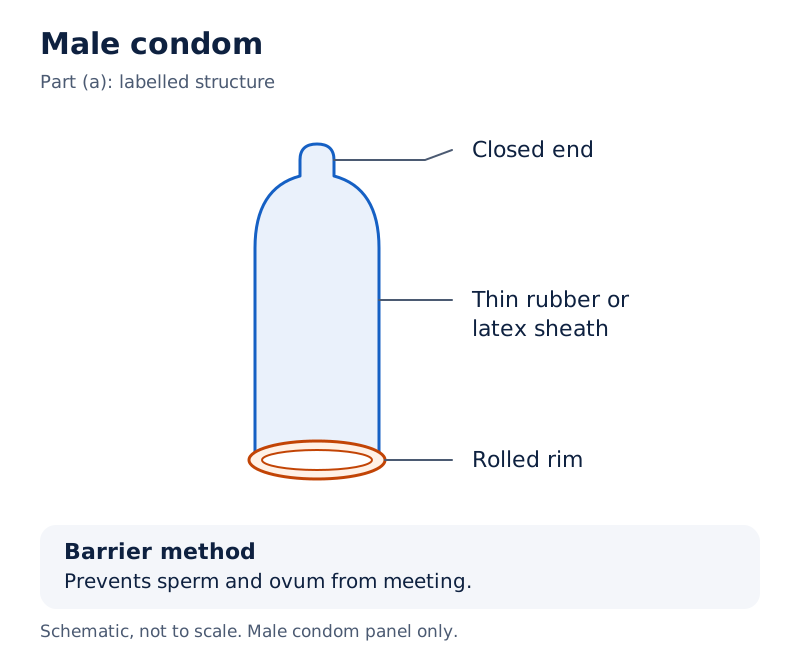
Part (a) is a drawing of a male condom with a rolled rim and closed end. Part (b) is a photograph of a transparent female condom with visible rings. The captions identify the two types.
Drawn by One Young India. See Fig. 3.1 in your NCERT textbook
How do intrauterine devices act?
Intrauterine devices (IUDs) are inserted into the uterus through the vagina by doctors or expert nurses. They increase phagocytosis, the engulfing of particles or cells, of sperms within the uterus. Different types have additional actions.
Copper-releasing devices suppress sperm motility, or movement, and fertilising capacity. Hormones are chemical messengers that influence target tissues. Hormone-releasing devices additionally make the uterus unsuitable for implantation, the attachment and embedding of an embryo, the developing early organism, in the uterine lining. They also make the cervix hostile to sperms.
Cu is the symbol for copper; CuT names the Copper T device. Cu7, Multiload 375, Progestasert and LNG-20 are device names. Copper ions are electrically charged copper particles.
| Method or type | Examples | Distinguishing feature |
|---|---|---|
| Condom | Nirodh; male and female condoms | Disposable barrier; additional protection against STIs |
| Cervical barrier | Diaphragms, cervical caps, vaults | Reusable barrier covering the cervix |
| Non-medicated IUD | Lippes loop | Belongs to the IUD group that increases sperm phagocytosis |
| Copper-releasing IUD | CuT, Cu7, Multiload 375 | Copper ions suppress sperm movement and fertilising capacity |
| Hormone-releasing IUD | Progestasert, LNG-20 | Makes the uterus unsuitable for implantation and cervix hostile to sperms |
IUDs are ideal for females wishing to delay pregnancy or space children. They are among the most widely accepted contraceptive methods in India.
Photograph: Copper T (NCERT Class 12 Figure 3.2). The photograph shows a T-shaped device against a dark background, with a horizontal top, a vertical stem and thin threads extending below. Its caption identifies it as Copper T, or CuT; there are no internal part labels.
How do pills, injections and implants prevent pregnancy?
Oral contraceptive pills contain small doses of progestogens alone or progestogen-estrogen combinations. Progestogens and estrogens are groups of hormones used in these contraceptive preparations.
Pills inhibit ovulation and implantation. They also alter the quality of cervical mucus, the secretion associated with the cervix, to prevent or retard sperm entry. Their action therefore involves several reproductive events rather than a physical barrier alone.
What is the pill schedule described for this method?
- Begin the daily pill course preferably within the first five days of the menstrual cycle.
- Continue taking the pills daily for a period of 21 days.
- Leave a seven-day gap, during which menstruation occurs.
- Repeat the same pattern for as long as prevention of conception is desired.
These pills are very effective, have lesser side effects and are well accepted. Saheli differs in being a non-steroidal preparation, meaning it is not a steroid preparation. It is a once-a-week pill with very few side effects and high contraceptive value.
Progestogens alone or combined with estrogen can also be given as injections or as implants placed under the skin. Their mode of action resembles that of pills, but their effective periods are much longer.
Photograph: Contraceptive implants (NCERT Class 12 Figure 3.3). The photograph shows several slender rods held between fingers and spread out against a dark background. The caption identifies them as implants. It does not show their insertion beneath the skin.
Emergency contraception aims to avoid a possible pregnancy after unprotected intercourse, including rape. Progestogens, progestogen-estrogen combinations or IUDs used within 72 hours of coitus have been found very effective for this purpose. Selection and use require qualified medical advice.
How do vasectomy and tubectomy prevent pregnancy?
Sterilisation refers to surgical contraception that blocks gamete transport and thereby prevents conception. It is generally advised as a terminal method for a male or female partner who wishes to prevent further pregnancies.
Vasectomy is the male procedure. A small part of the vas deferens, the duct carrying sperms, is removed or tied through a small incision, or surgical cut, in the scrotum. The scrotum is the pouch containing the testes, the male organs producing sperms.
Tubectomy is the female procedure. A small part of the fallopian tube, or oviduct, is removed or tied. This tube extends from the region near the ovary, the female organ producing ova, to the uterus. The procedure uses a small abdominal incision or an approach through the vagina.
Which distinctions matter when comparing the procedures?
| Feature | Vasectomy | Tubectomy |
|---|---|---|
| Partner undergoing procedure | Male | Female |
| Structure interrupted | Vas deferens | Fallopian tube |
| Procedure | Small part removed or tied | Small part removed or tied |
| Access | Small incision in scrotum | Small incision in abdomen or through vagina |
| Effect and reversibility | Highly effective; very poor reversibility | Highly effective; very poor reversibility |
What the figure shows
Vasectomy
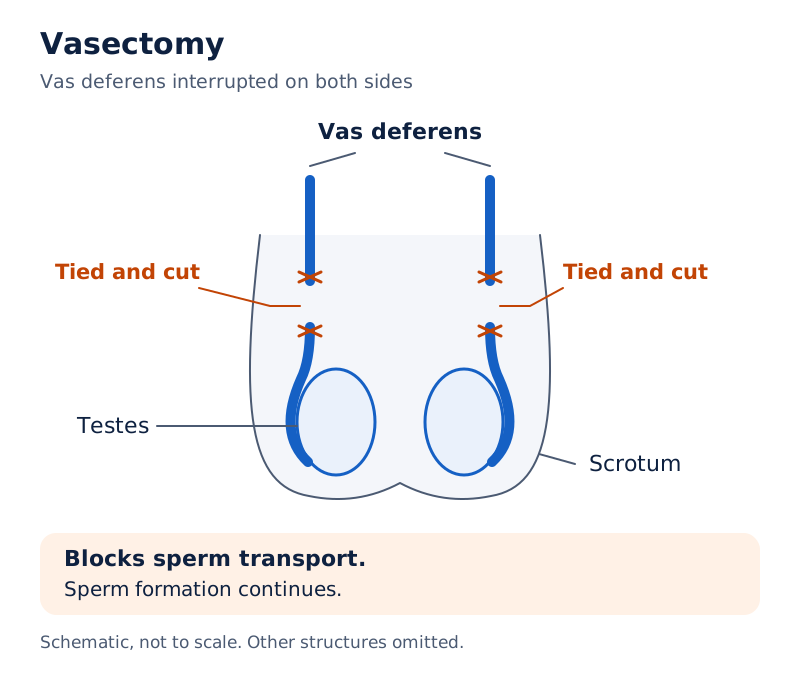
The male reproductive-system drawing labels the vas deferens as “tied and cut”.
Drawn by One Young India. See Fig. 3.4a in your NCERT textbook
What the figure shows
Tubectomy
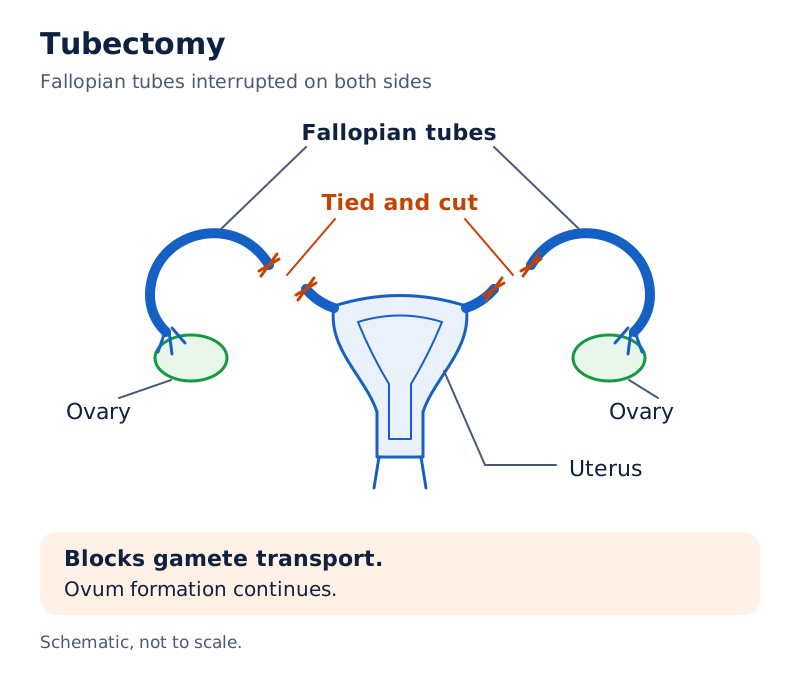
The female drawing labels the fallopian tubes as “tied and cut”, with arrows pointing to the interrupted regions on either side of the uterus.
Drawn by One Young India. See Fig. 3.4b in your NCERT textbook
The key action is interruption of gamete transport. It is incorrect to describe these operations as preventing gamete formation. Their very poor reversibility also distinguishes them from the desirable reversibility of an ideal contraceptive.
Note: Highly effective does not mean easily reversible. Sterilisation is highly effective, but its reversibility is very poor; qualified medical consultation is essential when choosing contraception.
What is medical termination of pregnancy and why is it used?
Medical termination of pregnancy (MTP), or induced abortion, means intentionally or voluntarily ending a pregnancy before full term. It concerns a pregnancy that has already begun, whereas contraception aims to prevent pregnancy.
MTP may be needed for unwanted pregnancies following unprotected intercourse, contraceptive failure or rape. It is also essential in certain cases where continuing a pregnancy could harm or even be fatal to the mother, the foetus or both.
How do timing and qualified care affect safety?
MTPs are considered relatively safe during the first trimester, meaning up to 12 weeks of pregnancy. Abortions in the second trimester, the next phase extending to about 24 weeks, are much riskier. “Relatively safe” expresses a comparison and must not be changed to a claim of complete safety.
Illegal abortions performed by unqualified people are unsafe and could be fatal. Emotional, ethical, religious and social issues also surround the acceptance and legalisation of MTP. These concerns make counselling and appropriate health-care facilities important.
India legalised MTP in 1971 under strict conditions intended to prevent misuse. Sex determination followed by termination because a foetus is female is a misuse of amniocentesis and MTP. It must not be confused with diagnostic testing or medically justified termination.
Effective counselling should address the need to avoid unprotected intercourse and the risks involved in illegal abortions. Better health-care facilities could help reverse unhealthy practices. Medical assistance and reproductive awareness are therefore closely linked in this area.
The reasons for MTP, its timing and the conditions in which it is performed are separate considerations. A reason for ending an unwanted or dangerous pregnancy does not remove the importance of qualified care or justify sex-selective misuse.
How do sexually transmitted infections spread and cause complications?
STIs are also called venereal diseases (VD) or reproductive tract infections (RTIs). Examples include gonorrhoea, syphilis, genital herpes, chlamydiasis, genital warts, trichomoniasis, hepatitis-B and HIV infection leading to AIDS. These names identify infections considered in reproductive health.
Hepatitis-B and HIV can also spread through shared injection needles or surgical instruments used with infected people, blood transfusion, or transmission from an infected mother to the foetus. Sexual intercourse is therefore not their sole possible route of transmission.
Why can early infection be missed?
Early symptoms of most STIs are minor: itching, fluid discharge, slight pain and swelling in the genital region. Infected females may often be asymptomatic, meaning without symptoms, and may consequently remain undetected for a long time.
Absent or less significant early symptoms, together with social stigma, can discourage timely detection and treatment. Untreated infection could lead to pelvic inflammatory diseases (PID), inflammatory conditions involving the female pelvic reproductive organs, and other serious complications.
These complications include abortions, stillbirths, meaning births of babies already dead, and ectopic pregnancies, in which pregnancy develops outside the normal uterine site. Infertility, the inability to produce children despite unprotected sexual cohabitation, and even reproductive-tract cancer are further possible complications.
Except for hepatitis-B, genital herpes and HIV infections, the other listed diseases are completely curable if detected early and treated properly. Both conditions belong to the claim. The exceptions must not disappear when the statement is shortened.
What principles help prevent infection?
- Avoid sexual intercourse with unknown partners or multiple partners.
- Always try to use condoms during intercourse.
- In case of doubt, consult a qualified doctor for early detection and complete treatment if infection is diagnosed.
All people are vulnerable, but incidence is reported to be very high among those aged 15 to 24 years. Prevention, early detection and treatment consequently receive priority in reproductive health-care programmes. Lack of noticeable symptoms is not a reliable reason to dismiss possible infection.
What causes infertility and how does fertilisation outside the body help?
Infertility involves inability to produce children despite unprotected sexual cohabitation. The possible reasons include physical problems, congenital conditions present from birth, diseases, drugs, immunological factors involving the body's defence system, and psychological factors involving the mind.
In India, often the female is blamed for a childless couple, but more often than not the problem lies in the male partner. Specialised clinics could diagnose and correct some disorders. Where correction is not possible, assisted reproductive technologies (ART), special techniques to help couples have children, may help.
What happens in the test-tube baby programme?
In vitro fertilisation (IVF) is fertilisation outside the body under conditions almost similar to those inside it. In the test-tube baby programme, it is followed by embryo transfer (ET), the transfer of the developing early organism into the female reproductive tract.
- Collect ova, the plural of ovum, from the wife or a female donor and sperms from the husband or a male donor.
- Bring them together under simulated laboratory conditions and induce fertilisation to form a zygote.
- Transfer a zygote or an early embryo with up to eight blastomeres, the cells produced as the zygote divides, into a fallopian tube.
- For an embryo with more than eight blastomeres, transfer it into the uterus so that further development can occur.
The third step describes zygote intrafallopian transfer (ZIFT); the fourth describes intrauterine transfer (IUT). They are alternative transfer routes based on developmental stage. They are not two successive transfers that every embryo must undergo.
Note: The eight-blastomere boundary determines the transfer site in this distinction: up to eight goes with the fallopian tube; more than eight goes with the uterus.
Embryos produced by in vivo fertilisation, meaning gamete fusion inside the female, could also be used for transfer. Thus embryo transfer does not necessarily mean that fertilisation occurred outside the body. The popular term “test-tube baby” does not mean complete development in a laboratory vessel.
How do other assisted reproductive techniques differ?
Gamete intrafallopian transfer (GIFT) transfers a donor ovum into the fallopian tube of another female. This is attempted when she cannot produce an ovum but can provide a suitable environment for fertilisation and further development.
Intracytoplasmic sperm injection (ICSI) is a specialised laboratory procedure in which a sperm is injected directly into an ovum to form an embryo. The term identifies injection into the egg cell, rather than introduction of semen into the female reproductive tract.
Artificial insemination (AI) could help when the male partner cannot inseminate the female or has a very low sperm count in the ejaculate. Semen from the husband or a healthy donor is introduced artificially into the vagina or uterus.
When semen is introduced into the uterus, the procedure is called intrauterine insemination (IUI). Distinguish the material transferred in each technique: an ovum, a sperm, semen, a zygote or an embryo.
| Technique | Material or event | Site or destination |
|---|---|---|
| IVF | Fertilisation of ova by sperms | Outside the body under simulated conditions |
| ZIFT | Zygote or embryo with up to eight blastomeres | Fallopian tube |
| IUT | Embryo with more than eight blastomeres | Uterus |
| GIFT | Donor ovum | Fallopian tube of a suitable recipient |
| ICSI | Direct injection of one sperm | Into an ovum in the laboratory |
| IUI | Semen from husband or healthy donor | Uterus |
What limits access to these methods?
ART requires extremely precise handling, specialised professionals and expensive equipment. Cost limits the number of people who can afford its benefits. Emotional, religious and social factors can also discourage acceptance.
Legal adoption is another option for couples seeking parenthood. It also provides care for orphaned and destitute children. The aim of helping people become parents can therefore be approached through both reproductive assistance and adoption.
Glossary
- Reproductive health — Total well-being in the physical, emotional, behavioural and social aspects of reproduction.
- Contraception — Prevention of pregnancy through methods that avoid conception or interfere with reproductive events.
- Periodic abstinence — Avoidance of sexual intercourse during the fertile period when ovulation could be expected.
- Lactational amenorrhoea — Absence of menstruation during intense lactation following childbirth, used as a natural contraceptive method.
- Barrier method — Contraceptive method using a physical barrier to prevent sperm and ovum from meeting.
- Intrauterine device — A contraceptive device inserted into the uterus through the vagina by trained medical personnel.
- Vasectomy — Male sterilisation involving removal or tying of a small part of the vas deferens.
- Tubectomy — Female sterilisation involving removal or tying of a small part of the fallopian tube.
- Medical termination of pregnancy — Intentional or voluntary termination of a pregnancy before it reaches full term.
- Amniocentesis — Sampling of amniotic fluid for analysis of foetal cells and dissolved substances.
- Sexually transmitted infection — An infection transmitted through sexual intercourse, although some also have other transmission routes.
- Infertility — Inability of a couple to produce children despite unprotected sexual cohabitation.
- In vitro fertilisation — Fertilisation outside the body under conditions almost similar to those within it.
- Zygote intrafallopian transfer — Transfer of a zygote or embryo with up to eight blastomeres into a fallopian tube.
- Artificial insemination — Artificial introduction of semen from a husband or healthy donor into the vagina or uterus.
Common errors and misconceptions
- Misconception: Reproductive health concerns only healthy reproductive organs. Correct: It also includes emotional, behavioural and social well-being in reproduction.
- Misconception: Breastfeeding guarantees contraception for as long as it continues. Correct: During full breastfeeding, chances of conception are almost nil, with effectiveness reported only up to a maximum of six months after childbirth.
- Misconception: Every contraceptive method is easily reversible. Correct: Sterilisation is highly effective, but its reversibility is very poor.
- Misconception: Vasectomy and tubectomy prevent the production of gametes. Correct: They block gamete transport by interrupting reproductive ducts.
- Misconception: First-trimester MTP is completely safe. Correct: It is considered relatively safe up to 12 weeks; this is not a claim of complete safety.
- Misconception: All STIs are completely curable. Correct: Hepatitis-B, genital herpes and HIV infections are exceptions; the others require early detection and proper treatment for complete cure.
- Misconception: Infertility is always a problem in the female partner. Correct: In India, often the female is blamed, but more often than not the problem lies in the male partner.
- Misconception: Every embryo transfer uses the uterus. Correct: ZIFT uses a fallopian tube for a zygote or embryo with up to eight blastomeres; IUT uses the uterus for embryos with more than eight.
Exam-style questions with model answers
Q1. State the two major tasks of Reproductive and Child Health Care programmes. [2 marks]
- Create awareness among people about reproduction-related matters and the requirements of reproductive well-being.
- Provide the facilities and support needed to build a reproductively healthy society.
Q2. Explain periodic abstinence, withdrawal and lactational amenorrhoea as natural contraceptive methods, including the time limits associated with the first and third methods. [3 marks]
- Periodic abstinence avoids intercourse from day 10 to day 17 of the menstrual cycle, when ovulation could be expected and fertilisation chances are very high.
- Withdrawal involves removing the penis from the vagina just before ejaculation to avoid insemination.
- Lactational amenorrhoea relies on absent ovulation during intense lactation. With full breastfeeding, conception chances are almost nil; reported effectiveness extends only to a maximum of six months after childbirth.
Q3. Explain four actions of intrauterine devices: the general effect on sperms, the additional effect of copper, and the two additional effects of hormone-releasing devices. [4 marks]
- Intrauterine devices increase phagocytosis of sperms within the uterus, contributing to their contraceptive action.
- Copper ions released by copper-containing devices suppress sperm motility and the fertilising capacity of sperms.
- Hormone-releasing devices additionally make the uterus unsuitable for implantation of the developing embryo.
- Hormone-releasing devices also make the cervix hostile to sperms, adding another effect to the general action of intrauterine devices.
Q4. Compare vasectomy and tubectomy using five features: partner undergoing surgery, duct affected, surgical change, route of access, and effectiveness with reversibility. [5 marks]
- Vasectomy is sterilisation of the male partner; tubectomy is sterilisation of the female partner. Both are generally advised as terminal contraceptive methods.
- Vasectomy acts on the vas deferens, which transports sperms. Tubectomy acts on the fallopian tube in the female reproductive system.
- In each procedure, a small part of the respective duct is removed or tied, blocking gamete transport and thereby preventing conception.
- Vasectomy uses a small incision in the scrotum. Tubectomy uses a small incision in the abdomen or an approach through the vagina.
- Both techniques are highly effective, but their reversibility is very poor. Their contraceptive effect must be distinguished from prevention of gamete formation.
Q5. Consider gonorrhoea, syphilis, genital herpes, chlamydiasis, genital warts, trichomoniasis, hepatitis-B and HIV infection. Explain STI transmission and prevention under five headings: non-sexual routes for hepatitis-B and HIV, early symptoms, possible absence of symptoms, curability, and preventive principles. [5 marks]
- Hepatitis-B and HIV can spread through shared needles or surgical instruments used with infected people, blood transfusion, or an infected mother to her foetus.
- Early symptoms of most STIs are minor and include itching, fluid discharge, slight pain and swelling in the genital region.
- Infected females may often be asymptomatic and remain undetected for long. Minor symptoms and social stigma can also delay detection and treatment.
- Except for hepatitis-B, genital herpes and HIV infections, the other listed STIs are completely curable if detected early and treated properly.
- Avoid unknown or multiple sexual partners, always try to use condoms during intercourse, and consult a qualified doctor for early detection and complete treatment if diagnosed.
Q6. In an assisted-reproduction programme, one embryo has eight blastomeres and another has more than eight. Name each transfer technique and destination, then explain whether embryo transfer requires fertilisation outside the body in every case. [3 marks]
- The embryo with eight blastomeres can undergo zygote intrafallopian transfer, or ZIFT, into a fallopian tube, because it falls within the “up to eight” category.
- The embryo with more than eight blastomeres can undergo intrauterine transfer, or IUT, into the uterus for further development.
- Embryo transfer does not require fertilisation outside the body in every case. Embryos formed through in vivo fertilisation inside the female could also be transferred.
Q7. Define medical termination of pregnancy, give two groups of reasons for it, and compare the relative safety of first- and second-trimester procedures. [4 marks]
- Medical termination of pregnancy is the intentional or voluntary termination of a pregnancy before full term, also called induced abortion.
- It may end unwanted pregnancies arising from unprotected intercourse, failure of a contraceptive method or rape.
- It is also essential in certain cases where continued pregnancy could be harmful or fatal to the mother, foetus or both.
- MTP is considered relatively safe during the first trimester, up to 12 weeks. Second-trimester abortions are much riskier; relatively safe does not mean completely safe.
Q8. Explain GIFT, ICSI, artificial insemination and IUI, then identify the professional and equipment requirements that can limit access to assisted reproductive technologies. [5 marks]
- Gamete intrafallopian transfer, or GIFT, places a donor ovum in the fallopian tube of a female unable to produce one but able to support fertilisation and development.
- Intracytoplasmic sperm injection, or ICSI, forms an embryo through a specialised laboratory procedure in which a sperm is injected directly into an ovum.
- Artificial insemination introduces semen from the husband or a healthy donor into the vagina or uterus. It could help with inability to inseminate or very low sperm counts.
- Intrauterine insemination, or IUI, specifically means artificial introduction of semen into the uterus. It therefore identifies one destination within artificial insemination.
- Assisted reproductive technologies need extremely precise handling, specialised professionals and expensive equipment. Their cost restricts the number of people able to afford their benefits.
Key takeaways
- Reproductive health includes physical, emotional, behavioural and social well-being; awareness and medical facilities are complementary requirements.
- Contraceptives can prevent unwanted pregnancy or help delay and space pregnancies, with selection guided by qualified medical professionals.
- Natural methods avoid sperm-ovum meeting; lactational amenorrhoea has a reported maximum effective period of six months after childbirth.
- Condoms provide a physical barrier and additional protection against STIs, while intrauterine devices act within the uterus.
- Vasectomy and tubectomy block gamete transport, are highly effective, and have very poor reversibility.
- MTP ends an existing pregnancy; first-trimester procedures are considered relatively safe, while second-trimester abortions are much riskier.
- STIs may have minor or absent early symptoms, making prevention, early detection and complete treatment important.
- Assisted reproductive techniques differ in the material transferred, the site of transfer and whether fertilisation occurs inside or outside the body.
Test yourself
What two activities form the core of RCH programmes?
Creating awareness about reproduction-related matters and providing facilities and support for a reproductively healthy society.
What qualities should an ideal contraceptive have?
It should be user-friendly, easily available, effective and reversible, with no or least side effects and no interference with sexual drive, desire or the sexual act.
Name one non-medicated IUD and two hormone-releasing IUDs.
Lippes loop is non-medicated; Progestasert and LNG-20 are hormone-releasing intrauterine devices.
How does Saheli differ from the daily pill schedule?
Saheli is a once-a-week, non-steroidal oral contraceptive with very few side effects and high contraceptive value.
Which three infections are exceptions to the statement about complete cure after early detection and proper treatment?
Hepatitis-B, genital herpes and HIV infections are the three exceptions.
How do ZIFT and IUT differ in embryo stage and destination?
ZIFT transfers a zygote or embryo with up to eight blastomeres into a fallopian tube. IUT transfers an embryo with more than eight blastomeres into the uterus.
Who may be helped by GIFT?
A female unable to produce an ovum but able to provide a suitable environment for fertilisation and further development may receive a donor ovum in her fallopian tube.
What is the diagnostic purpose of amniocentesis, and what use is banned?
Amniocentesis analyses foetal cells and dissolved substances in amniotic fluid to test for certain genetic disorders. Its use for sex determination is banned.
Write about it
Turn a question from this chapter into a paper.
The Writing Studio has a structure guide, a rubric and citation tools for 15 formats, from essays to research papers. Drafting is free with an account. Learnacy Essential adds feedback from an AI writing coach and submission to The OYI Review.
Learnacy Essential is ₹1,499 for the year. Publication depends on review and is not guaranteed.