
Metals and Non-metals | CBSE Class 10 Science Notes
On this page
Learnacy Labs Try it hands-on: open the Classification lab
This note covers physical and chemical properties of metals and non-metals, the reactivity series, electron transfer, ionic compounds, occurrence and extraction of metals, electrolytic refining, corrosion, protection against rusting and alloys.
What physical properties help us recognise metals?
Pure metals have a shiny surface called metallic lustre. Rubbing samples of iron, copper, aluminium and magnesium with sandpaper exposes a clean surface for comparison. Metals are generally hard, although their hardness varies from one metal to another.
How do malleability and ductility differ?
Malleability means that a metal can be beaten into thin sheets. Gold and silver are the most malleable metals. Ductility means that a metal can be drawn into thin wires. These properties allow metals to be shaped for different uses.
Gold is the most ductile metal. About two kilometres of wire can be drawn from one gram of gold. A sheet demonstrates malleability, while a wire demonstrates ductility; the terms describe different ways of changing a metal's shape.
| Property | Meaning or observation | Example or qualification |
|---|---|---|
| Lustre | A clean metallic surface shines | Compare cleaned copper and aluminium surfaces |
| Malleability | Can be beaten into sheets | Gold and silver are especially malleable |
| Ductility | Can be drawn into wires | Gold is the most ductile metal |
| Heat conduction | Heat travels through the metal | Silver and copper are the best conductors of heat |
| Sonority | Produces sound on striking a hard surface | This property explains the use of metals in bells |
How can conduction be demonstrated?
In a heat-conduction demonstration, an aluminium or copper wire is clamped to a stand. A pin is attached with wax at its free end. Heating near the clamp allows heat to travel along the wire towards the wax and pin.
What the figure shows
Heat conduction through a metal wire
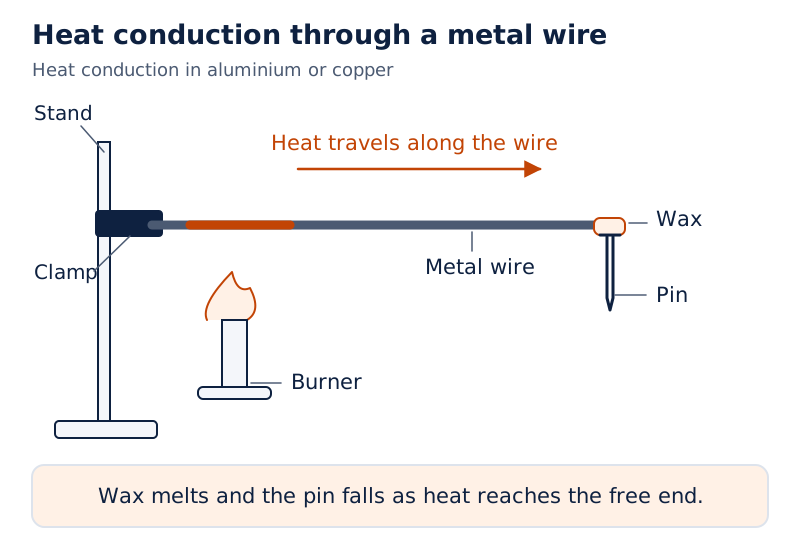
A stand and clamp support a horizontal metal wire. A burner is below the wire, and the free end is labelled with a pin and wax.
Drawn by One Young India. See Fig. 3.1 in your NCERT textbook
Metals also conduct electricity. A metal sample placed in the gap of a battery-and-bulb circuit can complete the conducting path. Lead and mercury are comparatively poor conductors of heat, so the general description of metals does not imply equal performance.
Why are physical properties alone insufficient for classification?
Non-metals include carbon, sulphur, iodine, oxygen and hydrogen. They are generally poor conductors of heat and electricity and are neither malleable nor ductile. However, several exceptions prevent a single physical test from reliably classifying every element.
Which exceptions must be remembered?
| Element or form | Exceptional property |
|---|---|
| Mercury | A metal that is liquid at room temperature |
| Bromine | A liquid non-metal, whereas other non-metals are solids or gases |
| Gallium and caesium | Metals with melting points low enough for them to melt on the palm |
| Iodine | A lustrous non-metal |
| Graphite | A form of carbon that conducts electricity |
| Diamond | A form of carbon that is the hardest known natural substance |
| Lithium, sodium and potassium | Soft metals that can be cut with a knife |
Different forms of the same element are called allotropes. Diamond and graphite are allotropes of carbon, yet their properties differ markedly. Diamond also has very high melting and boiling points. Graphite's electrical conductivity does not make it a metal.
The alkali metals lithium, sodium and potassium have low densities and low melting points. Their softness is another reason to avoid treating hardness as an absolute definition of a metal.
Note: A shiny sample is not necessarily metallic, and a conducting sample need not be a metal. Use chemical behaviour alongside physical observations when classifying elements.
Chemical behaviour provides a clearer distinction. Metals tend to lose electrons when reacting with non-metals, while non-metals gain them. Most metal oxides are basic; non-metal oxides are acidic or neutral. The exceptions among metal oxides require separate attention.
Non-metals do not displace hydrogen from dilute acids. They react with hydrogen to form compounds called hydrides. This chemical behaviour provides another contrast with metals above hydrogen in the reactivity series.
How do metals react with oxygen and form different oxides?
Almost all metals combine with oxygen to form metal oxides. Magnesium burns with a dazzling white flame. Heated copper develops a black coating of copper(II) oxide, while aluminium forms aluminium oxide.
In the equations below, Cu means copper, Al means aluminium and O₂ means oxygen gas. CuO is copper(II) oxide and Al₂O₃ is aluminium oxide. The arrow means “produces”; a number before a formula gives its relative amount in the balanced reaction.
2Cu + O₂ → 2CuO
4Al + 3O₂ → 2Al₂O₃
What are amphoteric oxides?
Definition: Amphoteric oxides react with both acids and bases to form salts and water. Aluminium oxide and zinc oxide are examples.
Aluminium oxide reacts with hydrochloric acid, written HCl, to form aluminium chloride, AlCl₃, and water, H₂O. It also reacts with sodium hydroxide, NaOH, to form sodium aluminate, NaAlO₂, and water.
Al₂O₃ + 6HCl → 2AlCl₃ + 3H₂O
Al₂O₃ + 2NaOH → 2NaAlO₂ + H₂O
Most metal oxides are insoluble in water. Sodium oxide, Na₂O, and potassium oxide, K₂O, are exceptions: they react with water to give alkalis. Potassium hydroxide is written KOH. State symbols mean solid (s), liquid (l), gas (g) and aqueous solution (aq).
Na₂O(s) + H₂O(l) → 2NaOH(aq)
K₂O(s) + H₂O(l) → 2KOH(aq)
Why does the surface of a metal matter?
Sodium and potassium react so vigorously in the open that they can catch fire. They are kept immersed in kerosene oil. Magnesium, aluminium, zinc and lead develop thin oxide layers that protect the underlying metal against further oxidation.
Iron does not burn on heating, but iron filings burn vigorously when sprinkled into a burner flame. Copper becomes coated with black oxide without burning. Silver and gold do not react with oxygen even at high temperatures.
How does a metal's reaction with water depend on its reactivity?
Some metals react with water to produce a metal oxide and hydrogen. If the oxide reacts further with water, a metal hydroxide forms. The required conditions differ: some metals react with cold water, others with hot water or steam.
Which metals react under which conditions?
| Metal | Condition and result |
|---|---|
| Potassium and sodium | React violently with cold water; evolved hydrogen catches fire |
| Calcium | Reacts less violently with water; hydrogen does not catch fire |
| Magnesium | Reacts with hot water to form magnesium hydroxide and hydrogen |
| Aluminium, iron and zinc | React with steam, but not with cold or hot water |
| Lead, copper, silver and gold | Do not react with water |
Here K means potassium, Na sodium, Ca calcium, Fe iron and H₂ hydrogen gas. Calcium hydroxide is Ca(OH)₂ and the iron oxide formed with steam is Fe₃O₄. The following balanced equations show the relevant products.
2K(s) + 2H₂O(l) → 2KOH(aq) + H₂(g) + heat
2Na(s) + 2H₂O(l) → 2NaOH(aq) + H₂(g) + heat
Ca(s) + 2H₂O(l) → Ca(OH)₂(aq) + H₂(g)
Calcium floats because hydrogen bubbles stick to its surface. Magnesium also begins to float when bubbles attach during its reaction with hot water. These observations concern gas formation, rather than a change in the identity of the metal before reaction.
2Al(s) + 3H₂O(g) → Al₂O₃(s) + 3H₂(g)
3Fe(s) + 4H₂O(g) → Fe₃O₄(s) + 4H₂(g)
What the figure shows
Reaction of a metal with steam
A horizontal tube contains water-soaked glass wool and a metal sample. A cork and delivery tube connect it to an inverted gas-collection tube over water. Hydrogen gas, water, a burner and supporting stands are labelled.
See Fig. 3.3 in your NCERT textbook
The distinction between liquid water and steam is essential when comparing reactivity. The same statement cannot be applied to all metals merely because hydrogen is a possible product. Demonstrations involving these reactions require the teacher's assistance.
How do metals react with dilute acids, and what are the exceptions?
A reactive metal can react with a dilute acid to form a salt and hydrogen gas. Metals above hydrogen in the activity series can displace hydrogen from dilute acids. Copper does not react with dilute hydrochloric acid.
What does the hydrochloric acid comparison show?
With dilute hydrochloric acid, magnesium produces bubbles fastest among magnesium, aluminium, zinc and iron. Its reaction is also the most exothermic, meaning that it releases the most heat in this comparison. Reactivity decreases through magnesium, aluminium, zinc and iron.
For copper, no bubbles appear and the temperature remains unchanged. These two observations support the conclusion that copper does not react with the dilute acid under these conditions. Sodium and potassium are excluded from this activity because of their vigorous reactions.
Why is nitric acid treated separately?
Nitric acid, written HNO₃, is a strong oxidising agent. Hydrogen is generally not evolved when metals react with it: the acid oxidises the hydrogen to water and is itself reduced to nitrogen oxides.
Magnesium and manganese are exceptions when the nitric acid is very dilute: they can evolve hydrogen. The concentration condition belongs with the exception. It would be incorrect to state simply that every metal-acid reaction releases hydrogen.
Aqua regia, meaning “royal water”, is a freshly prepared mixture of concentrated hydrochloric acid and concentrated nitric acid in a 3:1 ratio. It is a highly corrosive, fuming liquid that dissolves gold and platinum.
Neither of these concentrated acids alone dissolves gold. This explains the situation in which gold ornaments regain their shine after dipping in a liquid but lose substantial weight: some gold has dissolved in aqua regia.
How does the reactivity series predict displacement reactions?
The reactivity series arranges metals from more reactive to less reactive. Hydrogen is included as a reference for acid reactions. The full order below runs from potassium at the top to gold at the bottom.
| Symbol | Element, in decreasing reactivity |
|---|---|
| K | Potassium |
| Na | Sodium |
| Ca | Calcium |
| Mg | Magnesium |
| Al | Aluminium |
| Zn | Zinc |
| Fe | Iron |
| Pb | Lead |
| H | Hydrogen, a non-metal reference |
| Cu | Copper |
| Hg | Mercury |
| Ag | Silver |
| Au | Gold |
What is the displacement rule?
A more reactive metal displaces a less reactive metal from its compound in solution or molten form. If one metal displaces another from a salt solution, that observation provides evidence that the first metal is more reactive.
An iron nail placed in copper sulphate solution reacts because iron is above copper. Copper wire placed in iron sulphate solution does not produce the reverse displacement. The comparison is more informative than simply observing whether a metal looks shiny.
What the figure shows
Comparing displacement reactions
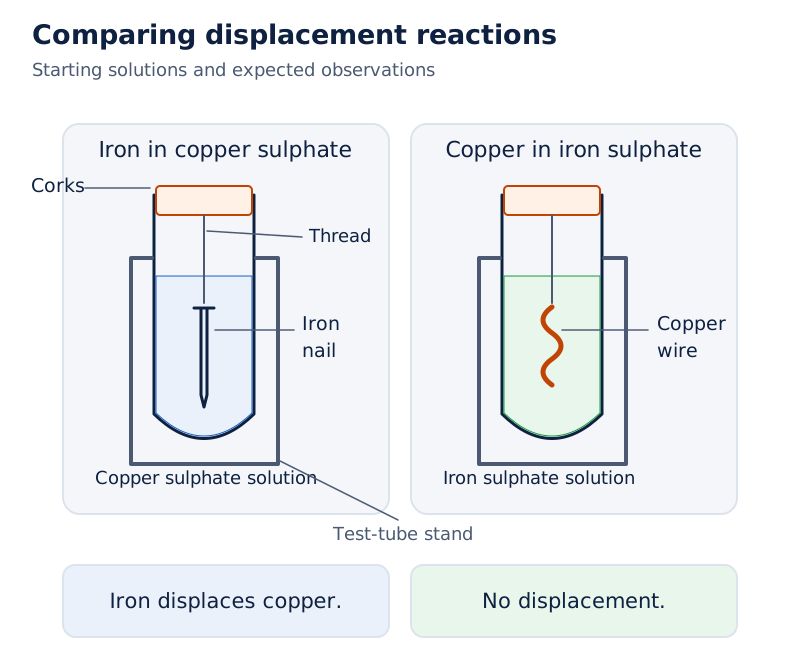
Two test tubes sit in a stand. One holds an iron nail in copper sulphate solution; the other holds copper wire in iron sulphate solution. Corks, thread and the test-tube stand are labelled.
Drawn by One Young India. See Fig. 3.4 in your NCERT textbook
Reactions with oxygen, water and acids do not by themselves separate all metals clearly. Displacement tests extend the comparison because they directly place one metal against the compound of another. The order then helps explain both extraction methods and chemical behaviour.
How does electron transfer form ionic compounds?
Noble gases show little chemical activity because their outermost electron shells are complete. Other elements can react by gaining or losing electrons to obtain complete outer shells. An octet is a set of eight electrons in the outermost shell.
Derivation: How does electron transfer give the formula of sodium chloride?
A sodium atom has the electronic configuration 2,8,1, meaning successive shells contain two, eight and one electrons. A chlorine atom, represented by Cl, has configuration 2,8,7. Sodium can lose one electron and chlorine can accept it.
- Sodium loses its single outermost electron, leaving the configuration 2,8.
- Its nucleus still contains 11 protons, but only 10 electrons remain. It becomes a positively charged sodium ion, Na⁺.
- Chlorine gains the electron and obtains the configuration 2,8,8. Its 17 protons and 18 electrons give a negatively charged chloride ion, Cl⁻.
- The opposite charges attract strongly, holding the ions together in sodium chloride, NaCl.
Result: Each sodium atom supplies the one electron needed by one chlorine atom. The resulting and ions combine in a 1:1 ratio, giving the formula .
A positive ion is a cation and a negative ion is an anion. In electron-transfer equations, e⁻ represents one electron. A superscript plus or minus gives the ion's charge; 2+ indicates two positive units of charge.
Na → Na⁺ + e⁻
Cl + e⁻ → Cl⁻
What the figure shows
Electron transfer in sodium chloride
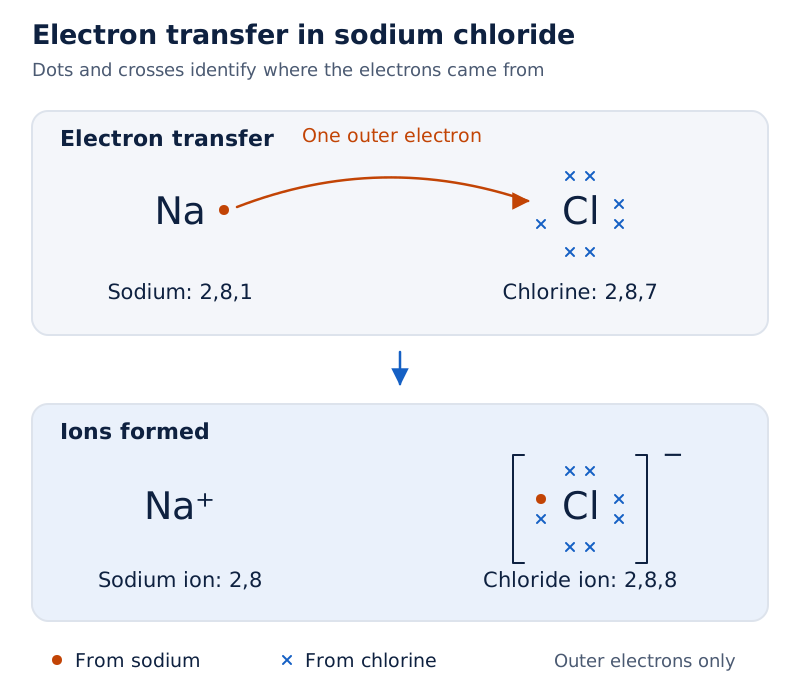
An arrow carries sodium's outer electron towards chlorine. The product shows a positive sodium ion and a bracketed negative chloride ion with a complete outer octet. Dots and crosses distinguish electrons in the drawing.
Drawn by One Young India. See Fig. 3.5 in your NCERT textbook
Sodium chloride consists of aggregates of oppositely charged ions, rather than separate sodium chloride molecules. The strong electrostatic attraction between these ions accounts for several properties of the compound.
Derivation: How does electron transfer give the formula of magnesium chloride?
Magnesium has electronic configuration 2,8,2, while chlorine has configuration 2,8,7. Their electron transfers determine the ratio of ions in magnesium chloride.
- Magnesium loses its two outermost electrons to form , with the complete outer shell of configuration 2,8.
- Each chlorine atom gains one electron to form , with configuration 2,8,8. Two chlorine atoms are therefore needed to accept the two electrons lost by one magnesium atom.
- The two chloride ions together balance the two positive units of charge on one magnesium ion. The oppositely charged ions combine in a ratio of one magnesium ion to two chloride ions.
Result: The 1:2 ratio of magnesium ions to chloride ions gives the formula .
Mg → Mg²⁺ + 2e⁻
Compounds formed by this transfer of electrons from metals to non-metals are called ionic compounds or electrovalent compounds. Both sodium chloride and magnesium chloride illustrate the link between electron transfer, ion formation and attraction between opposite charges.
Why do ionic compounds have high melting points and conduct only in certain states?
Ionic compounds are solids and are somewhat hard because positive and negative ions attract strongly. They are generally brittle, so pressure can break them into pieces. Their hardness does not imply the malleability associated with metals.
What do melting-point data show?
A considerable amount of energy is needed to overcome the strong attraction between ions. Consequently, ionic compounds have high melting and boiling points. In the table, K means kelvin, the unit used for temperature; here it is not the chemical symbol for potassium.
| Ionic compound | Melting point in kelvin | Boiling point in kelvin |
|---|---|---|
| Sodium chloride | 1074 | 1686 |
| Lithium chloride | 887 | 1600 |
| Calcium chloride | 1045 | 1900 |
| Calcium oxide | 2850 | 3120 |
| Magnesium chloride | 981 | 1685 |
These compounds are generally soluble in water and insoluble in solvents such as petrol and kerosene. The word “generally” matters: the description is a pattern of ionic compounds, rather than an unrestricted statement about every possible salt.
Why does mobility of ions matter?
A solid ionic compound does not conduct electricity because its rigid structure prevents ions from moving. When it melts, the ions become free to move. In an aqueous solution, ions are also mobile and move towards oppositely charged electrodes.
What the figure shows
Conductivity of a salt solution
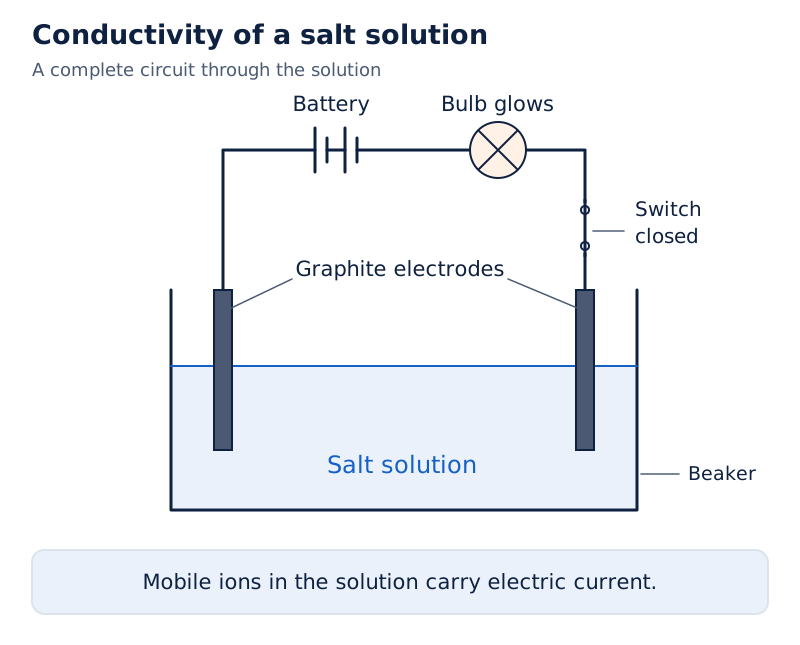
Two graphite rods dip into a salt solution in a beaker. They connect to a circuit containing a battery, bulb and switch. The solution and graphite electrodes are labelled.
Drawn by One Young India. See Fig. 3.8 in your NCERT textbook
The conducting particles in these liquids are ions. Explaining conduction therefore requires both charged particles and their freedom to move. Simply saying that an ionic substance contains ions does not explain why its solid form fails to conduct.
Where do metals occur, and how does reactivity guide extraction?
The Earth's crust is the main source of metals. Seawater also contains soluble salts, including sodium chloride and magnesium chloride. Metals can occur as free elements or in compounds, depending partly on their reactivity.
How do minerals, ores and gangue differ?
Minerals are naturally occurring elements or compounds in the Earth's crust. A mineral is an ore when it contains enough of a metal for profitable extraction. These terms therefore describe different aspects of the material.
Gangue consists of unwanted impurities, such as soil and sand, associated with mined ore. Enrichment removes these impurities before extraction. The separation method depends on differences between the physical or chemical properties of the ore and the gangue.
| Reactivity group | Occurrence and extraction pattern |
|---|---|
| High: potassium, sodium, calcium, magnesium, aluminium | Not found free in nature; extracted using electrolysis |
| Middle: zinc, iron, lead | Commonly occur as oxides, sulphides or carbonates; oxides can be reduced using suitable reducing agents |
| Low: examples include gold, silver and copper | Can occur free; some also occur in compounds from which metal is obtained by heating |
Gold, silver, platinum and copper occur in the free state. Copper and silver also occur as sulphide or oxide ores. Many ores are oxides because oxygen is abundant on Earth and is highly reactive.
What the figure shows
Routes from ore to metal
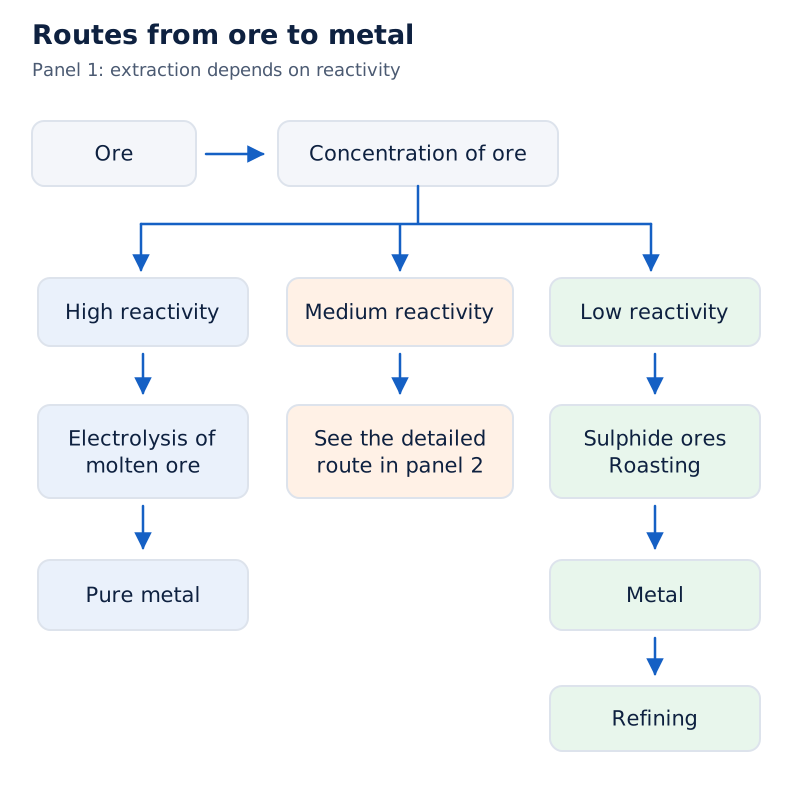
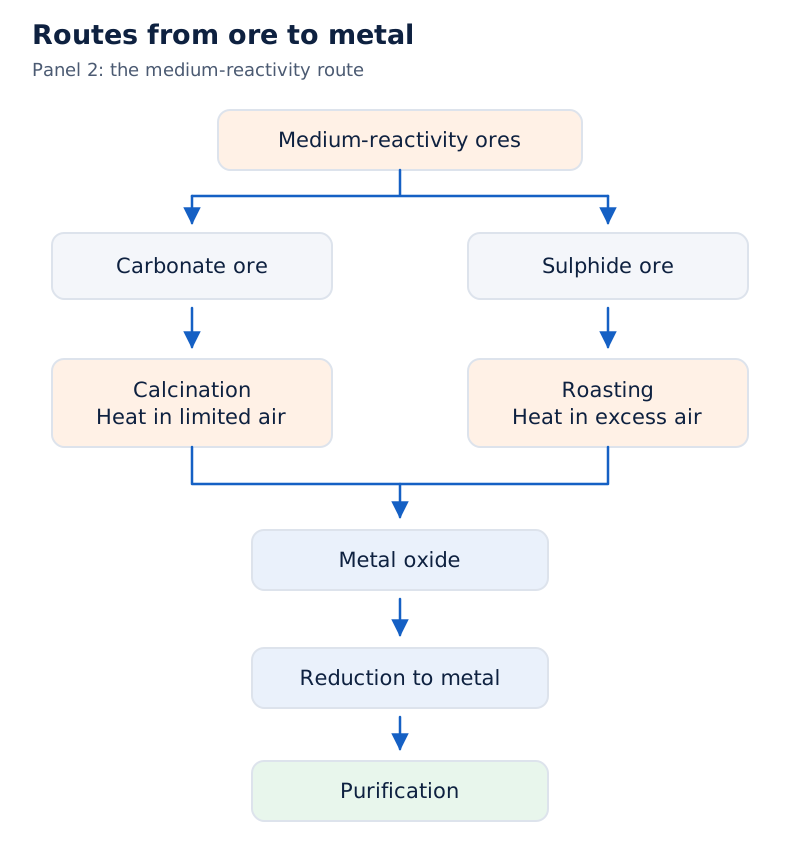
Ore first passes through concentration. The flowchart branches by high, medium and low reactivity. Its medium-reactivity branch converts carbonate or sulphide ore to oxide, then shows reduction and purification.
Drawn by One Young India. See Fig. 3.10 in your NCERT textbook
Metallurgy includes extraction from ores followed by refining. Concentration, chemical conversion and purification serve different purposes. Removing gangue does not itself convert a metal compound into the free metal, and extraction may still leave a product requiring refinement.
How are metals of low and medium reactivity extracted?
How are mercury and copper obtained?
Cinnabar, HgS, is mercury sulphide, an ore of mercury. Heating it in air first produces mercuric oxide, HgO. Further heating converts this oxide into mercury. Sulphur dioxide, SO₂, is the gaseous product of the first step.
2HgS(s) + 3O₂(g) → 2HgO(s) + 2SO₂(g)
2HgO(s) → 2Hg(l) + O₂(g)
Both steps require heat. Copper can similarly be obtained from copper sulphide, Cu₂S, by heating in air. Copper(I) oxide, Cu₂O, is formed first; it then reacts with remaining copper sulphide to produce copper.
2Cu₂S + 3O₂(g) → 2Cu₂O(s) + 2SO₂(g)
2Cu₂O + Cu₂S → 6Cu(s) + SO₂(g)
How do roasting and calcination differ?
It is easier to obtain metals from their oxides than from their sulphides or carbonates. Ores of moderately reactive metals are therefore commonly converted to oxides before reduction. Roasting uses strong heating in excess air; calcination uses strong heating in limited air.
Zinc sulphide, ZnS, undergoes roasting to form zinc oxide, ZnO. Zinc carbonate, ZnCO₃, undergoes calcination to give zinc oxide and carbon dioxide, CO₂. The following equations both require heat.
2ZnS(s) + 3O₂(g) → 2ZnO(s) + 2SO₂(g)
ZnCO₃(s) → ZnO(s) + CO₂(g)
Zinc oxide is then heated with carbon, represented by C. Carbon removes oxygen from zinc oxide, yielding zinc and carbon monoxide, CO. This is reduction of the metal oxide.
ZnO(s) + C(s) → Zn(s) + CO(g)
How can aluminium act as a reducing agent?
Highly reactive metals can displace less reactive metals from their compounds. Manganese dioxide, MnO₂, reacts with aluminium powder to form manganese, Mn. The reaction releases enough heat to produce molten metal.
3MnO₂(s) + 4Al(s) → 3Mn(l) + 2Al₂O₃(s) + heat
The thermit reaction uses iron(III) oxide, Fe₂O₃, and aluminium. Its intense heat and molten iron are used to join railway tracks or cracked machine parts. Aluminium gains oxygen while the iron oxide loses oxygen.
Fe₂O₃(s) + 2Al(s) → 2Fe(l) + Al₂O₃(s) + heat
How do electrolytic extraction and electrolytic refining differ?
Highly reactive metals cannot be extracted from their compounds by heating with carbon. Sodium, magnesium, calcium and aluminium have a stronger affinity for oxygen than carbon does. Their extraction therefore uses electrolytic reduction.
What happens during electrolytic extraction?
Sodium, magnesium and calcium are obtained by electrolysis of their molten chlorides. Metal is deposited at the cathode, the negatively charged electrode. Chlorine is released at the anode, the positively charged electrode. Aluminium is obtained by electrolytic reduction of aluminium oxide.
For molten sodium chloride, sodium ions gain electrons at the cathode. Chloride ions lose electrons at the anode, forming chlorine gas, Cl₂.
Na⁺ + e⁻ → Na
2Cl⁻ → Cl₂ + 2e⁻
How is impure copper refined?
Electrolytic refining purifies a metal already obtained by extraction. Copper, zinc, tin, nickel, silver and gold can be refined this way. The arrangement uses impure metal at the anode, pure metal at the cathode and a metal-salt solution as electrolyte.
- Connect impure copper as the anode and a thin strip of pure copper as the cathode.
- Immerse the electrodes in acidified copper sulphate solution, which acts as the electrolyte.
- Pass electric current. Copper from the anode dissolves into the solution.
- An equivalent amount of pure copper from the electrolyte deposits on the cathode.
- Soluble impurities enter the solution; insoluble impurities collect below the anode as anode mud.
What the figure shows
Electrolytic refining of copper
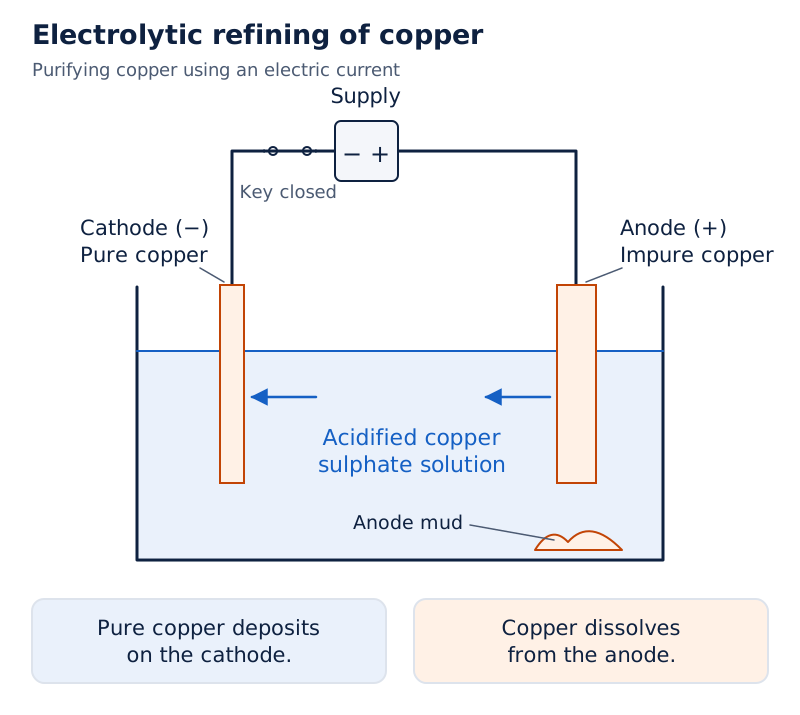
A cathode and anode hang in a tank of acidified copper sulphate solution. The circuit includes a key and a supply. The drawing labels impurities beneath the anode as anode mud.
Drawn by One Young India. See Fig. 3.12 in your NCERT textbook
The two electrolytic processes answer different needs. Extraction obtains a metal from its compound; refining improves the purity of an existing metal. Their starting materials and electrode arrangements must therefore be distinguished even though both involve electric current.
What causes corrosion, and how can it be prevented?
Corrosion changes a metal's surface through reaction with its surroundings. Silver darkens because it reacts with sulphur in air to form silver sulphide. Copper reacts with moist carbon dioxide to develop a green coating of basic copper carbonate.
Iron exposed to moist air develops a brown, flaky coating called rust. The conditions needed for rusting can be separated by comparing clean iron nails exposed to air and water, water without dissolved air, and dry air.
What does the three-tube experiment establish?
- In the tube labelled A, place nails in water with air above it and close the tube with a cork.
- In tube B, use boiled distilled water and an oil layer to prevent air from dissolving again.
- In tube C, use anhydrous calcium chloride to absorb moisture, leaving dry air around the nails.
- After a few days, compare the nails. Rust appears in A, but not in B or C.
What the figure shows
Conditions needed for rusting
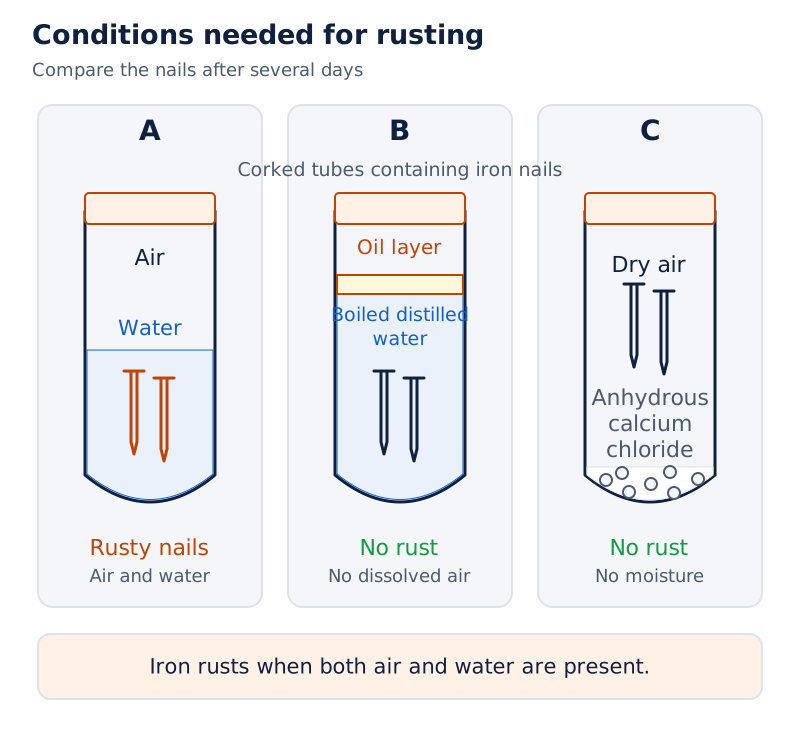
Three corked tubes are labelled A, B and C. A contains water, air and rusty nails; B contains nails in boiled distilled water beneath oil; C contains nails above anhydrous calcium chloride in dry air.
Drawn by One Young India. See Fig. 3.13 in your NCERT textbook
The comparison shows that both air and water are required for rusting under these conditions. Preventing contact with the surroundings explains the usefulness of protective surface treatments.
How do protective treatments work?
Painting, oiling, greasing, galvanising, chrome plating, anodising and alloying are methods used to prevent corrosion. Galvanisation coats iron or steel with a thin layer of zinc. The article remains protected even if the zinc layer is broken.
Anodising thickens aluminium's protective oxide layer. A clean aluminium article is made the anode during electrolysis with dilute sulphuric acid. Oxygen released at that electrode reacts with the aluminium, producing a thicker oxide coating that can also be dyed.
The rust-resistant iron pillar near the Qutub Minar in Delhi illustrates ancient Indian metallurgy. Made more than 1600 years ago, it is eight metres high and weighs six tonnes, equivalent to 6000 kilograms.
How does alloying change the properties and uses of metals?
Definition: An alloy is a homogeneous mixture of two or more metals, or of a metal and a non-metal.
To prepare an alloy, the main metal is melted first. Other elements are dissolved in it in definite proportions, and the mixture is cooled to room temperature. Alloying allows useful changes in hardness, strength, corrosion resistance and other properties.
Which alloys illustrate these changes?
| Material | Composition or change | Relevant property or use |
|---|---|---|
| Iron mixed with carbon | A small amount of carbon, about 0.05 per cent | Harder and stronger than pure iron |
| Stainless steel | Iron mixed with nickel and chromium | Hard and resistant to rusting |
| Brass | Copper and zinc | Not a good electrical conductor compared with copper |
| Bronze | Copper and tin | Not a good electrical conductor compared with copper |
| Solder | Lead and tin | Low melting point; joins electrical wires |
| Amalgam | An alloy with mercury as one constituent | Named according to the presence of mercury |
Pure iron is soft and stretches easily when hot. Adding other substances changes its properties. Copper conducts electricity well, whereas brass and bronze are poorer conductors. Solder's low melting point makes it useful for joining electrical wires.
Why is gold alloyed for jewellery?
Pure gold is called 24 carat gold. It is very soft and is therefore unsuitable for making jewellery without modification. Adding silver or copper makes it harder.
22 carat gold, generally used for ornaments in India, contains 22 parts pure gold alloyed with two parts copper or silver. The composition explains why an ornament can have useful hardness while still containing a high proportion of gold.
Glossary
- Malleability — The ability of a metal to be beaten into thin sheets when hammered.
- Ductility — The ability of a metal to be drawn into thin wires for different uses.
- Allotrope — One of the different forms in which the same element can exist, such as diamond or graphite.
- Amphoteric oxide — An oxide that reacts with both acids and bases to produce salts and water.
- Reactivity series — A list arranging metals in decreasing reactivity, with hydrogen included as a reference.
- Ionic compound — A compound formed through electron transfer from a metal to a non-metal, containing oppositely charged ions.
- Mineral — An element or compound that occurs naturally in the Earth's crust.
- Ore — A mineral containing enough of a particular metal for its extraction to be profitable.
- Gangue — Unwanted impurities, such as soil and sand, associated with an ore mined from the Earth.
- Roasting — Strong heating of a sulphide ore in excess air to convert it into an oxide.
- Calcination — Strong heating of a carbonate ore in limited air to convert it into an oxide.
- Metallurgy — The extraction of metals from their ores followed by refining them for use.
- Anode mud — Insoluble impurities that settle below the anode during the electrolytic refining of a metal.
- Galvanisation — Protection of iron or steel against rusting by applying a thin coating of zinc.
- Alloy — A homogeneous mixture of two or more metals, or a metal and a non-metal.
Common errors and misconceptions
- Misconception: Every metal is hard and solid at room temperature. Correct: Mercury is liquid, and lithium, sodium and potassium are soft enough to cut with a knife.
- Misconception: Every non-metal lacks lustre and cannot conduct electricity. Correct: Iodine is lustrous, and graphite conducts electricity.
- Misconception: All metal oxides are exclusively basic. Correct: Aluminium oxide and zinc oxide are amphoteric and react with both acids and bases.
- Misconception: Metals always release hydrogen with acids. Correct: Copper does not react with dilute hydrochloric acid, and nitric acid generally prevents hydrogen evolution through oxidation.
- Misconception: Sodium chloride consists of individual molecules. Correct: It consists of aggregates of oppositely charged sodium and chloride ions.
- Misconception: Solid ionic compounds conduct because they contain ions. Correct: Their ions cannot move through the rigid solid; conduction occurs when ions are mobile in a melt or aqueous solution.
- Misconception: Roasting and calcination use identical conditions. Correct: Roasting heats sulphide ores in excess air; calcination heats carbonate ores in limited air.
- Misconception: Water alone is sufficient to rust iron. Correct: The nail experiment establishes the need for both air and water.
Exam-style questions with model answers
Q1. Define malleability and ductility. Give one metal that shows both properties particularly well. [2 marks]
- Malleability is the ability to be beaten into thin sheets; ductility is the ability to be drawn into thin wires.
- Gold is highly malleable and is the most ductile metal.
Q2. Aluminium oxide reacts with hydrochloric acid to form aluminium chloride and water, and with sodium hydroxide to form sodium aluminate and water. Explain its classification and write balanced equations. The formulae are Al₂O₃, HCl, AlCl₃, H₂O, NaOH and NaAlO₂ respectively. [3 marks]
- Aluminium oxide is amphoteric because it reacts with both an acid and a base to produce salts and water. Its behaviour cannot be described as exclusively basic.
- With hydrochloric acid: Al₂O₃ + 6HCl → 2AlCl₃ + 3H₂O. Aluminium chloride is the salt formed.
- With sodium hydroxide: Al₂O₃ + 2NaOH → 2NaAlO₂ + H₂O. Sodium aluminate is the salt formed in this reaction.
Q3. Sodium has 11 protons and electronic configuration 2,8,1; chlorine has 17 protons and configuration 2,8,7. Explain sodium chloride formation, giving the electron counts, charges and final configurations of its ions. [5 marks]
- A sodium atom loses the single electron in its outermost shell. Its electronic configuration changes from 2,8,1 to 2,8, giving it a complete outer shell.
- The sodium nucleus retains 11 protons, while 10 electrons remain. The ion therefore has one positive charge and is called a sodium cation.
- A chlorine atom gains the transferred electron. Its configuration changes from 2,8,7 to 2,8,8, completing its outer octet.
- Chlorine now has 18 electrons and 17 protons. It forms a chloride anion carrying one negative charge.
- Strong electrostatic attraction holds the oppositely charged ions together. Sodium chloride consists of aggregates of these ions rather than separate sodium chloride molecules.
Q4. A solid sample of sodium chloride does not conduct electricity, but its molten form and aqueous solution do. Explain these observations and its high melting point. [3 marks]
- In the solid, sodium and chloride ions are held in a rigid structure and cannot move to carry electric current.
- In the molten form, heat overcomes the forces holding the ions in fixed positions. The mobile ions can conduct electricity.
- In aqueous solution, ions move towards oppositely charged electrodes. The high melting point reflects the considerable energy needed to overcome strong attraction between the ions.
Q5. Zinc sulphide and zinc carbonate are ores from which zinc oxide is first prepared. Explain the conditions for these conversions and the subsequent reduction with carbon. Use ZnS for zinc sulphide, ZnCO₃ for zinc carbonate, ZnO for zinc oxide, Zn for zinc, C for carbon, O₂ for oxygen, SO₂ for sulphur dioxide, CO₂ for carbon dioxide and CO for carbon monoxide. [5 marks]
- It is easier to obtain zinc from its oxide than from its sulphide or carbonate. The extraction route therefore first converts the ore to zinc oxide and then reduces that oxide.
- Zinc sulphide is strongly heated in excess air. This process is roasting: 2ZnS + 3O₂ → 2ZnO + 2SO₂.
- Zinc carbonate is strongly heated in limited air. This process is calcination: ZnCO₃ → ZnO + CO₂.
- The zinc oxide is heated with carbon, which acts as the reducing agent. The reaction is ZnO + C → Zn + CO.
- Removing oxygen from zinc oxide gives metallic zinc. Roasting or calcination prepares the oxide; the final reduction step produces the metal.
Q6. Describe electrolytic refining of copper using impure copper, a pure copper strip and acidified copper sulphate solution. State what happens to soluble and insoluble impurities. [5 marks]
- Make the impure copper the anode and the thin strip of pure copper the cathode. The acidified copper sulphate solution is the electrolyte into which both electrodes dip.
- When electric current passes, copper from the impure anode dissolves into the electrolyte. This transfers copper from the original impure metal into the solution.
- An equivalent amount of pure copper from the electrolyte deposits on the cathode. The purpose of this arrangement is purification of an already extracted metal.
- Soluble impurities go into the solution. Insoluble impurities settle at the bottom of the anode and form anode mud.
- The cathode receives pure copper, while the impurities remain in the solution or collect separately below the anode.
Q7. Clean iron nails are kept in three corked tubes: A contains air and water; B contains boiled distilled water covered with oil; C contains dry air and anhydrous calcium chloride. After several days, only A shows rust. Explain the role of each arrangement and the conclusion. [4 marks]
- Tube A exposes the nails to both air and water, allowing rust to develop.
- In B, boiling removes dissolved air, while the oil layer prevents air from dissolving again. The nails have water without dissolved air.
- In C, anhydrous calcium chloride absorbs moisture, leaving the nails exposed to dry air.
- Because only A rusts, the comparison shows that iron needs both air and water for rusting under these conditions.
Q8. Given the decreasing reactivity order magnesium, zinc, iron, copper, predict whether zinc displaces iron from iron sulphate solution and whether copper displaces zinc from zinc sulphate solution. Explain the rule used. [2 marks]
- Zinc displaces iron because zinc is more reactive than iron.
- Copper does not displace zinc because it is less reactive. A metal displaces a less reactive metal from its salt solution.
Key takeaways
- Metals are generally lustrous, malleable, ductile and conducting, but important exceptions prevent classification by a single physical property.
- Metal reactions with oxygen, water and acids differ in rate, required conditions and products according to their reactivity.
- The reactivity series predicts displacement: a more reactive metal can remove a less reactive metal from its compound.
- Ionic compounds form through electron transfer and contain oppositely charged ions held by strong electrostatic attraction.
- Mobile ions explain why ionic compounds conduct when molten or dissolved in water, whereas their rigid solids do not.
- Extraction depends on reactivity: highly reactive metals require electrolysis, while other metal oxides can undergo chemical reduction or heating.
- Electrolytic refining uses an impure anode and pure cathode to separate useful metal from soluble and insoluble impurities.
- Rusting needs both air and water; protective coatings and alloying help preserve metals and improve their useful properties.
Test yourself
Why is sodium stored under kerosene oil?
Sodium reacts vigorously in the open and may catch fire. Immersion in kerosene protects it and helps prevent accidental fires.
Why does calcium begin to float while reacting with water?
Hydrogen bubbles produced during the reaction stick to calcium's surface and make it float.
Which metals can release hydrogen with very dilute nitric acid?
Magnesium and manganese can evolve hydrogen when the nitric acid is very dilute.
How many chloride ions accompany each magnesium ion in magnesium chloride?
Two chloride ions accompany each magnesium ion, balancing its two positive units of charge.
What distinguishes an ore from a mineral?
An ore is a mineral from which a metal can be extracted profitably because of its sufficiently high metal content.
What is the thermit reaction used for?
The reaction of iron(III) oxide with aluminium produces molten iron and heat for joining railway tracks or cracked machine parts.
How does galvanisation protect an iron article?
It coats iron with a thin layer of zinc, protecting it against rusting even when the coating is broken.
Why is pure gold alloyed before making jewellery?
Pure gold is very soft. Adding copper or silver makes it harder and more suitable for ornaments.