
Learnacy Mentorship · January 2027 intake
18 weeks with a mentor, one question of their own, and the habit of finding things out.
Learnacy is the capacity to keep learning after anyone stops grading you. In the Learnacy Mentorship a student practises it for 18 weeks, online, in a small group and one to one, and makes one substantial piece of their own work.
Grades 8, 9 and 11Monday 18 January to Sunday 23 May 2027Online, at fixed IST times
Applications are open now and are read as they arrive. Every student goes through selection: a short task, then a conversation.
- Knowledge partner

The idea
Students do not hate learning. They hate being taught toward a test they do not care about.
Our founder saw it first while tutoring the neighbours’ children. When a fact was taught toward a question they cared about, they leaned in and asked the next question before the answer was finished.
That capacity has a name, Learnacy, after the old root of “scholar”: learning a person does by choice. The method is in Learnacy, our founder’s book of short essays: curiosity over certainty, the power of “I don’t know”, questions over answers, feedback, and starting again after failure.
The mentorship is where a student practises it: a question they choose, 18 weeks to find out, and a piece of work that is theirs.
Mentors and their questions
Learning passes from mind to mind. Become part of it.
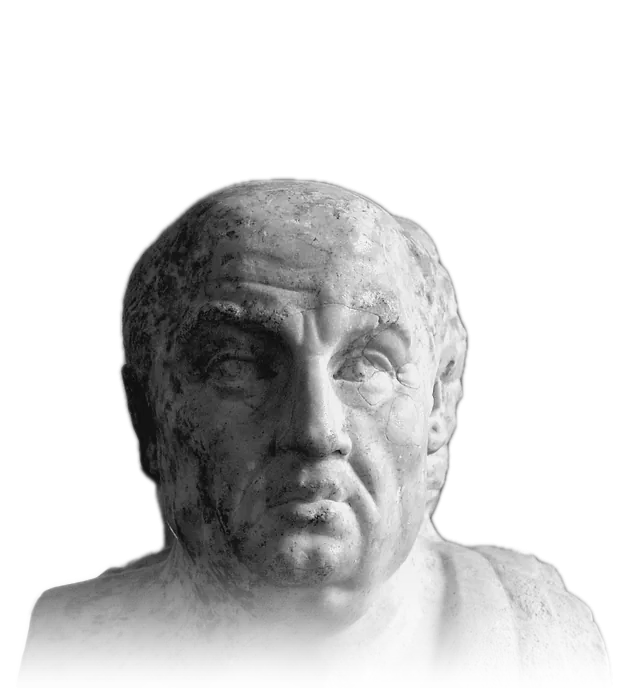
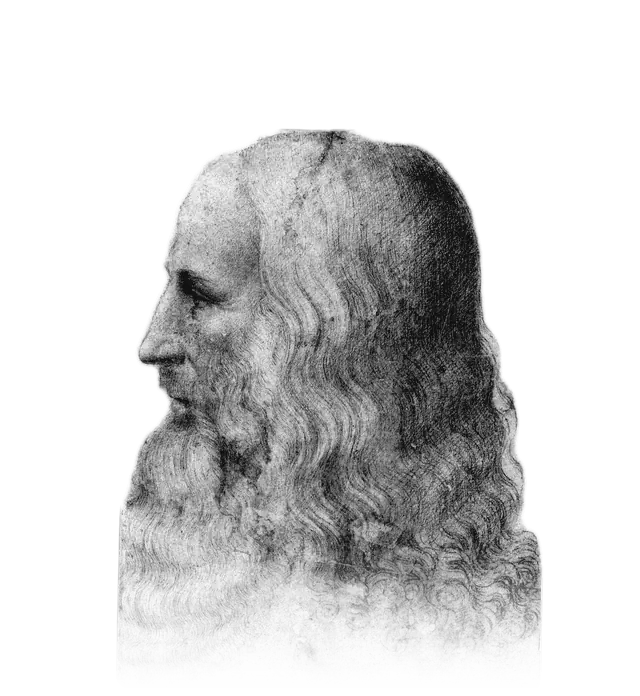

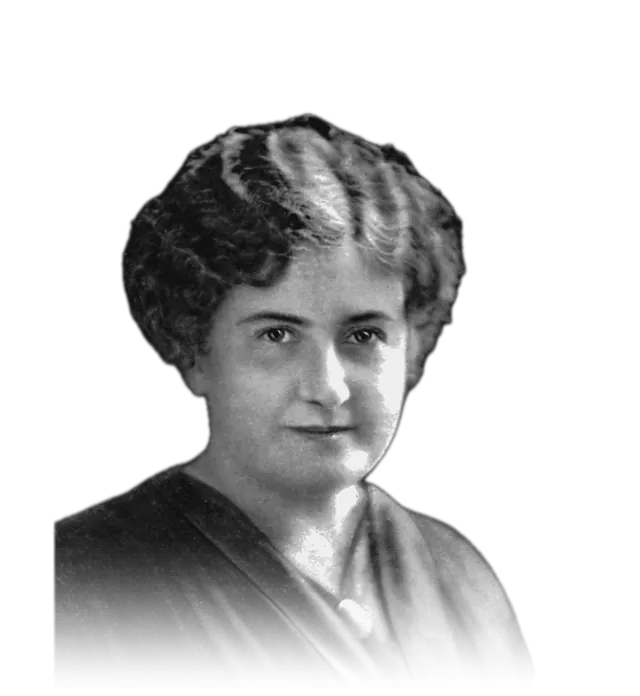
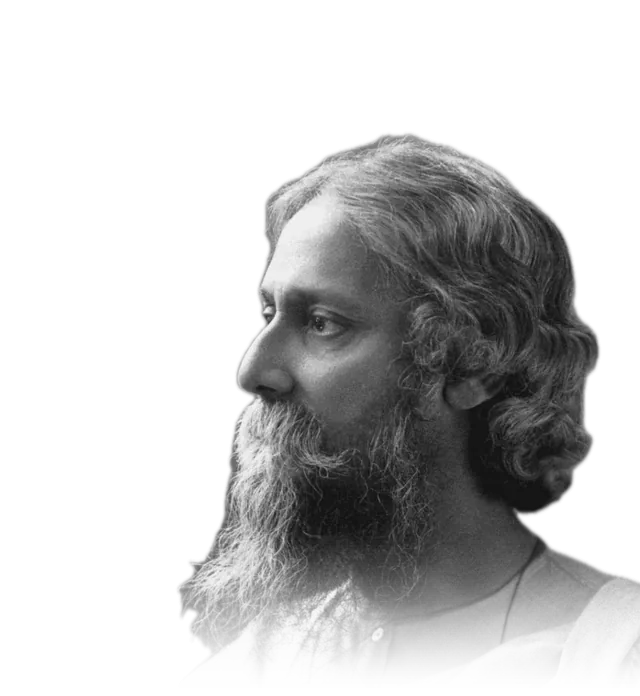
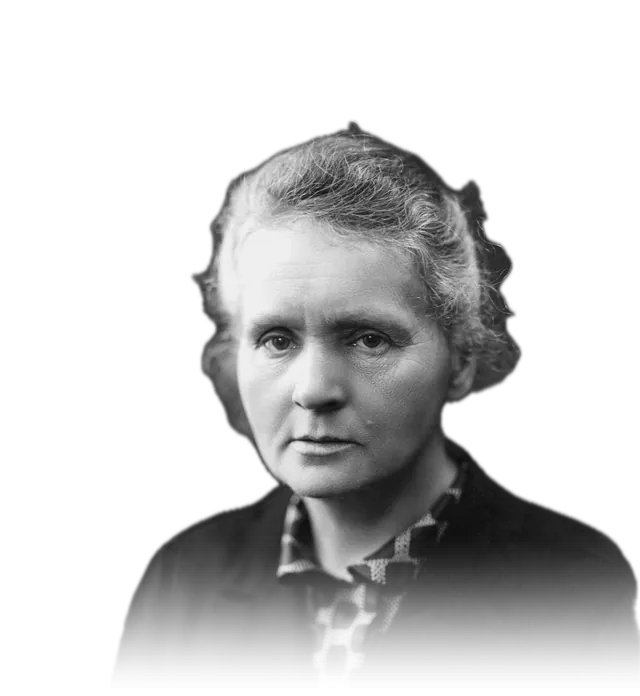


The living voice and the intimacy of a common life will help you more than the written word.
He is a poor disciple who does not excel his master.
His task is rather to keep alive the sacred spark of wonder and to fan the flame that already glows.
Discipline must come through liberty.
The highest education is that which does not merely give us information but makes our life in harmony with all existence.
We must not forget that when radium was discovered no one knew that it would prove useful in hospitals. The work was one of pure science.
The important thing is not to stop questioning. Curiosity has its own reason for existence.
My teacher, his life and his way of teaching showed me the way. In that class I decided my mission.
Image credits
- Seneca, part of the inscribed double herm, Antikensammlung Berlin, photo Calidius (own work), CC BY-SA 3.0, via Wikimedia Commons CC BY-SA 3.0
- Portrait of Leonardo, red chalk drawing attributed to Francesco Melzi, c. 1515 to 1517, Royal Collection, public domain, via Wikimedia Commons
- John Dewey, bust portrait, Underwood & Underwood, Library of Congress Prints and Photographs Division (cph.3a51565), public domain, via Wikimedia Commons
- Doctor Maria Montessori, Nationaal Archief, the Netherlands (119-0489), public domain, via Wikimedia Commons
- Rabindranath Tagore in Kolkata, 1909, published in Les Prix Nobel 1913 (1914), p. 60, public domain, via Wikimedia Commons
- Marie Curie, c. 1920, Henri Manuel, public domain, via Wikimedia Commons
- Albert Einstein, 1947, Oren Jack Turner, Library of Congress Prints and Photographs Division (cph.3b46036), public domain, via Wikimedia Commons
- A. P. J. Abdul Kalam, official portrait, 2 August 2002, Government of India (abdulkalam.nic.in; MEA India), GODL-India, via Wikimedia Commons GODL-India
- Each portrait is cut out from its background, cropped and set in greyscale. An adapted picture keeps the licence of its source.
The 18 weeks
From a question to a finished piece.
Monday 18 January to Sunday 23 May 2027. Each phase ends in a milestone, with written feedback from the student’s mentor.
- 01 Weeks 1 to 3 Ask
The student chooses a question, and writes what they think they know and how they would find out.
Milestone A one-page question memo, Sunday 7 February.
- 02 Weeks 4 to 7 Find out
Sources, data and interviews, a research plan and an evidence file.
Milestone The research plan and the evidence file, Sunday 7 March, before most school finals.
- 03 Weeks 8 to 13 Make the argument
Drafting in the chosen format. Two lighter weeks fall in March for school finals, set for each group at orientation.
Milestone A full draft, Sunday 18 April.
- 04 Weeks 14 to 18 Put it to the test
Revision, then the showcase on Saturday 22 May, with parents invited.
Milestone The final piece and a one-page reflection.
From week 12 (5 April) the new school year has begun. For a student moving into Class 10 or 12 that is a board year, so most drafting is planned to be done by mid-April, and weeks 14 to 18 are for revision and the showcase.
What a student makes
- One substantial piece of their own work, in a format chosen with the mentor: a white paper, a research paper, a policy brief, or a competition entry where the organiser’s dates fit.
- A one-page reflection: what they believed in January, what changed, and what they would ask next.
- The trail: the question memo, the research plan, the evidence file, and every draft with the mentor’s feedback. You see the work grow, which is how you know it is the student’s own.
At the end a student may submit the piece to The OYI Review, our reviewed student publication, like any Learnacy Essential member. Their own mentor never reviews it. Publication depends on review and is not guaranteed.
The film
Students, in their own words.
A film from our classes in person: a look inside them, and students on what they found there.


Moments from the film. Press a time to hear it there.
-
1:23“This class is engaging and not for a moment was I bored.”
-
2:02“You said we’re gonna be doing science, I was a little apprehensive because I’ve never understood science, but I actually understood everything that was happening in class.”
-
3:56“I really liked and learned a lot, and you gave me a lot to search, like, right after the class.”
Students at a One Young India workshop
From a workshop with Model NITI Aayog and Learnacy: students on what they took from it.
-
“You didn’t just tell us about that, but you actually made us experience that ourselves by constantly asking questions throughout.”
A student at the workshop 0:47
-
“The biggest eye opener, it’s the idea that there’s so many connections that I can make with my knowledge that I am not making right now.”
A student at the workshop 3:29
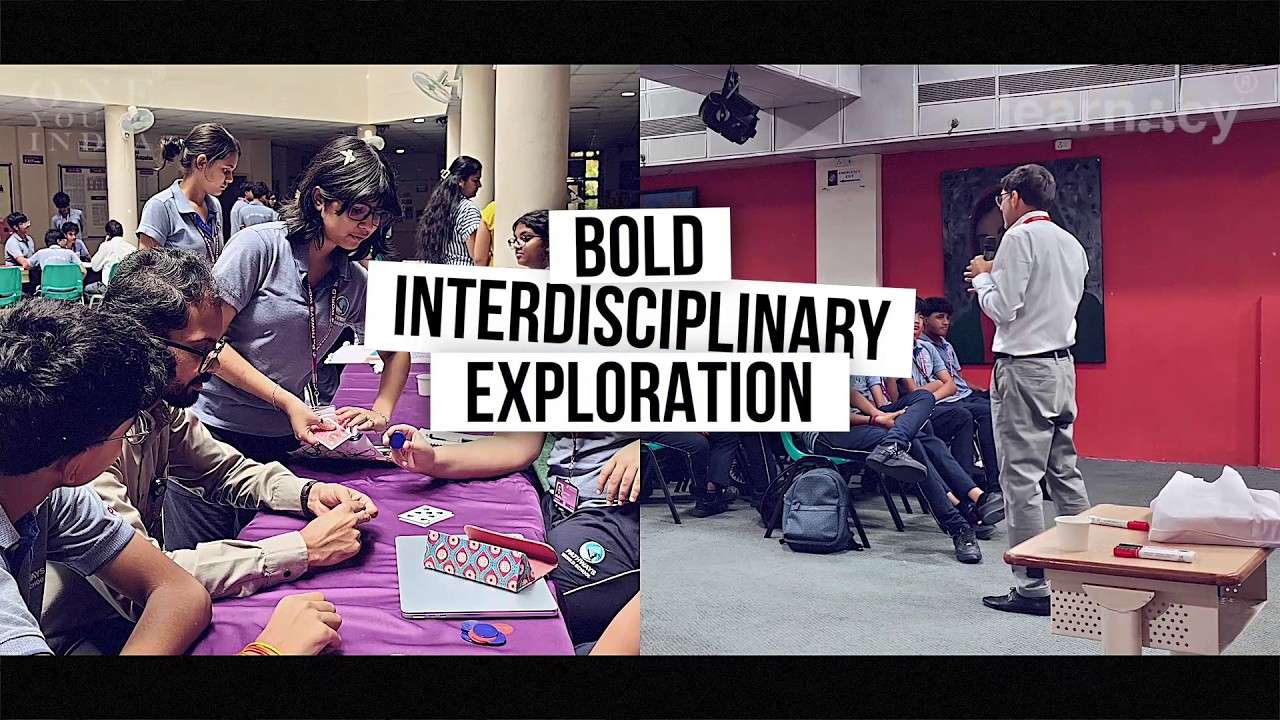
Learnacy at Pathways World School, Gurugram
Where this film is from: Learnacy at a partner school, in person.
Learnacy, in the room.
The mentorship itself runs online. These photos are from our days in person, where students made their own work and showed it.


Who mentors
Led by our founder.
Our founder leads the Learnacy Mentorship: the method, the seminar for the whole intake, every selection conversation, and a reading of every final piece.
Each family’s offer names the student’s mentor, with a short line about who they are.
Each week and each fortnight
6 to 8 students in one grade band (Grades 8 and 9 together, Grade 11 apart), in 16 of the 18 weeks, at a fixed time.
With the student’s mentor, eight in all.
The whole intake together, with our founder, nine in all.
From the student’s mentor. Our founder reads every final piece.
Orientation on Saturday 16 January, a short note at each milestone, and the showcase on Saturday 22 May.
A one-to-one can move once. Seminars are recorded for the intake only, with parents’ consent at enrolment.
About 29 hours of live sessions in all, and about 3 hours a week of the student’s own time, more in drafting weeks. Every session runs in our Zoom room. A parent may join any one-to-one. Mentors do not message students privately, and any group chat includes parents.
Times and dates
Fixed times, in IST, before you apply.
Studio groups
- Grades 8 and 9
- Saturday 10:00 to 11:00 IST
- Grade 11 (and IB DP year 1)
- Saturday 12:00 to 13:00 IST
- The seminar
- Alternate Sundays, 11:00 to 12:00 IST
One-to-one sessions: 30 minutes every two weeks, at a time agreed with each family.
Times stay in IST. Students abroad are welcome; we do not move the times for other time zones.
These are the planned times. If one changes, every family hears before its conversation.
The dates
- Now
- Applications are open, and each one is read as it arrives
- Sunday 3 January
- The last day to apply for January, if places remain
- Saturday 16 January
- Orientation for students and parents
- Monday 18 January
- Studio groups begin
- Saturday 22 May
- The showcase, with parents invited
Information sessions
Meet us before you apply.
45 minutes on Zoom with our founder: the idea, what a student does each week, what a finished piece looks like, how selection works, and your questions. For parents and students together. Sign up and we email you the joining link.
- Sunday 22 November, 11:00 IST
- Saturday 5 December, 11:00 IST
- Saturday 12 December, 11:00 IST
How selection works
Selected, not first come.
We look for a real question, a willingness to be wrong, about 3 hours a week, and a student who wants this, not only a parent. Not marks. It is not the right term for a student in full-time entrance coaching.
Admissions are rolling. We read each application as it arrives, and decide each one on its own once its task and conversation are done, not in batches.
- The application. A parent or guardian fills it in with the student, in about 15 minutes: the details, two questions in the student’s own words and one for the parent. There is no fee to apply.
- The task. The student writes 400 to 600 words, in about 45 minutes, within 10 days of the application: a question they would like to spend 18 weeks on, and why it matters to them; and one thing they used to believe and no longer do, and what changed their mind. Written alone, without AI writing it. We read for curiosity and voice, not polish.
- The conversation. Once we have read the task, 20 minutes on video with the student, a parent and our founder. The student talks about the task, and you can ask anything.
- The decision. Within a week of the conversation: an offer, the waitlist, or “not this time”, with free ways to keep going.
- Accepting. Within 7 days of the offer, then orientation on Saturday 16 January.
The fee is ₹59,000, including GST. The instalment and withdrawal terms come to you in writing after you apply and before the conversation, so you can read them before you decide anything.
What is included
Everything, with nothing to add.
- Every session on this page: the weekly studio group, the one-to-one sessions and the seminar
- Written feedback at all four milestones
- A year of Learnacy Essential: 10 self-paced courses, and the Writing Studio with its rubrics, citation tools, AI writing coach and originality check
- Orientation and the showcase
No outside fees, and none to add.
Never part of it
- Application help or profile plans
- Letters of recommendation
- Guaranteed publication
Apply
Apply for the January 2027 intake.
Applications are open now and are read as they arrive. Every student goes through selection: a short task, then a conversation. A parent or guardian fills in this form with the student beside them, in about 15 minutes. We then email you the student’s task and a private link to send it.
- Grades 8, 9 and 11 (IB DP year 1 and IGCSE year 1 too)
- Rolling admissions: open now, until the January places are filled, and Sunday 3 January at the latest
- No fee to apply
- We read every application and every task ourselves
Merit scholarship
A merit scholarship is awarded on one white paper the student writes, on the brief below. It replaces the short task and is due within three weeks of the application. The conversation still happens. Need is not considered, and every award is decided by our founder.
The brief. Pick a problem in your city, your school or your community that you think most people misunderstand. In 1,500 to 2,500 words, set out what the problem is and whom it touches, the best evidence you can find, two ways it could be addressed and what each would cost or risk, and the one you would recommend, with what would show you were wrong.
The student writes it in the Writing Studio, in the White paper format, with their own account, then pastes the final text into the private page we email you.
Free guides
Read before you write.
- Research paper for school students: how to write your first oneLearn how to frame a research question, evaluate sources, build an argument and cite borrowed ideas in your first school research paper.Read the guide
- Choosing a research topic and question as a school studentLearn how to narrow a research topic, check sources and feasibility, and choose a question that fits your assignment and available time.Read the guide
- Research projects in college applications: what admissions offices sayOfficial admissions guidance on research, activities and intellectual curiosity, with practical advice for describing your own project honestly.Read the guide
Questions
Good to know.
Admissions are rolling: we read each application as it arrives and decide each one on its own, after the task and the conversation, so there is no round to wait for. Applications close when the January places are filled, and on Sunday 3 January at the latest.
It takes about 3 hours a week, lighter in exam weeks, at fixed times you can see before you apply. Two lighter weeks fall in March for school finals. It is not the right term for a student in full-time entrance coaching, and we would rather say so now.
We do not write applications, plan profiles or promise admissions. The student will have finished a real piece of work and will be able to say what they found and how. Many universities, in India and abroad, ask students what they have done and why it mattered to them; what they make of it is for them to decide.
The fee is ₹59,000, including GST. Every session on this page, written feedback at all four milestones, the mentor named in your offer, a year of Learnacy Essential, and the showcase. There are no outside fees. The instalment and withdrawal terms come to you in writing once you apply, before the conversation.
Our founder leads the Learnacy Mentorship: the method, the seminar for the whole intake, every selection conversation, and a reading of every final piece. Each family’s offer names the student’s mentor, with a short line about who they are.
Not in January: a board year comes first. Class 10 and 12 students join the April intake. Choose “Class 10 or 12: tell me about the April intake” in the information session form, and we will email you when its dates are set.
Every session is online, in our Zoom room, at fixed IST times. Students abroad are welcome; we do not move the times for other time zones.
A one-to-one can move once, with a day’s notice. The seminars are recorded for the intake only, with parents’ consent at enrolment.
Yes. The withdrawal and refund terms come to you in writing once you apply and before the conversation, so you can read them before you decide anything.
Publication is never part of the offer. At the end a student may submit their piece to The OYI Review, like any Learnacy Essential member. It is a reviewed student publication, not a peer-reviewed journal, and the student’s own mentor never reviews that paper. Publication depends on review and is not guaranteed.
We do not sell or promise letters of recommendation, and the mentorship is not application help.
Yes. A small number of scholarships are awarded on merit, on a white paper the student writes; need is not considered. To ask for one, use “Request a scholarship” below.
Yes. January 2027 is the first intake on this 18-week design.
Only our team. A parent fills in the form and gives consent. The student’s own email is used only for their Writing Studio account. A student’s task and details are never used for marketing, and no automated system decides an application.