
Aldehydes, Ketones and Carboxylic Acids | CBSE Class 12 Chemistry Notes
On this page
Watch & explore
Start with a few high-quality watches, then dive into the notes below.
This note covers nomenclature and structure of carbonyl and carboxyl groups, preparation and physical properties of aldehydes, ketones and carboxylic acids, nucleophilic addition, oxidation and reduction, aldol and Cannizzaro reactions, acidity, esterification, chemical tests, conversions and uses.
How are aldehydes and ketones named and structured?
Identifying and naming the functional group
The carbonyl group, , contains a carbon-oxygen double bond. Aldehydes contain the group ; ketones contain between two carbon groups. Methanal is the simplest aldehyde, while propanone is the simplest ketone.
In general structures, and denote organic groups, usually alkyl or aryl groups; a prime distinguishes groups that need not be identical. denotes an aryl group. Hydrogen occupies one substituent position in an aldehyde and both in methanal.
For IUPAC nomenclature, replace the final letter of the corresponding alkane name with -al for an aldehyde or -one for a ketone. Number an aldehyde chain from its aldehyde carbon. Number a ketone chain from the end nearer the carbonyl group.
List substituents alphabetically with their positions. In cyclic ketones, the carbonyl carbon is carbon one. When an aldehyde group is attached to a ring, use carbaldehyde. Benzaldehyde is an accepted IUPAC name as well as a common name.
| Structure | Common name | IUPAC name |
|---|---|---|
| Formaldehyde | Methanal | |
| Acetaldehyde | Ethanal | |
| Isobutyraldehyde | 2-Methylpropanal | |
| -Methoxypropionaldehyde | 2-Methoxypropanal | |
| Acrolein | Prop-2-enal | |
| Methyl n-propyl ketone | Pentan-2-one |
The symbol , read as alpha, identifies the carbon next to the carbonyl carbon; , beta, identifies the next carbon. Common ketone names specify the two groups attached to the carbonyl group. Dimethyl ketone has the historical name acetone.
Bonding and polarity
The carbonyl carbon is -hybridised, meaning that one s and two p atomic orbitals combine. It forms three sigma bonds, denoted , in one plane. Its remaining p orbital overlaps with an oxygen p orbital to form a pi bond, denoted .
Oxygen has two non-bonding electron pairs. The bond angles are approximately . Because oxygen is more electronegative, carbon is an electrophilic centre and oxygen is a nucleophilic centre. Resonance includes neutral and charge-separated contributors.
What the figure shows
Formation of the carbonyl group
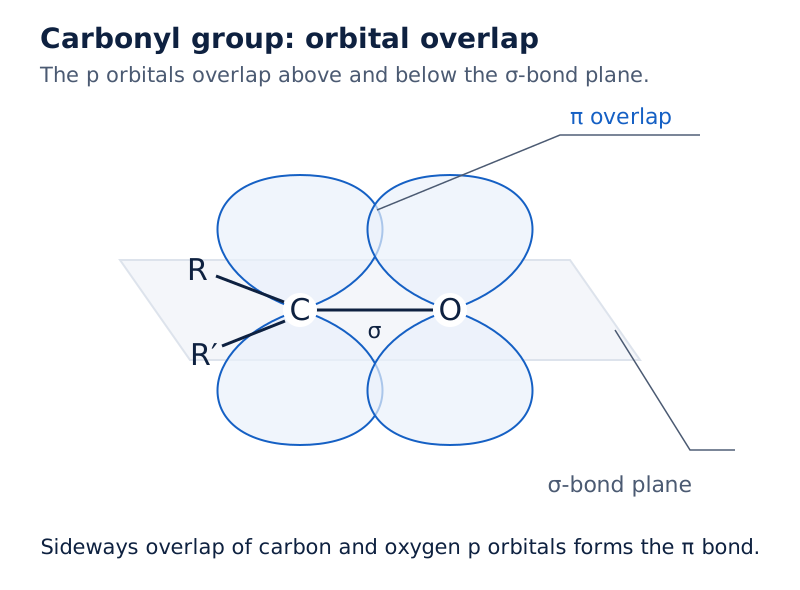
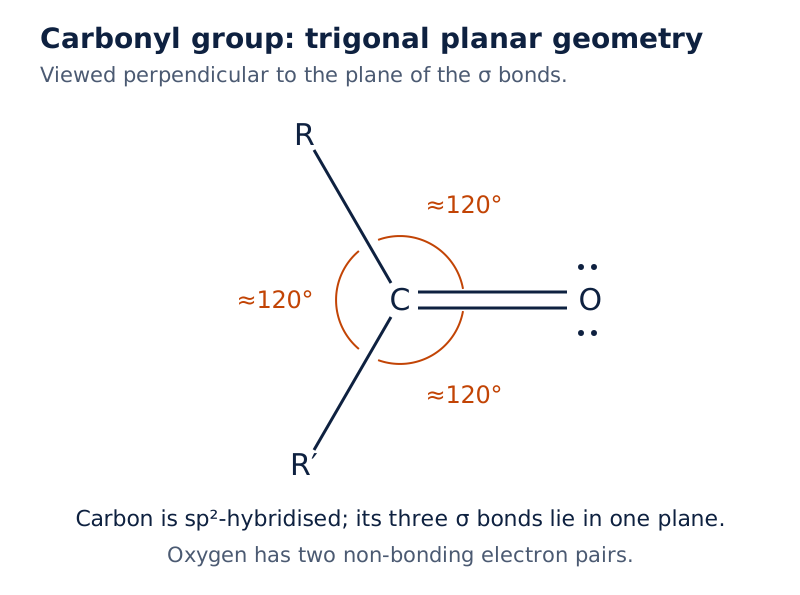
The drawing shows p orbitals overlapping above and below a plane containing the sigma bonds. Its final panel labels three approximately angles around carbon, showing the trigonal planar arrangement.
Drawn by One Young India. See Fig. 8.1 in your NCERT textbook
How are aldehydes and ketones prepared?
Routes from alcohols and hydrocarbons
Primary alcohols give aldehydes on controlled oxidation; secondary alcohols give ketones. Passing vapours of volatile alcohols over silver or copper catalysts brings about dehydrogenation. Primary and secondary alcohols again give aldehydes and ketones, respectively.
Ozonolysis of alkenes followed by zinc dust and water yields aldehydes, ketones or both, depending on the alkene. Hydration of ethyne with sulphuric acid and mercury(II) sulphate gives ethanal. Other alkynes give ketones under these conditions.
Selective aldehyde preparations
Rosenmund reduction hydrogenates an acyl chloride over palladium supported on barium sulphate. Benzoyl chloride gives benzaldehyde. Reagents and catalysts appear over reaction arrows; , used later, means heating, and means irradiation with light.
In the Stephen reaction, stannous chloride and hydrochloric acid reduce a nitrile to an imine, which is then hydrolysed. The following is the preparative scheme:
DIBAL-H means diisobutylaluminium hydride. It selectively reduces nitriles, followed by hydrolysis, to aldehydes. Esters also give aldehydes with this reagent. Thus, the choice of reducing agent determines whether the carbonyl group is retained.
In the Etard reaction, chromyl chloride converts toluene into a chromium complex, which gives benzaldehyde on hydrolysis. Carbon disulphide is the solvent shown. Alternatively, chromium trioxide in acetic anhydride forms benzylidene diacetate; aqueous acid then releases benzaldehyde.
Side-chain chlorination gives benzal chloride, which undergoes hydrolysis at , where K denotes kelvin. The Gatterman-Koch reaction uses carbon monoxide and hydrogen chloride with anhydrous aluminium chloride/cuprous chloride to convert benzene into benzaldehyde.
Ketone preparations and solved reagent choices
Acyl chlorides react with dialkylcadmium to form ketones. Dialkylcadmium is prepared using a Grignard reagent and cadmium chloride. In these schemes, denotes a halogen atom.
Nitriles react with Grignard reagents and then undergo hydrolysis to ketones. Propanenitrile and phenylmagnesium bromide give propiophenone. Friedel-Crafts acylation treats benzene or a substituted benzene with an acid chloride and anhydrous aluminium chloride to form an aromatic ketone.
Worked example 1. Select reagents for the six transformations below.
Answer: The reagent choices are:
| Transformation | Reagent |
|---|---|
| Hexan-1-ol to hexanal | Pyridinium chlorochromate, PCC, |
| Cyclohexanol to cyclohexanone | Anhydrous |
| p-Fluorotoluene to p-fluorobenzaldehyde | in acetic anhydride; alternatively, chromyl chloride followed by water |
| Ethanenitrile to ethanal | Diisobutylaluminium hydride, DIBAL-H |
| Allyl alcohol to propenal | PCC |
| But-2-ene to ethanal | Ozone followed by water and zinc dust |
How does structure explain the physical properties of aldehydes and ketones?
Methanal is gaseous at room temperature, while ethanal is a volatile liquid. Other aldehydes and ketones are liquids or solids. Their polar carbonyl groups produce dipole-dipole attractions, giving higher boiling points than hydrocarbons and ethers of comparable molecular masses.
Their boiling points remain below those of comparable alcohols because aldehyde and ketone molecules lack intermolecular hydrogen bonding with one another. The following boiling temperatures illustrate the differences; all temperatures are in kelvin.
| Compound | Boiling temperature |
|---|---|
| n-Butane | |
| Methoxyethane | |
| Propanal | |
| Acetone | |
| Propan-1-ol |
Solubility and a boiling-point comparison
Lower members, including methanal, ethanal and propanone, are miscible with water in all proportions because their oxygen atoms form hydrogen bonds with water. Solubility decreases rapidly as the alkyl chain grows. They are fairly soluble in organic solvents.
Lower aldehydes have sharp, pungent odours. With increasing molecular size, their odours become less pungent and more fragrant. Many naturally occurring aldehydes and ketones are therefore used as perfume and flavouring ingredients.
Worked example 2. Arrange , , and in increasing boiling-point order.
Answer: Butan-1-ol has extensive intermolecular hydrogen bonding. Butanal has stronger dipole-dipole attraction than ethoxyethane, while the hydrocarbon has weak van der Waals forces. The increasing order is:
Note: Absence of hydrogen bonding between pure aldehyde or ketone molecules does not prevent hydrogen bonding with water. These are different intermolecular comparisons.
Why do carbonyl compounds undergo nucleophilic addition?
A nucleophile donates an electron pair to the electron-deficient carbonyl carbon. The carbon-oxygen double bond is polar, so aldehydes and ketones favour nucleophilic addition rather than the electrophilic addition characteristic of alkenes.
Numbered mechanism
Let represent a negatively charged nucleophile and a proton. The symbols and represent partial positive and partial negative charges, respectively. The sequence changes a planar carbonyl centre into a tetrahedral centre.
- The nucleophile approaches carbon approximately perpendicular to the plane of its orbitals. Addition produces an alkoxide ion:
- The carbon changes from to hybridisation, involving one s and three p orbitals, and the alkoxide captures a proton:
The net change adds a nucleophile and a proton across the carbon-oxygen double bond. Tetrahedral intermediate formation is followed by production of an electrically neutral addition product.
What the figure shows
Nucleophilic attack on carbonyl carbon
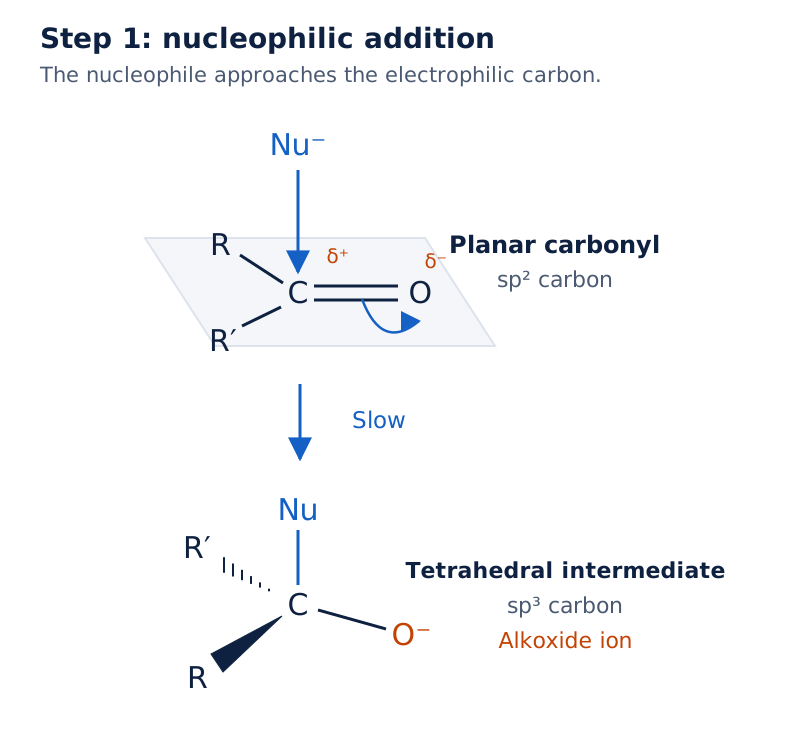
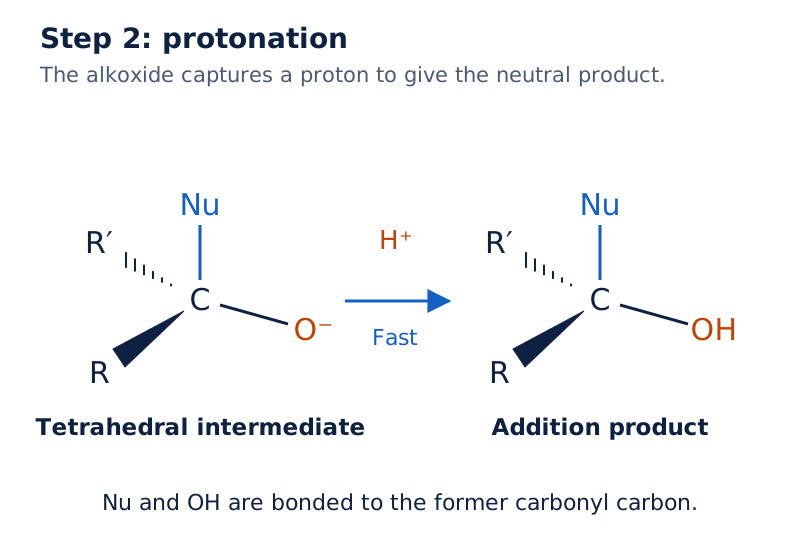
The planar carbonyl is labelled with partial charges and an approaching nucleophile. A slow first step forms a tetrahedral intermediate. A fast second step, labelled with a proton, produces the hydroxyl-containing addition product.
Drawn by One Young India. See Fig. 8.2 in your NCERT textbook
Comparing reactivity
Aldehydes are generally more reactive than ketones for two reasons. Two relatively large substituents in a ketone hinder nucleophilic approach. Electronically, two alkyl groups reduce the electrophilicity of the carbonyl carbon more effectively than one alkyl group in an aldehyde.
Worked example 3. Compare benzaldehyde with propanal in nucleophilic addition and explain the difference.
Answer: Benzaldehyde is less reactive. Resonance involving its benzene ring reduces carbonyl polarity, making the carbonyl carbon less electrophilic than that in propanal. Compare both steric accessibility and the electronic character of the carbonyl carbon when predicting addition reactions.
Which addition products do aldehydes and ketones form?
Cyanohydrins, hydrogensulphite compounds and acetals
Hydrogen cyanide adds across the carbonyl group to form cyanohydrins. Pure hydrogen cyanide reacts slowly. A base generates cyanide ions, which are stronger nucleophiles and add readily. Cyanohydrins are useful intermediates in synthesis.
- Base generates the nucleophile:
- Cyanide attacks the carbonyl carbon:
- Protonation forms the cyanohydrin:
Sodium hydrogensulphite forms addition compounds with aldehydes and ketones. Equilibrium lies largely towards products for most aldehydes, but towards reactants for most ketones because of steric effects. The water-soluble products regenerate carbonyl compounds with dilute mineral acid or alkali, aiding aldehyde separation and purification.
Aldehydes react with one equivalent of a monohydric alcohol in dry hydrogen chloride to form a hemiacetal. A second alcohol molecule produces a gem-dialkoxy compound called an acetal, with both alkoxy groups attached to the same carbon.
Ketones react with ethylene glycol under similar conditions to give cyclic ethylene glycol ketals. Protonation of carbonyl oxygen increases carbonyl-carbon electrophilicity. Aqueous mineral acids hydrolyse acetals and ketals back to their corresponding carbonyl compounds.
Ammonia derivatives and addition-elimination
Ammonia and its derivatives add to the carbonyl group, then lose water. The reaction is reversible and acid-catalysed. Rapid dehydration favours the product. In the general scheme, denotes hydrogen or the group attached to the nitrogen of the reagent.
| Reagent | Group represented by Z | Product |
|---|---|---|
| Ammonia | Imine | |
| Amine | Substituted imine, or Schiff's base | |
| Hydroxylamine | Oxime | |
| Hydrazine | Hydrazone | |
| Phenylhydrazine | Phenylhydrazone | |
| 2,4-Dinitrophenylhydrazine | , with nitro groups at positions 2 and 4 | 2,4-Dinitrophenylhydrazone |
| Semicarbazide | Semicarbazone |
2,4-DNP derivatives are yellow, orange or red solids and help characterise aldehydes and ketones. Formation of this derivative establishes the carbonyl class, but further tests are needed to distinguish an aldehyde from a ketone.
How do reduction, oxidation and chemical tests distinguish carbonyl compounds?
Reduction and oxidation products
Sodium borohydride, lithium aluminium hydride and catalytic hydrogenation reduce aldehydes to primary alcohols and ketones to secondary alcohols. Reduction to a hydrocarbon instead replaces the carbonyl group by a methylene group.
Clemmensen reduction uses zinc amalgam and concentrated hydrochloric acid. Wolff-Kishner reduction first forms a hydrazone, then heats it with sodium or potassium hydroxide in a high-boiling solvent such as ethylene glycol.
Aldehydes oxidise readily to carboxylic acids. The symbol denotes an oxidising agent in a reaction scheme. Ketones generally need strong oxidants and elevated temperatures; carbon-carbon bond cleavage then produces acids with fewer carbon atoms than the starting ketone.
Tollens', Fehling's and iodoform tests
Tollens' reagent is freshly prepared ammoniacal silver nitrate solution. Warming with an aldehyde deposits a bright silver mirror. The alkaline reaction forms a carboxylate anion, rather than an un-ionised acid.
Fehling's reagent combines equal amounts of aqueous copper sulphate, solution A, and alkaline sodium potassium tartrate, solution B. Heating with an aldehyde produces reddish-brown copper(I) oxide. Aromatic aldehydes do not respond to this test.
The haloform reaction oxidises methyl carbonyl compounds with sodium hypohalite. The methyl group becomes haloform and the other product is a carboxylate salt containing one fewer carbon atom. A carbon-carbon double bond, if present, is unaffected.
The iodoform test detects the group, or the group that yields it on oxidation. A yellow iodoform precipitate is the characteristic observation.
Solved identification from combined evidence
Worked example 4. Compound A, , gives an orange-red 2,4-DNP precipitate and yellow precipitate with iodine and sodium hydroxide. It reduces neither Tollens' nor Fehling's reagent and decolourises neither bromine water nor Baeyer's reagent. Drastic chromic-acid oxidation gives B, . Identify both.
Answer: The 2,4-DNP derivative establishes an aldehyde or ketone. Failure to reduce Tollens' reagent identifies a ketone, while the iodoform test identifies a methyl ketone. The formula and lack of bromine-water or Baeyer decolourisation point to aromatic unsaturation.
Therefore, A is acetophenone and B is benzoic acid. The diagnostic transformations are:
The nitro groups in this derivative occupy positions 2 and 4 of its phenyl ring.
When do aldol condensation and Cannizzaro reactions occur?
Reactions involving alpha-hydrogen
An alpha-hydrogen is attached to the carbon next to a carbonyl group. These hydrogens are acidic because the carbonyl group withdraws electrons and the resulting conjugate base is stabilised by resonance. This enables carbon-carbon bond formation in an aldol reaction.
Aldehydes and ketones with at least one alpha-hydrogen react in dilute alkali to form beta-hydroxy aldehydes, called aldols, or beta-hydroxy ketones, called ketols. Loss of water then gives an alpha,beta-unsaturated carbonyl compound.
For ethanal, the two stages are numbered below:
- Aldol addition forms 3-hydroxybutanal:
- Dehydration gives but-2-enal:
Propanone similarly forms 4-hydroxy-4-methylpentan-2-one with barium hydroxide. Dehydration gives 4-methylpent-3-en-2-one. The general term aldol condensation includes ketone reactions even though the first addition product is a ketol.
Cross aldol and disproportionation
A cross aldol condensation involves different aldehydes or ketones. If both contain alpha-hydrogens, four products can result. Ethanal and propanal give two self-condensation products and two cross-condensation products after dehydration.
| Origin | Condensation product |
|---|---|
| Two ethanal molecules | But-2-enal |
| Two propanal molecules | 2-Methylpent-2-enal |
| One ethanal and one propanal molecule | 2-Methylbut-2-enal |
| One ethanal and one propanal molecule | Pent-2-enal |
Cannizzaro reaction occurs with aldehydes lacking alpha-hydrogen on heating with concentrated alkali. One molecule is reduced to an alcohol while another is oxidised to a carboxylic acid salt. This simultaneous oxidation and reduction is called disproportionation.
Aromatic aldehydes and ketones also undergo electrophilic substitution on the ring. Their carbonyl substituents are deactivating and meta-directing, so ring reactions must be distinguished from reactions at the carbonyl carbon.
What determines the names, structure and physical properties of carboxylic acids?
The carboxyl group, , combines a carbonyl group and a hydroxyl group. Carboxylic acids can be aliphatic or aromatic. Some higher aliphatic members with twelve to eighteen carbon atoms are fatty acids occurring as glycerol esters in natural fats.
Nomenclature and structure
Replace the final letter of the corresponding alkane name with -oic acid, numbering the carboxyl carbon as one. Common names often reflect natural sources: formic acid was obtained from red ants, acetic acid from vinegar and butyric acid from rancid butter.
| Formula | Common name | IUPAC name |
|---|---|---|
| Formic acid | Methanoic acid | |
| Acetic acid | Ethanoic acid | |
| Propionic acid | Propanoic acid | |
| Oxalic acid | Ethanedioic acid | |
| Adipic acid | Hexanedioic acid | |
| Phenylacetic acid | 2-Phenylethanoic acid |
The bonds at the carboxyl carbon lie in one plane, separated by approximately . Resonance reduces its electrophilic character compared with the carbonyl carbon of an aldehyde or ketone. The hydroxyl group changes the behaviour of the whole functional group.
Association and water solubility
Aliphatic acids with up to nine carbon atoms are colourless liquids with unpleasant odours. Higher acids are wax-like, practically odourless solids because of low volatility. Intermolecular hydrogen bonding gives acids higher boiling points than comparable aldehydes, ketones and even alcohols.
Most carboxylic acids exist as dimers in the vapour phase or aprotic solvents. Simple aliphatic acids with up to four carbon atoms are miscible with water. Solubility decreases with increasing hydrocarbon-chain length; benzoic acid is nearly insoluble in cold water.
What the figure shows
Hydrogen bonding in carboxylic acids
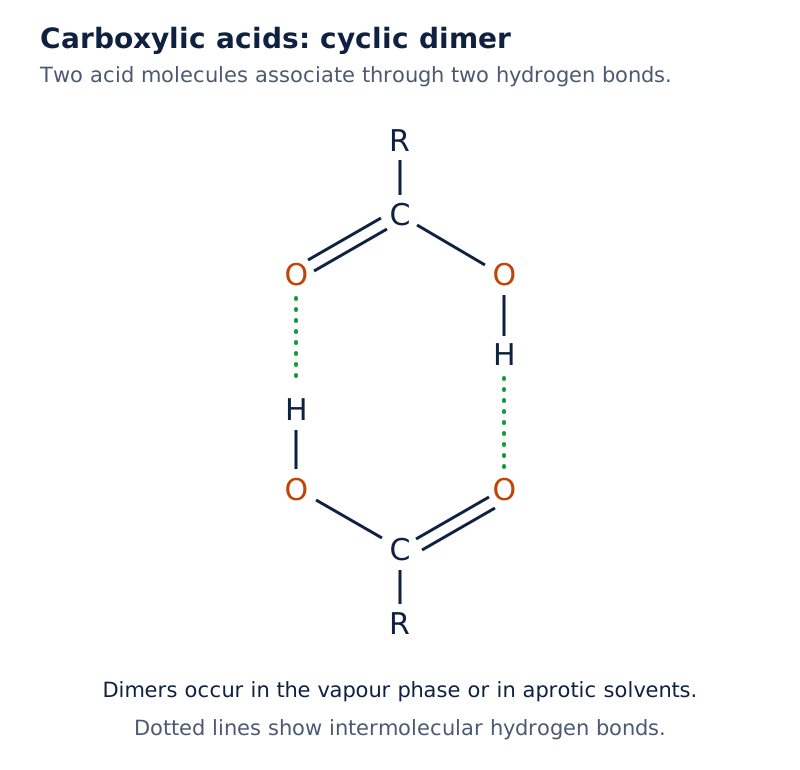
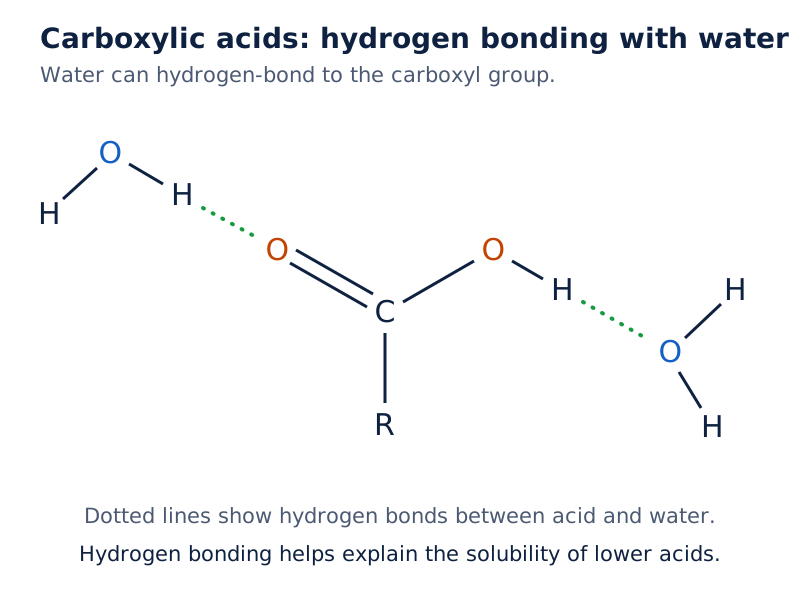
Two carboxyl groups face each other. Dotted bonds join each hydroxyl hydrogen to the other molecule's carbonyl oxygen, forming a cyclic dimer. A separate drawing shows hydrogen bonding between a carboxyl group and water molecules.
Drawn by One Young India. Reference: NCERT Class 12, unnumbered diagram, page 249
How are carboxylic acids prepared and linked through conversions?
Oxidation, hydrolysis and carbon-chain extension
Primary alcohols oxidise to acids using potassium permanganate or acidified potassium dichromate or chromium trioxide. Aldehydes also oxidise to acids. Vigorous oxidation of alkylbenzenes converts primary or secondary alkyl side chains into carboxyl groups, irrespective of side-chain length; tertiary alkyl groups are unaffected.
Nitrile hydrolysis proceeds through an amide. Acidic hydrolysis gives a carboxylic acid; alkaline hydrolysis gives a carboxylate salt, which yields the acid after acidification. Mild conditions allow isolation of the amide. Acid chlorides and anhydrides also hydrolyse to acids; ester hydrolysis gives an acid directly in acidic medium and a carboxylate in alkaline medium.
Grignard reagents add to carbon dioxide, used as dry ice, and acidification gives carboxylic acids. Starting from an alkyl halide, either the nitrile route or the Grignard route increases the chain by one carbon atom.
Worked conversion sequence
Worked example 5. Carry out these six transformations: butan-1-ol to butanoic acid; benzyl alcohol to phenylethanoic acid; 3-nitrobromobenzene to 3-nitrobenzoic acid; 4-methylacetophenone to benzene-1,4-dicarboxylic acid; cyclohexene to hexane-1,6-dioic acid; and butanal to butanoic acid.
Answer: The reaction schemes are given in the same sequence. The prefixes m and p denote meta and para ring positions, respectively.
- Oxidise butan-1-ol with Jones reagent, chromium trioxide and sulphuric acid:
- Convert benzyl alcohol into benzyl bromide, then benzyl cyanide, and hydrolyse:
- Replace bromine with a cyano group by heating with copper(I) cyanide, then hydrolyse the nitrile with heated aqueous acid: The nitro group is incompatible with the conventional Grignard route.
- Oxidise both side chains, then acidify the dipotassium salt:
- Oxidatively cleave cyclohexene:
- Oxidise butanal using ammoniacal silver nitrate:
Reaction-medium distinction: Tollens' oxidation actually produces the carboxylate ion in alkaline solution. The acid in a conversion scheme represents the corresponding acid product obtained after acidification.
Why are carboxylic acids acidic, and how do substituents change their strength?
Carboxylic acids release hydrogen with electropositive metals and form salts with alkalis. Unlike phenols, they react with carbonates and hydrogencarbonates to release carbon dioxide. This provides a test for the carboxyl group.
Numbered derivation of the acid-strength expression
Let denote the equilibrium constant and the acid dissociation constant. Square brackets denote equilibrium concentrations of the enclosed species. is the negative base-ten logarithm of the acid dissociation constant.
- Write the ionisation equilibrium:
- Express the equilibrium constant:
- Include the water-concentration factor in the acid constant:
- Express acid strength logarithmically:
A smaller pKa means a stronger acid. Benzoic acid has , compared with for acetic acid. Carboxylic acids are weaker than mineral acids but stronger than alcohols and many simple phenols.
Resonance and substituent effects
The carboxylate ion has two equivalent resonance structures. Negative charge is shared between two electronegative oxygen atoms. Phenoxide has non-equivalent contributors involving oxygen and less electronegative carbon atoms, so its charge is less effectively delocalised.
Electron-withdrawing groups stabilise the carboxylate ion through inductive and/or resonance effects and increase acidity. Electron-donating groups destabilise it and decrease acidity. Directly attached phenyl or vinyl groups increase acidity because the attached carbon is more electronegative.
For aromatic acids, 4-methoxybenzoic acid has , benzoic acid has , and 4-nitrobenzoic acid has . Thus, the nitro-substituted acid is strongest and the methoxy-substituted acid weakest among these three.
Which reactions replace groups in carboxylic acids or remove carbon dioxide?
Esterification and its numbered mechanism
Esterification reacts a carboxylic acid with an alcohol or phenol using a mineral acid catalyst, such as concentrated sulphuric acid or hydrogen chloride gas. It is a nucleophilic acyl substitution: an incoming alcohol ultimately replaces the acid's hydroxyl group.
- Protonate the carbonyl oxygen to activate the carbonyl group:
- The alcohol adds to give a tetrahedral intermediate:
- Proton transfer converts one hydroxyl group into a better leaving group:
- Eliminate neutral water to form a protonated ester:
- Loss of a proton yields the ester:
Acid derivatives and reduction
Heating acids with sulphuric acid or phosphorus pentoxide forms anhydrides. Phosphorus pentachloride, phosphorus trichloride and thionyl chloride replace the hydroxyl group with chlorine. Thionyl chloride is preferred because its other products escape as gases, simplifying purification.
Ammonia initially forms an ammonium carboxylate. Further heating at high temperature gives an amide, as illustrated by ammonium acetate yielding acetamide.
Lithium aluminium hydride, or preferably diborane, reduces carboxylic acids to primary alcohols. Diborane does not easily reduce ester, nitro or halo groups. Sodium borohydride does not reduce the carboxyl group.
Decarboxylation and substitution
Heating sodium carboxylates with soda lime, sodium hydroxide and calcium oxide in a ratio, removes carbon dioxide and produces a hydrocarbon. This is decarboxylation.
Kolbe electrolysis of aqueous alkali-metal carboxylates also causes decarboxylation. It forms hydrocarbons with twice the number of carbon atoms in the acid's alkyl group. Distinguish this carbon-carbon coupling from the soda-lime reaction.
Acids with an alpha-hydrogen undergo Hell-Volhard-Zelinsky halogenation with chlorine or bromine and a small amount of red phosphorus. Water treatment gives the alpha-halocarboxylic acid.
Aromatic carboxylic acids undergo electrophilic ring substitution with a deactivating, meta-directing carboxyl group. They do not undergo Friedel-Crafts reaction: the ring is deactivated and aluminium chloride binds to the carboxyl group.
Where are aldehydes, ketones and carboxylic acids used?
Aldehydes and ketones serve as solvents, reagents and starting materials in chemical manufacture. Formalin, a formaldehyde solution, preserves biological specimens. Formaldehyde also makes bakelite, urea-formaldehyde glues and other polymeric products.
Acetaldehyde is used primarily in manufacturing acetic acid, ethyl acetate, vinyl acetate, polymers and drugs. Benzaldehyde is used in perfumery and dye manufacture. Acetone and ethyl methyl ketone are common industrial solvents.
Natural fragrance compounds include vanillin from vanilla beans, salicylaldehyde from meadow sweet and cinnamaldehyde from cinnamon. Butyraldehyde, acetophenone and camphor are also known for their odours and flavours.
Uses of acids and their derivatives
Methanoic acid is used in rubber, textile, dyeing, leather and electroplating industries. Ethanoic acid acts as a solvent and is used as vinegar in the food industry. Hexanedioic acid is a starting material for nylon-6,6.
Benzoic acid esters are used in perfumery, while sodium benzoate is a food preservative. Higher fatty acids are used to manufacture soaps and detergents. The useful substance may therefore be the acid itself, its salt or an ester derived from it.
Glossary
- Carbonyl group — A carbon-oxygen double bond whose polar character makes carbon susceptible to nucleophilic attack.
- Carboxyl group — A functional group containing a carbonyl group attached to a hydroxyl group.
- Nucleophilic addition — Addition initiated by electron-pair donation to the electrophilic carbon atom of a carbonyl group.
- Cyanohydrin — An addition product with hydroxyl and cyano groups attached to the former carbonyl carbon.
- Hemiacetal — An aldehyde-alcohol addition product containing hydroxyl and alkoxy groups on the same carbon atom.
- Acetal — A gem-dialkoxy compound formed when an aldehyde reacts with alcohol under acidic conditions.
- Oxime — A carbonyl derivative formed by reaction with hydroxylamine followed by elimination of water.
- Aldol reaction — Reaction of suitable carbonyl compounds with alpha-hydrogen to form beta-hydroxy aldehydes or ketones.
- Cross aldol condensation — Aldol condensation carried out between two different aldehydes, ketones, or an aldehyde and a ketone.
- Cannizzaro reaction — Disproportionation of an aldehyde without alpha-hydrogen into an alcohol and carboxylate in concentrated alkali.
- Esterification — Acid-catalysed reaction of a carboxylic acid with an alcohol or phenol to form an ester.
- Decarboxylation — Removal of carbon dioxide from a carboxylic acid derivative, producing a hydrocarbon in the soda-lime reaction.
Common errors and misconceptions
- Misconception: Every carbonyl compound is a ketone. Correct: Aldehydes, carboxylic acids and several acid derivatives also contain a carbonyl group; attached groups determine the class.
- Misconception: Aldehydes and ketones cannot hydrogen-bond with water. Correct: Their oxygen atoms accept hydrogen bonds from water, explaining the high water solubility of lower members.
- Misconception: Ketones are generally more reactive in nucleophilic addition. Correct: Aldehydes are generally more reactive because steric hindrance and electron donation are smaller.
- Misconception: Every aldehyde gives Fehling's test. Correct: Aromatic aldehydes do not respond, although they can give Tollens' test.
- Misconception: Aldol and Cannizzaro reactions require the same structural feature. Correct: Aldol reaction requires alpha-hydrogen; Cannizzaro reaction involves aldehydes lacking it.
- Misconception: A larger pKa means a stronger acid. Correct: A smaller pKa indicates greater acid strength, because pKa is the negative logarithm of the acid dissociation constant.
- Misconception: Sodium borohydride reduces carboxylic acids just as it reduces aldehydes. Correct: It does not reduce the carboxyl group; lithium aluminium hydride or diborane is used.
Exam-style questions with model answers
Q1. Why are aldehydes generally more reactive than ketones towards nucleophilic addition? Give two reasons. [2 marks]
- A ketone's two relatively large substituents hinder nucleophilic approach more than the single carbon substituent in an aldehyde.
- Two alkyl groups donate electron density and reduce the ketone carbonyl carbon's electrophilicity more effectively, making nucleophilic attack less favourable.
Q2. State Tollens' test for an aldehyde, including reagent, observation and the organic product in the reaction medium. [2 marks]
- Warm the aldehyde with freshly prepared ammoniacal silver nitrate solution. A bright silver mirror forms as silver ions are reduced.
- The aldehyde is oxidised to a carboxylate anion because the test occurs in alkaline medium.
Q3. Explain the increasing boiling-point order of n-butane, methoxyethane, propanal and propan-1-ol. Their boiling temperatures are 273 K, 281 K, 322 K and 370 K, respectively, and their molecular masses are comparable. [3 marks]
- The order is n-butane, methoxyethane, propanal and propan-1-ol, consistent with the supplied temperatures.
- The hydrocarbon has weak intermolecular attractions. Propanal's polar carbonyl group produces stronger dipole-dipole attraction than that in methoxyethane, so propanal boils at a higher temperature.
- Propan-1-ol forms intermolecular hydrogen bonds. This association explains its highest boiling temperature, while propanal lacks hydrogen bonding between its own molecules.
Q4. Explain why ethanal undergoes aldol reaction whereas benzaldehyde undergoes Cannizzaro reaction. Give conditions and products, including the dehydration product of ethanal's aldol. [4 marks]
- Ethanal has alpha-hydrogens. Dilute sodium hydroxide catalyses addition of two molecules to form the beta-hydroxy aldehyde 3-hydroxybutanal.
- The aldol loses water on heating to form the alpha,beta-unsaturated aldehyde but-2-enal: .
- Benzaldehyde lacks alpha-hydrogen and undergoes Cannizzaro disproportionation on heating with concentrated sodium hydroxide.
- One benzaldehyde molecule is reduced to benzyl alcohol and another is oxidised to sodium benzoate: .
Q5. Compound A, C₈H₈O, gives an orange-red 2,4-DNP precipitate and a yellow precipitate with iodine and sodium hydroxide. It reduces neither Tollens' nor Fehling's reagent and decolourises neither bromine water nor Baeyer's reagent. Drastic chromic-acid oxidation yields B, C₇H₆O₂. Identify A and B and explain the evidence. [5 marks]
- The 2,4-DNP derivative establishes that A contains an aldehyde or ketone carbonyl group. Failure to reduce Tollens' reagent supports its identification as a ketone.
- The yellow precipitate with iodine and sodium hydroxide is iodoform. The positive test shows that A is a methyl ketone.
- The molecular formula indicates substantial unsaturation. Lack of decolourisation of bromine water or Baeyer's reagent supports an aromatic ring rather than the tested alkene type of unsaturation.
- A is acetophenone, . Its iodoform reaction gives sodium benzoate and iodoform.
- B is benzoic acid, , consistent with its given formula and formation on drastic oxidation of acetophenone.
Q6. The pKa values of 4-methoxybenzoic acid, benzoic acid and 4-nitrobenzoic acid are 4.46, 4.19 and 3.41, respectively. Arrange them in increasing acidity and explain the substituent effects. [3 marks]
- Increasing acidity is 4-methoxybenzoic acid, benzoic acid, then 4-nitrobenzoic acid. A smaller pKa represents a stronger acid.
- The electron-withdrawing nitro group stabilises the carboxylate conjugate base and increases acidity relative to benzoic acid.
- The electron-donating methoxy group destabilises the conjugate base and decreases acidity. The supplied values therefore agree with the effects of these substituents on the stability of the acid's conjugate base.
Q7. Explain acid-catalysed esterification of a carboxylic acid with an alcohol in five numbered mechanistic stages. Identify the intermediate and the leaving molecule. [5 marks]
- The carbonyl oxygen of the carboxylic acid accepts a proton. Protonation activates the carbonyl group and makes its carbon more susceptible to attack by the alcohol.
- The alcohol acts as a nucleophile and adds to this carbonyl carbon. This step changes the geometry and produces a tetrahedral intermediate.
- A proton transfer within the intermediate converts a hydroxyl group into a protonated hydroxyl group. This is a better leaving group than the original hydroxyl group.
- Neutral water is eliminated, giving the protonated ester. Thus, water is the leaving molecule in this nucleophilic acyl substitution.
- The protonated ester loses a proton to form the neutral ester and regenerate the acid catalyst. Overall, the acid and alcohol yield ester and water.
Q8. Give the sequence for converting benzyl alcohol to phenylethanoic acid using hydrogen bromide, potassium cyanide and heated aqueous acid. Explain the increase in carbon-chain length. [3 marks]
- Hydrogen bromide converts benzyl alcohol, , into benzyl bromide, .
- Potassium cyanide replaces bromine with a cyano group to give benzyl cyanide, . This introduces an additional carbon atom into the side chain.
- Heating with aqueous acid hydrolyses the nitrile to phenylethanoic acid, . The added cyano carbon becomes the carboxyl carbon, so direct oxidation of the starting alcohol would not give this longer-chain product.
Key takeaways
- The polar carbonyl group has an electrophilic carbon atom, explaining the nucleophilic addition reactions of aldehydes and ketones.
- Aldehydes generally react more readily than ketones because they offer less steric hindrance and greater carbonyl-carbon electrophilicity.
- Selective reagents control preparation: Rosenmund reduction gives aldehydes, while dialkylcadmium reactions with acyl chlorides give ketones.
- Tollens', Fehling's and iodoform tests provide different structural evidence and should be interpreted together with the molecular formula.
- Alpha-hydrogen enables aldol reaction; aldehydes without alpha-hydrogen undergo Cannizzaro disproportionation in concentrated alkali instead.
- Carboxylate resonance stabilisation explains acid strength; electron-withdrawing substituents increase acidity, and smaller pKa values indicate stronger acids.
- Carboxylic acids form esters, anhydrides, acid chlorides and amides, while reduction and decarboxylation change the carboxyl group more extensively.
- Carbon counting distinguishes nitrile or Grignard chain extension, soda-lime decarboxylation and the coupling observed in Kolbe electrolysis.
Test yourself
What is the hybridisation and approximate bond angle at carbonyl carbon?
The carbon is -hybridised, with a trigonal planar arrangement and bond angles of approximately .
Why is cyanohydrin formation accelerated by a base?
A base generates cyanide ions from hydrogen cyanide. Cyanide is the stronger nucleophile and attacks the carbonyl carbon readily.
Which catalyst support is used in Rosenmund reduction?
Palladium on barium sulphate catalyses hydrogenation of an acyl chloride to the corresponding aldehyde.
What is the distinction between an aldol and its condensation product?
An aldol is a beta-hydroxy aldehyde. Loss of water produces an alpha,beta-unsaturated aldehyde, the condensation product.
Why does Fehling's test not provide a positive result for every aldehyde?
Aromatic aldehydes do not respond to Fehling's reagent, so a negative result alone does not rule out an aldehyde.
How does sodium hydrogencarbonate help identify a carboxylic acid?
A carboxylic acid reacts to form its sodium salt, water and carbon dioxide; evolution of the gas is the diagnostic observation.
Why is thionyl chloride preferred for preparing acid chlorides?
Its other products, sulphur dioxide and hydrogen chloride, escape as gases, making purification of the acid chloride easier.
What conditions are needed for Hell-Volhard-Zelinsky reaction?
An acid with alpha-hydrogen is treated with chlorine or bromine and a small amount of red phosphorus, followed by water.