
Biomolecules | CBSE Class 12 Chemistry Notes
On this page
Watch & explore
Start with a few high-quality watches, then dive into the notes below.
This note covers carbohydrate classification, glucose preparation and structure, cyclic sugars, disaccharides and polysaccharides, amino acids, peptide bonds, protein structure and denaturation, enzymes, vitamins, nucleic acids, DNA and RNA, and hormones.
What are carbohydrates and how are they classified?
What makes a compound a carbohydrate?
Carbohydrates are mainly produced by plants. Cane sugar, glucose and starch belong to this large group of naturally occurring organic compounds. Some carbohydrates taste sweet and are called sugars; sucrose is household sugar and lactose is milk sugar.
Definition: Carbohydrates are optically active polyhydroxy aldehydes or ketones, or compounds that yield these units on hydrolysis.
The historical formula is , where and represent the numbers of carbon atoms and water units in this expression. It suggested hydrates of carbon, but it does not define the group correctly.
Glucose, C₆H₁₂O₆, fits the expression, but so does acetic acid, CH₃COOH, which is not a carbohydrate. Conversely, rhamnose, C₆H₁₂O₅, is a carbohydrate that does not fit it. The functional groups and hydrolysis behaviour therefore matter more than this historical formula.
How does hydrolysis distinguish the groups?
| Group | Behaviour on hydrolysis | Examples |
|---|---|---|
| Monosaccharides | Cannot yield simpler polyhydroxy aldehyde or ketone units by further hydrolysis | Glucose, fructose, ribose |
| Oligosaccharides | Yield two to ten monosaccharide units | Sucrose and maltose are disaccharides |
| Polysaccharides | Yield a large number of monosaccharide units | Starch, cellulose, glycogen, gums |
A disaccharide can supply identical or different monosaccharides. Sucrose gives glucose and fructose, whereas maltose gives two glucose molecules. Polysaccharides are not sweet and are also called non-sugars. About twenty monosaccharides occur naturally.
How are monosaccharides named?
An aldose contains an aldehyde group; a ketose contains a ketonic group. The number of carbon atoms provides the other part of the name. Thus glucose is an aldohexose and fructose is a ketohexose.
| Carbon atoms | General name | Aldehyde type | Ketone type |
|---|---|---|---|
| 3 | Triose | Aldotriose | Ketotriose |
| 4 | Tetrose | Aldotetrose | Ketotetrose |
| 5 | Pentose | Aldopentose | Ketopentose |
| 6 | Hexose | Aldohexose | Ketohexose |
| 7 | Heptose | Aldoheptose | Ketoheptose |
Reducing sugars reduce Fehling’s solution and Tollens’ reagent. All monosaccharides, including both aldoses and ketoses, are reducing sugars. Classification by reduction behaviour is separate from classification by the number of units released on hydrolysis.
How is glucose prepared and what establishes its open-chain structure?
What are the two preparation routes?
Glucose, also called dextrose, occurs freely and in combined forms. Sweet fruits, honey and ripe grapes contain it. It is an aldohexose and a building unit of starch and cellulose. It is probably the most abundant organic compound on earth.
Boiling sucrose with dilute hydrochloric acid or sulphuric acid in alcoholic solution gives equal amounts of glucose and fructose. Here H⁺ denotes the acidic reaction conditions; the product names distinguish the two sugars with the same molecular formula.
Commercial preparation uses starch hydrolysis with dilute sulphuric acid at , under pressure. In the scheme, denotes the number of repeating carbohydrate units, K denotes kelvin and atm denotes atmosphere, a pressure unit.
How do the reactions establish the structure?
The proposed open chain is . The terminal CHO is an aldehyde group, CHOH represents a carbon carrying hydrogen and hydroxyl, and CH₂OH is a primary alcohol group. The following numbered evidence connects reactions to structural conclusions.
- Molecular formula: The composition is C₆H₁₂O₆, fixing the numbers of carbon, hydrogen and oxygen atoms.
- Carbon skeleton: Prolonged heating with hydrogen iodide gives normal hexane, supporting a straight chain of six carbon atoms. The symbol denotes heating.
- Carbonyl group: Hydroxylamine gives an oxime, while hydrogen cyanide gives a cyanohydrin. Both reactions establish a carbonyl group, .
- Aldehydic group: Mild oxidation with bromine water gives gluconic acid, a six-carbon carboxylic acid. This identifies the carbonyl group as aldehydic.
- Five hydroxyl groups: Acetic anhydride gives glucose pentaacetate. Its stability supports five hydroxyl groups attached to different carbon atoms.
- Primary alcohol: Nitric acid oxidation of either glucose or gluconic acid gives the dicarboxylic saccharic acid, identifying the terminal primary alcoholic group.
Structural conclusion: These observations establish the straight carbon chain and the functional groups. The spatial arrangement of the hydroxyl groups requires the additional stereochemical configuration.
Why are cyclic structures needed for glucose and fructose?
What do configuration and optical rotation mean?
In D-(+)-glucose, D identifies relative configuration and the plus sign indicates dextrorotation. D and L do not specify the direction of optical rotation. Their assignment relates a compound’s configuration to a known glyceraldehyde configuration.
For a monosaccharide, compare the lowest asymmetric carbon in its Fischer representation, with the most oxidised carbon at the top. Glucose has its hydroxyl group on the right at this reference carbon and belongs to the D-series. Other asymmetric carbons do not decide this comparison.
Which observations require a glucose ring?
- Glucose does not give Schiff’s test, despite the aldehydic group in the proposed open chain.
- It does not form the hydrogensulphite addition product with sodium hydrogensulphite, NaHSO₃.
- Glucose pentaacetate does not react with hydroxylamine, indicating the absence of a free aldehyde group.
- Two crystalline forms exist: the alpha form melts at , while the beta form melts at .
The alpha form crystallises from concentrated glucose solution at . The beta form is obtained from hot, saturated aqueous solution at . A single open-chain representation does not explain these different forms.
The hydroxyl group at carbon 5 adds to the aldehydic group at carbon 1, forming a six-membered cyclic hemiacetal. These rings coexist in equilibrium with the open chain. Carbon 1 becomes the anomeric carbon, originally the aldehyde carbon.
The alpha and beta forms differ only in the hydroxyl configuration at that carbon and are anomers. The six-membered ring, containing one oxygen and five carbon atoms, is called a pyranose ring. Its Haworth representations are alpha- and beta-D-glucopyranose.
How does fructose differ?
Fructose occurs in fruits, honey and vegetables and is obtained with glucose by sucrose hydrolysis. It has the formula C₆H₁₂O₆ and a straight six-carbon chain, but its ketonic group is at carbon 2. It is D-configured and laevorotatory, written D-(−)-fructose.
Addition of the hydroxyl group at carbon 5 to the carbonyl at carbon 2 gives a five-membered ring containing one oxygen and four carbon atoms. This is a furanose ring. Fructose also has two cyclic anomers, represented as alpha- and beta-D-fructofuranose.
Note: D does not mean dextrorotatory. D-glucose is dextrorotatory, whereas D-fructose is laevorotatory. Configuration and the sign of rotation describe different properties.
How do sucrose, maltose and lactose differ?
What is a glycosidic linkage?
A glycosidic linkage joins monosaccharide units through an oxygen atom after the loss of a water molecule. Disaccharides yield two monosaccharide molecules on hydrolysis with dilute acids or enzymes. The resulting units may be the same or different.
The reducing character depends on whether the relevant aldehydic or ketonic groups are engaged in the linkage. If they are tied up, the disaccharide is non-reducing. When a free reducing group can be produced, it can show reducing behaviour.
| Disaccharide | Constituent units | Linkage | Reducing behaviour |
|---|---|---|---|
| Sucrose | Alpha-D-glucose and beta-D-fructose | Carbon 1 of glucose to carbon 2 of fructose | Non-reducing: both reducing groups participate |
| Maltose | Two alpha-D-glucose units | Carbon 1 of one glucose to carbon 4 of the other | Reducing: the second glucose can produce a free aldehyde group at carbon 1 |
| Lactose | Beta-D-galactose and beta-D-glucose | Carbon 1 of galactose to carbon 4 of glucose | Reducing: the glucose unit can produce a free aldehyde group at carbon 1 |
Why is hydrolysed sucrose called invert sugar?
Sucrose is dextrorotatory. Its hydrolysis produces an equimolar mixture of dextrorotatory glucose and laevorotatory fructose. The rotation changes sign because the magnitude of fructose’s laevorotation exceeds that of glucose’s dextrorotation.
The rotations are for glucose and for fructose, where the degree symbol denotes angular rotation. The resulting mixture is laevorotatory and is called invert sugar. Inversion refers to this change from positive to negative rotation.
Maltose differs from sucrose because the linkage leaves the second glucose’s reducing position available. Lactose, commonly called milk sugar, similarly retains the possibility of a free aldehyde group on its glucose unit. Being a disaccharide therefore does not by itself establish whether a sugar is reducing.
How do starch, cellulose and glycogen serve different roles?
What distinguishes the storage and structural polymers?
Polysaccharides contain many monosaccharide units connected by glycosidic bonds. They mainly provide food storage or structural material. Starch is the principal plant storage polysaccharide and an important dietary source for humans. Cereals, roots, tubers and some vegetables contain much starch.
Starch is a polymer of alpha-glucose with two components, amylose and amylopectin. Their different branching patterns distinguish them even though both contain alpha-D-glucose units.
| Polymer | Structure and linkages | Occurrence or property |
|---|---|---|
| Amylose | Unbranched chain of 200 to 1,000 alpha-D-glucose units; carbon 1 to carbon 4 links | Water-soluble component; about 15 to 20 per cent of starch |
| Amylopectin | Branched alpha-D-glucose polymer; carbon 1 to carbon 4 chains and carbon 1 to carbon 6 branches | Water-insoluble component; about 80 to 85 per cent of starch |
| Cellulose | Straight chains of beta-D-glucose with carbon 1 to carbon 4 linkages | Predominant constituent of plant cell walls |
| Glycogen | Resembles amylopectin but is more highly branched | Animal carbohydrate store, also found in yeast and fungi |
Cellulose is the most abundant organic substance in the plant kingdom. The beta-glucose units distinguish it from starch, whose units are alpha-glucose. Thus naming glucose as the hydrolysis product does not fully describe a polysaccharide’s structure.
Glycogen is also called animal starch. It occurs in the liver, muscles and brain. When the body requires glucose, enzymes break glycogen down to release it. Its greater branching distinguishes its structure from that of amylopectin.
Why are carbohydrates important beyond food storage?
Carbohydrates form a major part of food and are essential in plants and animals. Cellulose supplies wood used in furniture and cotton fibre used for clothing. Carbohydrates also supply raw materials for textiles, paper, lacquers and breweries.
Two aldopentoses, D-ribose and 2-deoxy-D-ribose, occur in nucleic acids. Carbohydrates also occur combined with proteins and lipids in biological systems. Their roles therefore include structural material, stored food and components of other biomolecules.
What are amino acids and why do they behave as zwitterions?
How are amino acids classified?
Amino acids contain an amino group and a carboxyl group. In an alpha-amino acid, the amino group is on the carbon next to the carboxyl group. Alpha-amino acids are the units obtained by protein hydrolysis.
The general structure is , where denotes the side chain. For glycine the side chain is hydrogen; for alanine it is a methyl group. Amino acids are commonly represented by three-letter or one-letter symbols, such as Gly or G for glycine.
| Classification | Basis | Meaning |
|---|---|---|
| Neutral | Relative number of functional groups | Equal numbers of amino and carboxyl groups |
| Basic | Relative number of functional groups | More amino groups than carboxyl groups |
| Acidic | Relative number of functional groups | More carboxyl groups than amino groups |
| Essential | Ability of the body to synthesise the amino acid | Must be obtained through the diet |
| Non-essential | Ability of the body to synthesise the amino acid | Can be synthesised in the body |
The essential amino acids listed are valine, leucine, isoleucine, arginine, lysine, threonine, methionine, phenylalanine, tryptophan and histidine. Glycine and alanine are non-essential examples. Essential refers to dietary supply, not to whether an amino acid has a biological role.
How does the dipolar form arise?
Amino acids are usually colourless crystalline solids, soluble in water and with high melting points. Their salt-like behaviour follows from having both an acidic carboxyl group and a basic amino group in the same molecule.
The carboxyl group can lose a proton, while the amino group can accept it. The resulting zwitterion has positive and negative charges but is electrically neutral overall. Superscript plus and minus signs indicate the charged groups.
In this form, amino acids react with both acids and bases and show amphoteric behaviour. Except glycine, naturally occurring alpha-amino acids are optically active because their alpha-carbon is asymmetric. Most naturally occurring amino acids have L-configuration, represented with the amino group on the left.
How do peptide bonds build proteins?
How is a dipeptide formed?
Proteins are polymers of alpha-amino acids and occur throughout the body. They support growth and maintenance as well as structural and functional activities. Milk, cheese, pulses, peanuts, fish and meat are major dietary sources.
A peptide linkage is the amide linkage . It forms between the carboxyl group of one amino acid and the amino group of another, with elimination of water. Two linked amino acids form a dipeptide.
Glycine and alanine give the dipeptide glycylalanine when glycine supplies the carboxyl group and alanine supplies the amino group. The reaction scheme shows water elimination above the arrow.
- Identify the carboxyl group of glycine and the amino group of alanine.
- Join these groups by eliminating a molecule of water.
- Locate the new peptide linkage between the two amino-acid residues.
- Name the resulting two-residue compound glycylalanine, abbreviated Gly-Ala.
When is a chain called a protein?
A tripeptide contains three amino acids joined by two peptide linkages. Four, five and six units give tetrapeptides, pentapeptides and hexapeptides. Products containing more than ten amino-acid units are called polypeptides.
A polypeptide with more than one hundred residues and molecular mass above , where u denotes the atomic mass unit, is called a protein. This distinction is not sharp. Insulin contains 51 amino acids but has a well-defined protein conformation.
How do fibrous and globular proteins compare?
| Feature | Fibrous proteins | Globular proteins |
|---|---|---|
| Shape | Parallel polypeptide chains form a fibre-like structure | Polypeptide chains coil into a spherical shape |
| Water solubility | Generally insoluble | Usually soluble |
| Examples | Keratin and myosin | Insulin and albumins |
Hydrogen bonds and disulphide bonds hold the parallel chains of fibrous proteins together. Molecular shape therefore provides another classification, distinct from naming peptides by the number of amino-acid residues they contain.
What are the levels of protein structure and what changes during denaturation?
How do the four structural levels differ?
Primary structure is the specific sequence of amino acids in a polypeptide chain. A protein may contain one or more such chains. Altering the sequence changes the protein, so primary structure concerns the order of residues rather than the shape of folding.
Secondary structure describes regular folding of the polypeptide backbone. Hydrogen bonding between carbonyl groups, , and peptide groups produces alpha-helices and beta-pleated sheets.
In an alpha-helix, a polypeptide twists into a right-handed screw. The NH group of each amino-acid residue hydrogen-bonds to a carbonyl group in an adjacent turn. This is a common arrangement that allows extensive hydrogen bonding.
What the figure shows
Alpha-helix structure of proteins
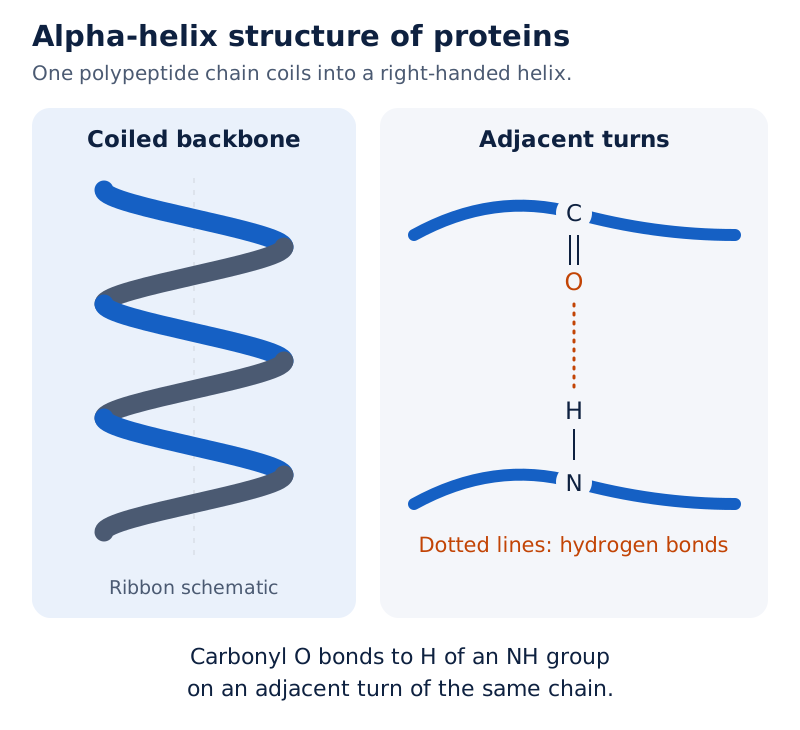
A ribbon coils around a vertical axis. The neighbouring molecular representation shows the coiled backbone with dotted hydrogen bonds between oxygen and hydrogen-bearing nitrogen groups on adjacent turns.
Drawn by One Young India. See Fig. 10.1 in your NCERT textbook
In a beta-pleated sheet, peptide chains are stretched almost fully and lie side by side. Intermolecular hydrogen bonds hold these chains together. The resulting arrangement resembles pleated folds.
What the figure shows
Beta-pleated sheet structure of proteins
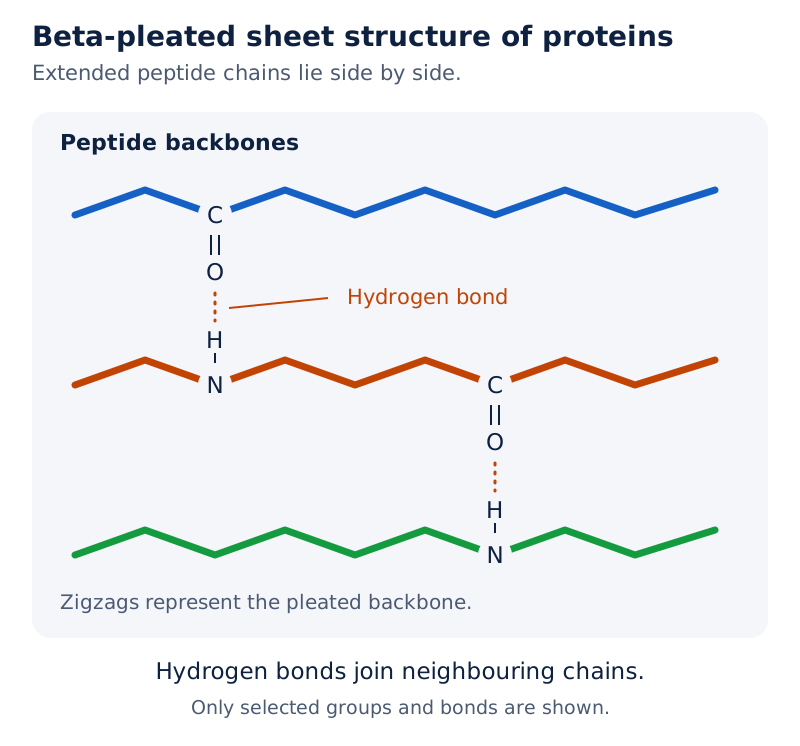
Several extended zigzag peptide chains lie beside one another. Dotted lines connect oxygen and hydrogen groups between neighbouring chains, showing the hydrogen bonds holding the sheet together.
Drawn by One Young India. See Fig. 10.2 in your NCERT textbook
Tertiary structure is the overall folding of a polypeptide, including further folding of its secondary structure. Hydrogen bonds, disulphide linkages, van der Waals forces and electrostatic attractions stabilise protein structures. Overall folding gives fibrous or globular forms.
Quaternary structure describes the spatial arrangement of two or more polypeptide subunits relative to one another. It concerns how the subunits assemble, rather than just the amino-acid sequence of an individual chain.
What the figure shows
Levels of protein structure
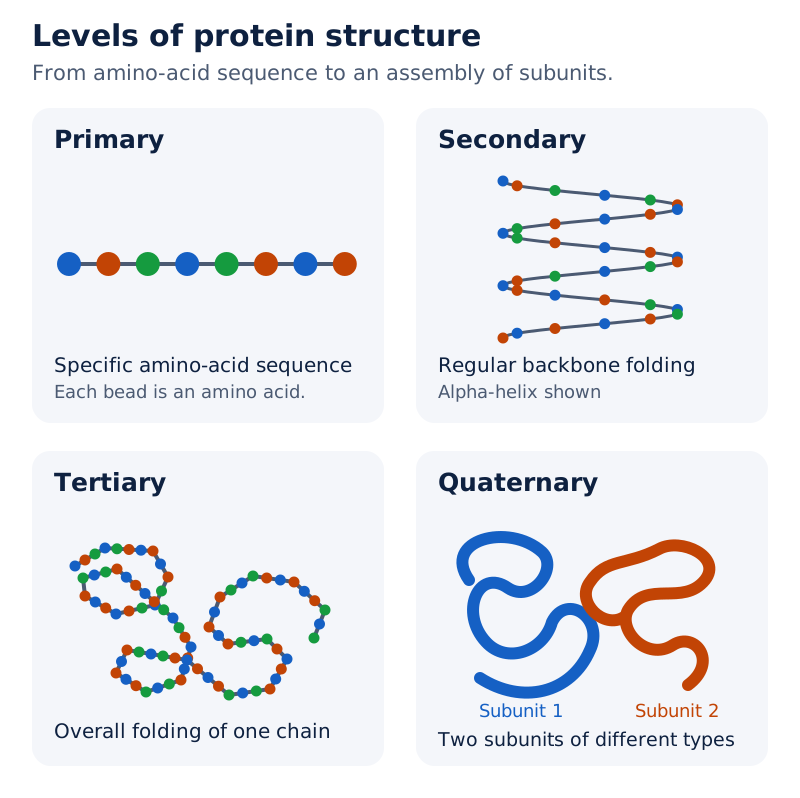
Coloured beads represent amino acids. The sequence progresses from a straight bead chain to a helix, then a folded chain, and finally an assembly labelled quaternary structure containing two subunits of different types.
Drawn by One Young India. See Fig. 10.3 in your NCERT textbook
What is denaturation?
A native protein has its characteristic three-dimensional structure and biological activity. Changes in temperature or pH can disturb hydrogen bonding, unfold globules and uncoil helices. Here pH denotes the acidity or alkalinity of the medium.
Loss of biological activity through this structural disturbance is denaturation. Secondary and tertiary structures are destroyed while primary structure remains intact. Boiling coagulates egg white; formation of lactic acid by bacteria causes milk to curdle. Both illustrate denaturation.
How do enzymes make biological reactions possible?
What distinguishes enzyme action?
Enzymes are biological catalysts. Digestion, absorption and energy production involve coordinated reaction sequences that proceed under mild conditions in living organisms. Enzymes help these reactions occur without the harsh conditions often associated with laboratory processes.
Almost all enzymes are globular proteins. They are highly specific for both the reaction and the substrate on which they act. Only small quantities are needed to promote a reaction.
Names often identify the substrate or class of substrates, with the ending “-ase”. Maltase, for example, catalyses hydrolysis of maltose into glucose. The transformation is represented by the following substrate-to-product scheme.
Hydrolysis uses water. The scheme identifies maltose, the enzyme and the two glucose molecules produced. It does not display water as a separate reactant.
How do enzymes affect activation energy?
Like chemical catalysts, enzymes reduce activation energy, the energy barrier associated with a reaction. For sucrose hydrolysis, the activation energy with acid is ; with sucrase it is . The unit means kilojoules per mole.
This comparison relates the same hydrolysis to different catalytic conditions. It illustrates why an enzyme can support reactions under the mild conditions of a living system. It does not imply that all enzyme-catalysed reactions share the same activation energy.
Some enzyme names describe reaction type. Oxidoreductases catalyse oxidation of one substrate alongside reduction of another. Naming by substrate and naming by reaction are therefore two ways of identifying an enzyme’s action.
How are vitamins classified and what follows from their deficiency?
Why are small dietary amounts necessary?
Vitamins are organic compounds needed in small dietary amounts for specific biological functions, normal growth and health. Most cannot be synthesised in the human body. Plants can synthesise almost all vitamins, and gut bacteria can produce some required by humans.
Vitamins belong to different chemical classes, so a single structural description does not define them. Their names use letters and subgroups, including vitamins A, B, C and D. Excess intake can also be harmful.
How does solubility affect storage?
Fat-soluble vitamins are A, D, E and K. They dissolve in fats and oils rather than water and are stored in the liver and adipose tissues. Water-soluble vitamins include the B group and vitamin C.
Water-soluble vitamins require regular dietary supply because they are readily excreted in urine and generally cannot be stored. Vitamin B₁₂ is the storage exception. Thus vitamin C’s water solubility helps explain why a continuing dietary supply is needed.
| Vitamin | Sources | Deficiency effects |
|---|---|---|
| A | Fish liver oil, carrots, butter, milk | Xerophthalmia, involving hardening of the cornea; night blindness |
| B₁, thiamine | Yeast, milk, green vegetables, cereals | Beri beri, with loss of appetite and retarded growth |
| B₂, riboflavin | Milk, egg white, liver, kidney | Cheilosis, digestive disorders and a burning sensation of the skin |
| B₆, pyridoxine | Yeast, milk, egg yolk, cereals, grams | Convulsions |
| B₁₂ | Meat, fish, egg, curd | Pernicious anaemia |
| C, ascorbic acid | Citrus fruits, amla, green leafy vegetables | Scurvy, including bleeding gums |
| D | Exposure to sunlight, fish, egg yolk | Rickets in children; osteomalacia in adults |
| E | Vegetable oils, including wheat germ and sunflower oils | Increased red blood cell fragility and muscular weakness |
| K | Green leafy vegetables | Increased blood clotting time |
Cheilosis involves fissures at the corners of the mouth and lips. Rickets causes bone deformities in children, while osteomalacia involves soft bones and joint pain in adults. These distinguish the named deficiency conditions rather than treating all vitamin deficiencies as interchangeable.
How do nucleotides form DNA and RNA?
What are the components of nucleic acids?
Nucleic acids are long-chain polymers of nucleotides, also called polynucleotides. The two principal types are deoxyribonucleic acid, DNA, and ribonucleic acid, RNA. Chromosomes contain nucleic acids along with proteins and transmit hereditary characteristics.
Complete hydrolysis of either nucleic acid gives a pentose sugar, phosphoric acid and nitrogen-containing heterocyclic bases. DNA contains beta-D-2-deoxyribose; RNA contains beta-D-ribose. Both contain adenine, guanine and cytosine, but their fourth bases differ.
| Feature | DNA | RNA |
|---|---|---|
| Sugar | Beta-D-2-deoxyribose | Beta-D-ribose |
| Bases | Adenine, guanine, cytosine, thymine | Adenine, guanine, cytosine, uracil |
| Secondary structure | Two complementary chains form a double helix | Single-stranded helix, sometimes folded back on itself |
| Biological role | Stores genetic information and the message for protein synthesis | Different RNA molecules carry out protein synthesis |
What is the difference between a nucleoside and a nucleotide?
A nucleoside forms when a base attaches to the sugar’s position. The prime mark distinguishes sugar-carbon numbering from numbering in the base. Linking phosphoric acid at the sugar’s position produces a nucleotide.
Nucleotides join by phosphodiester linkages between the and carbon positions of pentose sugars. This creates a sugar-phosphate chain with bases attached. The sequence of nucleotides constitutes the primary structure of the nucleic acid.
Why are the DNA strands complementary?
Two chains wind around each other and are held together by hydrogen bonds between specific base pairs. Adenine pairs with thymine and cytosine pairs with guanine. The letters A, T, C and G denote these four bases respectively.
What the figure shows
Double-strand helix structure for DNA
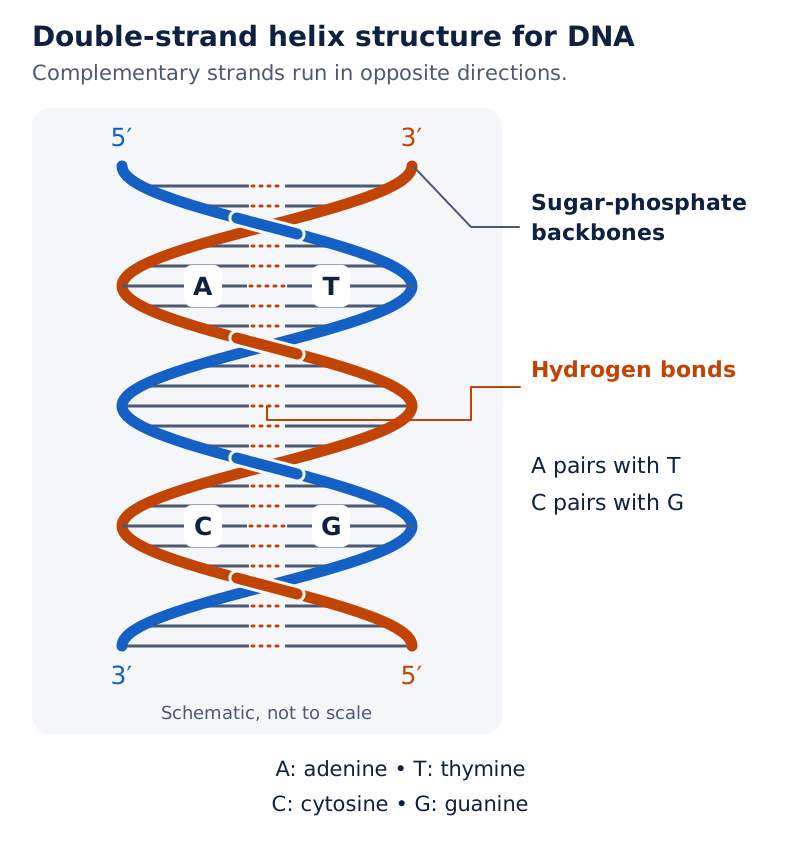
Two strands twist around each other. The ends carry opposite 5-prime and 3-prime labels, and paired bases across the strands are labelled A with T and C with G.
Drawn by One Young India. See Fig. 10.7 in your NCERT textbook
Complementarity means a base on one strand specifies its pairing partner on the other. DNA can duplicate during cell division and pass genetic information to daughter cells. It contains the message for synthesising particular proteins.
RNA has three named forms: messenger RNA, ribosomal RNA and transfer RNA, abbreviated mRNA, rRNA and tRNA. These perform different functions in protein synthesis. RNA’s single-stranded structure can fold back on itself.
DNA fingerprinting uses information in DNA base sequences for identification. Applications include forensic identification, establishing paternity and identifying accident victims through comparison with parental or children’s DNA. These uses connect the information stored in DNA with individual identification.
How do hormones coordinate biological activities?
What kinds of molecules act as hormones?
Hormones act as intercellular messengers. Endocrine glands release them directly into the bloodstream, which carries them to their sites of action. They help maintain the balance of biological activities and include several chemical types.
| Chemical type | Examples |
|---|---|
| Steroids | Oestrogens and androgens |
| Polypeptides | Insulin and endorphins |
| Amino-acid derivatives | Epinephrine and norepinephrine |
How are glucose and thyroid activity regulated?
Insulin is released when blood glucose rises rapidly and helps keep it within narrow limits. Glucagon tends to increase blood glucose. Together these hormones regulate its level. Epinephrine and norepinephrine mediate responses to external stimuli.
Thyroxine, made by the thyroid gland, is an iodinated derivative of tyrosine. Abnormally low levels cause hypothyroidism, associated with lethargy and obesity; increased levels cause hyperthyroidism. Low dietary iodine may cause hypothyroidism and enlargement of the thyroid gland.
What roles do steroid and sex hormones play?
Steroid hormones come from the adrenal cortex and gonads. Glucocorticoids control carbohydrate metabolism, modulate inflammatory reactions and participate in responses to stress. Mineralocorticoids control the kidney’s excretion of water and salt.
Improper adrenal cortex functioning may cause Addison’s disease, characterised by low blood glucose, weakness and increased susceptibility to stress. The condition involves the functions normally supported by glucocorticoids and mineralocorticoids.
Testosterone is the major male sex hormone and supports secondary male characteristics, including deep voice and facial hair. Oestradiol is the main female sex hormone, supporting secondary female characteristics and participating in menstrual-cycle control. Progesterone prepares the uterus for implantation of a fertilised egg.
Glossary
- Carbohydrate — An optically active polyhydroxy aldehyde or ketone, or a compound yielding such units on hydrolysis.
- Monosaccharide — A carbohydrate that cannot be hydrolysed into simpler polyhydroxy aldehyde or ketone units.
- Reducing sugar — A carbohydrate capable of reducing Fehling’s solution and Tollens’ reagent.
- Anomers — Cyclic sugar forms differing in configuration at the anomeric carbon.
- Glycosidic linkage — An oxygen linkage joining monosaccharide units after loss of water.
- Essential amino acid — An amino acid that must be supplied through diet because the body cannot synthesise it.
- Zwitterion — An electrically neutral dipolar ion carrying both positive and negative charges.
- Peptide linkage — An amide bond formed between the carboxyl and amino groups of amino acids.
- Primary protein structure — The specific sequence of amino acids in a protein’s polypeptide chain.
- Denaturation — Loss of a protein’s biological activity when its native folded structure is disturbed.
- Enzyme — A biological catalyst with high specificity for its substrate and reaction.
- Vitamin — An organic dietary compound required in small amounts for specific biological functions and normal growth.
- Nucleoside — A unit containing a nitrogenous base attached to a pentose sugar.
- Nucleotide — A nucleoside linked to phosphoric acid at the sugar’s five-prime position.
- Hormone — An intercellular messenger released by an endocrine gland and carried in blood to its site of action.
Common errors and misconceptions
- Misconception: The historical hydrate-of-carbon formula defines every carbohydrate. Correct: Acetic acid fits it but is not a carbohydrate; rhamnose is a carbohydrate that does not fit it.
- Misconception: D-configuration means positive optical rotation. Correct: D identifies relative configuration. D-glucose is dextrorotatory, whereas D-fructose is laevorotatory.
- Misconception: Every disaccharide is non-reducing. Correct: Sucrose is non-reducing, but maltose and lactose can produce a free aldehyde group and are reducing.
- Misconception: Starch and cellulose have the same glucose configuration. Correct: Starch contains alpha-glucose units, whereas cellulose contains beta-glucose units.
- Misconception: A zwitterion has no charges. Correct: It contains both positive and negative charges while remaining electrically neutral overall.
- Misconception: Denaturation destroys the amino-acid sequence. Correct: Secondary and tertiary structures are disturbed, but primary structure remains intact.
- Misconception: All water-soluble vitamins cannot be stored. Correct: Vitamin B₁₂ can be stored in the body.
- Misconception: A nucleoside already includes phosphate. Correct: A nucleoside contains sugar and base; phosphate attachment gives a nucleotide.
Exam-style questions with model answers
Q1. Define a reducing sugar and explain why sucrose is non-reducing. [2 marks]
- A reducing sugar reduces Fehling’s solution and Tollens’ reagent.
- In sucrose, the reducing groups of glucose and fructose both participate in the glycosidic linkage, so sucrose is non-reducing.
Q2. State the product and structural inference when D-glucose undergoes prolonged heating with HI, treatment with bromine water, and oxidation with nitric acid. [3 marks]
- Prolonged heating with HI gives normal hexane. This supports a straight chain containing all six carbon atoms.
- Bromine water gives gluconic acid. Mild oxidation to a carboxylic acid establishes that the carbonyl group is aldehydic.
- Nitric acid gives saccharic acid, a dicarboxylic acid. Oxidation at the other end supports the presence of a primary alcoholic group in glucose.
Q3. Glucose has alpha and beta crystalline forms melting at and , respectively. Explain this and two other observations that the open-chain structure cannot explain, and show how the cyclic structure accounts for the anomers. [5 marks]
- Glucose fails to give Schiff’s test and does not form the sodium hydrogensulphite addition product, although its open-chain formula contains an aldehyde group.
- Glucose pentaacetate does not react with hydroxylamine, indicating that a free aldehyde group is absent.
- Glucose occurs in two crystalline forms with different melting points, alpha at and beta at .
- The hydroxyl group at carbon 5 adds to the aldehydic group at carbon 1, producing a six-membered hemiacetal ring.
- The cyclic forms differ in hydroxyl configuration at carbon 1, the anomeric carbon. They are alpha and beta anomers and coexist in equilibrium with the open-chain form.
Q4. Compare amylose and amylopectin in solubility, chain structure and glycosidic linkages. Then identify the glucose configuration in cellulose. [4 marks]
- Solubility: Amylose is water-soluble, whereas amylopectin is water-insoluble.
- Chain structure: Amylose is unbranched, whereas amylopectin is branched; both contain alpha-D-glucose units.
- Glycosidic linkages: Amylose has carbon 1 to carbon 4 links. Amylopectin has carbon 1 to carbon 4 links in its chains and carbon 1 to carbon 6 links at its branches.
- Cellulose contains beta-D-glucose units in straight chains with carbon 1 to carbon 4 glycosidic linkages.
Q5. Explain zwitterion formation in an alpha-amino acid, its amphoteric behaviour, and peptide formation using glycine and alanine. [4 marks]
- The carboxyl group can lose a proton and the amino group can accept it. The resulting zwitterion contains oppositely charged groups but is neutral overall.
- In this form the amino acid reacts with both acids and bases, explaining amphoteric behaviour.
- The carboxyl group of glycine combines with the amino group of alanine, eliminating water and producing glycylalanine.
- The new amide linkage, , is the peptide bond connecting the two amino-acid residues.
Q6. Distinguish the four levels of protein structure and state the effect of denaturation on primary, secondary and tertiary structure. [5 marks]
- Primary structure is the particular amino-acid sequence within a polypeptide chain. A change in this sequence produces a different protein.
- Secondary structure involves regular backbone folding into alpha-helices or beta-pleated sheets, stabilised by hydrogen bonding.
- Tertiary structure is the overall further folding of a polypeptide chain and contributes to its molecular shape.
- Quaternary structure is the spatial arrangement of two or more polypeptide subunits relative to one another.
- During denaturation, a native protein loses biological activity. Secondary and tertiary structures are destroyed, while its primary amino-acid sequence remains intact. Temperature or pH changes can cause this disturbance.
Q7. Classify vitamins by solubility, name the exception to the general storage rule for water-soluble vitamins, and identify the deficiencies causing scurvy and increased blood clotting time. [3 marks]
- Vitamins A, D, E and K are fat-soluble and are stored in liver and adipose tissues. B-group vitamins and vitamin C are water-soluble.
- Water-soluble vitamins generally require regular dietary supply because they are readily excreted. Vitamin B₁₂ is the storage exception.
- Vitamin C deficiency causes scurvy, while vitamin K deficiency increases blood clotting time.
Q8. Compare DNA and RNA in sugar, bases, strand structure and function. Explain why the two DNA strands are complementary. [5 marks]
- DNA contains beta-D-2-deoxyribose; RNA contains beta-D-ribose. Both are polymers of nucleotides containing sugar, phosphate and a nitrogenous base.
- Both contain adenine, guanine and cytosine. DNA additionally contains thymine, whereas RNA has uracil as its fourth base.
- DNA forms a double-stranded helix. RNA is single-stranded and sometimes folds back on itself.
- DNA stores hereditary information and the message for protein synthesis. Different RNA molecules carry out protein synthesis.
- DNA strands are complementary because hydrogen bonds form between specific base pairs: adenine with thymine and cytosine with guanine. A base on one strand thus determines its partner on the other.
Key takeaways
- Classify carbohydrates by hydrolysis products, carbonyl group and reducing behaviour; these describe different features of the same molecule.
- Glucose reactions establish its functional groups and straight carbon chain, while cyclic structures account for observations unexplained by the open chain.
- Sucrose is non-reducing because both reducing groups form its linkage; maltose and lactose retain a potential free aldehyde group.
- Starch contains alpha-glucose units, cellulose contains beta-glucose units, and glycogen resembles a more highly branched amylopectin.
- Amino acids form zwitterions and peptide bonds; protein properties depend on their sequence and the folding of their chains.
- Denaturation disrupts secondary and tertiary protein structures and biological activity while leaving the primary amino-acid sequence intact.
- Enzymes lower activation energy; vitamins support specific functions in small amounts and are classified by their solubility.
- DNA stores genetic information, RNA participates in protein synthesis, and hormones coordinate biological activity as intercellular messengers.
Test yourself
Why is rhamnose a problem for the historical hydrate-of-carbon definition?
Rhamnose is a carbohydrate with formula C₆H₁₂O₅, which does not fit the historical hydrate-of-carbon expression.
Which carbon is the anomeric carbon in cyclic glucose?
Carbon 1, formerly the aldehyde carbon, becomes the anomeric carbon when the cyclic hemiacetal forms.
Why does sucrose hydrolysis produce invert sugar?
Fructose’s laevorotation exceeds glucose’s dextrorotation in magnitude, so hydrolysis changes the mixture’s rotation from positive to negative.
Which linkage produces branching in amylopectin?
Carbon 1 to carbon 6 glycosidic linkages produce branches; carbon 1 to carbon 4 links form the chains.
Why can a zwitterion be neutral while containing charges?
It carries positive and negative charges on different groups, but these balance to give overall electrical neutrality.
What survives protein denaturation?
The primary amino-acid sequence remains intact, although secondary and tertiary structures and biological activity are lost.
What products result from complete hydrolysis of a DNA nucleotide containing thymine?
The products are thymine, the pentose sugar 2-deoxyribose and phosphoric acid.
Which two hormones act together to regulate blood glucose?
Insulin responds to increased blood glucose, while glucagon tends to increase it; together they regulate blood glucose levels.