
The Age of Industrialisation | CBSE Class 10 History Notes
On this page
Watch & explore
Start with a few high-quality watches, then dive into the notes below.
Try an idea before you read. Before factories, there was already large-scale production. Sort each feature into the world it belongs to. Explore →
Dawn of the New Century
In 1900, a popular music publisher E.T. Paull produced a music book that had a picture on the cover page announcing the ‘Dawn of the Century’
At the center of the picture is a goddess-like figure, the angel of progress, bearing the flag of the new century. She is gently perched on a wheel with wings, symbolizing time.
Her flight is taking her into the future. Floating about, behind her, are the signs of progress: railway, camera, machines, printing press and factory.
This glorification of machines and technology is even more marked in a picture where Aladdin from the Orient who built a beautiful palace with his magic lamp, while the modern mechanic, with his modern tools weaves a new magic: builds bridges, ships, towers and high-rise buildings.
Aladdin is shown as representing the East and the past, the mechanic stands for the West and modernity
What is Proto-industrialisation?
Before industrialisation there was large-scale industrial production for an international market which was not based on factories. It was controlled by merchants and the goods were produced by a vast number of producers working within their family farms, not in factories. Merchants could not expand production within towns. This was because here urban crafts and trade guilds were powerful.
Rulers granted different guilds the monopoly right to produce and trade in specific products. It was therefore difficult for new merchants to set up business in towns. So they turned to the countryside.
This phase of industrialisation is referred to as Proto Industrialisation.

How was production set up during Proto Industrialisation?
In the 17th and 18th century, merchants from the towns of Europe began moving to the countryside, supplying money to peasants and artisans, persuading them to produce for an international market.
Merchants offered advances for producing clothes for them at a time when open fields were disappearing and commons were being enclosed. Income from proto-industrial production supplemented their shrinking income from cultivation. Within this system a close relationship developed between the town and the countryside. Merchants were based in towns but the work was done mostly in the countryside.
A merchant clothier in England purchased wool from a wool stapler, and carried it to the spinners; the yarn (thread) that was spun was taken in subsequent stages of production to weavers, fullers, and then to dyers.
The finishing was done in London before the export merchant sold the cloth in the international market. London in fact came to be known as a finishing center.
The Coming Up of the Factory - 1730s
The earliest factories in England came up. - First symbol of the new era was cotton. Its production boomed in the late nineteenth century. Inventions in the 18th century increased the efficiency of each step of production (carding, twisting, spinning and rolling), thereby increasing the output per worker.
Richard Arkwright invented the cotton mill. Mill production of cotton started, which allowed a more careful supervision over the production process. Now, the costly new machines could be purchased, set up and maintained in the mill. Within the mill all the processes were brought together under one roof and management.
Slowly, mills started imposing the British landscape and the smaller workshops were overlooked.
The Pace of Industrial Change
Cotton became the leading sector in the first phase of industrialization. The focus later shifted to metals, especially Iron and Steel which grew due to ra[pid growth of railways. However, the new, technologically advanced industrial sectors could not easily displace the traditional industries.
Textiles were still produced within domestic units and not in factories. Less than 20 per cent of the total workforce was employed in technologically advanced industrial sectors.
Small innovations became the basis of growth in many non-mechanised sectors such as food processing, building, pottery, glass work, tanning, furniture making, and production of implements.
Technological changes occurred slowly
The high cost of machines and the uncertainty of their performance made technological changes slow. Merchants and industrialists were cautious about accepting and using the new technology.
1781: James Watt improved the steam engine produced by Newcomen and patented the new engine, while his friend Boulton manufactured the engine but they could not find many buyers for it. (Why? - Importance of Hand Labor)
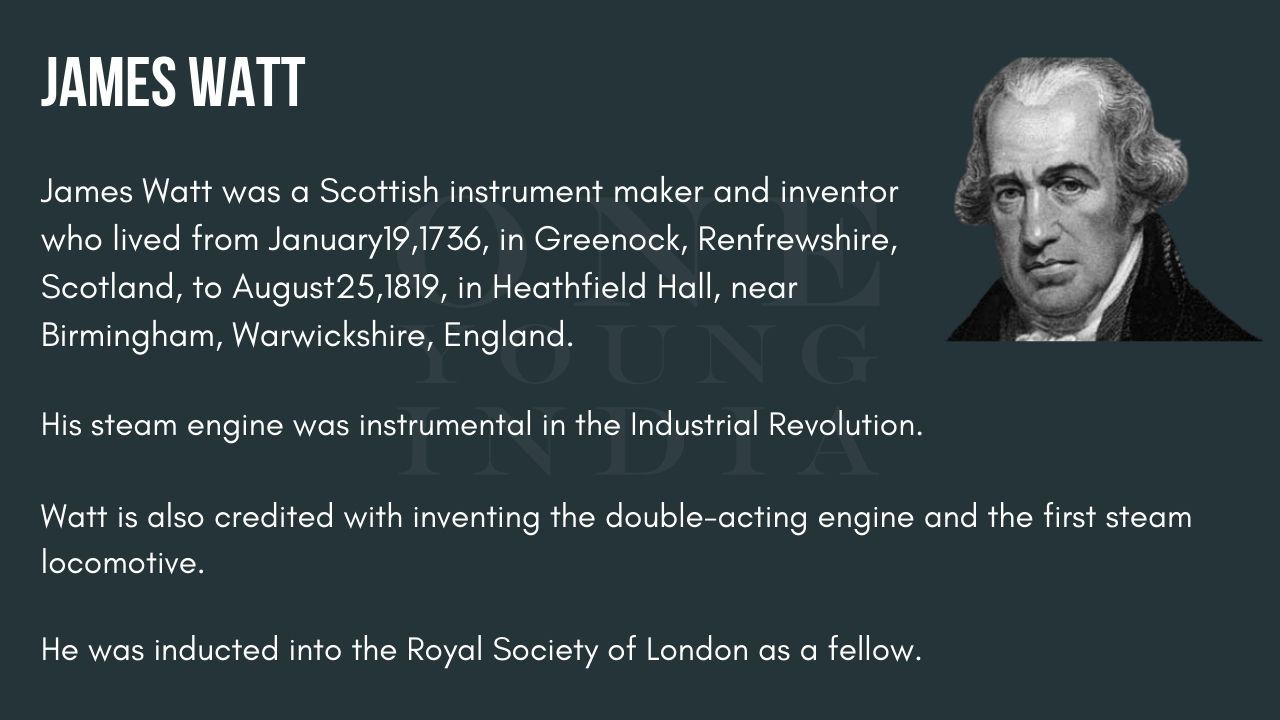
Importance of Hand Labor
Industrialists had no problem with labor shortage or high wage costs. They did not want to introduce machines that got rid of human labor and required large capital investment.
Introduction of machines required large capital investment. Hence, cheap labor was preferred over the use of machines. Manual labor was also preferred in the industries where production fluctuate with seasons such as in Gas Works and Breweries.
Book- binders and printers, catering to Christmas demand, too needed extra hands before December. At the waterfront, winter was the time that ships were repaired and spruced up. In all such industries where production fluctuated with the season, industrialists usually preferred hand labor, employing workers for the season.
Goods with intricate designs and specific shapes were in great demand in the European markets. This was possible only with hand labor and not machine outputs.
The aristocrats and the bourgeoisie in Victorian Britain preferred the refined and carefully handmade products; machine made goods were for the colonies.
Handmade products came to symbolize refinement and class. They were better finished, individually produced, and carefully designed. Machine- made goods were for export to the colonies.
Life of the Workers
The abundance of labor in the market affected the lives of workers. - The actual possibility of getting a job depended on existing networks of friendship and kin relations.
Many job- seekers had to wait weeks, spending nights under bridges or in night shelters and causal wards maintained by the Poor Law Authorities . There was also large-scale migrations to towns and cities from the countryside in search of jobs.
Seasonality of work in many industries meant prolonged periods without work. After the busy season was over, the poor were on the streets again.
Some returned to the countryside when the demand for labor in the rural areas opened up.
Most people looked for odd-jobs, which till the mid-19th century were difficult to find. The fear of unemployment made workers hostile to the introduction of new technology. -
Women who survived on hand-spinning began protesting when the Spinning Jenny was introduced. Women who survived on hand spinning began attacking the new machines. This conflict over the introduction of the jenny continued for a long time.
After this the construction in Cities intensified and workers found jobs in construction of roads and railways, and development of tunnels, drainage and sewage systems.
The number of workers employed in the transport industry doubled in the 1840s, and doubled again in the subsequent 30 years.
The Age of Indian Textiles
Before the age of machines, silk and cotton goods from India dominated the international textile market.
Armenian and Persian merchants took goods from Punjab to Afghanistan, Eastern Persia and Central Asia. A vibrant sea trade operated through the main pre-colonial ports. Surat on Gujarat coast connected India to the Gulf and the Red Sea ports.
Masulipatam on the Coromandel Coast and Hooghly in Bengal had trade links with Southeast Asian ports.
A variety of Indian merchants and traders were involved in this network of export trade, financing production, carrying goods and supplying exporters. They gave advances to the weavers, procured the woven cloth from weaving villages and carried the supply to the ports.
By the 1750s this network, controlled by Indian merchants, was breaking down. The European companies gradually gained power and monopoly rights.
Trade through the new ports of Calcutta and Mumbai came to be controlled by the European companies.
Plight of Weavers
British cotton industries had not yet expanded and Indian fine textiles were in great demand in Europe. So the company was keen on expanding textile exports from India.
The East India Company gained monopoly rights over the Indian textile trade. It tried to eliminate the existing traders and brokers connected with the cloth trade and established direct control over the weavers.
A paid servant called the gomastha was appointed for supervising weavers, collecting supply and examining the quality of cloth.
The Company prevented the weavers from dealing with other buyers by the system of advances. Once an order was placed, the weavers were given loans to purchase the raw material for their production. Those who took loans had to hand over the cloth they produced to the gomastha. They could not take it to any other trader.
Once the order was placed, the weavers were given loans for purchasing raw material for production. The produced cloth was to be handed over to the gomastha.
In many weaving villages there were reports of clashes between weavers and gomasthas. Earlier supply merchants had very often lived within the weaving villages, and had a close relationship with the weavers, looking after their needs and helping them in times of crisis.
The new gomasthas were outsiders, with no long-term social link with the village.
They acted arrogantly, marched into villages with sepoys and peons and punished weavers for delays in supply.
The price received by weavers from the Company was miserably low and the loans that they had accepted tied them to the Company.
In Carnatic and Bengal weavers deserted villages and migrated, setting up looms in other villages where they had some family relation. Elsewhere, the weavers along with the village traders revolted, opposing the Company and its officials.
Weavers began refusing loans, closing down their workshops and taking to agricultural labour. British Textiles in India
In 1772, Henry Patullo, a Company official, had ventured to say that the demand for Indian textiles could never reduce, since no other nation produced goods of the same quality.
As cotton industries developed in England, industrial groups began worrying about imports from other countries.
The British industrialists pressured the government to impose duties on cotton textiles so that Manchester goods could sell in Britain without any outside competition.
The industrialists also persuaded the East India Company to sell the British manufactures in the Indian markets.
Exports of British cotton goods increased dramatically in the early 19th century. The export market of the Indian cotton weavers collapsed and the local market shrank, being glutted with cheap Manchester imports.
The weavers could not get sufficient supply of good quality raw cotton. Weavers in India were starved of supplies and forced to buy raw cotton at exorbitant prices.
Civil War broke out and cotton supplies from the US were cut off, Britain turned to India. As raw cotton exports from India increased, the price of raw cotton shot up. Weavers in India were starved of supplies and forced to buy raw cotton at exorbitant prices. In this situation weavers could not pay.
By the end of the 19th century, factories in India began production, flooding the markets with machine-made goods. Consequently, the weaving industry decayed and died.
Timeline of Factories in India
1854: First cotton mill came up in Bombay and went into production in 1856
1855: The first jute mill came up; and another one in 1862
1860s: The Elgin mill was started in Kanpur
1861: The first cotton mill of Ahmedabad was set up
1874: The first spinning and weaving mill of Madras began production
The Early Entrepreneurs
The British in India began exporting opium to China and took tea from China to England. Many Indians participated in this trade by providing finance, procuring supplies and shipping consignments.
In Bengal, Dwarkanath Tagore made his fortune in the China trade and established six joint-stock companies in the 1830s and 1840s.

In Bombay, Dinshaw Petit and Jamsetjee Nusserwanjee Tata built huge industrial empires in India. They accumulated their initial wealth partly from exports to China and partly from raw cotton shipments to England.
Seth Hukumchand, a Marwari businessman who set up the first Indian jute mill in Calcutta in 1917, also traded with China. So did the father as well as grandfather of the famous industrialist G.D. Birla.
Merchants from Madras traded with Burma, Middle East and East Africa.
Other trading activities included carrying goods from one place to another, banking, transferring funds between cities and financing traders.
However, Indian traders were barred from trading with Europe in manufactured goods and had to export raw materials and food grains required by the British. They were also gradually edged out of the shipping business.
Workers
In most industrial regions, workers came from the nearby districts - The job-seekers were always more than the jobs available. Industrialists employed a jobber for getting new recruits. He got people from his village, ensured them jobs, helped them settle in the city and provided them money in times of crisis.
The Peculiarities of Industrial Growth
The European Managing Agencies established tea and coffee plantations, acquiring land at cheap rates from the colonial governments. They also invested in mining, indigo and jute.
Since yarn was not an important part of British imports into India, the early cotton mills in India produced coarse cotton yarn rather than fabric. The yarn produced in Indian spinning mills was used by handloom weavers in India or exported to China.
Nationalists during the Swadeshi movement mobilized people to boycott foreign cloth. Industrial groups organized themselves to protect their collective interests, pressurizing the government to increase tariff protection and grant other concessions.
From 1906, the export of Indian yarn to China declined since produce from Chinese and Japanese mills flooded the Chinese market.
1900 and 1912: Cotton piece goods production in India doubled
With British mills busy with war production to meet the needs of the army, Manchester imports into India declined. As the war prolonged, Indian factories were called upon to supply war needs including jute bags, cloth for army uniforms, tents and leather boots, horse and mule saddles and a host of other items.
Industrial production boomed owing to the increase in the working hours and the establishment of new factories.
Unable to modernize and compete with the US, Germany and Japan, the British economy crumbled after the war. Cotton production collapsed and exports of cotton cloth from Britain fell dramatically.
Within the colonies, local industries substituted the foreign manufactures and captured the home market.
Small-scale Industries
Large industries formed only a small segment of the economy. Most of them were located in Bombay and Bengal.
Most of the workers worked in small workshops and household units. - While cheap machine-made thread wiped out the spinning industry in the 19th century, the weavers survived. Handloom cloth-production expanded steadily between 1900 and 1940.
Technological changes and other small innovations made the handloom cloth- production rise. By the second decade of the 20th century, weavers used looms with a fly shuttle.
Amongst weavers, some produced coarse cloth while others wove finer varieties. The coarser cloth was bought by the poor and its demand fluctuated violently along with the fluctuations in their incomes. The finer ones were bought by the rich and its demand was constant.
Market for Goods
New consumers were created through advertisements. Advertisements expanded the markets for products and shaped a new consumer culture.
The label was needed for making the name and the place of manufacture and the name of the company familiar to the buyer.
Images of Indian gods and goddesses were imprinted on goods for making a foreign product familiar to the Indian masses.
Calendars were used for advertisements. Figures of important personages adorned advertisements and calendars allowing it to become a vehicle of the nationalist message of Swadeshi.
Key takeaways
- Proto-industrialisation was a decentralized system of large-scale production where urban merchants employed rural peasants before the invention of factories.
- The factory system centralized production, allowing for better supervision of labor, quality control, and the integration of new technologies like the steam engine.
- In Victorian Britain, cheap human labor was often preferred over machines for seasonal work and for producing intricate, luxury goods favored by the upper classes.
- The East India Company used paid servants called gomasthas to monopolize the Indian textile trade, trapping traditional weavers in cycles of debt.
- Early Indian industrialists built the foundation of India's domestic manufacturing sector despite facing severe colonial trade restrictions and competition from cheap British imports.
Test yourself
What is proto-industrialisation?
The phase of large-scale, decentralized industrial production for international markets that existed before the establishment of modern factories.
Who was a gomastha?
A paid servant appointed by the East India Company to supervise weavers, collect supplies, and ensure a monopoly on textile production in India.
Why did Victorian industrialists sometimes prefer hand labor over machinery?
Human labor was cheap and abundant, ideal for seasonal industries, and necessary for producing the intricate, customized goods demanded by the upper classes.
Try it
Proto-industry or the factory?
Before factories, there was already large-scale production. Sort each feature into the world it belongs to.
Drop each feature under the system it describes.
Proto-industrialisation was already large-scale production for distant markets — just without factories. The factory concentrated it under one roof, under supervision and machine power.