
Heat Transfer in Nature | CBSE Class 7 Science Notes
On this page
This note covers heat transfer by conduction, convection and radiation; conductors and insulators; warmth in clothing and houses; land and sea breezes; the water cycle; seepage, groundwater and aquifers; and methods of conserving water.
How does conduction transfer heat through a metal strip?
Conduction is heat transfer from a hotter part of an object to a colder part. A heated particle, a small constituent of a material, passes heat to a neighbouring particle, which passes it onwards. The particles themselves do not move from their positions during this process.
Heat can travel along a metal strip even though the strip remains fixed. In solids, heat transfer takes place mainly by conduction.
How can wax and pins reveal the direction of transfer?
Carry out this activity under the supervision of a teacher or an adult. Use aluminium or iron for the strip. The abbreviation cm means centimetres, the unit used here for the strip's length and the spacing between pins.
- Take a metal strip about 15 cm long. Attach four pins using wax, with nearly equal spacing of about 2 cm between them.
- Fix the strip to a stand. Label the pins I, II, III and IV, meaning one, two, three and four, starting from the end to be heated.
- Heat the end away from the stand with a candle or spirit lamp. Predict which pin will fall first.
- Observe the pins falling in the order I, II, III and IV. Record the order and explain why the wax melts successively.
What the figure shows
Heat transfer in a metal strip
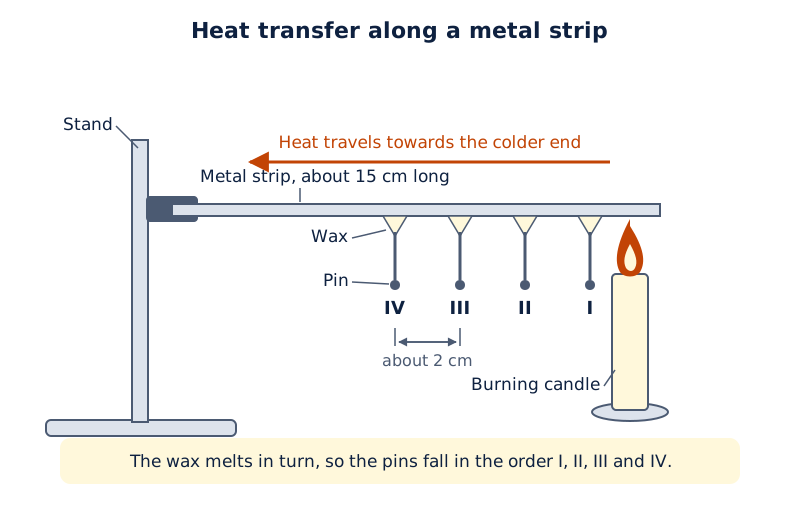
A stand supports a horizontal metal strip. Four pins hang beneath it. The candle is below the free end, nearest pin I; pin IV is nearest the stand.
Drawn by One Young India. See Fig. 7.1 in your NCERT textbook
What does the falling order show?
The wax near the flame melts first, releasing the nearest pin. As heat travels towards the colder end, the wax holding the other pins melts in turn. The order therefore shows the direction of heat transfer along the strip.
The observation is the falling sequence; the explanation is heat passing through neighbouring particles. These are distinct parts of the activity. The pins do not all fall together because the heat reaches their positions successively.
Why do different materials serve different heating purposes?
A good conductor of heat allows heat to pass through it easily. A poor conductor of heat, also called an insulator, does not allow heat to pass through it easily. These descriptions concern how readily the material transfers heat.
Metals are good conductors. Cooking utensils are generally made of metal because heat passes readily through them. Glass, wood, clay and porcelain are poor conductors. Tea or coffee stays hot longer in clay and porcelain cups because these materials resist easy heat transfer.
How do familiar materials compare?
| Material | Heat-conducting behaviour | Connection with an observation or use |
|---|---|---|
| Aluminium or iron | Good conductor | A heated strip transfers heat towards the wax holding the pins. |
| Steel | Good conductor | It belongs in the good-conductor group when materials are classified. |
| Wood or glass | Poor conductor | The pins do not fall when either replaces the metal strip in the activity. |
| Clay or porcelain | Poor conductor | Cups made from these materials keep tea or coffee hot longer. |
| Air | Poor conductor | Air trapped in clothing helps reduce heat loss from the body. |
The metal-strip activity can be compared with the same activity using wood or glass. With the poor-conducting strip, heat does not travel readily along the material to melt the wax. The pins therefore do not fall in that activity.
Note: “Poor conductor” means that heat does not pass through the material easily. It does not mean that heat transfer is completely impossible.
Choosing a material depends on the purpose. In a cooking utensil, easy heat transfer is useful. For keeping a drink hot, reducing easy heat transfer is useful. The same distinction between good and poor conductors explains these different choices.
How do trapped air and building materials help retain warmth?
Woollen fabric traps air in its pores, the small spaces within the fabric. Since air is a poor conductor of heat, this trapped air reduces heat flow from the body to the surroundings. This helps us feel warm during winter.
Air can also remain between layers of clothing. The air between two thin blankets acts as an insulator. Its presence explains the preference for two thin blankets over one thick blanket for keeping warm.
What is the role of air?
The useful feature is the layer of trapped air. In clothing and blankets, it reduces the transfer of body heat to the surroundings. Explain warmth by linking the arrangement of the material to the poor heat-conducting property of air.
This use of air also appears in houses with outer walls made using hollow bricks, bricks containing empty spaces. Air becomes trapped inside the spaces. Its poor conductivity helps these houses remain warm in winter and cool in summer.
How are houses adapted to very cold places?
Houses in very hot or cold climates often use heat-transfer principles to keep their interiors cool or warm. In the upper Himalayas, the Mori block of Uttarkashi in Uttarakhand experiences extremely cold weather and heavy winter snowfall.
Houses there are often built with walls containing two wooden layers and a filling of cow dung and mud. Wood and mud are poor conductors: they prevent heat loss and help keep the houses warm.
| Arrangement | Relevant material | Effect |
|---|---|---|
| Woollen clothing | Air held in fabric pores | Reduces heat flow from the body to the surroundings. |
| Two thin blankets | Air between the blankets | Acts as an insulating layer. |
| Hollow outer-wall bricks | Air inside the bricks | Helps keep the house warm in winter and cool in summer. |
| Layered wooden walls | Wood and mud | Help prevent heat loss in very cold surroundings. |
Clothing and house construction apply the same broad idea at different scales. Material choice and the spaces containing air influence how easily heat passes between a warm interior and its surroundings.
Why does heated air rise?
Convection transfers heat through the actual movement of particles in liquids and gases. Heated air expands, occupies more space and becomes lighter. It rises, carrying heat with it. This movement differs from conduction, where particles pass heat on without leaving their positions.
What happens in the paper-cup activity?
Two identical paper cups are suspended upside down using equal lengths of thread at opposite ends of a wooden stick. Adjust the cups until the stick is horizontal. Then place a burning candle beneath one cup and watch what happens.
- The candle heats the air around its flame and within the cup above it.
- The heated air expands and occupies more space.
- This warmer air becomes lighter and rises.
- The cup above the candle rises, so the stick no longer remains horizontal.
The cup's upward movement is the observation. The expansion and rise of the air explain that observation. A complete explanation connects the heat source, the change in the air and the movement that follows.
What other observations show the effect of heating air?
A partially inflated balloon placed in the Sun becomes larger after the air inside it gets heated. The expanding air occupies more space. This provides another way to observe the connection between heating and expansion, meaning an increase in the space occupied.
Smoke is a mixture of hot gases and tiny solid particles released when something burns. Smoke from burning firewood or an incense stick rises because it is warmer than the surrounding air.
These observations focus on moving air. In the cup activity, air warmed by the candle rises. Around burning material, warm smoke rises. In the balloon, heating is shown by an increase in size as the enclosed air expands.
Note: Air is a poor conductor, but moving air can transfer heat by convection. Poor conduction and heat transfer through actual movement describe different processes.
How does convection heat water in a beaker?
Water can transfer heat through convection, just as air does. Water near the heat source becomes warm, expands and rises. Comparatively cooler and heavier water moves down to replace it. This repeated movement heats the entire volume.
How can a coloured streak reveal the movement?
Perform this activity under the supervision of a teacher or an adult. Use a 500 mL beaker half-filled with water. Here, mL means millilitres, a unit of volume, and a beaker is the laboratory container holding the water.
Using a straw, place a grain of potassium permanganate, the substance used to produce the coloured streak, at the centre of the beaker's base. Put a candle directly below the centre of the base and observe the colour's movement as heating continues.
What the figure shows
Convection in heated water
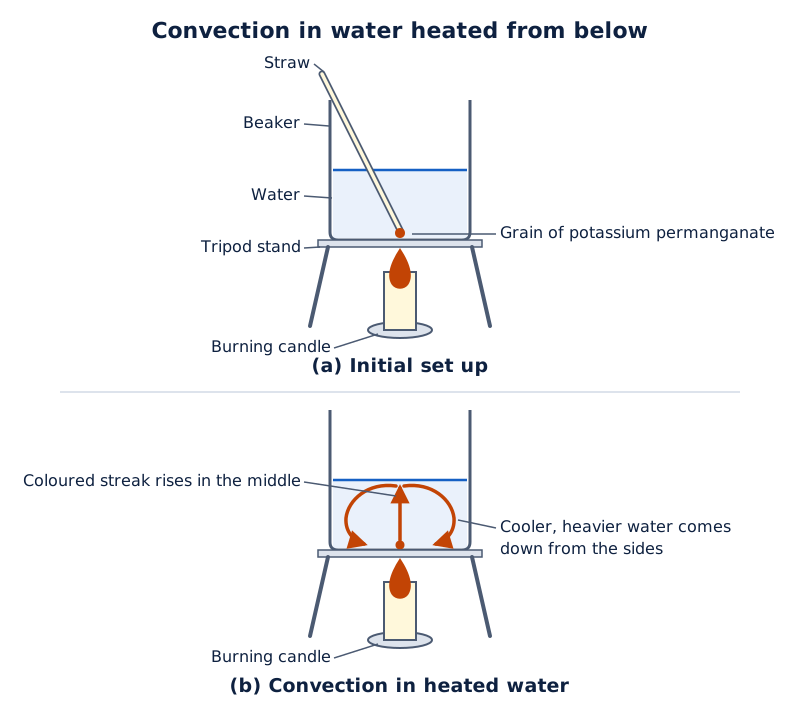
A beaker of water rests on a tripod stand above a candle. The initial arrangement includes a straw; the heated arrangement shows a coloured streak inside the water.
Drawn by One Young India. See Figs. 7.5(a) and 7.5(b) in your NCERT textbook
- Water near the centre of the bottom receives heat from below.
- This water expands, becomes lighter and rises, carrying the coloured streak upwards.
- Water near the sides is comparatively cooler and heavier, so it moves down to replace the rising water.
- The replacement water is heated and rises in turn. The cycle continues until the entire volume is heated.
What distinguishes this from the metal-strip activity?
In the beaker, the water particles move from one place to another. The colour makes that movement easier to observe. Its streak rises and then comes down from the sides as the water circulates.
In the metal strip, particles transfer heat to their neighbours without moving away from their positions. The falling pins reveal the passage of heat. Comparing the two activities separates the movement of heat from the actual movement of material.
How do unequal heating and cooling produce coastal breezes?
Land and water heat and cool at different rates. An activity with soil and water helps show this difference. A laboratory thermometer measures temperature, the degree of hotness or coldness. The symbol °C means degrees Celsius, the temperature unit used in the observations.
How can soil and water be compared?
On a clear, sunny day, work under the supervision of a teacher or an adult. Half-fill one bowl with soil and an identical bowl with water. Fix a thermometer in each, with its bulb immersed without touching the bowl's bottom or sides.
Place both bowls in sunlight. Record temperatures at 0, 5, 10, 15 and 20 minutes. After 20 minutes, the soil shows a greater temperature rise: it heats faster than water. Then bring the arrangement indoors for 20 minutes; soil also cools faster.
Why does the direction of the breeze reverse?
A sea breeze is the movement of cooler air from sea to land. During the day, land heats faster than seawater. Warm air above the land rises, and cooler air from the sea moves towards the land to replace it.
At night, land cools faster than seawater. Air above the sea is warmer and rises. Cooler air moves from the land towards the sea. This movement is a land breeze. Both breezes are examples of convection.
| Feature | Sea breeze | Land breeze |
|---|---|---|
| Time | Day | Night |
| Warmer surface | Land | Sea |
| Place where warm air rises | Above the land | Above the sea |
| Direction of cooler air | Sea towards land | Land towards sea |
What the figure shows
Sea and land breezes
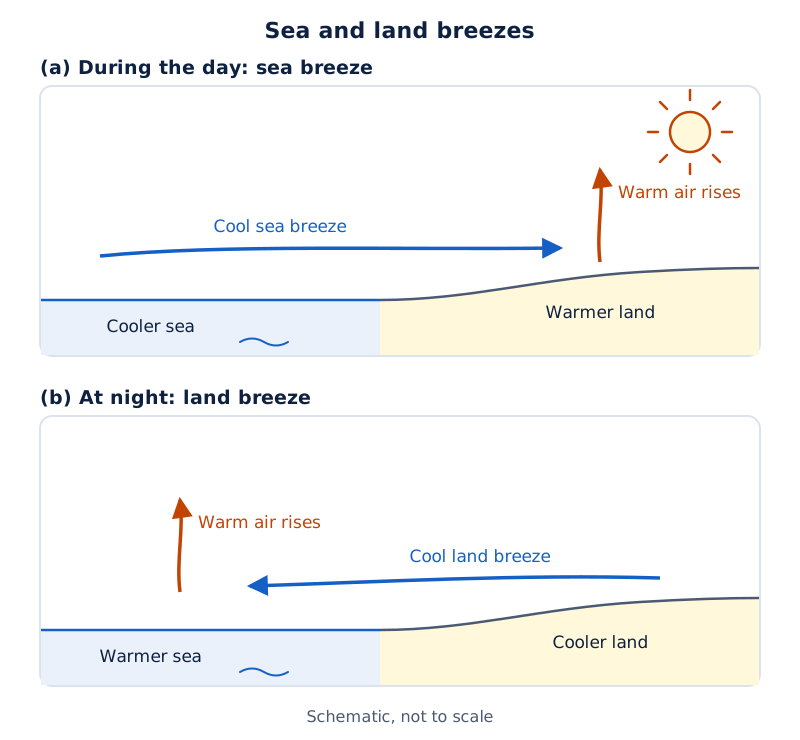
The daytime drawing labels warmer land and cooler sea, with a cool sea-breeze arrow towards land. The night drawing labels cooler land and warmer sea, with a cool land-breeze arrow towards the sea.
Drawn by One Young India. See Figs. 7.7(a) and 7.7(b) in your NCERT textbook
In hot places, the sea breeze provides relief from heat. Houses in coastal areas have windows facing the sea for this reason. To explain either breeze, connect the different rates of heating or cooling with the rise of warmer air and the movement of cooler air.
How does radiation differ from conduction and convection?
Radiation transfers heat without requiring a material medium. A medium is the material whose particles help transfer heat. Conduction and convection require such material, whereas radiation does not. Heat from the Sun reaches the Earth by radiation.
Warmth felt while sitting near a fire is also due to radiation from the hot object. All objects radiate heat. A hot utensil removed from a flame cools after some time by radiating heat to its surroundings.
How are the three processes compared?
| Process | How heat is transferred | Material medium | Example |
|---|---|---|---|
| Conduction | Particles pass heat to neighbouring particles without leaving their positions. | Required | Heat travelling along a metal strip. |
| Convection | Particles actually move from one place to another. | Required | Water circulating as it is heated from below. |
| Radiation | Heat travels without needing a material medium. | Not required | Heat reaching the Earth from the Sun. |
Why does clothing colour matter?
Light-coloured clothes reflect most of the heat falling on them, which makes them more comfortable in summer. Reflection means that heat is sent back rather than taken in. Dark surfaces absorb more heat, making dark-coloured clothes more comfortable in winter.
Absorption means taking in the incident heat, the heat falling on a surface. Keep the comparison precise: light colours reflect most of the heat, while dark surfaces absorb more. The statements do not say that either reflects or absorbs all heat.
Can all three processes occur together?
Yes. When water is heated in a pan, conduction transfers heat to the utensil, convection heats the water within it, and radiation accounts for the warmth felt around the flame and hot pan.
A bukhari is a traditional room heater used in the upper Himalayan region. Wood or charcoal burns in its iron stove. An attached long pipe acts as a chimney, carrying smoke out. Its flat top can also hold cooking utensils.
All three heat-transfer processes are involved when a bukhari cooks food and warms a room. A single everyday situation can therefore involve several processes, even though each process has a distinct mechanism.
How does solar heat drive the water cycle?
The Sun is the Earth's main source of heat. Evaporation changes liquid water into water vapour, its gaseous form. Solar heat makes evaporation faster, explaining why wet clothes dry faster on a sunny day.
Water exists naturally as liquid water in rivers, lakes and oceans; solid snow, ice sheets and glaciers; and gaseous water vapour in the atmosphere, the air surrounding the Earth. A glacier is a large body of ice found in mountain or polar regions.
What steps connect water bodies, plants and clouds?
- The Sun heats water in oceans, rivers and lakes. Some water evaporates and enters the air as water vapour.
- Plants also release water through transpiration, the process by which water evaporates from trees and other plants.
- Rising water vapour cools and undergoes condensation, changing from vapour into liquid water as clouds form.
- Water returns from clouds as rain, snow or hail. This return is called precipitation.
- Rainwater flows into ponds, lakes, rivers and oceans, or seeps into the ground, continuing the movement of water.
What the figure shows
Water cycle
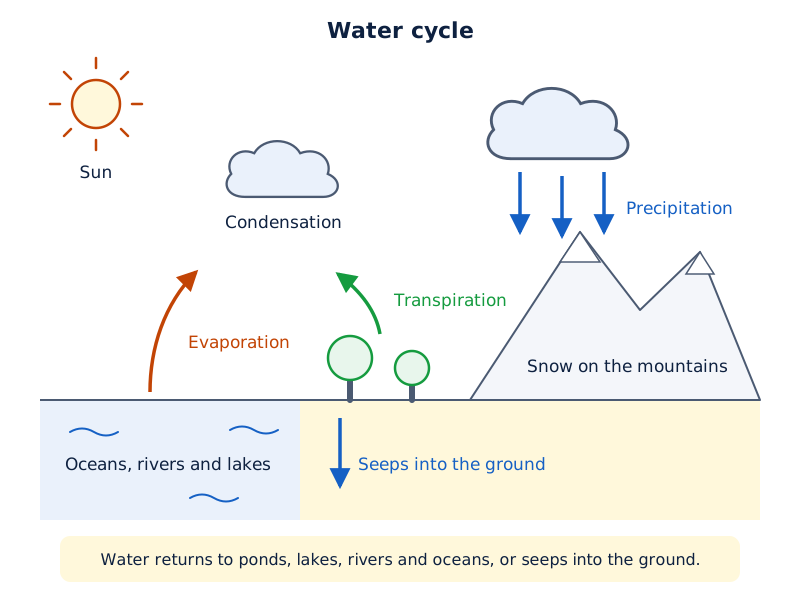
The drawing shows the Sun, a water body, clouds, mountains and vegetation. It labels evaporation above the water, condensation among clouds, precipitation over the mountains and transpiration above vegetation.
Drawn by One Young India. See Fig. 7.9 in your NCERT textbook
The water cycle is this continuing movement: water rises as vapour, returns through precipitation, passes through soil, rocks and plants, and returns to water bodies. It redistributes and replenishes water in rivers, lakes and oceans while conserving Earth's total amount of water.
How do snow and ice participate?
During summer, some snow and ice melt because of the Sun's radiation. The resulting water flows down as rivers and ultimately reaches the oceans. Fresh winter snow replenishes the ice that has melted.
The cycle connects changes of state with movement between places. Evaporation carries water upwards as vapour, precipitation returns it downwards, and flowing or seeping water supplies water bodies and underground stores. These linked processes explain both redistribution and replenishment.
How does water seep through soil and become groundwater?
Infiltration is surface water seeping through soil and rocks. The ease of this movement depends on the spaces between particles. Wider spaces that are open and interconnected allow water to infiltrate more readily.
How can seepage through different materials be investigated?
Use three transparent, used plastic bottles of 1 L capacity. The symbol L means litre, a unit of volume. Cut each bottle in the middle and make a small hole in its cap. Invert the upper portions over identical beakers.
- Put clay in the first inverted bottle, sand in the second and gravel in the third. Gravel consists of the coarse particles used for comparison with sand and clay.
- Add 200 mL of water to each bottle. Predict how quickly water will seep through each material.
- Collect the water flowing through each bottle for 10 minutes.
- Compare the amounts collected and describe the seepage as very slow, slow or fast.
You may have observed that water seeps fastest through gravel, slower through sand and slowest through clay. Spaces between gravel particles are wider than those in sand and clay, allowing water to pass through gravel more easily.
Where is infiltrated water stored?
Groundwater is water stored below the surface in the pore spaces of sediments and openings in rocks. Sediments are accumulated particles of material; pore spaces are the gaps between those particles where water can be held.
Aquifers are underground layers of sediments and rocks that store water in pore spaces. Wells and bore wells reach these stores. Depending on location, groundwater may lie a few metres to hundreds of metres below the ground.
What the figure shows
Aquifer beneath the ground
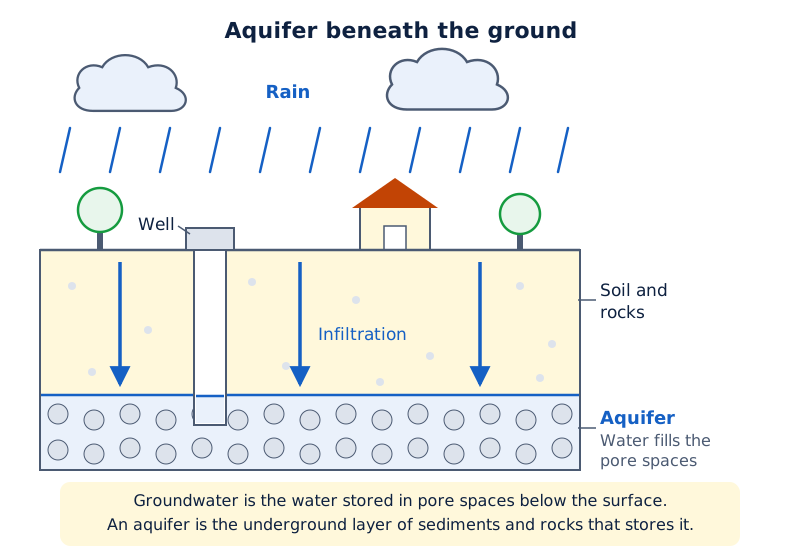
A cutaway drawing shows rain above the land, infiltration below the surface and a well reaching a blue underground layer labelled Aquifer. Trees and a house appear above the ground.
Drawn by One Young India. See Fig. 7.12 in your NCERT textbook
Distinguish the three terms: infiltration is the entry process, groundwater is the stored water, and an aquifer is the underground layer storing it. Water drawn through wells or handpumps has previously seeped into the ground.
Why must groundwater and seasonal water supplies be conserved?
Groundwater is not unlimited. An increasing population requires more water, leading to excessive extraction from underground stores. At the same time, reduced vegetation cover and increased concrete surfaces in urban areas have limited infiltration.
These changes connect demand with replenishment. More groundwater is removed, while less surface water is able to enter the ground. As a result, groundwater becomes depleted, meaning that the available store is reduced.
How can groundwater stores be replenished?
Rainwater harvesting means collecting rainwater for useful storage or replenishment. Recharge pits are pits used to help replenish groundwater. These measures address the need to return water to underground stores rather than relying on extraction alone.
The water cycle recharges groundwater through infiltration. Its continuing movement helps maintain supplies, but the existence of the cycle does not make excessive extraction harmless. The balance between water entering the ground and water being removed matters for continued availability.
How do ice stupas conserve water in Ladakh?
During spring in Ladakh, streams often dry up. Heat from the Sun's radiation is not enough to melt mountain snow at that time, causing water scarcity. An ice stupa is a tall, cone-shaped ice structure made to conserve water.
- During winter, water from mountain streams is channelled down through underground pipes.
- The water is sprayed into cold air. As it falls, extremely low temperatures cause it to freeze.
- Ice accumulates layer by layer, producing the tall cone-shaped structure.
- The ice melts slowly during spring and supplies water for farming and other needs throughout summer.
The method links storage with a change of state. Stream water is stored as ice during winter; gradual melting makes it available later. It is a local response to the seasonal mismatch between available water and people's needs.
Groundwater recharge and ice stupas address different storage problems. Recharge restores underground water; ice stupas conserve winter stream water as ice. Both show why understanding water movement and the effects of heat helps people manage water supplies.
Glossary
- Conduction — Transfer of heat from a hotter part to a colder part without particles leaving their positions.
- Good conductor — A material that allows heat to pass through it easily, such as a metal.
- Insulator — A poor conductor that does not allow heat to pass through it easily.
- Convection — Transfer of heat through the actual movement of particles in liquids and gases.
- Radiation — A process of heat transfer that does not require a material medium.
- Sea breeze — Movement of cooler air from the sea towards land during the day.
- Land breeze — Movement of cooler air from the land towards the sea at night.
- Evaporation — The change of liquid water into water vapour, which solar heat makes faster.
- Condensation — The change of water vapour into liquid water as it cools during cloud formation.
- Transpiration — The process through which water evaporates from trees and other plants into the air.
- Precipitation — The return of water from clouds as rain, snow or hail.
- Water cycle — Continuous movement of water upwards as vapour and downwards through precipitation, eventually returning to water bodies.
- Infiltration — The process in which surface water seeps through soil and rocks beneath the ground.
- Groundwater — Water stored below the surface in sediment pore spaces and openings in rocks.
- Aquifer — An underground layer of sediments and rocks that stores water in pore spaces.
Common errors and misconceptions
- Misconception: Conduction carries particles from the hot end of a metal strip to the cold end. Correct: Particles pass heat to neighbours without leaving their positions.
- Misconception: An insulator allows no heat transfer at all. Correct: It does not allow heat to pass through easily; the definition concerns ease of transfer.
- Misconception: Air cannot transfer heat because it is a poor conductor. Correct: Moving air transfers heat by convection, which involves actual particle movement.
- Misconception: A sea breeze moves from land to sea. Correct: The cooler air moves from sea to land during the day; a land breeze moves in the opposite direction at night.
- Misconception: Radiation requires air between a hot object and its surroundings. Correct: Radiation does not require a material medium, unlike conduction and convection.
- Misconception: Light-coloured clothing reflects all heat falling on it. Correct: It reflects most of the heat; dark surfaces absorb more heat.
- Misconception: Groundwater and aquifer mean the same thing. Correct: Groundwater is the stored water; an aquifer is the underground layer storing water in pore spaces.
- Misconception: The water cycle makes groundwater unlimited. Correct: Excessive extraction and reduced infiltration can deplete groundwater despite natural recharge.
Exam-style questions with model answers
Q1. Explain why woollen clothing helps keep the body warm during winter. Give two linked points. [2 marks]
- Woollen fabric traps air in its pores, creating spaces containing air within the clothing.
- Air is a poor conductor of heat, so it reduces heat flow from the body to the surroundings.
Q2. Four pins, labelled I, II, III and IV in order from the heated end, are attached with wax to a metal strip. A candle heats the end nearest pin I. State the falling order, explain why the pins fall, and name the heat-transfer process. [3 marks]
- The pins fall in the order I, II, III and IV, beginning with the pin nearest the candle and proceeding towards the colder end.
- Heat travels along the metal strip, melting the wax holding each pin in turn. The nearest pin is released first.
- The process is conduction: neighbouring particles pass heat onwards without moving away from their positions.
Q3. A beaker is half-filled with water, with a grain of potassium permanganate at the centre of its base to show water movement. A candle heats the base directly below the grain. Explain the coloured streak's movement and how the whole volume becomes heated. [4 marks]
- Water at the centre of the base is heated first. It expands, becomes lighter and rises, taking the coloured streak upwards.
- Water near the sides is comparatively cooler and heavier, so it moves downwards to replace the water that has risen.
- This replacement water is heated and rises in turn. The circulation continues until the entire volume of water becomes heated.
- This is convection because heat transfer occurs through the actual movement of water particles from one place to another.
Q4. Land heats and cools faster than seawater. Explain in five points how this difference produces a sea breeze during the day and a land breeze at night. Include the direction of each breeze. [5 marks]
- During the day, land becomes warmer than the sea because it heats faster. Air above the land becomes warm and rises.
- Cooler air above the sea moves towards the land to replace the rising warm air. This movement is called a sea breeze.
- At night, land loses heat faster than seawater and becomes cooler. The sea therefore remains the warmer surface in this comparison.
- Warmer air above the sea rises, and cooler air from the land moves towards the sea. This is called a land breeze.
- Both breezes involve convection, with actual movement of air transferring heat. The cooler air's direction reverses between the daytime and night-time situations.
Q5. Explain how the water cycle redistributes and replenishes water. Include evaporation, transpiration, condensation, precipitation and the return of water to water bodies or the ground. [5 marks]
- The Sun heats water in rivers, lakes and oceans, causing it to evaporate as water vapour and move into the air.
- Trees and other plants also add water vapour to the air through transpiration, linking plants with the continuing movement of water.
- As water vapour rises, it cools and condenses to form clouds. This connects upward movement with a change from the vapour state.
- Clouds bring water back as rain, snow and hail, a process called precipitation. Water therefore returns downwards after entering the air.
- Water flows into ponds, rivers, lakes and oceans or seeps underground. These connected movements replenish and redistribute supplies while conserving Earth's total water.
Q6. In a seepage activity, inverted bottles contain clay, sand and gravel. Each receives 200 mL of water, and outflow is collected for 10 minutes. The observed seepage is fastest through gravel, slower through sand and slowest through clay. Explain the gravel result, define infiltration, and distinguish groundwater from an aquifer. [4 marks]
- Spaces between gravel particles are wider than those in sand and clay, allowing water to seep through gravel more easily.
- Infiltration is the process of surface water seeping through soil and rocks. Wider, open and interconnected spaces favour this movement.
- Groundwater is the water stored beneath the surface in the pore spaces of sediments and the openings in rocks.
- An aquifer is an underground layer of sediments and rocks storing water in pore spaces. It is the storage layer, whereas groundwater is the water.
Q7. For conduction, convection and radiation, explain the mechanism or medium requirement and give one example for each. [3 marks]
- Conduction requires a material medium. Particles pass heat to neighbours without leaving their positions, as when heat travels along a metal strip.
- Convection also requires a medium, but particles actually move. Water rising and descending in a beaker heated from below is an example.
- Radiation requires no material medium. Heat from the Sun reaches the Earth by this process, which also explains warmth felt near a fire.
Q8. In Ladakh, spring streams often dry up because solar heat is insufficient to melt mountain snow. Describe how an ice stupa is made in winter and how it helps provide water later, using five points. [5 marks]
- During winter, water from mountain streams is channelled down through underground pipes, bringing it to the place where ice will be stored.
- This water is sprayed into cold air. As the falling water encounters extremely low temperatures, it freezes and becomes solid ice.
- Ice accumulates layer by layer, gradually forming a tall cone-shaped structure called an ice stupa. The winter stream water is thus conserved.
- The ice stupa melts slowly during spring, releasing water when streams often dry up and mountain snow has not supplied enough meltwater.
- This stored water provides for farming and other needs throughout summer. The method connects winter freezing with a later supply through gradual melting.
Key takeaways
- Conduction transfers heat through neighbouring particles without their leaving their positions; heat transfer in solids occurs mainly by this process.
- Good conductors transfer heat easily, while poor conductors reduce easy heat transfer; trapped air helps clothing and houses retain warmth.
- Convection transfers heat through moving particles in liquids and gases, as warmer material rises and comparatively cooler material replaces it.
- Land heats and cools faster than seawater, producing daytime sea breezes towards land and night-time land breezes towards sea.
- Radiation requires no material medium; solar heat reaches Earth this way, and all objects radiate heat to their surroundings.
- The water cycle links evaporation, transpiration, condensation and precipitation with returning water, redistributing and replenishing supplies across the Earth.
- Infiltration moves surface water through soil and rocks; groundwater occupies underground spaces, and aquifers are the layers storing it.
- Excessive extraction and reduced infiltration deplete groundwater; rainwater harvesting, recharge pits and seasonal ice storage help conserve water supplies.
Test yourself
What distinguishes conduction from convection at the particle level?
In conduction, particles pass heat to neighbours without leaving their positions. In convection, particles actually move from one place to another.
Why do clay and porcelain cups help keep drinks hot longer?
Clay and porcelain are poor conductors of heat, so heat does not pass through them easily.
Why does smoke from burning material rise?
Smoke contains hot gases and tiny solid particles. It rises because it is warmer than the surrounding air.
What changes in a partially inflated balloon placed in sunlight?
The air inside gets heated and expands, occupies more space and makes the balloon larger.
Which breeze moves towards the sea, and when does it occur?
A land breeze moves cooler air from land towards the sea at night, when land cools faster than seawater.
What is the precise claim about light-coloured clothes and heat?
Light-coloured clothes reflect most of the heat falling on them, making them more comfortable in summer.
Which spaces favour the infiltration of water?
Water infiltrates more readily where spaces between soil and rock particles are wider, open and interconnected.
Why can groundwater decrease even though the water cycle continues?
Excessive extraction removes groundwater, while reduced vegetation and increased concrete surfaces limit infiltration. Together, these changes deplete underground stores.
Write about it
Turn a question from this chapter into a paper.
The Writing Studio has a structure guide, a rubric and citation tools for 15 formats, from essays to research papers. Drafting is free with an account. Learnacy Essential adds feedback from an AI writing coach and submission to The OYI Review.
Learnacy Essential is ₹1,499 for the year. Publication depends on review and is not guaranteed.