
Waste Management | ICSE Class 10 Geography Notes
On this page
Watch & explore
Start with a few high-quality watches, then dive into the notes below.
This note covers waste types and sources, the effects of waste accumulation, the need for waste management, segregation, dumping, composting, reducing, reusing and recycling, and the meanings of global warming, acid rain, eutrophication, biomagnification and thermal pollution.
What is waste, and how do its sources and types differ?
Waste is material discarded during human activities. Solid waste includes old and used articles such as broken glassware, plastic containers, polythene bags, pieces of metal and ash. Refuse, garbage and rubbish are other names used for discarded material.
Households produce kitchen waste, vegetable peels, used tea leaves, waste paper, packaging and worn-out articles. Industrial and commercial establishments also produce waste. Industries, thermal power houses, meaning electricity-generating plants using heat, and building construction or demolition generate ashes and debris, meaning scattered remains of materials.
What makes a material biodegradable?
Biodegradable substances are broken down by biological processes. Non-biodegradable substances are not broken down in this manner. This distinction concerns how a material breaks down, rather than whether somebody has already thrown it away.
Decomposers are organisms, including bacteria and fungi, that break down dead remains and waste products. They convert complex organic substances from living things into simpler inorganic substances that return to the soil and can be used again by plants.
Many human-made materials, such as plastics, are not broken down by bacteria under ordinary environmental conditions. Non-biodegradable substances may be inert, meaning relatively unreactive, and persist for a long time, or may harm organisms. Their effects are not identical.
Manure is organic material derived from plant waste and animal excreta, added to soil to improve its fertility and structure. Reuse means using an article again; recycling means processing used material into useful material again.
| Basis of comparison | Biodegradable waste | Non-biodegradable waste |
|---|---|---|
| Biological breakdown | Can be broken down by biological processes | Is not broken down by these processes |
| Examples | Vegetable peels, leftover food and dry flowers | Plastic bangles, broken glass and metal articles |
| Management connection | Suitable plant and kitchen wastes can become manure | Recover useful materials for reuse or recycling where appropriate |
Knowing a waste's type helps determine its destination. Mixing every discarded article together obscures the difference between material that can form manure and material that requires another method of management.
How does waste accumulation damage surroundings and health?
Waste accumulation means the build-up of discarded material. Its effects include spoilage of the landscape, pollution and health hazards. These effects are connected, but they describe different problems: an unpleasant appearance, contamination of the environment, and danger to health.
What happens to the landscape, air, soil and water?
Garbage accumulating on streets, in open spaces between houses and on wasteland makes surroundings unpleasant. Carelessly handled waste can be scattered by wind and rainwater. Moving a heap from one exposed place to another does not address these processes.
Pollution is harmful contamination of the environment by substances or energy. A pollutant is a substance or form of energy responsible for this contamination. Industrial waste and untreated sewage can pollute rivers. Sewage is wastewater carrying wastes from human activities.
Dumped harmful chemicals, industrial wastewater, packaging and garbage can damage soil. Rainwater entering the soil can carry pollutants downwards and contaminate groundwater, the water beneath the ground. Soil pollution and water pollution are therefore closely related.
Burning dry leaves produces fumes and gases that can cause coughing and breathing problems. It also wastes material that could make manure. Burning plastic creates hazardous gases and toxic ash, so burning a visible waste heap can create further pollution.
Why is accumulated waste a health hazard?
Solid waste can produce an obnoxious smell and harbour flies and rodents that carry disease. Contaminated water can spread illnesses such as diarrhoea and intestinal worm infections. Untreated industrial waste and sewage also create health problems for people downstream.
Note: Photograph of urban waste in Mahim, Mumbai. The photograph shows a narrow passage between buildings, with scattered waste on the ground and a person bending beside it. It illustrates waste within a built-up neighbourhood.
These effects explain why a waste problem cannot be judged by appearance alone. Material may spoil the view, while pollutants from it move into water or air. Clearing visible litter and preventing contamination are connected responsibilities.
Why is waste management needed beyond collecting garbage?
Waste management means organising the handling, treatment and disposal of discarded materials, alongside efforts to reduce waste and recover useful resources. Collection removes waste from places where people live, but its destination and treatment also matter.
Increasing quantities of solid waste create serious disposal problems. Greater use of disposable articles means that more objects are thrown away after use. Changes in packaging have also increased the non-biodegradable part of household waste, which persists under ordinary environmental conditions.
What do waste-collection estimates tell us?
The following approximate figures describe contrasting urban waste-collection conditions. They measure different things: the first is the share collected and disposed of, while the second is the share left uncollected. They should not be read as identical indicators.
| Urban group | Approximate share | What the figure measures |
|---|---|---|
| Metropolitan cities such as Mumbai, Kolkata, Chennai and Bengaluru | About 90 per cent | Solid waste collected and disposed of |
| Most other cities and towns | About 30 to 50 per cent | Generated waste left uncollected |
Draw and label
Metropolitan cities and waste collection
On an outline map of India, locate and label Mumbai, Kolkata, Chennai and Bengaluru. Add a shared annotation: about 90 per cent of solid waste is collected and disposed of in metropolitan cities such as these.
Per cent means parts out of a hundred. The qualifiers “about” and “most” matter: these are approximate group descriptions, not a precise measurement for every city. They reveal why uncollected waste can accumulate even where collection services exist.
How can waste become a resource?
Suitable wastes can be used to produce compost or energy. Compost is manure formed from decomposed organic waste. Waste paper, glass, plastics and metal objects can also provide materials for recycling, which means processing used material into useful material again.
The need for management therefore includes protecting land, water and air; reducing health hazards; preventing waste from being scattered; and recovering useful material. A system that collects mixed garbage but leaves it exposed addresses only part of the problem.
Waste management also involves households and other waste producers. Separating wastes, reducing unnecessary consumption and passing on recyclable material support the work of collection and treatment. Responsibility begins with the way materials are used and discarded.
How does segregation help waste reach the right destination?
Segregation means separating different kinds of waste. An important separation is between biodegradable and non-biodegradable material. Vegetable peels and kitchen scraps should be distinguished from plastic, glass and metal because their treatment possibilities differ.
Segregation does not itself destroy waste or turn it into manure. It prepares material for appropriate handling. Composting, the conversion of suitable organic waste into manure, uses biodegradable material, while recycling recovers useful materials such as waste paper and metal objects for further processing.
How can common wastes be sorted?
| Discarded material | Relevant property | Useful management route |
|---|---|---|
| Vegetable peels and leftover food | Biodegradable kitchen material | Composting |
| Dry leaves and flowers | Plant material that can decompose | Making manure |
| Old newspapers | Paper that can be recovered | Recycling into paper products |
| Used envelopes | Articles that may still serve a purpose | Reuse |
| Discarded metal objects | Material unsuitable for composting | Recycling |
The destination should follow the nature and usable condition of the article. Calling something “non-biodegradable” does not mean that it has no further use. Similarly, calling something “biodegradable” does not make careless dumping an appropriate method of disposal.
Why keep waste out of drains?
Tea leaves, cotton swabs and other solid articles can choke drains. Cooking oil can block pipes and clog pores in soil. Insecticides, motor oil and paints can kill useful microorganisms that help purify water. Microorganisms are living things too small to see individually without magnification.
Note: A drain is not a substitute for waste sorting. Putting discarded substances into flowing water can transfer a waste problem into blocked drainage, polluted water or damage to useful microorganisms.
Separating material also makes useful recovery easier to organise. Paper set aside for recycling has a different destination from kitchen waste placed in a compost pit. The aim is to match each material with a suitable use or disposal route.
How should dumping and landfill disposal be understood?
Dumping is depositing discarded material at a place. Uncontrolled dumping leaves waste exposed in open spaces or puts it into water bodies. A landfill is an area where garbage is collected, spread and covered with soil.
The distinction matters because an open waste heap and a managed landfill do not provide the same protection. Waste left exposed can scatter, produce unpleasant surroundings and harbour disease carriers. Covering and containing waste are important features of managed disposal.
What safeguards does a modern landfill use?
Leachate is liquid that drains through waste and carries dissolved or suspended substances from it. A liner is a protective layer used to contain this liquid. Modern landfill features include clay or plastic liners, compacted and covered waste, and systems for extracting landfill gas.
| Feature | Meaning | Purpose |
|---|---|---|
| Clay or plastic liner | A containing layer at the disposal site | Helps contain leachate |
| Compaction and covering | Pressing waste together and covering it | Prevents waste being blown by wind |
| Gas extraction system | A system that draws gas from the landfill | Allows its use for generating power |
Compaction means pressing material together. The cover addresses the movement of loose waste, while the liner addresses contaminated liquid. Gas extraction addresses a different product of the waste. These features have separate functions and should not be treated as interchangeable.
Diagram
Landfill safeguards
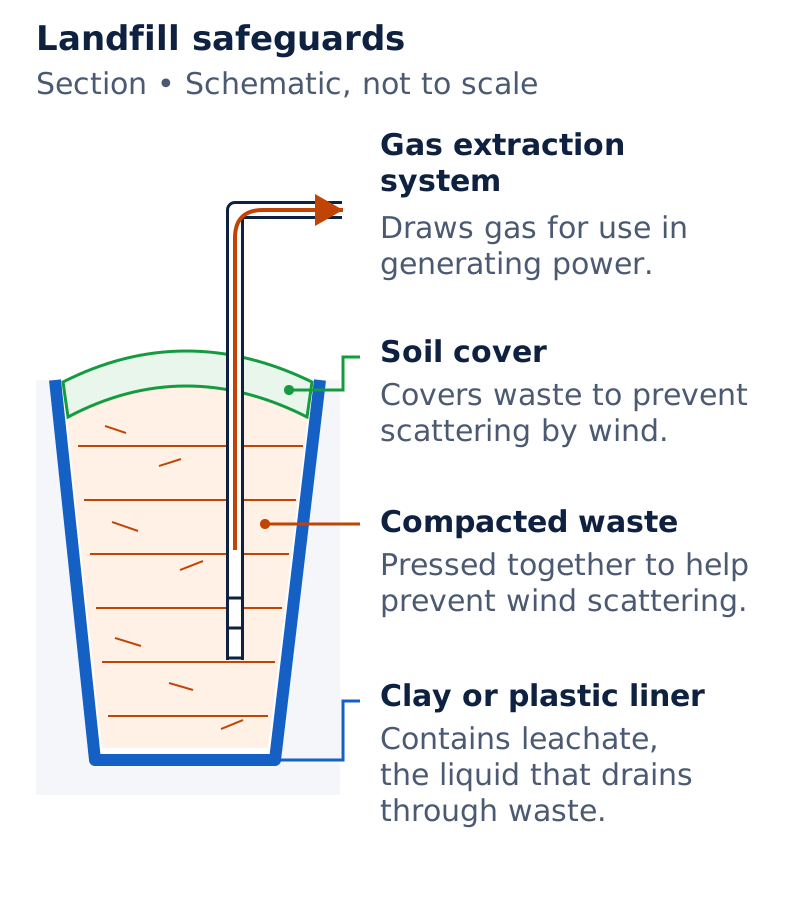
Draw a simple section through covered waste. Label the soil cover, compacted waste, clay or plastic liner, and gas extraction system. Beside each label, state the function of that safeguard.
Drawn by One Young India.
Landfill disposal should be understood alongside recovery methods. Material suitable for composting, reuse or recycling has potential value. Simply moving all material to a dumping area overlooks those possibilities and does not explain whether the disposal site controls pollution.
How do composting and vermicomposting turn organic waste into manure?
Composting is the conversion of suitable biodegradable waste into compost. Kitchen scraps, vegetable peels, dry leaves and flowers can provide material for manure. The process uses biological breakdown rather than the burning of waste.
Bacteria and fungi help break down organic remains. The resulting simpler substances can return to the soil and support plants. Composting connects waste disposal with the return of useful material to the soil, instead of leaving that material scattered in public places.
Which materials belong in this process?
Plant and kitchen waste should be separated from broken glass, plastic articles, nails and metal vessels. These non-biodegradable articles do not become manure through the biological processes used in composting. Mixing them with organic waste does not change their properties.
Dry leaves need not be burnt. Burning produces harmful fumes and gases and loses a source of low-cost manure. Composting provides a use for this material and avoids that particular source of smoke.
What is the role of earthworms?
Vermicomposting means preparing compost with the help of earthworms. These worms convert suitable wastes from plants and animals, or their products, into compost. The defining feature is the use of earthworms, rather than simply putting garbage in a pit.
A pit-based vermicomposting activity uses the following stages:
- Dig a pit in a suitable place in the garden.
- Spread sand on the floor of the pit.
- Add vegetable peels and fruit waste.
- Cover the pit with a gunny bag, meaning a coarse sack, or grass.
- Sprinkle water to keep the material moist.
- Place red worms in the pit.
The material, moisture and worms all have roles in the activity. The sequence does not imply that plastic or glass becomes compost, nor does it prescribe a fixed completion time. Observe decomposition instead of assuming that every waste material breaks down at the same rate.
Definition: Composting converts suitable organic waste into manure; vermicomposting carries out this conversion with the help of earthworms. Both require attention to the kind of waste being treated.
How do reducing, reusing and recycling differ?
The three Rs are reduce, reuse and recycle. They help conserve resources and address waste at different stages. Reducing concerns how much is used; reusing concerns repeated use of an article; recycling concerns recovering and processing used material.
How does each method work?
Reduce means using a material or resource in a smaller quantity. Water and electricity are examples. Switching off unnecessary lights and fans and avoiding running taps unnecessarily reduce consumption. Reducing use begins before a material becomes discarded waste.
Reuse means using something over and over again instead of throwing it away. Used envelopes and jam bottles are examples. Reuse does not require the material to pass through the manufacturing process involved in recycling.
Recycle means collecting used material and processing it into useful material again. Paper, glass, plastic articles and metal objects are examples of materials that can be recycled. Waste paper can become paper bags or pulp for handicrafts.
| Method | Central action | Example |
|---|---|---|
| Reduce | Use a smaller amount | Avoid unnecessary water and electricity use |
| Reuse | Use an article again | Reuse envelopes or jam bottles |
| Recycle | Process used material into useful material | Send waste paper for recycling |
Why are all three needed?
Recovery does not remove the need to consider consumption. An article reused directly remains useful without being discarded for processing. Material no longer useful in its existing form may still provide material for recycling. These are distinct ways to conserve resources.
The same reasoning can apply to water. Avoiding a running tap reduces use. Water used for washing vegetables or rice can be reused for gardening. Dirty water can be recycled after purification, meaning treatment to remove impurities.
Disposal choices can also have consequences beyond visible litter. Disposable clay cups, called kulhads, require soil. Producing them on a large scale would remove fertile topsoil. Substituting one disposable material for another therefore calls for attention to the resources used in production.
Note: Reusing an envelope and recycling waste paper are different actions. The first uses an existing article again; the second processes used material into a useful product.
What are global warming, acid rain and thermal pollution?
Waste and pollution are connected with changes in air and water, but the mechanisms differ. Global warming is the gradual rise in the Earth's average temperature. Acid rain involves acids formed from air pollutants, while thermal pollution involves the discharge of heat into water.
How does global warming occur?
Greenhouse gases are gases that retain heat in the atmosphere and reduce its escape into space. Carbon dioxide and methane are examples. An increase in heat retained in the atmosphere contributes to the rise in average temperature.
Untreated urban wastes ferment slowly, meaning that microorganisms break them down, and release a mixture of gases, including methane, into the atmosphere. This connects waste handling with greenhouse gas emissions, meaning releases into the atmosphere. The greenhouse effect concerns retained heat; it is different from the formation of acids in rain.
How does acid rain form?
Sulphur dioxide and nitrogen dioxide can react with water vapour in the atmosphere to form sulphuric acid and nitric acid respectively. These acids are associated with acid rain. Industrial emissions and the burning of fuels contribute to air pollution.
Acid rain can damage marble. The white marble of the Taj Mahal is affected by air pollutants associated with this process. The essential link is between gases released into air, acid formation and damage to materials exposed to that pollution.
How does thermal pollution occur?
Thermal pollution of water occurs when hot water from factories and thermal power plants enters rivers or ponds before cooling. A thermal power plant produces electricity using heat. Here, the important pollutant is heat carried by the discharged water.
Cooling hot water before releasing it into rivers and ponds addresses this problem. Merely removing visible rubbish would not remove the heat. Similarly, treating a heat problem does not by itself explain how dissolved chemical pollutants are removed.
| Term | Main mechanism | Key distinction |
|---|---|---|
| Global warming | Greater retention of heat by greenhouse gases | Concerns average temperature |
| Acid rain | Acid formation involving air pollutants and water vapour | Concerns chemical change |
| Thermal pollution | Discharge of hot water before cooling | Concerns heat entering water bodies |
Case study: How can fertilisers cause eutrophication in a lake?
Eutrophication is enrichment of a water body with nutrients that promotes excessive growth of aquatic plants. Nutrients are substances needed for growth. Aquatic means living or occurring in water. Fertilisers containing nitrates and phosphates can supply these nutrients.
Consider a village in Karnataka where people cultivate fields around a lake. They add fertilisers to improve crop yield. The lake then becomes covered with green floating plants, and fish begin dying in large numbers. The connection lies in material moving from fields into water.
What is the sequence of events?
- Excess fertilisers are applied to fields around the lake.
- Rain carries fertilisers down into the lake.
- Nitrates and phosphates enrich the lake water.
- Aquatic plants grow excessively and cover the water surface.
- Reduced light and insufficient dissolved oxygen and nutrients contribute to the death of fish.
Run-off is water flowing over land that can carry substances into water bodies. Dissolved oxygen is oxygen present in water and available to aquatic organisms. The lake's appearance changes, but the underlying problem also involves conditions below its surface.
This example shows why more plant growth is not necessarily evidence of a healthier lake. Excessive growth follows nutrient enrichment and can accompany conditions that harm fish. The effect of fertiliser is therefore connected with where it goes after rainfall.
Diagram
Nutrient enrichment of a lake
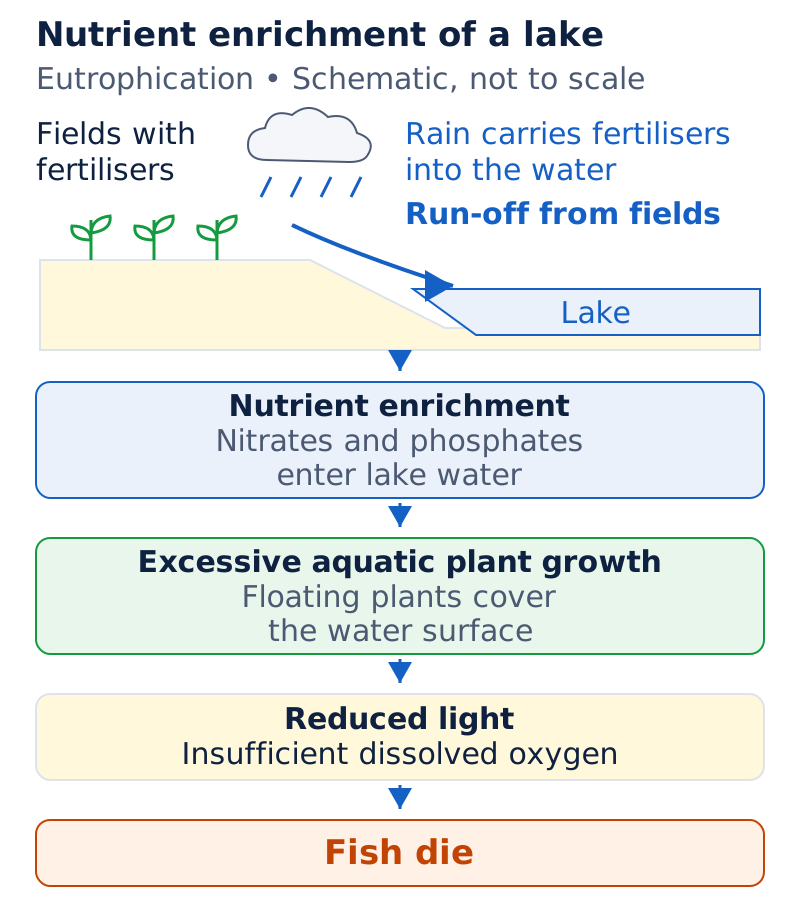
Draw fields beside a lake. Use labelled arrows for rain carrying fertilisers into water, nutrient enrichment, excessive aquatic plant growth, and reduced light and dissolved oxygen. End with the effect on fish.
Drawn by One Young India.
Eutrophication is different from thermal pollution: the first involves nutrient enrichment, while the second involves heat. It is also different from the movement of persistent chemicals through organisms that feed on one another.
How does biomagnification carry pollution through food chains?
A food chain is a sequence of organisms feeding on one another. Each feeding step is a trophic level. Biomagnification, also called biological magnification, is the progressive increase in the concentration of certain non-degradable chemicals at successive trophic levels.
Pesticides are substances used to control organisms that damage crops. Some pesticide chemicals can enter soil or water and then enter living organisms. If these chemicals are not degraded, they can accumulate as feeding transfers them through the food chain.
How do chemicals enter and move through the chain?
- Pesticides and other chemicals used on crops are washed into soil or water bodies.
- Plants absorb chemicals from soil along with water and minerals; aquatic organisms take them up from water.
- The chemicals enter the food chain when organisms feed on contaminated material.
- Non-degradable chemicals accumulate progressively at successive trophic levels.
Pesticide residues are amounts of pesticide chemicals remaining in food or other material. Food grains, vegetables, fruits and meat can contain varying amounts of these residues. They cannot always be removed by washing or other means.
The word “always” matters in that last statement. Washing does not guarantee removal of every residue, but this does not mean that washing removes none. Preserve the difference between an incomplete guarantee and a claim that a method has no effect.
How is biomagnification different from eutrophication?
Eutrophication concerns nutrient enrichment and excessive aquatic plant growth. Biomagnification concerns the increasing concentration of persistent chemicals along feeding levels. The first can be explained through a nutrient pathway into water; the second requires a food chain.
Neither term simply means that water looks dirty. Pollution may involve substances that are not identified by looking at water or food. Understanding the route of a pollutant explains how the effects of disposal can extend beyond the place where the material first entered the environment.
Case study: What does Daurala show about waste and community action?
Daurala, near Meerut, illustrates the connection between untreated industrial wastewater and groundwater contamination. In 2003, the condition of residents drew attention from civil society. Heavy metals had contaminated groundwater because untreated industrial wastewater was entering it.
Draw and label
Daurala and Meerut
Locate Meerut and mark nearby Daurala on a local area map. Label Daurala as the village where untreated industrial wastewater contaminated groundwater with heavy metals. Annotate Meerut as the base of the non-governmental organisation involved in the restoration effort.
In this pollution context, heavy metals include metallic pollutants such as lead and mercury that can harm living organisms. A non-governmental organisation is an organisation outside government. One based in Meerut surveyed residents' health from door to door and prepared a report.
What responses were organised?
The organisation, village community and people's representatives worked together on solutions. Discussions also involved industrial officials and government officials. The approach connected environmental restoration with public health and participation by the people affected.
| Recorded detail | Number or date | Meaning |
|---|---|---|
| Attention drawn to residents' condition | 2003 | Beginning of the described intervention |
| Extra water-supply pipeline | 900 metres | Additional pipe to supply drinking water |
| Trees planted | 1,000 | Planting undertaken to improve the environment |
The village's overhead water tank capacity was increased, and the additional pipeline supplied potable water, meaning water fit for drinking. A silted pond was cleaned by removing accumulated sediment. This allowed more water to enter and recharge underground water-bearing layers.
These underground water-bearing layers are called aquifers. Rainwater-harvesting structures, which collect rainwater, were built at different places. They helped dilute groundwater contaminants after the monsoons. Dilution means reducing concentration by mixing with more water; it does not mean that all pollutants have disappeared.
What lesson does the case provide?
The effort followed the principle “polluter pays”, meaning that those responsible for pollution should bear the costs of addressing it. Health surveys, community participation, improved drinking-water supply, pond restoration and tree planting formed parts of the response.
The case shows why waste management extends beyond removing visible rubbish. Industrial wastewater can affect water below the ground. Responses must consider the route of pollution, the people exposed and the need for suitable drinking water.
Glossary
- Waste management — Organising waste handling, treatment and disposal while reducing waste and recovering useful resources.
- Biodegradable waste — Discarded material that can be broken down by biological processes involving living organisms.
- Non-biodegradable waste — Discarded material that is not broken down by biological processes under ordinary environmental conditions.
- Segregation — Separation of different waste materials so that they can receive suitable treatment or disposal.
- Landfill — An area where garbage is collected, spread out and covered with soil.
- Leachate — Liquid draining through waste and carrying dissolved or suspended substances from that waste.
- Composting — Conversion of suitable biodegradable waste into manure through the action of biological processes.
- Vermicomposting — Preparation of compost from suitable organic waste with the help of earthworms.
- Reuse — Using an article repeatedly instead of discarding it or processing its material again.
- Recycling — Collecting and processing used material so that useful material can be made from it.
- Global warming — A gradual rise in the Earth's average temperature associated with increased retention of heat.
- Acid rain — Rain containing acids formed through reactions involving air pollutants and atmospheric water vapour.
- Thermal pollution — Pollution caused when hot wastewater enters rivers or ponds before it has cooled.
- Eutrophication — Nutrient enrichment of a water body that promotes excessive growth of aquatic plants.
- Biomagnification — Progressive increase in concentrations of certain non-degradable chemicals at successive food-chain feeding levels.
Common errors and misconceptions
- Misconception: Biodegradable waste can be dumped carelessly because it will disappear. Correct: Accumulated waste can create unpleasant smells and health hazards; suitable material should be collected and treated through methods such as composting.
- Misconception: Every non-biodegradable article is useless. Correct: Materials such as glass, plastics and metals have recycling uses; reusable articles can also continue to serve a purpose.
- Misconception: Open dumping and managed landfill disposal are identical. Correct: Covering, compaction, leachate containment and gas extraction are protective features that an exposed heap does not provide.
- Misconception: Burning dry leaves solves disposal without further effects. Correct: It produces harmful fumes and loses material that could have been converted into manure.
- Misconception: Reusing an envelope is the same as recycling paper. Correct: Reuse employs the existing article again, while recycling involves processing used material into useful material.
- Misconception: Eutrophication and biomagnification are two names for one process. Correct: Eutrophication involves nutrient enrichment of water; biomagnification involves increasing chemical concentrations through successive feeding levels.
- Misconception: Washing food always removes pesticide residues. Correct: Residues cannot always be removed by washing or other means; the claim does not say that washing removes no residues.
- Misconception: Diluting contaminated groundwater proves that pollution has completely disappeared. Correct: Dilution reduces concentration; it is not evidence that every contaminant has been removed.
Exam-style questions with model answers
Q1. Vegetable peels can be broken down by biological processes, while plastic bangles are not broken down in this manner. Classify each waste and give the reason. [2 marks]
- Vegetable peels are biodegradable waste because biological processes can break them down.
- Plastic bangles are non-biodegradable waste because they are not broken down by the biological processes described.
Q2. A household can use less water, use envelopes again, and send old newspapers for processing into paper products. Match these actions with the three Rs and explain each match. [3 marks]
- Using less water illustrates reduce: the household lowers the quantity of a resource consumed in its activities.
- Using envelopes again illustrates reuse: the existing articles continue to serve a purpose instead of being thrown away.
- Sending newspapers for processing illustrates recycle: used paper becomes material for useful products through a further processing stage.
Q3. A modern landfill uses clay or plastic liners to contain leachate, compacts and covers waste to prevent wind scattering, and extracts gas for power generation. Explain the three safeguards and their purposes. [3 marks]
- The clay or plastic liner helps contain leachate, the liquid that drains through waste carrying substances from it.
- Compaction presses the waste together, while covering protects it against being blown around by wind and spreading outside the waste heap.
- The gas extraction system draws gas from the landfill so that it can be used to generate power.
Q4. In a Karnataka village, fertilisers containing nitrates and phosphates were used excessively around a lake. Rain washed them into the lake; floating plants covered its surface, light and dissolved oxygen became insufficient, and fish died. Explain the sequence in five points and name the process. [5 marks]
- Excess fertiliser use supplied nitrates and phosphates on the surrounding fields, creating a source of nutrients that could reach the nearby lake.
- Rain carried these fertilisers from the cultivated land into the lake, linking the agricultural activity with the change in water conditions.
- The nutrients enriched the lake water and promoted excessive aquatic plant growth. This nutrient-enrichment process is called eutrophication.
- The extensive plant cover was accompanied by reduced light and insufficient dissolved oxygen, changing the conditions available to organisms in the lake.
- Fish died under the unsuitable conditions described. Their deaths were connected with the sequence of nutrient entry and excessive plant growth.
Q5. Non-degradable pesticide chemicals wash into soil and water. Plants and aquatic organisms take them up, feeding transfers them through a food chain, and concentrations rise at successive feeding levels. Explain this process in four points, including its name. [4 marks]
- The process is biomagnification, the progressive increase in concentrations of certain non-degradable chemicals at successive feeding levels.
- The chemicals first enter soil and water when pesticide material is washed away from where it was applied.
- Plants and aquatic organisms take up the chemicals, providing a route by which these pollutants enter living material.
- Feeding transfers the persistent chemicals through the food chain, and their concentrations rise at successive trophic levels as described.
Q6. Daurala experienced groundwater contamination from untreated industrial wastewater. Responses included a health survey, discussions among the community and other participants, an enlarged overhead water tank with 900 metres of extra pipeline to supply drinking water, pond desilting to help recharge underground water-bearing layers, rainwater harvesting that helped dilute contaminants after the monsoons, and planting 1,000 trees to improve the environment. Explain five responses, grouping the survey and discussions together. [5 marks]
- The health survey and discussions brought the residents' problems into the decision-making process and involved the community with other participants in finding solutions.
- The enlarged overhead tank and 900 metres of additional pipeline improved arrangements for supplying potable water, meaning water fit for drinking.
- Desilting removed accumulated material from the pond, making room for more water and helping recharge aquifers, the underground water-bearing layers.
- Rainwater-harvesting structures collected rainwater and helped dilute groundwater contaminants after the monsoons, reducing their concentration rather than proving complete removal.
- Planting 1,000 trees formed part of the environmental improvement effort, alongside the measures directed at drinking-water supply and groundwater conditions.
Q7. Identify and explain each process: greenhouse gases retain heat and average temperature rises; sulphur dioxide and nitrogen dioxide form sulphuric and nitric acids respectively with atmospheric water vapour; factories discharge hot water into rivers before cooling it. [3 marks]
- The first process contributes to global warming: heat retained by greenhouse gases is associated with a rise in the Earth's average temperature.
- The second process produces acids associated with acid rain: sulphur dioxide forms sulphuric acid and nitrogen dioxide forms nitric acid.
- The third process causes thermal pollution: the factory discharge introduces heat into river water before the wastewater has cooled.
Q8. Approximate urban estimates show about 90 per cent of solid waste collected and disposed of in metropolitan cities such as Mumbai, and about 30 to 50 per cent left uncollected in most other cities and towns. State what each figure measures. [2 marks]
- About 90 per cent measures the share collected and disposed of in the metropolitan group described.
- About 30 to 50 per cent measures the share left uncollected in most other cities and towns, a different indicator.
Key takeaways
- Waste accumulation damages the landscape, creates pollution and exposes people to health hazards through contaminated surroundings and water.
- Biodegradable and non-biodegradable wastes differ in biological breakdown; this distinction helps identify suitable treatment and recovery routes.
- Segregation separates waste types, allowing suitable kitchen material to reach composting and recyclable materials to reach recovery processes.
- Managed landfill safeguards include leachate containment, compaction and covering, and gas extraction for use in power generation.
- Composting converts suitable organic waste into manure, while vermicomposting uses earthworms to help carry out that conversion.
- Reducing lowers consumption, reusing keeps an article in use, and recycling processes used material into useful material again.
- Eutrophication concerns nutrient enrichment of water; biomagnification concerns increasing concentrations of persistent chemicals through successive feeding levels.
- Global warming, acid rain and thermal pollution involve different mechanisms: retained heat, acid formation, and hot-water discharge respectively.
- The Daurala case connects untreated industrial wastewater with groundwater pollution and shows the value of community participation in environmental restoration.
Test yourself
Why is biological breakdown central to classifying waste?
It distinguishes biodegradable material, which biological processes break down, from non-biodegradable material, which is not broken down in this manner.
What is segregation, and why does it precede suitable treatment?
Segregation separates waste types. It helps direct suitable organic material towards composting and recoverable material towards reuse or recycling.
What is leachate, and which landfill feature contains it?
Leachate is liquid draining through waste and carrying substances from it. Clay or plastic liners help contain this liquid.
What makes vermicomposting different from composting in general?
Vermicomposting specifically uses earthworms to help turn suitable organic wastes into compost; composting is the broader conversion process.
Why should dry leaves be converted into manure instead of burnt?
Burning produces harmful fumes and gases and wastes useful material. Making manure provides a use for the leaves.
Why are eutrophication and biomagnification different?
Eutrophication involves nutrient enrichment and excessive aquatic plant growth; biomagnification involves increasing concentrations of persistent chemicals at successive food-chain levels.
What does “pesticide residues cannot always be removed by washing” mean?
Washing is not guaranteed to remove all residues. The statement does not mean that washing removes no pesticide material.
What does dilution of groundwater contaminants establish?
Dilution means a lower concentration after mixing with more water; it does not establish that every contaminant has disappeared.
Write about it
Turn a question from this chapter into a paper.
The Writing Studio has a structure guide, a rubric and citation tools for 15 formats, from essays to research papers. Drafting is free with an account. Learnacy Essential adds feedback from an AI writing coach and submission to The OYI Review.
Publication depends on review and is not guaranteed.