
Endocrine System | ICSE Class 10 Biology Notes
On this page
Watch & explore
Start with a few high-quality watches, then dive into the notes below.
Try an idea before you read. Apply your knowledge of hormone targeting and blood glucose regulation in this interactive scenario. Explore →
The endocrine system includes ductless glands, chemical messengers, target organs and feedback control. This note covers the positions and shapes of the pituitary, thyroid, adrenal glands and pancreas, their hormones, the coordination of growth, metabolism, blood glucose and water balance, and disorders caused by abnormal hormone secretion.
What are endocrine glands, and how do they differ from exocrine glands?
Chemical coordination
The endocrine system coordinates body functions through hormones. It works with the nervous system to regulate physiological activities. Nervous coordination is rapid and short-lived, while hormonal communication can provide continuing regulation of functions such as growth and metabolism.
Definition: A hormone is a non-nutrient chemical messenger produced in very small quantities that helps coordinate the activities of cells and organs.
Endocrine glands lack ducts. Their hormones enter the blood, which carries them to different parts of the body. A target tissue responds to a particular hormone because its cells possess suitable receptors, which are proteins that recognise and bind that hormone.
Circulation of a hormone does not mean that every cell responds to it in the same way. For example, adrenaline affects the heart, while insulin acts on tissues involved in glucose uptake and storage. The response depends on the hormone and its target.
Comparing the routes of secretion
Exocrine glands send their secretions through ducts to a surface or into a body cavity. Salivary glands release saliva into the mouth. The exocrine part of the pancreas supplies digestive juice to the small intestine.
| Feature | Endocrine glands | Exocrine glands |
|---|---|---|
| Ducts | Ductless | Have ducts carrying their secretions |
| Route of release | Hormones enter the blood | Secretions pass through ducts to their destination |
| Nature of secretion | Hormones acting as chemical messengers | Products such as saliva and pancreatic digestive juice |
| Action illustrated | Thyroxin regulates metabolism in the body | Salivary amylase acts on starch in food |
| Examples | Thyroid and pituitary glands | Salivary glands and the exocrine pancreas |
The pancreas is a mixed gland because it has both endocrine and exocrine functions. Its insulin and glucagon are hormones, whereas its digestive juice contains enzymes. These products have different routes and functions, even though they originate in the same organ.
Enzymes and hormones should therefore be distinguished by their roles. Digestive enzymes help break down food. Hormones communicate instructions that regulate activities within the body. Calling pancreatic juice a hormone would confuse digestion with chemical coordination.
Where are the main endocrine glands located, and what are their shapes?
Recognising glands by position
The four glands can be located using nearby organs as landmarks. The pituitary lies below part of the brain, the thyroid surrounds part of the windpipe, the adrenal glands lie above the kidneys, and the pancreas lies in the abdomen behind the stomach.
| Gland | Location | Shape or arrangement |
|---|---|---|
| Pituitary | At the base of the brain, in a bony cavity called the sella turcica; attached to the hypothalamus by a stalk | A small, pea-sized, rounded gland with anterior and posterior regions |
| Thyroid | In the neck, below the larynx, with a lobe on either side of the trachea | Butterfly-shaped; two lobes connected by a narrow isthmus |
| Adrenal glands | One above each kidney | The right is approximately pyramidal; the left is crescent-shaped |
| Pancreas | Behind the stomach; its head lies within the curve of the duodenum | An elongated, flattened gland with a broader head and a narrower tail |
The larynx is the voice box, and the trachea is the windpipe. The duodenum is the first part of the small intestine. These landmarks make the positions more precise than simply placing a gland in the head, neck or abdomen.
External position and internal structure
Location and internal organisation are separate features. Each adrenal has an outer cortex and an inner medulla. The pancreas contains hormone-producing groups of cells called the islets of Langerhans. The pituitary has anterior and posterior regions with different roles.
What the figure shows
Location of endocrine glands
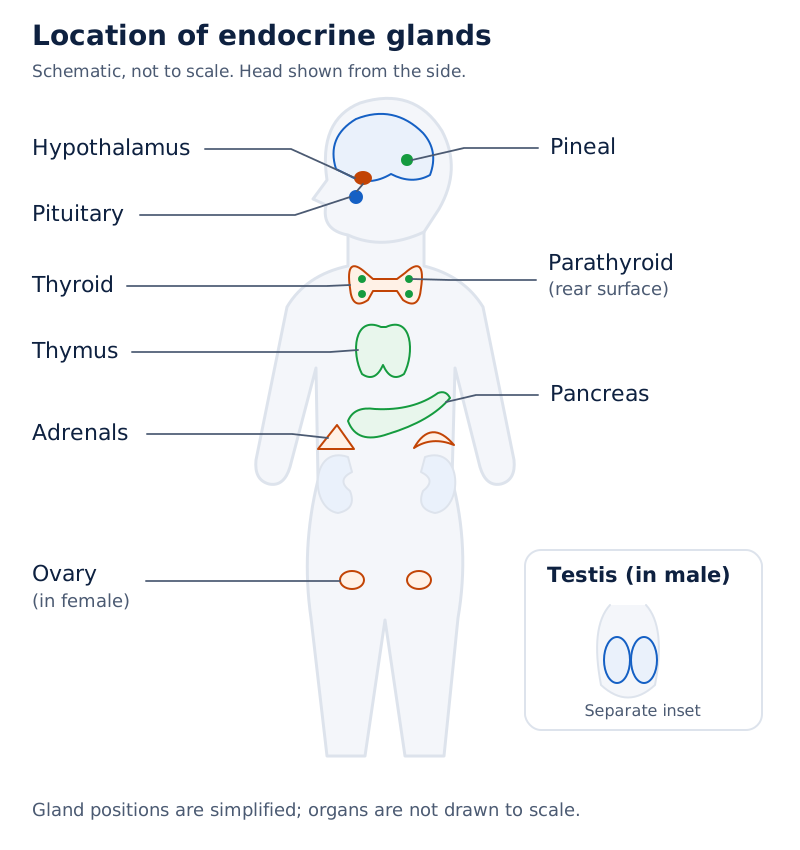
The body outline labels the hypothalamus, pituitary and pineal in the head, thyroid and parathyroid in the neck, thymus in the chest, pancreas and adrenals in the abdomen, and an ovary and a separate testis inset below.
Drawn by One Young India.
In a labelled outline, point to the actual gland rather than its neighbouring organ. An adrenal label should end above the kidney. The pituitary label should indicate the small gland below the hypothalamus, rather than the whole brain.
How does the anterior pituitary control growth and other glands?
The pituitary and hypothalamus
The hypothalamus is part of the forebrain. It produces releasing and inhibiting hormones that regulate the anterior pituitary. Releasing hormones stimulate secretion, while inhibiting hormones reduce it. The pituitary is therefore itself subject to control.
The anterior pituitary produces growth hormone (GH) and several hormones that act on other endocrine glands. A tropic hormone stimulates another endocrine gland. This explains why the pituitary is often called the master gland, although that description does not mean it works independently.
| Anterior pituitary hormone | Main target or target activity | Main function |
|---|---|---|
| Growth hormone (GH) | Body growth and development | Regulates growth and development of the body |
| Thyroid-stimulating hormone (TSH) | Thyroid gland | Stimulates the synthesis and secretion of thyroid hormones |
| Adrenocorticotrophic hormone (ACTH) | Adrenal cortex | Stimulates the synthesis and secretion of glucocorticoids |
| Follicle-stimulating hormone (FSH) | Ovaries and testes | Promotes ovarian follicle development; helps regulate sperm formation with androgens |
| Luteinising hormone (LH) | Ovaries and testes | Induces ovulation and maintains the corpus luteum; stimulates androgen secretion in males |
Glucocorticoids are adrenal cortical hormones involved in carbohydrate metabolism. Androgens are a group of male sex hormones. An ovarian follicle contains a developing egg; the corpus luteum forms from the follicle after ovulation, the release of the egg.
FSH and LH are called gonadotrophins because they stimulate the gonads, meaning the testes and ovaries. TSH acts on the thyroid, whereas ACTH acts on the adrenal cortex. These target glands must not be interchanged.
Growth hormone and age
Insufficient GH during childhood causes pituitary dwarfism, with stunted growth. Excessive GH during the growing period causes gigantism, with abnormal growth of the body. Excess secretion in adults can cause acromegaly, involving marked changes in external features, especially the face.
The time at which a hormonal disturbance occurs matters. Gigantism and acromegaly both involve excess GH, but the affected person is at a different stage of development. A description of abnormal growth should therefore link the hormone, the direction of change and the stage of life.
What the figure shows
Pituitary and hypothalamus
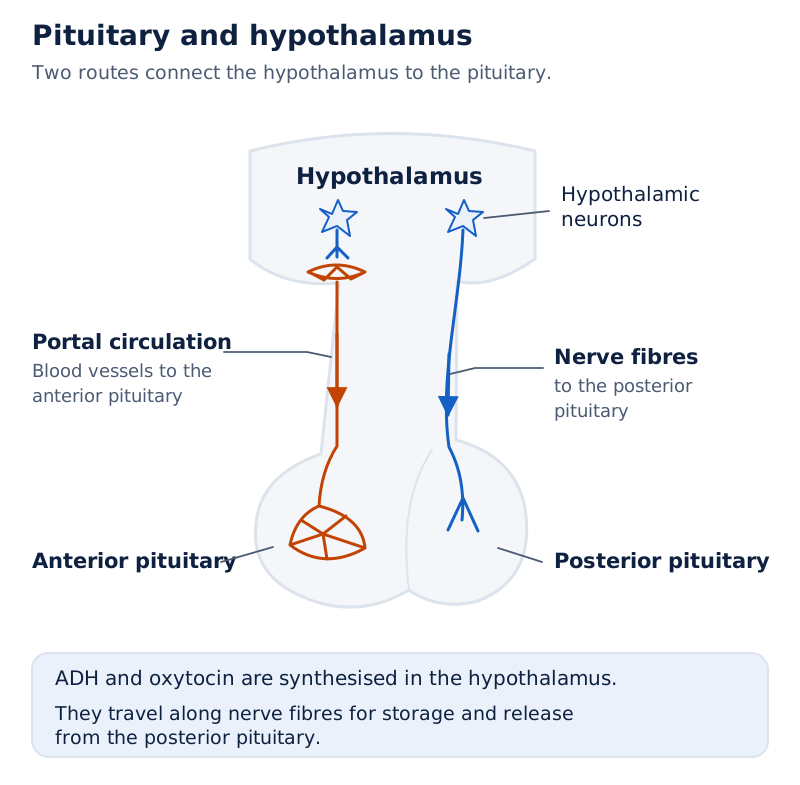
The drawing labels the hypothalamus above the pituitary, hypothalamic neurons, portal circulation, and anterior and posterior pituitary regions. Nerve fibres descend from hypothalamic neurons towards the posterior region, while labelled blood vessels connect with the anterior region.
Drawn by One Young India.
What do the posterior pituitary hormones do?
Production, storage and release
The posterior pituitary stores and releases oxytocin and antidiuretic hormone (ADH), also called vasopressin. These hormones are synthesised in the hypothalamus and transported along nerve fibres to the posterior pituitary. Their place of synthesis must be distinguished from their place of release.
ADH acts mainly on the kidneys and promotes the reabsorption of water, reducing its loss in urine. Reabsorption means the return of filtered substances from kidney tubules to the blood. The term antidiuretic means that the hormone reduces water loss through urine.
Water balance and diabetes insipidus
If ADH synthesis or release is impaired, the kidneys become less able to conserve water. The resulting water loss can cause dehydration. This condition is called diabetes insipidus. Its central problem is failure to conserve enough water.
Diabetes insipidus differs from diabetes mellitus, which involves disturbed blood glucose regulation. The similar names do not mean that the same hormone is responsible. ADH is associated with water conservation; insulin is associated with control of blood glucose.
Oxytocin and muscle contraction
Oxytocin stimulates smooth muscle contraction. In females, it produces strong contractions of the uterus during childbirth. It also causes milk ejection from mammary glands. Milk ejection means the release of milk that has already been formed.
Note: Oxytocin causes milk ejection. Prolactin, a hormone of the anterior pituitary, regulates milk formation and mammary gland growth. Milk formation and milk ejection are different processes.
Thus, the two posterior pituitary hormones have distinct functions. ADH helps conserve water through its action on the kidneys. Oxytocin acts on smooth muscle, including the uterus and structures involved in milk ejection. Neither should be described as the hormone that regulates body growth.
How does thyroxin regulate metabolism, and why is iodine necessary?
Structure and normal action
The thyroid has two lobes, one on each side of the trachea. A narrow connection called the isthmus joins them. Its hormone thyroxin, also spelt thyroxine, regulates the metabolism of carbohydrates, proteins and fats and supports normal growth and development.
Metabolism refers to the chemical reactions occurring within the body. Thyroxin helps regulate the basal metabolic rate, meaning the rate at which the body uses energy at rest to maintain essential functions. Normal hormone production is important for coordinated development.
Iodine is necessary for thyroxin synthesis. An inadequate dietary supply can reduce hormone production. The thyroid may enlarge, producing simple goitre, which can appear as swelling in the neck. Iodised salt provides iodine used in making the hormone.
Reduced and excessive secretion
Hypothyroidism means insufficient thyroid hormone activity. During development, severe deficiency can impair physical growth and brain development. The traditional textbook term cretinism refers to the resulting developmental disorder. Adult hypothyroidism can produce reduced metabolic activity; severe adult hypothyroidism is traditionally associated with myxoedema.
Hyperthyroidism means excessive thyroid hormone activity. Exophthalmic goitre, also called Graves’ disease, is a form of hyperthyroidism associated with an enlarged thyroid, protruding eyeballs, increased basal metabolic rate and weight loss.
An enlarged thyroid does not, by itself, prove that thyroxin secretion is low. Enlargement occurs in iodine-deficiency goitre and can also occur in hyperthyroidism. The accompanying features and the direction of the hormone disturbance are necessary to distinguish them.
What the figure shows
Position of the thyroid
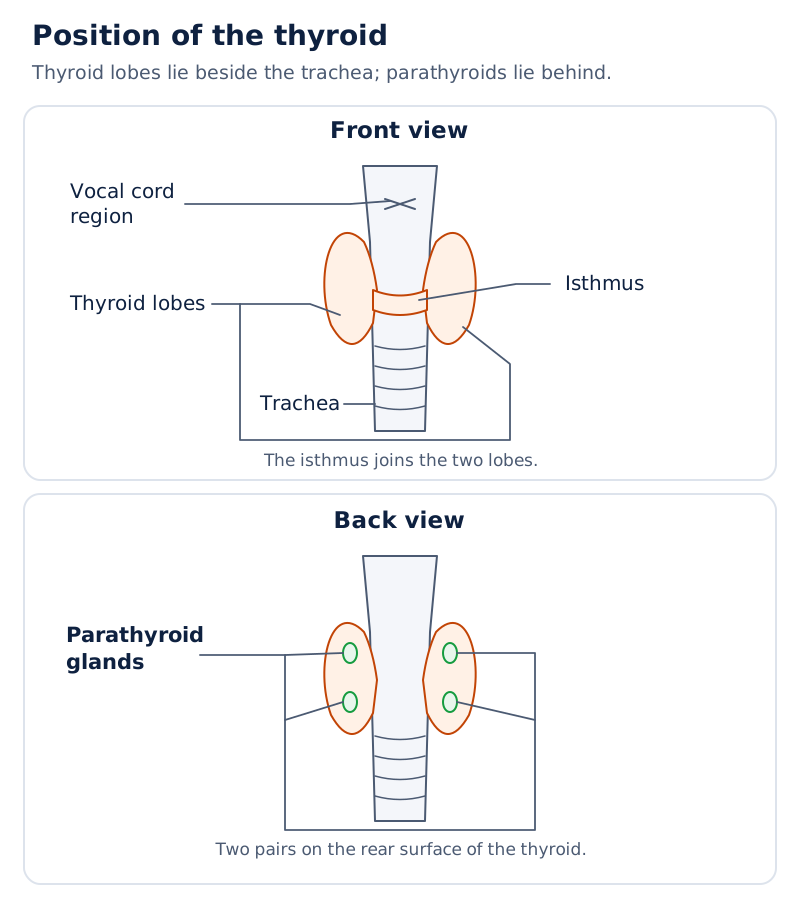
The upper, front view shows the thyroid around the trachea below the labelled vocal cord region. The lower, back view shows the parathyroid glands on the rear surface of the thyroid.
Drawn by One Young India.
The thyroid and parathyroid glands are separate structures. Identifying the small glands in the back view does not make them parts that secrete thyroxin. The two thyroid lobes and their connecting region are the features to recognise when locating the thyroid.
How does feedback regulate thyroxin secretion?
The meaning of negative feedback
Hormones need to be released at suitable times and in suitable quantities. Feedback connects the state of the body with further hormone secretion. In negative feedback, a change produces a response that opposes that change, helping to keep internal conditions within a suitable range.
The anterior pituitary secretes TSH, which stimulates the thyroid to make and release thyroid hormones. The circulating thyroid hormone level, in turn, influences further TSH release. This creates a regulatory loop linking the pituitary, thyroid and blood hormone level.
Following the control sequence
- When the circulating thyroxin level falls, the inhibitory feedback acting on the pituitary is reduced.
- The anterior pituitary releases more TSH, increasing the stimulus reaching the thyroid gland.
- The thyroid responds by increasing thyroxin synthesis and secretion, provided it has the materials and ability to do so.
- As thyroxin rises, it exerts greater inhibitory feedback, so the pituitary reduces TSH release.
- The reduced TSH stimulus limits further thyroid hormone secretion, opposing the original rise.
The feedback does not mean that TSH becomes thyroxin. These are different hormones released by different glands. TSH is the stimulating signal from the anterior pituitary; thyroxin is the thyroid hormone whose level contributes to regulating that signal.
The hypothalamus participates in control of the pituitary, so the pituitary-thyroid loop operates within a wider control system. This also explains why describing the pituitary as a master gland must not imply that no other part of the body influences it.
Diagram
Thyroid feedback loop
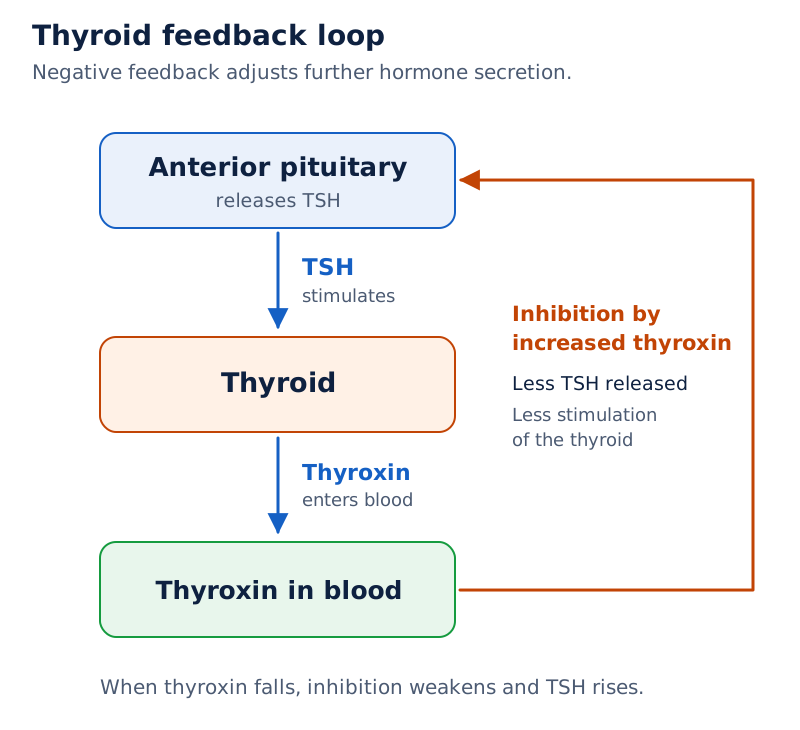
Draw boxes for the anterior pituitary and thyroid. Add an arrow labelled TSH from pituitary to thyroid, and an arrow showing thyroxin entering blood. Add a returning arrow labelled inhibition by increased thyroxin to the pituitary.
Drawn by One Young India.
A different example is blood glucose control: a rise in blood sugar stimulates increased insulin secretion, while a fall reduces secretion. The controlled substance differs, but the principle remains adjustment of hormone release in response to changing conditions.
How do insulin and glucagon control blood glucose?
The endocrine pancreas
The endocrine part of the pancreas consists of the islets of Langerhans. Its alpha cells secrete glucagon, while its beta cells secrete insulin. These hormones enter the blood and jointly help maintain glucose balance, also called glucose homeostasis.
Homeostasis means maintaining suitable internal conditions. Blood glucose regulation requires both removal of glucose from the blood and provision of glucose when needed. Insulin and glucagon have opposing overall effects, but both contribute to the same regulatory function.
| Feature | Insulin | Glucagon |
|---|---|---|
| Source | Beta cells of pancreatic islets | Alpha cells of pancreatic islets |
| Overall blood glucose effect | Lowers the blood glucose level | Raises the blood glucose level |
| Glucose uptake | Promotes cellular uptake and utilisation of glucose | Reduces cellular uptake and utilisation of glucose |
| Glycogen-related action | Promotes conversion of glucose into glycogen | Promotes breakdown of glycogen, mainly in the liver |
| Functional description | A hypoglycaemic hormone | A hyperglycaemic hormone |
Glycogen is a stored carbohydrate. Its formation from glucose is called glycogenesis, and its breakdown is called glycogenolysis. Glucagon also promotes gluconeogenesis, the formation of glucose from non-carbohydrate materials. These processes explain the direction of each hormone’s effect.
The insulin feedback response
- The blood glucose level rises, providing the signal for increased insulin secretion.
- Cells of the pancreas detect the rise, and beta cells release more insulin into the blood.
- Insulin promotes glucose uptake and utilisation by target cells and promotes its storage as glycogen.
- As the blood glucose level falls, the stimulus for insulin secretion decreases and less insulin is released.
Diabetes mellitus involves prolonged high blood glucose and can result from insulin deficiency or resistance to insulin action. Glucose may be lost in urine, and harmful ketone bodies may form. Some affected patients receive insulin to help regulate blood glucose.
Excessive insulin action can make blood glucose abnormally low, a condition called hypoglycaemia. By contrast, hyperglycaemia means abnormally high blood glucose. The terms describe the glucose level, so they must not be confused with the amount of insulin itself.
The exocrine pancreas has a separate function: pancreatic juice contains digestive enzymes, including trypsin for proteins and lipase for fats. Insulin is a regulating messenger carried in blood, rather than a digestive enzyme delivered into the intestine.
How do adrenal hormones help the body respond to stress and maintain balance?
Cortex and medulla
Each adrenal gland lies above a kidney. The outer adrenal cortex and inner adrenal medulla secrete different hormones. Adrenaline belongs to the medulla; cortical hormones belong to the cortex. Position within the gland is therefore linked to function.
What the figure shows
Adrenal gland and its internal regions
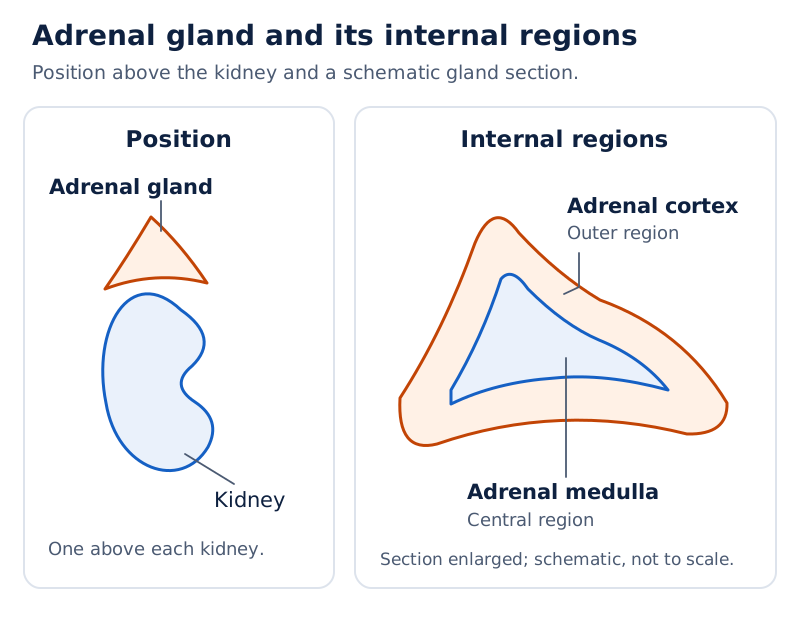
Part (a) shows a labelled adrenal gland above a kidney. Part (b) shows a section of the gland with an outer adrenal cortex and a centrally located adrenal medulla.
Drawn by One Young India.
| Region | Hormone or group | Main action |
|---|---|---|
| Adrenal medulla | Adrenaline, also called epinephrine | Prepares the body for stress or an emergency |
| Adrenal cortex | Glucocorticoids, particularly cortisol | Regulate carbohydrate metabolism and promote glucose formation from non-carbohydrate materials |
| Adrenal cortex | Mineralocorticoids, particularly aldosterone | Help regulate water and electrolyte balance |
Cortisol promotes breakdown of proteins and fats and helps maintain cardiovascular and kidney functions. It also has anti-inflammatory effects. Aldosterone acts mainly on kidney tubules, increasing reabsorption of sodium and water and promoting excretion of potassium and phosphate ions.
Electrolytes are substances that form ions in body fluids. Regulation of water and electrolytes helps maintain body fluid volume and blood pressure. These continuing functions differ from the rapid emergency response associated with adrenaline.
Adrenaline and the fight-or-flight response
Adrenaline is released rapidly during stress and emergencies. A frightened squirrel preparing to fight or run away illustrates the coordinated response. Several organs change their activity together, making energy and oxygen available for the muscles.
- Adrenaline is released from the adrenal medulla into the bloodstream during the emergency.
- It acts on target tissues, including the heart, increasing heart rate and the strength of contraction.
- Blood supply to the digestive system and skin is reduced, diverting more blood towards skeletal muscles.
- Breathing becomes faster, helping support the increased oxygen needs of active muscles.
- Glycogen breakdown increases blood glucose availability, helping supply the energy needed for activity.
These effects together prepare the body for fight or flight. Adrenaline does not itself choose whether the animal fights or escapes. It coordinates physiological preparation that can support either action.
Underproduction of adrenal cortical hormones causes Addison’s disease, with disturbed carbohydrate metabolism, weakness and fatigue. Excess cortisol can cause Cushing’s syndrome, associated with characteristic fat accumulation around the trunk and face and muscle weakness.
How can hormone disorders be compared without confusing their causes?
Linking gland, hormone and secretion level
Hyposecretion means too little hormone is released; hypersecretion means too much is released. Their effects depend on the hormone, its targets and the stage of life. A useful explanation connects these features rather than merely attaching a disease name to a gland.
For example, the pituitary is associated with several different disorders. Low GH during childhood affects growth, whereas impaired ADH synthesis or release affects water conservation. Saying only that a disorder involves the pituitary does not identify the physiological problem.
| Hormone disturbance | Associated condition | Distinguishing effect |
|---|---|---|
| Too little GH during childhood | Pituitary dwarfism | Stunted body growth |
| Excess GH during the growing period | Gigantism | Abnormal excessive body growth |
| Excess GH in adulthood | Acromegaly | Marked changes in external features, especially the face |
| Impaired ADH synthesis or release | Diabetes insipidus | Reduced kidney water conservation and dehydration |
| Inadequate thyroid hormone during development | Cretinism | Impaired physical growth and brain development |
| Severe adult hypothyroidism | Myxoedema | Reduced metabolic activity |
| Excess thyroid hormone in Graves’ disease | Exophthalmic goitre | Enlarged thyroid, protruding eyeballs, increased metabolic rate and weight loss |
| Insulin deficiency or resistance to its action | Diabetes mellitus | Prolonged high blood glucose; glucose may appear in urine |
| Underproduction of adrenal cortical hormones | Addison’s disease | Disturbed carbohydrate metabolism, weakness and fatigue |
| Excess cortisol | Cushing’s syndrome | Characteristic fat accumulation around trunk and face, with muscle weakness |
Two particularly important distinctions
Diabetes mellitus and diabetes insipidus concern different regulatory processes. The first involves glucose regulation and insulin action. The second involves water conservation and ADH. Glucose loss in urine belongs to the description of diabetes mellitus, not to the mechanism of ADH deficiency.
Simple and exophthalmic goitre can both involve thyroid enlargement. Simple goitre associated with iodine deficiency follows inadequate hormone synthesis. Exophthalmic goitre involves excessive thyroid activity and has additional features, including protruding eyeballs and increased metabolic rate.
These comparisons show why a visible sign alone is not enough to explain a hormonal disorder. Short stature, an enlarged thyroid or altered urine production must be linked to the specific hormone and mechanism described. The same gland can produce more than one kind of disturbance.
Glossary
- Endocrine gland — A ductless gland that releases hormones into blood for transport to responding target tissues.
- Exocrine gland — A gland whose secretions pass through ducts to a surface or into a body cavity.
- Hormone — A non-nutrient chemical messenger produced in small quantities that regulates the activities of target cells.
- Target tissue — Tissue with suitable receptors that allow it to respond to a particular hormone.
- Tropic hormone — A hormone that stimulates another endocrine gland to carry out its secretory activity.
- Hyposecretion — Release of an insufficient amount of a hormone, potentially disturbing the functions it regulates.
- Hypersecretion — Release of an excessive amount of a hormone, potentially causing abnormal activity in its targets.
- Negative feedback — Regulation in which a response opposes the change that produced it, helping maintain internal balance.
- Islets of Langerhans — Groups of endocrine cells within the pancreas that include insulin-secreting beta cells and glucagon-secreting alpha cells.
- Glycogenesis — Formation of glycogen from glucose, a storage process promoted by insulin in target cells.
- Glycogenolysis — Breakdown of glycogen, a process promoted by glucagon that helps raise the blood glucose level.
- Homeostasis — Maintenance of suitable internal conditions, including regulation of blood glucose and body water balance.
- Adrenal cortex — The outer region of an adrenal gland, producing cortical hormones including cortisol and aldosterone.
- Adrenal medulla — The inner region of an adrenal gland, which releases adrenaline during stress and emergency situations.
- Goitre — Enlargement of the thyroid gland, which may occur with either deficient or excessive thyroid activity.
Common errors and misconceptions
- Misconception: All glands send their secretions through ducts. Correct: Endocrine glands are ductless and release hormones into blood. Exocrine glands use ducts to carry secretions to their destinations.
- Misconception: The pituitary acts independently because it is the master gland. Correct: The hypothalamus regulates pituitary activity, and feedback helps adjust hormone release.
- Misconception: The posterior pituitary manufactures ADH and oxytocin. Correct: They are synthesised in the hypothalamus, then transported to the posterior pituitary for storage and release.
- Misconception: Insulin and glucagon both lower blood glucose. Correct: Insulin lowers it, while glucagon raises it. Their opposing effects contribute to glucose homeostasis.
- Misconception: Any enlarged thyroid means low thyroxin. Correct: Iodine-deficiency goitre can accompany reduced synthesis, but exophthalmic goitre is associated with excessive thyroid activity.
- Misconception: Diabetes insipidus is caused by insulin deficiency. Correct: It involves impaired ADH synthesis or release and reduced water conservation. Insulin deficiency or resistance is associated with diabetes mellitus.
- Misconception: Adrenaline is secreted by the adrenal cortex. Correct: It comes from the medulla. The cortex produces hormones such as cortisol and aldosterone.
- Misconception: Oxytocin causes milk formation. Correct: Oxytocin causes milk ejection. Prolactin regulates milk formation, so these two actions should be distinguished.
Exam-style questions with model answers
Q1. State two differences between endocrine and exocrine glands, comparing ducts and the route of secretion. [2 marks]
- Endocrine glands lack ducts, whereas exocrine glands possess ducts that carry their secretions.
- Endocrine glands release hormones into blood; exocrine glands deliver secretions through ducts to a surface or into a body cavity.
Q2. Give the location and shape or arrangement of each of these glands: pituitary, thyroid, adrenal glands and pancreas. [4 marks]
- The pituitary is a small, rounded, pea-sized gland in the sella turcica at the brain’s base, attached to the hypothalamus by a stalk.
- The thyroid is butterfly-shaped, with two connected lobes beside the trachea below the larynx.
- An adrenal lies above each kidney. The right is approximately pyramidal and the left crescent-shaped.
- The pancreas is elongated and flattened, behind the stomach, with its broader head in the curve of the duodenum.
Q3. Compare the effects of growth hormone deficiency during childhood, excess during the growing period, and excess in adulthood. Name each associated disorder. [3 marks]
- GH deficiency during childhood causes pituitary dwarfism. Insufficient growth hormone results in stunted body growth during development.
- Excess GH during the growing period causes gigantism, in which growth becomes abnormally excessive.
- Excess GH in adulthood can cause acromegaly, with marked alteration of external features, especially the face. The contrast shows that both the amount of hormone and the stage of life affect the outcome.
Q4. Name the site of synthesis and the site of storage and release of ADH and oxytocin. Give one function of each and name the condition caused by impaired ADH synthesis or release. [4 marks]
- Both hormones are synthesised in the hypothalamus and transported to the posterior pituitary, where they are stored and released.
- ADH promotes water reabsorption by the kidneys, reducing water loss through urine.
- Oxytocin stimulates strong uterine contractions during childbirth. It also causes milk ejection from mammary glands.
- Impaired ADH synthesis or release can cause diabetes insipidus. The kidneys conserve less water, so excessive water loss and dehydration can follow.
Q5. Explain how iodine deficiency can lead to simple goitre. Contrast this with exophthalmic goitre in terms of hormone activity and two associated features. [4 marks]
- Iodine is necessary for thyroxin synthesis. When the dietary supply is inadequate, normal production of the hormone is impaired.
- The thyroid may enlarge, producing simple goitre and visible swelling in the neck. This form is associated with inadequate thyroid hormone synthesis.
- Exophthalmic goitre is a form of hyperthyroidism, involving excessive thyroid hormone activity.
- Protruding eyeballs and increased basal metabolic rate distinguish it from the simple iodine-deficiency explanation; weight loss may also occur.
Q6. Explain how the pancreas responds when blood glucose rises. Include the insulin-secreting cells, insulin’s actions, feedback control, glucagon’s contrasting role and the disorder associated with insulin deficiency or resistance. [5 marks]
- The rise in blood glucose is detected by pancreatic cells. Beta cells in the islets of Langerhans increase their release of insulin into the blood.
- Insulin promotes cellular glucose uptake and utilisation. It also stimulates conversion of glucose into glycogen, helping reduce the glucose level in blood.
- As blood glucose falls, insulin secretion is reduced. This feedback adjusts the hormone response to the changing glucose level.
- Glucagon, released by alpha cells, has the opposite overall effect. It raises blood glucose by promoting glycogen breakdown and glucose formation, mainly through actions on the liver.
- Insulin deficiency or resistance to its action can cause diabetes mellitus, with prolonged high blood glucose and possible glucose loss in urine.
Q7. A frightened squirrel is preparing to fight or run away. Name the hormone and gland region responsible for its emergency response, and explain changes in heart activity, blood distribution, breathing and glucose availability. [5 marks]
- Adrenaline from the adrenal medulla enters the blood and acts on several target tissues, coordinating preparation for fight or flight.
- The heart beats faster and contracts more strongly, helping provide active muscles with an increased oxygen supply.
- Blood flow to the skin and digestive system is reduced as small arteries in these regions constrict. More blood is directed towards skeletal muscles.
- The breathing rate increases because of contractions of the diaphragm and rib muscles, supporting the oxygen needs of the muscles during the expected activity.
- Glycogen breakdown increases glucose availability in the blood. Together, these changes provide physiological support for vigorous muscular action, whether the animal fights or escapes.
Q8. Explain the negative feedback relationship between TSH and thyroxin when circulating thyroxin first falls and then rises. Identify the gland releasing each hormone. [4 marks]
- The anterior pituitary releases TSH, which stimulates the thyroid gland to synthesise and secrete thyroxin.
- When circulating thyroxin falls, its inhibitory feedback is reduced. The pituitary can release more TSH, increasing thyroid stimulation.
- As thyroxin rises, inhibitory feedback increases and TSH release decreases, reducing the stimulus for further thyroid secretion.
- The response opposes the original change, which is why it is called negative feedback. TSH and thyroxin remain distinct hormones, rather than one being converted into the other.
Key takeaways
- Endocrine glands release hormones into blood, while exocrine glands use ducts to carry secretions to their destinations.
- The pituitary lies below the hypothalamus, the thyroid beside the trachea, the adrenals above the kidneys, and the pancreas behind the stomach.
- Growth hormone affects body growth; pituitary tropic hormones stimulate the thyroid, adrenal cortex and gonads.
- ADH conserves water through kidney action, while oxytocin stimulates uterine contractions and milk ejection.
- Iodine is required for thyroxin synthesis, and thyroid hormone activity helps regulate metabolism and development.
- Insulin lowers blood glucose, while glucagon raises it; both contribute to maintaining glucose homeostasis.
- Adrenaline prepares the body for emergencies; adrenal cortical hormones support metabolism and water and electrolyte balance.
- Negative feedback adjusts hormone secretion, while the effects of abnormal secretion depend on the hormone and stage of life.
Test yourself
Why is the pancreas described as a mixed gland?
It has endocrine cells that release insulin and glucagon into blood and an exocrine part that supplies digestive juice to the intestine.
Which pancreatic cells produce insulin, and which produce glucagon?
Beta cells of the islets of Langerhans produce insulin, while alpha cells produce glucagon.
Why is the pituitary not completely independent?
The hypothalamus regulates pituitary activity through releasing and inhibiting hormones, and feedback also adjusts hormone release.
How do gigantism and acromegaly differ?
Both involve excess growth hormone, but gigantism develops during the growing period, whereas acromegaly results from excess secretion in adulthood.
Which hormone reduces water loss through urine?
ADH, also called vasopressin, promotes kidney water reabsorption and reduces the amount of water lost in urine.
What happens to TSH release when rising thyroxin increases inhibitory feedback?
TSH release decreases, reducing the stimulus that the anterior pituitary sends to the thyroid gland.
Which part of an adrenal gland releases adrenaline?
The inner adrenal medulla releases adrenaline; the outer cortex produces hormones such as cortisol and aldosterone.
Why should simple goitre and exophthalmic goitre not be treated as identical conditions?
Iodine-deficiency simple goitre accompanies inadequate thyroid hormone synthesis. Exophthalmic goitre involves excessive thyroid activity and features such as protruding eyeballs.
Try it
ICSE Class 10 Biology: Endocrine System (Hormones, Glands & Mechanism)
Apply your knowledge of hormone targeting and blood glucose regulation in this interactive scenario.
1Imagine a new synthetic hormone is injected into a patient's bloodstream to help muscle cells recover. Tests show that the hormone successfully travels through the blood and reaches the liver and kidneys, but it has absolutely no effect on those organs. Based on the text, why does this happen?
Correct! The text explains that hormones are 'targeted' and work by binding to specific receptors on target cells. If a hormone cannot bind to a receptor on a cell, that cell will not show the hormone's effect.
Incorrect. While the endocrine system is generally slower than the nervous system, the lack of effect here is due to targeting. The text states that if a cell lacks the specific receptor, it 'will not show the hormone's effect' at all.
Incorrect. The text explains that negative feedback controls hormone secretion (reducing it when levels rise), not that it prevents a hormone from acting on an organ it has already reached.
2Later, the patient eats a large meal, causing their blood glucose to rise significantly above the normal target. According to the text's worked reasoning, how will the pancreas respond to restore balance?
Incorrect. The text states that glucagon is released during fasting when blood glucose is low, because it moves glucose into the blood from storage.
Correct! The text explains that after eating, when blood glucose is high, insulin is released to lower it by moving glucose out of the blood and into cells or storage (as glycogen).
Great job! You successfully applied the concepts of targeted hormone action via specific receptors and the pancreas's role in regulating blood glucose levels through insulin.