
Health and Hygiene | ICSE Class 9 Biology Notes
On this page
This note covers health and hygiene, disease classification, routes of infection, bacterial, viral, protozoan and worm diseases, personal and public cleanliness, body defences, vaccination, medicines, and the work of health organisations.
What do health, disease and hygiene mean?
Definition: Health could be defined as a state of complete physical, mental and social well-being. It means more than freedom from disease or physical fitness.
Disease is a condition in which the normal functioning of one or more organs or body systems is adversely affected. A symptom is a change experienced by the affected person; a sign is an observable indication of disease.
Hygiene means practices that help preserve health and prevent disease. Keeping the body clean, consuming clean food and water, disposing of waste properly and maintaining clean surroundings help reduce exposure to disease-causing agents.
What influences health?
Health is affected by inherited defects, infections and lifestyle. Infection means the entry and multiplication of a disease-causing agent in the body. Food, water, rest, exercise and habits all influence health. Mental state can also affect the body's defences.
A balanced diet supplies the nutrients required by the body in appropriate amounts. Along with personal hygiene and regular exercise, it helps maintain good health. Health therefore involves both care of the individual and conditions in the surrounding community.
Public hygiene concerns shared conditions such as water supplies, waste disposal and cleanliness in places where food is prepared. Personal cleanliness cannot replace these shared measures. Both levels matter because contaminated surroundings can expose many people to infection.
How are diseases classified by spread and occurrence?
A communicable disease can pass from an infected source to another person, directly or indirectly. A non-communicable disease does not spread between people in this way. Typhoid is communicable; cancer, in which control of cell growth breaks down, is an example of a non-communicable disease.
A pathogen is a disease-causing organism or agent. Bacteria, viruses, protozoans and parasitic worms include pathogens. Microbes are microscopic organisms or infectious agents. Bacteria are single-celled organisms; viruses multiply inside living cells. Protozoans are single-celled animal-like organisms. A parasite lives in or on another organism, called its host.
What do the terms describing occurrence mean?
| Term | Meaning | Example |
|---|---|---|
| Endemic | Persistently present at an expected level in a particular population or region | Malaria in regions where transmission persists |
| Epidemic | Occurrence above the normally expected level in a population or area during a period | A local cholera outbreak |
| Pandemic | An epidemic extending across countries or continents and affecting many people | Pandemic influenza, a viral respiratory disease |
| Sporadic | Occurring infrequently and irregularly as scattered cases | Scattered cases of tetanus, a bacterial disease affecting muscles and nerves |
These terms describe patterns of occurrence. They do not identify the type of pathogen or measure the severity of illness in one person. An endemic disease can still be serious, while a sporadic disease can also require urgent care.
The classifications answer different questions. “Bacterial” describes the cause; “communicable” describes the possibility of transmission; “epidemic” describes occurrence in a population. Cholera, for example, is bacterial and communicable, and it can occur as an epidemic.
Note: Endemic does not mean mild, and pandemic does not mean that every person is infected. The terms describe the distribution of disease.
How do pathogens reach a new host?
Transmission is the passage of a pathogen from an infected source to a susceptible host, meaning a person who can acquire that infection. The route of transmission determines which preventive measures can interrupt its spread.
How do air, water and vectors transmit infection?
| Route or carrier | How transmission occurs | Relevant protection |
|---|---|---|
| Air | Infectious particles released from an infected respiratory tract are inhaled | Respiratory hygiene and reduced close exposure |
| Food and water | Pathogens are swallowed with contaminated food or drinking water | Safe water, clean food and proper sewage disposal |
| Housefly | Mechanically carries contamination from faeces to food | Cover food and dispose of excreta properly |
| Mosquito | An infected mosquito transmits particular pathogens during a bite | Mosquito nets, screens and control of breeding sites |
| Cockroach | Can mechanically contaminate food after contact with dirty material | Food protection, cleanliness and pest control |
A vector is a living transmitting agent. A mechanical carrier transfers pathogens without their development being a necessary part of transmission by that carrier. Houseflies carry contamination; the malaria parasite undergoes development inside its mosquito vector.
Faeces are the solid wastes passed from the intestine. When disease agents in faeces contaminate food or water and are swallowed, transmission follows the faecal-oral route. This links sanitation directly with protection against intestinal infections.
Not every disease uses every route. Mosquito control is relevant to malaria, whereas protection of drinking water is particularly important for typhoid and amoebic dysentery. Identifying a route makes prevention more precise than simply saying “keep clean”.
What are the symptoms and control measures for bacterial diseases?
Cholera, typhoid and tuberculosis are bacterial diseases. Their grouping identifies the kind of pathogen involved, but it does not mean that their symptoms, affected organs or transmission routes are identical.
Diarrhoea means passing frequent loose or watery stools. Dehydration is excessive loss of body water; salts are also lost during severe diarrhoea. Sputum is material coughed up from the respiratory passages. These terms describe different effects and should not be interchanged.
How do the three diseases differ?
| Disease | Transmission | Symptoms or effects | Control measures |
|---|---|---|---|
| Cholera | Contaminated food or water | Profuse watery diarrhoea, vomiting and dehydration | Safe water, sanitation, food hygiene and prompt treatment |
| Typhoid | Generally through contaminated food or water | Sustained high fever, weakness, stomach pain, constipation, headache and loss of appetite | Clean food and drinking water, safe disposal of excreta and treatment |
| Tuberculosis | Airborne transmission from a person with infectious lung disease | Persistent cough, fever, night sweats and weight loss; blood may occur in sputum | Early diagnosis, complete prescribed treatment, ventilation and respiratory hygiene |
Typhoid pathogens generally enter the small intestine through contaminated food and water, then reach other organs through the blood. Intestinal perforation, meaning a hole in the intestinal wall, and death may occur in severe cases. These are possible complications, not inevitable outcomes.
Why does recognising the route matter?
Cholera and typhoid make protection of food and drinking water particularly important. Tuberculosis requires attention to shared air and infectious respiratory material. A measure that interrupts one route does not automatically interrupt another route.
A carrier can harbour and spread a pathogen. Typhoid can be spread through food handled by a carrier, illustrating why food hygiene matters even when the source of contamination is not immediately obvious.
How do viral diseases affect health?
AIDS means Acquired Immuno Deficiency Syndrome. “Acquired” indicates development during life, “immune deficiency” means weakened protection against infection, and a “syndrome” is a group of symptoms. AIDS is caused by the human immunodeficiency virus, abbreviated to HIV.
How is HIV transmitted and controlled?
HIV transmission generally occurs through sexual contact with an infected person, transfusion of infected blood or blood products, sharing infected needles, or transmission from an infected mother to her child through the placenta. The placenta is the organ linking maternal and developing baby's exchanges during pregnancy.
HIV progressively damages immune defences. The illness includes bouts of fever, diarrhoea and weight loss, and weakened defences allow other infections to develop. Infection and the appearance of AIDS symptoms are separated by a time lag; they are not the same event.
Control includes screening donated blood, using sterile needles and syringes, avoiding shared injecting equipment, and safer sexual practices. Sterile means free from viable microorganisms. HIV is not spread by mere touch or ordinary physical contact, so affected people should not be excluded from family and society.
What should be known about chickenpox and hepatitis?
Inflammation is a protective tissue response to injury or infection. Jaundice is yellowing of the skin and whites of the eyes. Nausea is the feeling of wanting to vomit. Not every person with viral hepatitis develops every symptom listed below.
| Disease | Main features | Transmission and control |
|---|---|---|
| Chickenpox | Fever and an itchy rash that develops fluid-filled blisters | Spreads through airborne particles and contact with blister fluid; control includes vaccination and avoiding exposure to infectious cases |
| Viral hepatitis | Inflammation of the liver; may cause tiredness, loss of appetite, nausea, dark urine and jaundice | Routes differ by virus; safe food and water help prevent hepatitis A, while blood safety, sterile needles and vaccination help prevent hepatitis B |
Hepatitis means liver inflammation; in viral hepatitis, a virus is responsible. It is inaccurate to give one transmission route for all viral hepatitis. The distinction between hepatitis A and hepatitis B connects each preventive measure to the appropriate route.
How are protozoan diseases transmitted and prevented?
Malaria, amoebic dysentery and sleeping sickness are caused by protozoan parasites. Their prevention depends on different routes: mosquitoes, contamination of food and water, or tsetse flies respectively.
What happens in malaria?
Malaria is transmitted by infected female Anopheles mosquitoes. The mosquito is the vector; the protozoan parasite causes the disease. Plasmodium is the name of the malaria parasite genus, a group of related species.
- An infected female mosquito introduces sporozoites, the infective stage of the parasite, during a bite.
- The parasites reach the liver and multiply inside liver cells.
- They then attack red blood cells, the blood cells that carry oxygen, and multiply within them.
- Rupture of infected red blood cells is associated with release of a toxic substance and recurring chills and high fever.
- Another female mosquito taking infected blood receives parasite stages that continue development inside the mosquito.
What the figure shows
Stages in the life cycle of Plasmodium
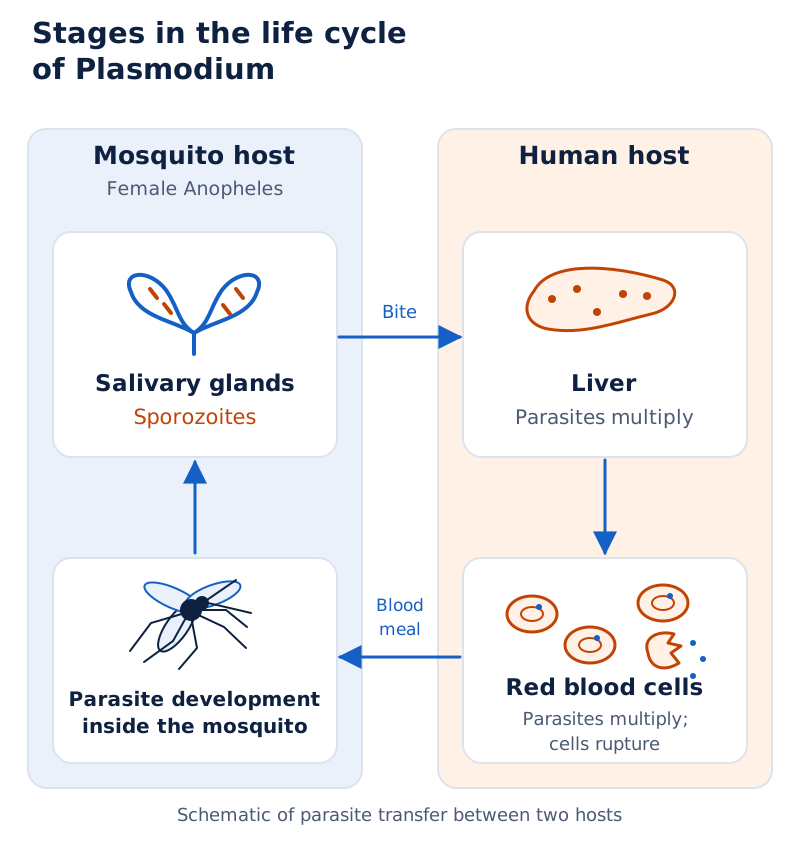
The drawing connects a biting mosquito, the human liver and red blood cells with arrows. It separates human and mosquito hosts and labels salivary glands, which release saliva, and sporozoites. Arrows return parasite stages from human blood to the mosquito.
Drawn by One Young India.
Mosquito nets, screens, reduction of stagnant water and control of breeding places help prevent malaria. The life cycle explains why protecting people from bites and reducing mosquitoes are complementary measures.
How do amoebic dysentery and sleeping sickness differ?
Amoebiasis, also called amoebic dysentery, affects the large intestine. Symptoms include constipation, abdominal pain and cramps, and stools containing excess mucus and blood clots. Mucus is a slippery protective secretion. Contaminated food and water are the main sources of infection.
Houseflies act as mechanical carriers, transferring contamination from infected faeces to food. Clean drinking water, food hygiene and proper disposal of excreta help prevent this disease. The fly carries the parasite; it does not cause the disease by itself.
Sleeping sickness is transmitted by infected tsetse flies. It can cause fever, headache and swollen lymph nodes, followed by disturbed sleep and nervous-system effects. Lymph nodes are small immune structures that filter fluid draining from tissues. Control includes avoiding bites, vector control and early detection and treatment.
How do parasitic worms cause disease?
Helminths are parasitic worms. Ascariasis, taeniasis and filariasis are helminthic diseases. Although all three involve worms, their routes of entry and sites of infection differ.
How does ascariasis spread?
Ascariasis is an intestinal roundworm infection. Eggs leave an infected person's body with faeces and contaminate soil, water and plants. Another person can acquire infection by swallowing eggs in contaminated water, vegetables or fruits.
Symptoms include internal bleeding, muscular pain, fever, anaemia and blockage of the intestinal passage. Anaemia is a condition in which the blood has reduced capacity to carry oxygen, commonly associated with insufficient haemoglobin, the oxygen-carrying pigment in red blood cells.
Safe disposal of excreta, clean drinking water and properly cleaned food help interrupt transmission. Worm infection therefore connects personal food hygiene with wider sanitation, since eggs from faeces can enter the shared environment.
How do taeniasis and filariasis differ?
| Disease | Route and site | Symptoms and control |
|---|---|---|
| Taeniasis | Intestinal tapeworm infection acquired from raw or inadequately cooked infected pork or beef | May cause abdominal discomfort, digestive disturbance and weight loss; prevent through thorough cooking, meat inspection and sanitation |
| Filariasis | Infected female mosquitoes transmit worms that usually affect lymphatic vessels, the channels carrying tissue fluid called lymph | Slowly developing chronic inflammation, usually involving lower-limb lymphatic vessels; control mosquito bites and breeding sites |
Chronic means persisting for a long time. In filariasis, affected organs can develop pronounced swelling and deformity. The genital organs are also often affected. Severe enlargement associated with this disease is called elephantiasis.
Intestinal worms are not all acquired in the same way. Ascariasis involves swallowing eggs from contamination; taeniasis involves infected meat containing immature tapeworm stages. Filariasis involves mosquito transmission. Matching the route to the disease prevents incorrect generalisations about “worm infections”.
How do personal and public hygiene interrupt transmission?
Personal hygiene includes keeping the body clean and consuming clean drinking water, food, vegetables and fruits. Sanitation means maintaining conditions that protect health, particularly through safe management of human waste and environmental cleanliness.
How can faecal contamination reach another person?
- An infected person passes disease agents or parasite eggs with faeces.
- Improper disposal allows contamination of soil, water or food.
- Houseflies may carry contaminated material from faeces to food products.
- Another person swallows contaminated food or water and can acquire infection.
Diagram
Food-and-water transmission chain
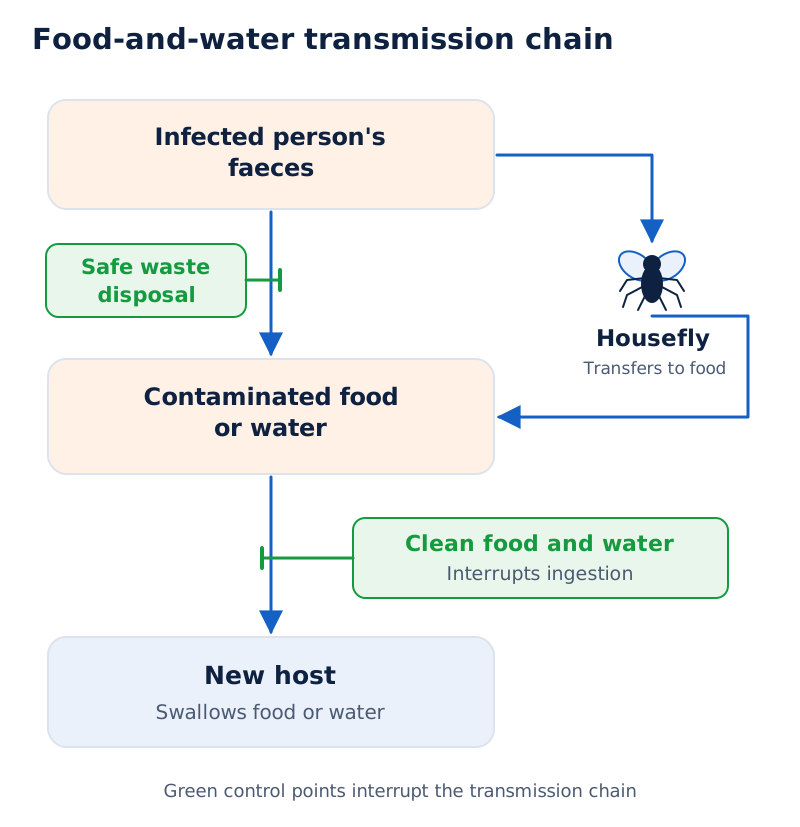
Draw labelled boxes for infected person's faeces, contaminated food or water, and a new host. Connect them with arrows showing transmission. Add a housefly beside the transfer to food, and label safe waste disposal and clean food and water as control points.
Drawn by One Young India.
Public hygiene includes proper disposal of waste and excreta, periodic cleaning and disinfection of water reservoirs and tanks, and hygienic preparation of food in public catering. Disinfection means reducing or destroying disease-causing microorganisms on non-living materials.
How can mosquito exposure be reduced?
Avoid stagnation of water near homes and clean household coolers regularly. Use mosquito nets and wire mesh on doors and windows. These measures address both breeding places and contact between mosquitoes and people.
Biological control can use fish such as Gambusia, which feed on mosquito larvae, the immature aquatic stages of mosquitoes. Vector-control programmes also use insecticides, substances that kill insects. These approaches target the transmitting insects rather than the symptoms in an infected person.
Hygiene measures are especially important against diseases transmitted through food and water. Airborne infections additionally require attention to close exposure to infected people. Prevention works best when measures are chosen for the actual route of transmission.
How does the local defence system protect the body?
Immunity is the body's overall ability to fight disease-causing organisms through its immune system, the network of cells, tissues and protective substances involved in defence. Exposure to an infectious agent does not necessarily lead to disease.
Innate immunity is non-specific defence present at birth. “Non-specific” means it is not directed against just one particular pathogen. Local barriers act at possible entry points, helping prevent microorganisms from entering or becoming established.
Phagocytosis means engulfing and destroying particles or microorganisms. Phagocytic cells are defensive cells capable of this process. Some white blood cells, the blood cells involved in defence, and tissue cells called macrophages carry out this action.
What are the main barriers?
| Defence | Location | Protective action |
|---|---|---|
| Skin | Body surface | Forms a physical barrier to microbial entry |
| Mucus | Linings of respiratory, digestive and urogenital passages, the latter serving urinary and reproductive functions | Helps trap microbes entering these passages |
| Stomach acid | Stomach | Provides a chemical barrier against microbial growth |
| Saliva and tears | Mouth and eyes | Contain substances that help prevent microbial growth |
| Phagocytic cells | Blood and tissues | Engulf and destroy microbes |
What are the merits and limits of local defence?
Local barriers are already present and work at sites where microbes encounter the body. Their broad action provides protection without waiting for a first specific response to a particular pathogen. Skin and mucus therefore reduce entry, while protective secretions discourage microbial growth.
These defences are not an absolute guarantee against infection. Pathogens that gain entry can encounter other immune responses. Acquired immunity develops after exposure, is pathogen-specific and is characterised by memory of an earlier encounter.
How do vaccination, serum and antitoxin provide protection?
An antigen is a substance recognised by the immune system that can stimulate an immune response. An antibody is a defensive protein produced in response to an antigen. These terms describe different participants in immunity and are not interchangeable.
Vaccination introduces a vaccine into the body. A vaccine is a preparation containing antigenic material, such as proteins of a pathogen or weakened or inactivated pathogens. Immunisation is the process of providing or developing protection against a disease.
How does immune memory help?
- A vaccine introduces antigenic material into the body.
- The immune system responds, producing antibodies directed against that material.
- Memory cells form. These are immune cells that enable recognition of the same pathogen on later exposure.
- A subsequent encounter with that pathogen brings a faster, intensified response that helps control infection.
The response to a first encounter is called the primary response and is of low intensity. A later encounter with the same pathogen produces a more intense secondary response. This property of memory underlies vaccination.
Diagram
Vaccination and immune memory
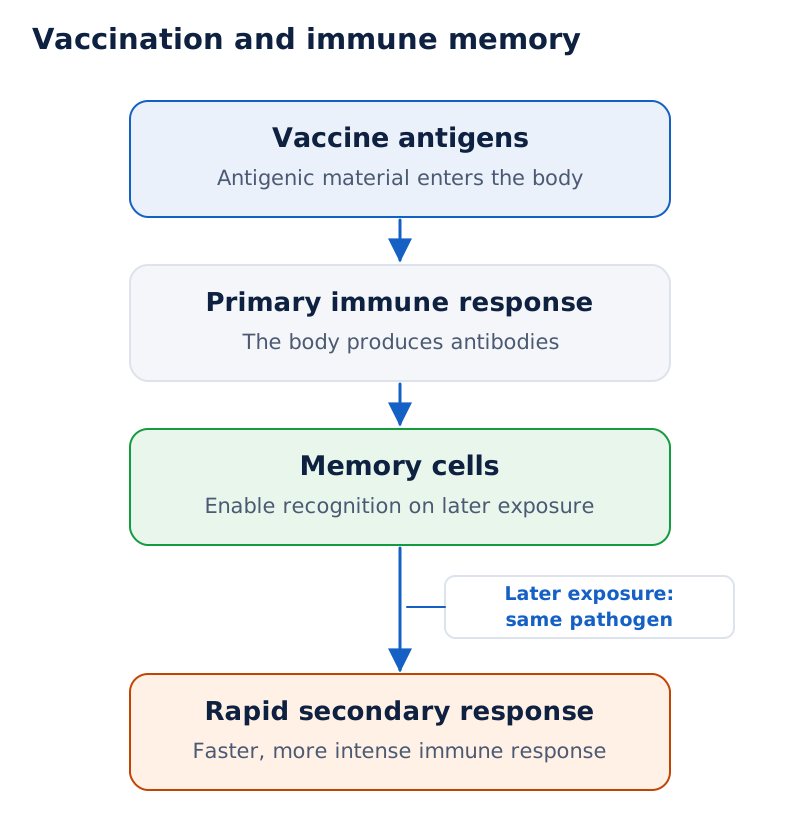
Draw four labelled boxes: vaccine antigens, primary immune response, memory cells, and rapid secondary response on later exposure. Use arrows to show the sequence and label the final exposure “same pathogen”.
Drawn by One Young India.
How do active and passive immunity differ?
| Feature | Active immunity | Passive immunity |
|---|---|---|
| Source of antibodies | Produced by the recipient's own immune system | Received ready-made from another source |
| What is supplied | Antigens stimulate a response | Antibodies provide protection directly |
| Speed | Takes time to develop its full effect | Useful when a quick protective response is needed |
| Example | Response following vaccination | Injection of preformed antibodies |
| Natural example | Response after natural infection | Maternal antibodies reaching the baby |
Serum is the liquid remaining after blood has clotted. Antiserum is serum containing specific antibodies used to provide passive protection. A toxin is a poisonous substance produced by a living organism; an antitoxin is an antibody preparation that neutralises a toxin.
Preformed antitoxin can provide rapid protection when required, as in tetanus. It acts against the toxin, while a vaccine stimulates the person's own immune response. Serum and vaccine therefore describe different preparations, even though both can contribute to protection.
How do antiseptics, disinfectants and antibiotics differ?
Antiseptics are substances used on living tissues to kill microorganisms or inhibit their growth. Disinfectants are used on non-living surfaces or objects to destroy disease-causing microorganisms. Their place of use is a central distinction.
Why is the site of use important?
| Feature | Antiseptic | Disinfectant |
|---|---|---|
| Usual site | Living tissues, such as skin | Non-living objects and surfaces |
| Purpose | Control microbes on tissue | Control microbes in the environment |
| Tissue suitability | Formulated for the intended tissue use | May damage living tissue |
| Concentration | Must be suitable for tissue application | Chosen for the object and disinfection task |
| Interchangeability | Use as directed for its intended purpose | Do not assume a surface product is suitable for skin |
Some chemicals can have different uses at different concentrations. Concentration means the amount of a substance present in a given quantity of a mixture. The name of a chemical alone does not establish that every preparation of it is suitable for living tissue.
How do antibiotics act?
Antibiotics are substances produced by some microbes that kill or retard the growth of other disease-causing microbes. Penicillin is an example. Antibiotics have made an important contribution to the treatment of bacterial infections.
Antibiotics act against susceptible bacteria; they do not treat viral infections themselves. Susceptible bacteria are bacteria whose growth or survival is affected by a particular antibiotic. The appropriate medicine depends on the infection, so one medicine cannot be assumed to treat every communicable disease.
Vaccines stimulate immune protection, antitoxins neutralise particular toxins, antibiotics act on susceptible bacteria, and antiseptics and disinfectants control microbes at their sites of application. Keeping these actions distinct explains why the aids to health are complementary.
What are the major activities of the Red Cross and WHO?
The Red Cross is part of an international humanitarian movement that helps people affected by conflict, disasters and other emergencies. Humanitarian aid means assistance intended to protect life, health and human dignity and relieve suffering.
How does the Red Cross help people?
Major activities include assisting the sick and wounded, providing emergency relief, supporting health services, and training people in first aid. First aid is immediate assistance given to a sick or injured person before further medical care becomes available.
Red Cross societies also support blood-donation services and help communities prepare for and respond to disasters. These activities combine practical relief with preparation, so assistance is not confined to care after an emergency has already occurred.
What does WHO do?
WHO stands for the World Health Organization, the United Nations specialised agency for international public health. Its activities include coordinating international health work, supporting disease prevention and control, and helping countries strengthen health services.
WHO also monitors health trends, develops health guidance and standards, promotes research, and supports responses to health emergencies. Monitoring disease occurrence helps health authorities recognise patterns and plan appropriate responses.
The Red Cross is strongly associated with humanitarian assistance and practical relief. WHO is strongly associated with international health coordination and technical guidance. Both contribute to health, but their roles and organisational responsibilities are different.
Glossary
- Health — A state of physical, mental and social well-being, extending beyond absence of disease.
- Hygiene — Practices that preserve health by maintaining cleanliness and helping prevent disease.
- Pathogen — A disease-causing organism or agent that can interfere with normal body functioning.
- Communicable disease — A disease capable of passing from an infected source to another person.
- Endemic disease — Disease persistently present at an expected level within a particular population or region.
- Epidemic — Disease occurrence exceeding the normally expected level in a population during a period.
- Pandemic — An epidemic extending across countries or continents and affecting many people.
- Sporadic disease — Disease occurring infrequently and irregularly as scattered cases within a population.
- Vector — A living agent that transmits a pathogen to a susceptible host.
- Immunity — The body's overall ability to fight disease-causing organisms through its immune system.
- Antigen — A substance recognised by the immune system that can stimulate an immune response.
- Antibody — A defensive protein produced by the immune system in response to an antigen.
- Vaccination — Introduction of a vaccine to stimulate immune protection against a particular disease.
- Antitoxin — A preparation containing antibodies that neutralise a particular toxin rather than stimulating antibody production.
- Antiseptic — A substance used on living tissue to kill microorganisms or inhibit their growth.
Common errors and misconceptions
- Misconception: A person without a diagnosed disease is necessarily completely healthy. Correct: Health includes physical, mental and social well-being.
- Misconception: Endemic and epidemic mean the same thing. Correct: Endemic describes persistent expected occurrence; epidemic describes occurrence above the expected level.
- Misconception: The mosquito itself is the malaria pathogen. Correct: A protozoan parasite causes malaria, and an infected female Anopheles mosquito transmits it.
- Misconception: All hepatitis spreads through contaminated water. Correct: Routes vary; hepatitis A and hepatitis B require different route-specific preventive measures.
- Misconception: HIV spreads through ordinary touch. Correct: Mere touch does not transmit HIV, and affected people should not be socially isolated.
- Misconception: A vaccine is a dose of ready-made antibodies. Correct: Vaccines supply antigenic material that stimulates the recipient's immune response; ready-made antibodies provide passive protection.
- Misconception: A surface disinfectant is automatically suitable for skin. Correct: Antiseptics are formulated for living tissue; surface disinfectants may damage it.
- Misconception: Antibiotics cure viral diseases. Correct: Antibiotics act against susceptible bacteria and do not treat the viral infection itself.
Exam-style questions with model answers
Q1. A vaccine supplies antigenic material that stimulates a person's own antibody production. An antiserum supplies ready-made antibodies. Classify the immunity produced by each and give the reason. [2 marks]
- The vaccine produces active immunity because the recipient's own immune system responds to antigens and makes antibodies.
- The antiserum provides passive immunity because protective antibodies arrive ready-made from another source.
Q2. Typhoid generally spreads through contaminated food and water. Infectious lung tuberculosis spreads through air. Malaria is transmitted by infected female mosquitoes. Explain one suitable control measure for each: safe water, respiratory hygiene, and mosquito nets respectively. [3 marks]
- Safe drinking water helps control typhoid by reducing the chance that a person swallows the bacteria in contaminated water. This addresses the stated route into the body.
- Respiratory hygiene helps control tuberculosis by reducing the release and spread of infectious respiratory material into shared air.
- Mosquito nets help control malaria by reducing contact with biting mosquitoes and therefore reducing opportunities for the parasite to enter a person.
Q3. Disease X persists at the expected level in a region. Disease Y suddenly exceeds the expected local level. Disease Z forms an epidemic across continents. Disease W occurs as infrequent, irregular scattered cases. Classify each pattern and justify it using the information given. [4 marks]
- Disease X has an endemic pattern because it remains present at the expected level in the specified region.
- Disease Y has an epidemic pattern because its occurrence rises above the level normally expected locally.
- Disease Z has a pandemic pattern because the epidemic extends across continents rather than remaining within one area.
- Disease W has a sporadic pattern because its cases are scattered, infrequent and irregular.
Q4. The following defences act as stated: skin blocks microbial entry; mucus traps microbes; stomach acid prevents microbial growth; tears contain antimicrobial substances; phagocytes engulf and destroy microbes. Explain these five contributions to innate defence, linking each structure or substance to its action. [5 marks]
- Skin acts as a physical barrier at the body surface. Its contribution is to obstruct microbial entry before an organism becomes established inside the body.
- Mucus acts by trapping microbes. This helps retain organisms that reach the mucus-covered passages instead of allowing their unrestricted movement.
- Stomach acid provides a chemical barrier. Its stated action is to prevent microbial growth within the stomach environment.
- Tears provide protective substances at the eyes. Their antimicrobial components help oppose microbes at this exposed surface.
- Phagocytes provide cellular defence. They engulf and destroy microbes, acting directly on organisms rather than simply forming a surface barrier.
Q5. A food-and-water transmission chain runs from infected faeces to contaminated food or water and then to a person who swallows it. Houseflies can transfer contamination to food. Available measures are safe excreta disposal, clean drinking water, cleaning vegetables and fruits, covering food, controlling houseflies, and hygiene during food preparation. Explain how each of these six measures interrupts the stated chain. [6 marks]
- Safe disposal of excreta reduces the escape of infected faecal material into the surroundings, addressing the source from which contamination can spread.
- Clean drinking water reduces the opportunity for a person to swallow disease agents with water, interrupting the final entry route.
- Cleaning vegetables and fruits reduces contamination on food before it is eaten, helping prevent ingestion of agents carried on it.
- Covering food makes it less accessible to houseflies, reducing opportunities for these mechanical carriers to deposit contaminated material.
- Controlling houseflies reduces the carriers available to transfer contamination from faecal material to food, weakening the stated transfer link.
- Hygiene during food preparation helps keep food free from contamination before consumption, supporting protection at the point where food is handled.
Q6. A health-work summary lists these activities: Red Cross first-aid training; Red Cross emergency relief; WHO monitoring of disease trends; WHO guidance and standards for public health. Explain the contribution of each activity, using first aid to mean immediate help before further medical care. [4 marks]
- Red Cross first-aid training prepares people to give immediate assistance to someone who is ill or injured before further medical care becomes available.
- Red Cross emergency relief supports people affected by emergencies, addressing immediate humanitarian needs and helping reduce suffering.
- WHO monitoring identifies patterns in disease occurrence, helping health authorities understand trends and plan responses.
- WHO guidance and standards support public-health decisions by providing technical direction for health work.
Key takeaways
- Health includes physical, mental and social well-being; hygiene and a balanced lifestyle contribute to maintaining it.
- Communicable describes transmission, while endemic, epidemic, pandemic and sporadic describe patterns of disease occurrence.
- Match preventive measures to transmission routes: safe water, respiratory hygiene and vector control address different pathways.
- The twelve diseases discussed belong to bacterial, viral, protozoan and helminthic groups with different symptoms and control measures.
- Skin, mucus, protective secretions and phagocytic cells contribute to innate defence against disease-causing agents.
- Vaccination stimulates active immune protection; antiserum and antitoxin can supply antibodies for passive protection.
- Antiseptics suit living tissue, disinfectants suit non-living materials, and antibiotics act against susceptible bacteria.
- The Red Cross provides humanitarian assistance, while WHO coordinates international public-health work and technical guidance.
Test yourself
What distinguishes epidemic occurrence from endemic occurrence?
An epidemic exceeds the expected level of disease; endemic occurrence persists at an expected level in a population or region.
What is the distinction between the malaria pathogen and its vector?
The pathogen is a protozoan parasite; its vector is an infected female Anopheles mosquito.
How can a housefly contribute to amoebic dysentery transmission?
It can mechanically transfer contamination from infected faeces to food, which another person then eats.
Why are hepatitis A and hepatitis B not assigned one common prevention route?
Their routes differ: safe food and water help prevent hepatitis A, while blood safety and sterile needles help prevent hepatitis B.
Which property of acquired immunity explains vaccination?
Immune memory enables a faster, intensified response when the same pathogen is encountered again.
What is the difference between serum and antiserum?
Serum is the liquid left after blood clots; antiserum contains specific antibodies used for passive protection.
Why should ordinary physical contact with someone living with HIV not cause social exclusion?
HIV is not transmitted through mere touch, and affected people need family and social support.
What does WHO stand for, and what is one major activity?
WHO means World Health Organization. One major activity is coordinating international work on disease prevention and control.
Write about it
Turn a question from this chapter into a paper.
The Writing Studio has a structure guide, a rubric and citation tools for 15 formats, from essays to research papers. Drafting is free with an account. Learnacy Essential adds feedback from an AI writing coach and submission to The OYI Review.
Learnacy Essential is ₹1,499 for the year. Publication depends on review and is not guaranteed.