
Himalayas in Peril: How Melting Glaciers Threaten Billions
On this page
Watch & explore
Start with a few high-quality watches, then dive into the notes below.
Try an idea before you read. Step into the role of a regional water security advisor. Use your knowledge of the 'Third Pole' to evaluate climate impacts and recommend adaptation strategies for local communities. Explore →
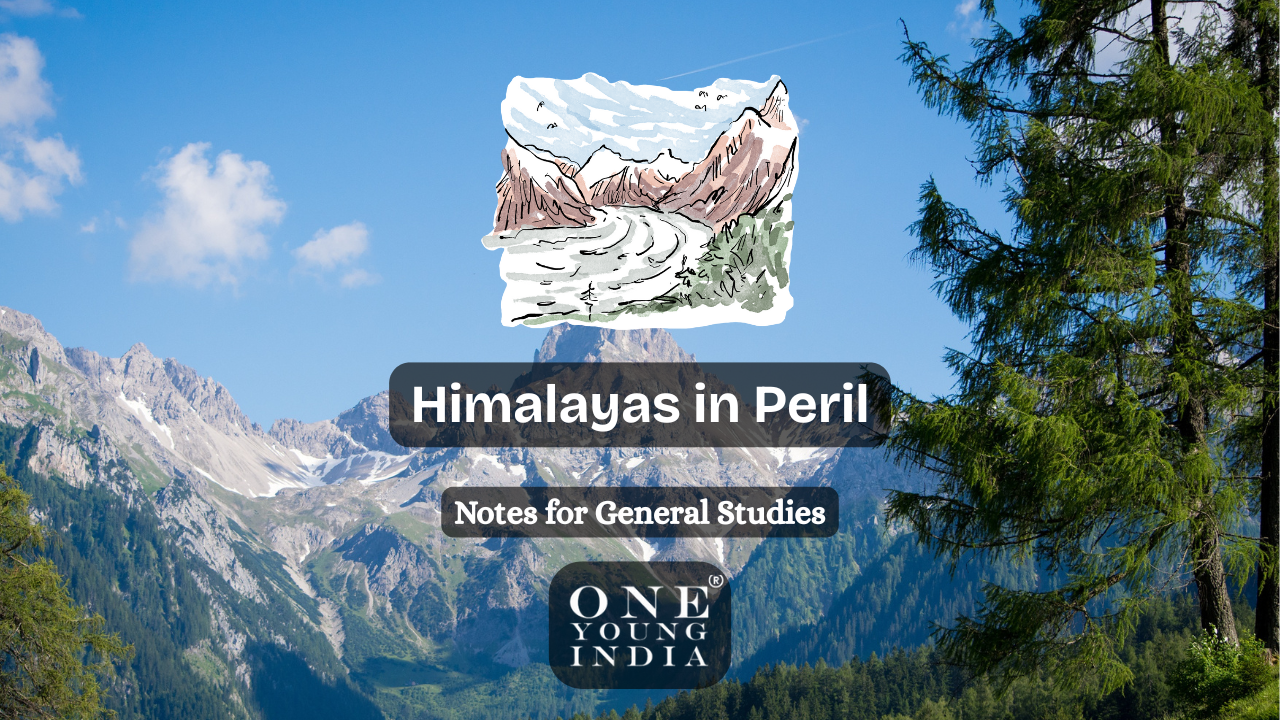
The Himalayas, towering across South and Central Asia, are often called the “Third Pole” because they hold the largest reservoir of ice outside the Arctic and Antarctic. These majestic mountains are more than just a geographical marvel-they are life-givers. Feeding ten of the world’s major rivers-including the Ganges, Indus, Brahmaputra, and Mekong-the Himalayas provide water to over 1.5 billion people across Asia.
But this crucial lifeline is under dire threat. Himalayan glaciers are melting at an alarming rate due to global warming. According to recent scientific assessments, the region is losing ice at a pace 65% faster than in the previous decade. This rapid melt is not just a concern for climate scientists-it is a slow-moving disaster that affects everything from water availability and agriculture to geopolitical stability and natural disasters.
In this blog, we’ll explore why the glaciers are melting, what this means for the billions who depend on them, and whether there’s still time to turn the tide.
1. The Scale of the Ice Loss
Himalayan Ice: A Critical Reserve
The Hindu Kush Himalayan (HKH) region spans eight countries-Afghanistan, Pakistan, India, China, Nepal, Bhutan, Bangladesh, and Myanmar. It contains over 54,000 glaciers and serves as the source of water for 10 major river systems. These rivers support half the world's population, either directly or indirectly.
Alarming Data from Recent Studies
A 2023 report from the International Centre for Integrated Mountain Development (ICIMOD) paints a grim picture. The report shows that glaciers in the eastern Himalayas are melting two to three times faster than those in the central and western ranges. Overall, the HKH glaciers could lose up to 80% of their ice by 2100 if current greenhouse gas emissions continue.
This loss isn’t uniform. Smaller glaciers at lower altitudes are vanishing entirely, while even the mighty Gangotri and Khumbu glaciers are retreating by dozens of meters every year.
2. Why Are the Glaciers Melting?
Rising Temperatures in the Region
The Himalayas are warming faster than the global average-a phenomenon known as elevation-dependent warming. For every degree of warming at sea level, high-altitude regions experience a disproportionately higher temperature increase. This has catastrophic implications for glaciers, which are extremely sensitive to even small shifts in temperature.
Black Carbon and Soot
It’s not just CO₂ that’s causing the melt. Black carbon particles-tiny specks of soot from diesel engines, cookstoves, and forest fires-settle on the snow, darkening its surface. This reduces the snow’s albedo effect (its ability to reflect sunlight), causing it to absorb more heat and melt faster.
India and China, two of the world's most polluted nations, are significant contributors to black carbon in the Himalayas. These pollutants often travel hundreds of kilometers from urban areas and industrial zones to settle on pristine mountain snow.
Changing Monsoons and Snowfall Patterns
Climate change is also altering the monsoon cycles, leading to less snowfall and more rainfall in higher altitudes. Snow compacts into glaciers over time; rain does not. With reduced snow accumulation, the glaciers can't regenerate, even as they continue to melt.
3. Impact on Rivers and Agriculture
Water Supply Disruption
The Himalayan glaciers act as natural water towers, storing water during winter and releasing it as melt during the hot, dry months-precisely when it’s needed most. As glaciers shrink, rivers like the Ganges, Indus, and Brahmaputra will initially swell due to increased melt, but this is only a temporary phase.
Once the glaciers pass a tipping point, river flows will decline drastically, especially in dry seasons. This would impact:
Urban water supply in megacities like Delhi, Lahore, Dhaka, and Kathmandu
Agriculture across the Indo-Gangetic Plain, South Asia’s breadbasket
Hydropower generation in countries like Nepal, Bhutan, and India
Agricultural Collapse
Over 70% of agriculture in South Asia is rain-fed or glacier-fed, and crops are deeply reliant on predictable water cycles. The glacier-fed irrigation systems will falter as seasonal flows decline. Crop failures, food price spikes, and rural migration could become widespread, particularly in countries already facing food insecurity.
4. Glacial Lake Outburst Floods (GLOFs): Sudden Catastrophes
What Are GLOFs?
As glaciers retreat, they leave behind depressions that fill with meltwater, forming glacial lakes. These lakes are often dammed by unstable walls of ice or loose sediment. As the water accumulates, the pressure increases until the dam bursts, unleashing catastrophic floods downstream.
Recent Examples
In 2021, a massive GLOF in Chamoli, Uttarakhand, India, destroyed two hydroelectric plants and killed over 200 people.
In Nepal and Bhutan, dozens of high-risk glacial lakes have been identified, some of which are growing in size by several meters per year.
With continued glacier melt, the frequency and severity of GLOFs are likely to increase dramatically, threatening lives, infrastructure, and ecosystems.
5. Geopolitical and Economic Consequences
Water Wars?
The Himalayan rivers cross multiple national boundaries, making water a highly politicized resource. As flows diminish, tensions could escalate between countries like:
India and Pakistan over the Indus River
India and China over the Brahmaputra
Bangladesh and India over the Ganges
With shrinking water supplies, the risk of hydro-political conflict will rise, especially in already volatile regions.
Economic Costs
The economic fallout could be staggering. Losses from reduced agricultural productivity, power shortages, flood damages, and displacement could cost the region hundreds of billions of dollars. Countries like Nepal and Bhutan, which rely heavily on hydropower exports, may see their revenues decline.
Meanwhile, the cost of climate adaptation-building dams, relocating villages, reinforcing infrastructure-will strain already tight national budgets.
6. Cultural and Spiritual Loss
The Himalayas are not just natural wonders; they are sacred spaces in Hinduism, Buddhism, and indigenous faiths. Shrines like Kedarnath, Amarnath, and Mount Kailash draw millions of pilgrims each year.
As glaciers melt and landscapes change, these cultural and spiritual landmarks may be lost or damaged. The erosion of these places represents not just physical loss, but a spiritual disconnection for millions who see the Himalayas as divine.
7. Is There Hope? What Can Be Done?
Mitigation Through Emission Cuts
The most direct solution is also the most difficult-reducing global carbon emissions. If emissions are drastically cut, scientists estimate we could limit ice loss to around 30-40% by 2100 instead of the predicted 80%. This could preserve essential water sources for future generations.
Local Adaptation Strategies
Communities and governments are already experimenting with local solutions:
Artificial glaciers in Ladakh, India, store meltwater for use in the dry season.
Early warning systems for GLOFs are being deployed in Nepal and Bhutan.
Eco-tourism and reforestation projects are helping build climate resilience.
These grassroots innovations offer hope in the short term, but they are not enough unless paired with global action.
International Cooperation
The Himalayas span eight nations, each with different capacities and priorities. Addressing glacier melt will require transboundary cooperation, including:
Data sharing on glacier health and river flows
Joint disaster preparedness protocols
Regional climate pacts similar to the Paris Agreement
Organizations like ICIMOD and UNESCO are working to foster such cooperation, but political will remains a significant barrier.
Conclusion: A Test of Global Responsibility
The Himalayas are melting, and with them, the future of 1.5 billion people hangs in the balance. The Himalayan glacier melt is not a far-off issue. It is already unfolding, bringing floods, droughts, and instability. But this is not just a regional crisis-it is a global test of our ability to respond to environmental destruction.
We can no longer treat the high mountains as remote and disconnected. What happens in the Himalayas doesn’t stay in the Himalayas. These glaciers feed rivers, which nourish civilizations. Their loss would reshape not just South Asia, but the very foundations of global water, food, and energy systems.
There is still time to act-but that window is closing fast. The Himalayas are sounding the alarm. Will we listen?
Key takeaways
- The Himalayas are a vital water source for over a billion people across Asia.
- Climate change is causing the Himalayan glaciers to melt at an alarming rate.
- The melting of Himalayan glaciers has severe consequences for agriculture, hydropower, and drinking water supplies.
- Human activities, such as deforestation and the burning of fossil fuels, contribute to glacier melting.
- Conservation and adaptation are crucial for mitigating the impacts of melting glaciers.
Test yourself
What is the 'Third Pole'?
The 'Third Pole' refers to the Himalayas, which are home to the largest reserve of ice outside the polar regions.
How are the Himalayan glaciers melting?
The Himalayan glaciers are melting due to rising global temperatures caused by climate change.
What are the consequences of melting glaciers?
The consequences include reduced water availability for agriculture, hydropower, and drinking water supplies.
Frequently asked questions
What is elevation-dependent warming and how does it affect Himalayan glaciers?
Elevation-dependent warming refers to the phenomenon where high-altitude regions like the Himalayas warm faster than the global average. This disproportionate warming directly accelerates glacier melt due to their sensitivity to even small temperature increases.
How does black carbon contribute to glacier melt in the Himalayas?
Black carbon, such as soot from cookstoves and diesel engines, darkens the snow surface, reducing its ability to reflect sunlight (albedo effect). This causes the snow to absorb more heat and melt faster, exacerbating glacial loss.
Why are changing monsoon patterns a concern for Himalayan glaciers?
Climate change is altering monsoon cycles, leading to less snowfall and more rainfall in higher altitudes. Since snow compacts into glaciers over time while rain does not, reduced snow accumulation prevents glaciers from regenerating, even as they continue to melt.
What is the role of Himalayan glaciers in water supply for Asian rivers?
Himalayan glaciers act as natural water towers, storing water during winter and releasing it as melt during dry months. This seasonal melt is crucial for maintaining river flow in major rivers like the Ganges and Indus, which support vast populations.
Try it
Advising on the Himalayan Water Crisis
Step into the role of a regional water security advisor. Use your knowledge of the 'Third Pole' to evaluate climate impacts and recommend adaptation strategies for local communities.
1A local official argues that local deforestation is the sole reason the glaciers have lost 10% of their volume over the past 40 years. How should you correct their understanding based on the data?
Correct! The text states that melting is primarily driven by rising global temperatures (up 1.1°C to 1.2°C), which are caused by greenhouse gases trapping heat. Deforestation is only one contributing factor alongside the burning of fossil fuels.
Incorrect. The text notes that melting is primarily driven by rising global temperatures, and attributes the heat-trapping greenhouse gases to the burning of fossil fuels as well as deforestation, not deforestation alone.
Incorrect. The text explicitly states that human activities, such as deforestation and burning fossil fuels, contribute to the melting of the glaciers.
2Looking ahead to 2030, a farming community relying on the Indus river asks how to prepare for the projected 30% loss in glacier volume. Which strategy aligns best with the text's recommendations?
Incorrect. The text states conservation focuses on protecting the *remaining* glaciers and restoring ecosystems, not rebuilding lost glacier volume.
Incorrect. The text warns that reduced water flow from melting glaciers will negatively affect hydropower generation, making this a poor strategy.
Correct! The text specifically recommends adaptation strategies involving technologies for water management and improving agricultural practices to cope with the reduced water availability.
Excellent work! You accurately applied the facts about the Himalayan glacier crisis to address misconceptions and recommend text-supported adaptation strategies.