
Photosynthesis in higher plants | ISC Class 11 Biology Notes
On this page
Photosynthesis in higher plants: autotrophic nutrition, chloroplast structure, photosynthetic pigments and spectra, photosystems, light reactions, photophosphorylation, chemiosmosis, the Calvin cycle, the Hatch and Slack pathway, photorespiration and factors affecting photosynthesis.
What is photosynthesis and what does it require?
Definition: Photosynthesis is the physico-chemical process in which green plants use light energy to synthesise organic compounds. It transforms light energy into chemical energy stored in food. Here organic compounds include carbon-containing food substances such as sugars.
Autotrophic nutrition means making organic food from inorganic raw materials. Green plants are autotrophs because they synthesise their food. Organisms that depend on other organisms for food are called heterotrophs. Photosynthesis supports food production and releases oxygen into the atmosphere.
What does the overall equation represent?
In the equation below, CO₂ means carbon dioxide, H₂O means water, C₆H₁₂O₆ means glucose, a six-carbon sugar, and O₂ means molecular oxygen. Numbers before formulae give the relative numbers of molecules; subscripts give the numbers of atoms within each molecule.
6CO₂ + 12H₂O → C₆H₁₂O₆ + 6H₂O + 6O₂, in the presence of light.
This equation summarises a multistep process. The oxygen released comes from water. Water supplies hydrogen for carbohydrate formation and is oxidised, meaning that it loses electrons. An electron is a negatively charged particle. Reduction involves gain of electrons.
Glucose is usually stored as starch, a carbohydrate storage material. The word “usually” matters: glucose formation and starch storage are related, but they are not the same event. The overall equation also does not describe a single reaction occurring in one step.
How do simple experiments establish the requirements?
A variegated leaf has green and non-green regions. After exposure to light, starch forms in its green regions. A leaf partly covered with black paper shows starch formation in the illuminated region. Together, these observations connect photosynthesis with chlorophyll and light.
In another experiment, part of a leaf is enclosed with cotton soaked in potassium hydroxide, written KOH, which absorbs carbon dioxide. The remaining part is exposed to air. After illumination, the exposed part tests positive for starch, while the enclosed part tests negative.
The difference supports the requirement for carbon dioxide. In interpreting each experiment, connect the changed condition with the region that forms starch. Chlorophyll, the green leaf pigment, light and carbon dioxide are all necessary for the process demonstrated by these experiments.
Where does photosynthesis occur within a leaf?
Photosynthesis occurs in green leaves and also in other green parts of plants. Within leaves, mesophyll, the internal photosynthetic tissue, contains cells with many chloroplasts, the organelles in which photosynthesis takes place. An organelle is a specialised structure within a cell.
Chloroplasts usually align along mesophyll cell walls so that they receive an optimum quantity of incident light, meaning light falling on them. Their internal organisation separates light capture from sugar synthesis while allowing the products of one phase to support the other.
How is the chloroplast organised?
A thylakoid is a flattened membrane sac within a chloroplast. Stacks of thylakoids form grana, singular granum. Stroma lamellae are membranes connecting grana. The stroma is the surrounding fluid matrix, while the lumen is the space inside a thylakoid.
What the figure shows
Chloroplast organisation
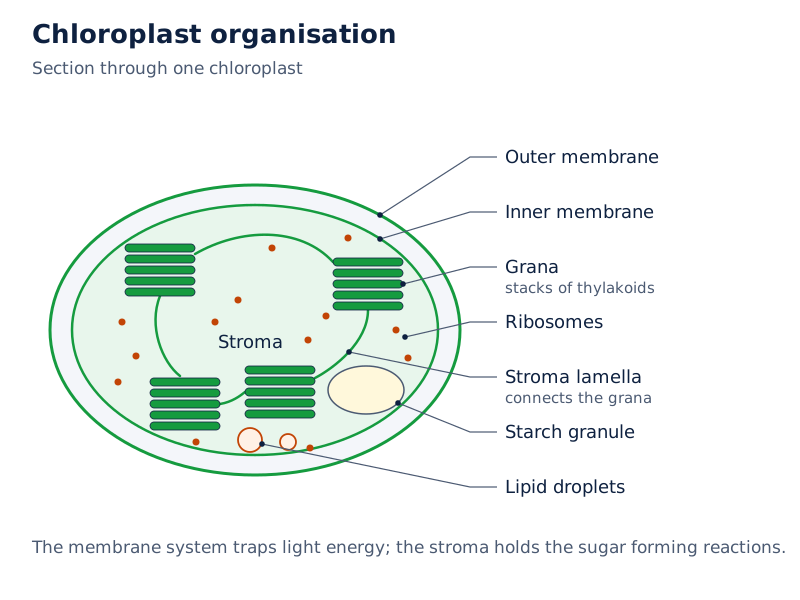
The drawing shows outer and inner membranes enclosing the stroma. Stacks labelled grana are connected by stromal lamellae. Other labels identify ribosomes, starch granules and lipid droplets within the chloroplast.
Drawn by One Young India.
Ribosomes are structures involved in protein synthesis; lipid droplets contain lipid material. These labels help identify the illustrated chloroplast, but the membrane system and stroma are the principal locations to connect with the two phases of photosynthesis.
How do the two phases differ?
The photochemical phase, or light reaction, captures light and produces chemical intermediates. ATP, adenosine triphosphate, transfers energy. NADPH, reduced nicotinamide adenine dinucleotide phosphate, supplies reducing power, meaning the ability to donate electrons in reduction reactions.
| Feature | Photochemical phase | Biosynthetic phase |
|---|---|---|
| Principal location | Chloroplast membrane system | Stroma |
| Direct light requirement | Directly driven by light | Not directly driven by light |
| Central activity | Light capture and electron transfer | Carbon fixation and sugar formation |
| ATP and NADPH | Produced for subsequent reactions | Used to support sugar synthesis |
| Oxygen | Released through water splitting | Not the product of carbon fixation |
Carbon fixation means incorporating carbon dioxide into organic compounds. The biosynthetic phase uses ATP and NADPH to support this process and sugar synthesis. Its conventional name, “dark reaction”, does not mean that it requires darkness or is independent of the light reaction.
How do pigments and spectra explain light capture?
Pigments are substances that absorb light at particular wavelengths. A wavelength is the distance between successive corresponding points in a wave. Paper chromatography, a method of separating substances on paper, separates leaf pigments into differently coloured components.
| Pigment | Colour in the chromatogram | Photosynthetic role |
|---|---|---|
| Chlorophyll a | Bright or blue-green | Chief pigment; supplies the reaction centre, the specialised chlorophyll that initiates electron transfer |
| Chlorophyll b | Yellow-green | Accessory pigment that transfers absorbed energy |
| Xanthophylls | Yellow | Accessory pigments that broaden light use |
| Carotenoids | Yellow to yellow-orange | Accessory pigments involved in light capture and protection |
Accessory pigments absorb light and transfer its energy to chlorophyll a. They allow a wider range of incoming wavelengths to be used and protect chlorophyll a from photo-oxidation, oxidative damage associated with light. Thus, leaf colour does not result from a single pigment.
How does an absorption spectrum differ from an action spectrum?
An absorption spectrum shows how strongly a pigment absorbs different wavelengths. An action spectrum shows the effectiveness of different wavelengths in driving photosynthesis. One records light absorption; the other records a biological response, such as oxygen release.
What the figure shows
Absorption and action spectra
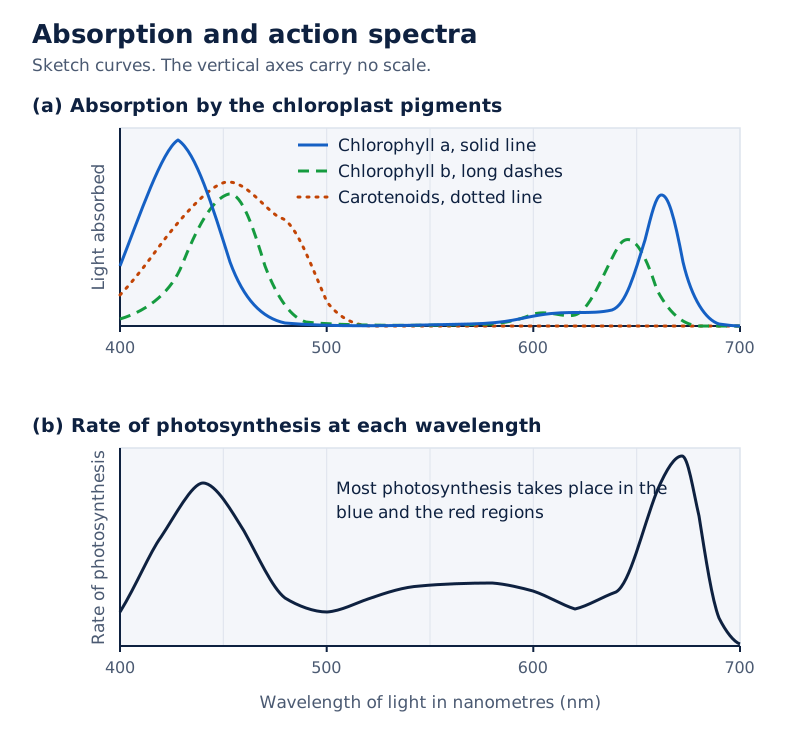
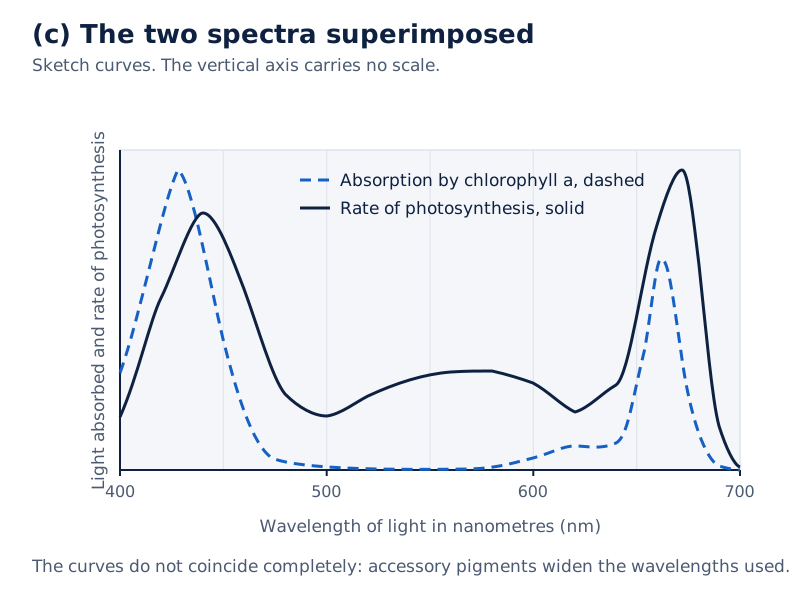
The upper graph shows separate absorption curves for chlorophyll a, chlorophyll b and carotenoids. The middle graph shows photosynthetic activity. The lower graph superimposes action and absorption curves, which do not coincide completely.
Drawn by One Young India.
Most photosynthesis takes place in the blue and red regions of the spectrum; some also occurs at other visible wavelengths. Chlorophyll a absorbs strongly in blue and red regions, but its absorption spectrum alone cannot account for the whole action spectrum.
In Engelmann's experiment, a prism separated light into its spectral components and illuminated the green alga Cladophora. Aerobic bacteria, which require oxygen, accumulated mainly in the blue and red regions. Their distribution indicated where oxygen evolution was greatest.
The resulting action spectrum resembled roughly the absorption spectra of chlorophyll a and b. Accessory pigments explain why photosynthetic activity is broader than the absorption pattern of chlorophyll a alone. Do not conclude that green or other visible wavelengths support no photosynthesis.
How do photosystems drive the light reaction?
A photosystem is a photochemical unit containing pigment molecules associated with proteins. Its light-harvesting complex, abbreviated LHC, contains hundreds of pigment molecules bound to proteins. These antenna pigments absorb different wavelengths and transfer energy towards a specialised chlorophyll a molecule.
This specialised molecule forms the reaction centre, where excitation initiates electron transfer. The two units are Photosystem I, abbreviated PS I, and Photosystem II, abbreviated PS II. Their numbering records their discovery sequence, not their order of operation in non-cyclic electron flow.
How do Photosystems I and II differ?
In PS I, the reaction-centre chlorophyll has an absorption peak at 700 nm, where nm means nanometre, a unit of wavelength. It is called P700. The PS II reaction centre has its absorption maximum at 680 nm and is called P680.
| Feature | Photosystem I | Photosystem II |
|---|---|---|
| Reaction centre | P700 | P680 |
| Absorption peak | 700 nm | 680 nm |
| Order in non-cyclic flow | Acts after PS II | Acts before PS I |
| Cyclic flow | Participates | Does not participate |
| Water-splitting association | Receives replacement electrons through PS II | Associated with the water-splitting complex |
| Stroma lamellae | Present | Absent |
An electron acceptor receives an excited electron, meaning an electron raised to a higher energy state by absorbed light. An electron transport chain is a series of carriers that pass electrons onwards. Cytochromes are electron-carrying components of this system.
What is the sequence of non-cyclic electron transfer?
- Light excites an electron in the PS II reaction centre. An electron acceptor receives it.
- The acceptor passes the electron into an electron transport chain containing cytochromes.
- The chain passes electrons towards PS I; they are transferred, not used up during passage.
- Light also excites electrons in PS I, and another acceptor receives those electrons.
- Electrons ultimately reduce NADP⁺, the oxidised form of nicotinamide adenine dinucleotide phosphate, to NADPH.
This arrangement is called the Z scheme because of its characteristic shape when carriers are ordered on a redox potential scale. Redox potential expresses a substance's tendency to accept electrons. The two light-driven excitations link water-derived electrons to the formation of reducing power.
What the figure shows
Z scheme
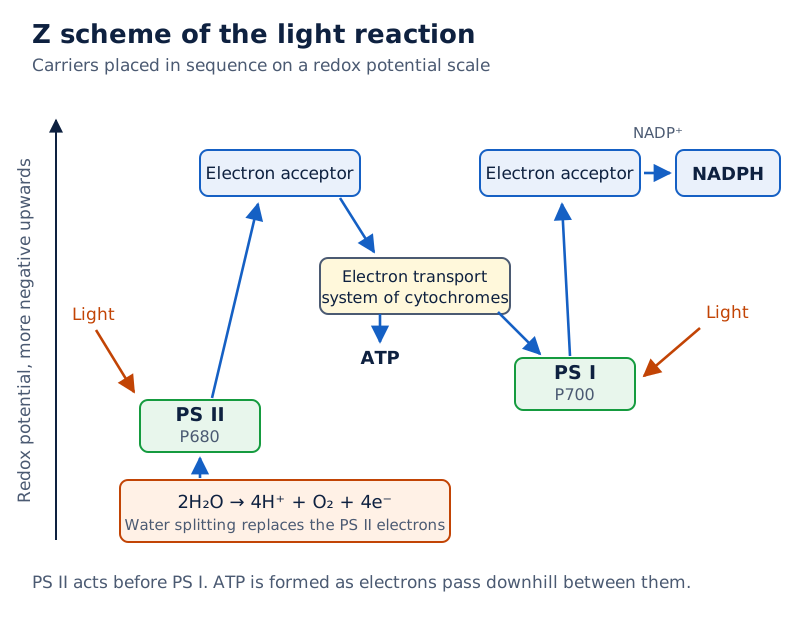
PS II is drawn to the left of PS I. Light arrows reach both complexes; upward arrows reach electron acceptors. An electron transport system connects the photosystems, with ATP formation indicated, and the final arrow leads towards NADPH.
Drawn by One Young India.
How do water splitting and photophosphorylation work?
Photolysis is the light-associated splitting of water. The water-splitting complex is associated with PS II on the inner side of the thylakoid membrane. It supplies electrons that replace those lost by PS II, while PS II supplies replacement electrons to PS I.
The water-splitting equation is 2H₂O → 4H⁺ + O₂ + 4e⁻. Here H⁺ denotes a hydrogen ion, or proton, and e⁻ denotes an electron. The plus and minus superscripts indicate electric charge. Protons accumulate in the thylakoid lumen.
Water splitting therefore connects three outcomes: replacement of electrons, oxygen production and proton accumulation. Oxygen is a net product of photosynthesis, whereas the electrons continue through the photosynthetic machinery. The water-splitting step explains why evolved oxygen originates from water.
What distinguishes cyclic and non-cyclic photophosphorylation?
Phosphorylation is ATP synthesis from ADP, adenosine diphosphate, and inorganic phosphate, written Pᵢ. Photophosphorylation is this synthesis in the presence of light. The subscript i indicates inorganic phosphate, rather than phosphate already incorporated into an organic molecule.
| Feature | Cyclic photophosphorylation | Non-cyclic photophosphorylation |
|---|---|---|
| Photosystems | PS I alone | PS II followed by PS I |
| Electron route | Returns to PS I through carriers | Passes from water through both photosystems towards NADP⁺ |
| ATP formation | Occurs | Occurs |
| NADPH formation | Does not occur | Occurs |
| Water splitting | Not involved in the cyclic route | Replenishes PS II electrons |
| Oxygen evolution | Not produced by the cyclic route | Associated with water splitting |
During cyclic flow, an excited electron returns to PS I through the transport chain instead of passing to NADP⁺. A possible location for this process is the stroma lamellae. Their membranes lack PS II and NADP reductase, the enzyme involved in reducing NADP⁺. An enzyme is a biological catalyst: it speeds a reaction without being consumed by it.
Cyclic photophosphorylation also occurs when only wavelengths beyond 680 nm are available for excitation. It produces ATP without NADPH. It is probably used to meet the difference between the amounts of ATP and NADPH needed by the carbon-fixing reactions.
How does chemiosmosis produce ATP?
The chemiosmotic hypothesis explains ATP synthesis through a proton gradient across a membrane. A gradient is a difference in concentration between regions. In chloroplasts, protons accumulate inside the thylakoid lumen, while their concentration in the stroma decreases.
Chemiosmosis requires a membrane, a proton pump, a proton gradient and ATP synthase, the enzyme that makes ATP. A proton pump moves protons across a membrane using energy. Electron transport helps establish the gradient that subsequently drives ATP synthesis.
How is the gradient established and used?
- Water splitting: water is split on the inner side of the thylakoid membrane, releasing protons directly into the lumen.
- Proton transport: an electron-associated hydrogen carrier takes up a proton from the stroma and releases it towards the lumen as electrons move onwards.
- Stromal proton removal: NADP reductase on the stromal side uses protons from the stroma during formation of reduced NADP.
- Gradient formation: proton concentration rises in the lumen and falls in the stroma. The lumen's pH decreases; pH measures acidity, with lower values indicating greater acidity.
- Proton return: protons move from the lumen towards the stroma through the membrane channel of ATP synthase.
- ATP formation: energy released as the gradient breaks down changes the shape of ATP synthase and enables it to synthesise ATP.
What do the two ATP synthase components do?
CF₀ is the membrane-embedded component of chloroplast ATP synthase. It forms the channel for facilitated diffusion, movement down a concentration gradient through a membrane protein. CF₁ projects towards the stroma and undergoes the conformational change, meaning change of shape, associated with ATP synthesis.
What the figure shows
ATP synthesis by chemiosmosis
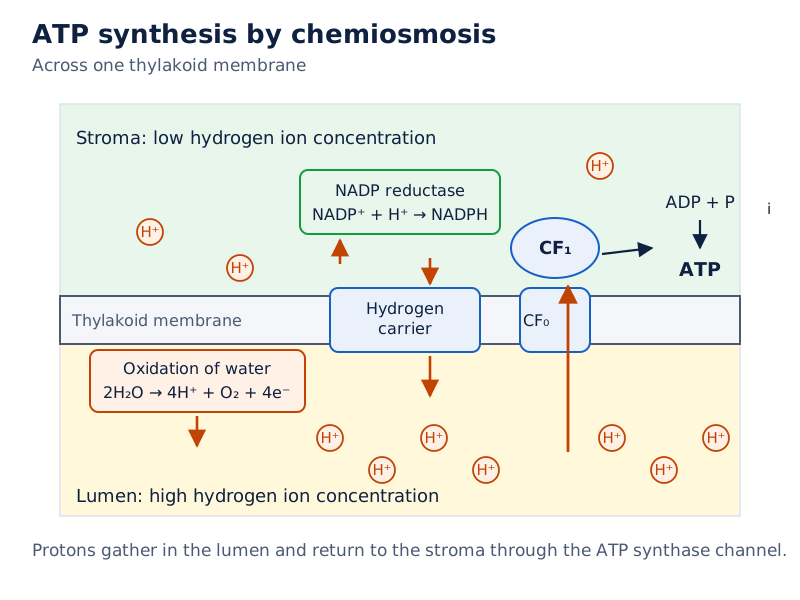
The drawing encloses a lumen labelled with high hydrogen-ion concentration. The surrounding stroma has low hydrogen-ion concentration. Water oxidation and proton movement feed the lumen; an ATP synthase channel allows proton return towards the stroma, beside ATP formation.
Drawn by One Young India.
The direction of proton movement is essential: accumulation is towards the lumen; return through ATP synthase is towards the stroma. ATP and NADPH then support biosynthetic reactions in the stroma. Electron transport builds the gradient, while proton flow down that gradient powers ATP synthesis.
How does the Calvin cycle synthesise carbohydrates?
The Calvin cycle is the cyclic carbon-fixing pathway that uses ATP and NADPH to support carbohydrate synthesis. Its primary carbon dioxide acceptor is ribulose bisphosphate, abbreviated RuBP, a five-carbon sugar. The first stable fixation product is 3-phosphoglyceric acid, abbreviated PGA, containing three carbon atoms.
The label C₃ refers to this three-carbon first product, not to the carbon count of the acceptor. The Calvin cycle occurs in both C₃ and C₄ photosynthetic plants. The distinction concerns initial carbon fixation and its location, not the presence or absence of the Calvin cycle.
What are the stages in the correct sequence?
- Carboxylation: carbon dioxide is fixed into an organic intermediate. RuBP accepts carbon dioxide, producing two molecules of PGA for each molecule of carbon dioxide fixed.
- Enzyme action: ribulose bisphosphate carboxylase-oxygenase, abbreviated RuBisCO, catalyses this fixation. A carboxylase catalyses carbon dioxide incorporation; an oxygenase catalyses oxygen incorporation. Its name records both activities.
- Reduction: PGA enters reactions leading towards carbohydrate formation. This reduction stage, also termed glycolytic reversal, uses two ATP and two NADPH molecules per carbon dioxide molecule fixed.
- Product formation: triose phosphate, a phosphorylated three-carbon sugar, connects the reduction stage with carbohydrate formation and with regeneration of the acceptor.
- Regeneration of pentose: RuBP is regenerated so that fixation can continue. A pentose is a five-carbon sugar. Regeneration requires one further ATP per carbon dioxide molecule fixed.
What the figure shows
Calvin cycle
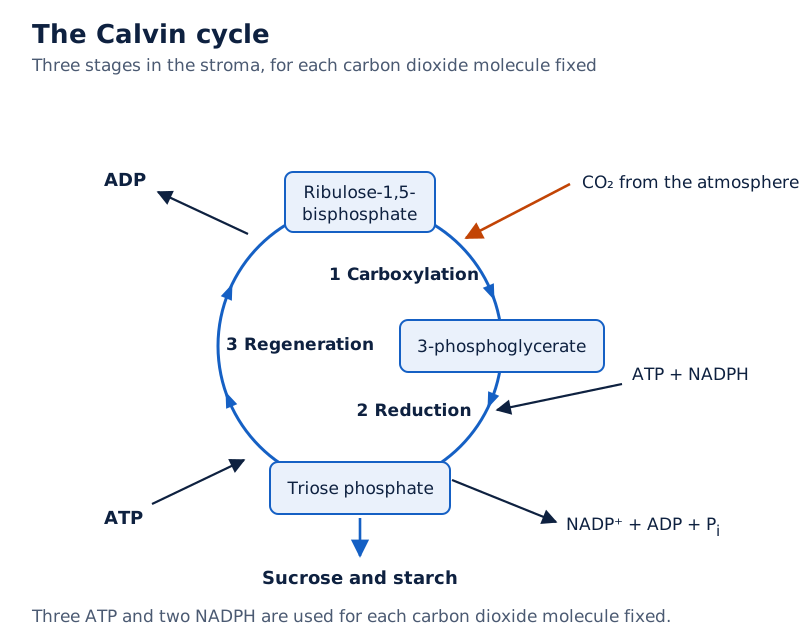
Arrows connect carboxylation, reduction and regeneration in a circle. Carbon dioxide enters beside ribulose-1,5-bisphosphate. The diagram labels 3-phosphoglycerate and triose phosphate, shows an outlet towards sucrose and starch, and marks ATP and NADPH use.
Drawn by One Young India.
Ribulose-1,5-bisphosphate is the fuller name of RuBP, with phosphate groups at carbon positions 1 and 5. The label 3-phosphoglycerate names the ionic form of PGA. Sucrose is a sugar formed from the products of photosynthesis.
What is the energy requirement?
For each carbon dioxide molecule fixed, the cycle needs three ATP and two NADPH molecules. Six turns fix six carbon dioxide molecules for the formation of one glucose molecule, requiring 18 ATP and 12 NADPH. Regeneration must be included when counting ATP.
The biosynthetic reactions do not depend directly on illumination, but they depend on products of the light reaction. After light becomes unavailable, synthesis continues for some time and then stops. When light becomes available again, synthesis resumes.
Note: “Dark reaction” does not mean “reaction occurring only at night”. The useful distinction is between directly light-driven reactions and biosynthesis that uses their ATP and NADPH.
How do Kranz anatomy and the C₄ pathway work together?
The C₄ pathway, also called the Hatch and Slack pathway, initially fixes carbon dioxide into a four-carbon acid. Its first stable product is oxaloacetic acid, abbreviated OAA. Plants with this pathway still use the Calvin cycle as their main carbohydrate-forming pathway.
What is Kranz anatomy?
Kranz anatomy is the characteristic wreath-like arrangement associated with C₄ leaves. Particularly large bundle sheath cells surround the vascular bundles, the strands containing conducting tissues. “Kranz” means wreath. Maize and sorghum are examples in which this anatomy can be observed.
The bundle sheath cells may form several layers. They have many chloroplasts, thick walls impervious to gaseous exchange and no intercellular spaces. Their location allows initial carbon fixation in mesophyll cells to be coupled with the Calvin cycle in bundle sheath cells.
What is the sequence of the Hatch and Slack pathway?
- The primary acceptor, phosphoenol pyruvate, abbreviated PEP, is a three-carbon molecule in mesophyll cells.
- PEP carboxylase, also written PEPcase, catalyses initial fixation, forming the four-carbon acid OAA. These mesophyll cells lack RuBisCO.
- OAA forms other four-carbon acids, such as malic acid or aspartic acid, which transport fixed carbon to bundle sheath cells.
- In the bundle sheath, these acids break down to release carbon dioxide and a three-carbon molecule. Release of carbon dioxide from a compound is called decarboxylation.
- The three-carbon molecule returns to the mesophyll, where PEP is regenerated, completing the cycle.
- The released carbon dioxide enters the Calvin cycle in bundle sheath cells, which are rich in RuBisCO but lack PEPcase.
What the figure shows
Hatch and Slack pathway
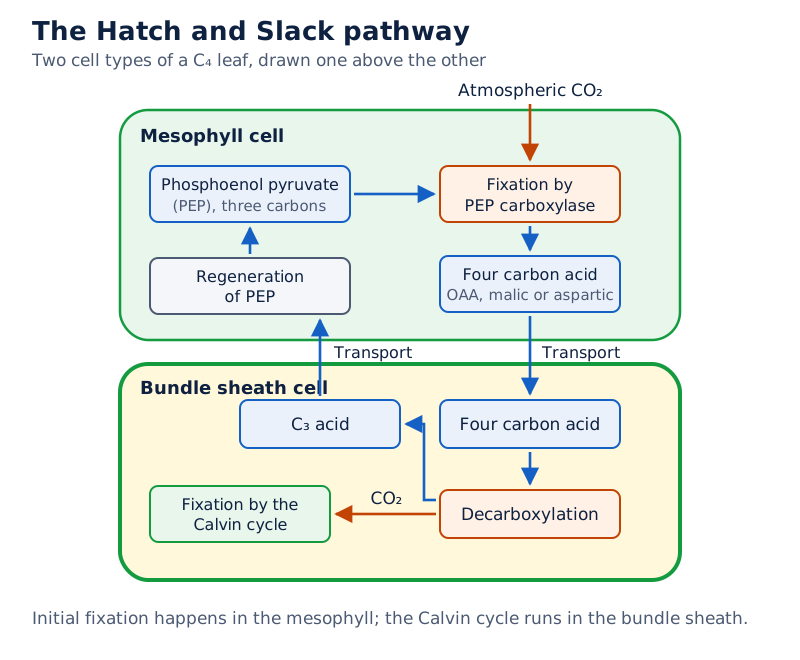
The drawing places a mesophyll cell above a bundle sheath cell. Four-carbon acid transport is directed downwards. A return route carries three-carbon acid upwards, while decarboxylation releases carbon dioxide beside fixation by the Calvin cycle.
Drawn by One Young India.
This spatial arrangement concentrates carbon dioxide around RuBisCO. Spatial separation means that different parts of the process occur in different cells. It helps RuBisCO act as a carboxylase, minimising its oxygenase activity, the competing activity that uses oxygen.
C₄ plants are adapted to dry tropical regions, tolerate higher temperatures, respond to high light intensity and show greater biomass productivity. Biomass means the organic material produced by organisms. Their high productivity is connected with carbon dioxide concentration and the absence of photorespiration.
How do C₃ and C₄ plants differ?
The names C₃ and C₄ identify the carbon counts of the first stable products of initial carbon dioxide fixation. They do not identify the primary acceptors. In C₃ plants, a five-carbon acceptor gives a three-carbon product; in C₄ plants, a three-carbon acceptor gives a four-carbon product.
The initial fixation reaction and the Calvin cycle must be distinguished when comparing these plants. In C₃ leaves, mesophyll cells carry out the Calvin cycle. In C₄ leaves, initial fixation occurs in mesophyll cells, while the Calvin cycle takes place in bundle sheath cells.
Which features should be compared?
| Feature | C₃ plants | C₄ plants |
|---|---|---|
| Primary acceptor | RuBP, five carbons | PEP, three carbons |
| First stable product | PGA, three carbons | OAA, four carbons |
| Initial fixation enzyme | RuBisCO | PEP carboxylase |
| Initial fixation site | Mesophyll cells | Mesophyll cells |
| Calvin cycle site | Mesophyll cells | Bundle sheath cells |
| Cell types fixing carbon dioxide | One: mesophyll | Two: mesophyll and bundle sheath |
| Photorespiration | Occurs | Does not occur |
| Temperature response | Lower temperature optimum | Responds to higher temperatures |
The temperature optimum is the temperature at which the process operates most effectively under the conditions considered. Differences in temperature response also depend on the habitat to which a plant is adapted. The comparison should therefore be linked to physiology rather than external appearance alone.
Why is the Calvin cycle common to both?
The C₄ route transports and concentrates carbon dioxide before it enters the Calvin cycle. It does not replace that cycle. Bundle sheath RuBisCO fixes the released carbon dioxide, and ATP and NADPH support the subsequent reactions leading to carbohydrate formation.
When tracing the routes, ask separately: Which molecule accepts carbon dioxide first? and Where does the Calvin cycle occur? Answering only one can conceal the two-cell organisation of C₄ photosynthesis. Kranz anatomy is an internal leaf feature, so external appearance alone does not establish the pathway.
What is photorespiration and why does it affect productivity?
Photorespiration begins when RuBisCO acts as an oxygenase and RuBP reacts with oxygen. RuBisCO can bind both carbon dioxide and oxygen at its active site, the region where its reaction occurs. The binding is competitive and depends on their relative concentrations.
RuBisCO has a much greater affinity for carbon dioxide when carbon dioxide and oxygen concentrations are nearly equal. Affinity means tendency to bind. Nevertheless, some oxygen binds in C₃ plants, reducing carbon dioxide fixation. The concentration condition must accompany the affinity statement.
How does oxygenation differ from carboxylation?
During carboxylation, RuBP and carbon dioxide yield two PGA molecules. During oxygenation, RuBP and oxygen yield one phosphoglycerate molecule and one phosphoglycolate molecule, a two-carbon phosphorylated compound. This begins the photorespiratory route rather than directly supplying two PGA molecules to the Calvin cycle.
A brief outline involves three organelles: the chloroplast, the peroxisome, an organelle carrying out oxidative reactions, and the mitochondrion, an organelle involved in cellular respiration. The route recovers part of the carbon from phosphoglycolate while releasing carbon dioxide.
- In the chloroplast, phosphoglycolate is converted to glycolate, a two-carbon organic acid.
- In the peroxisome, glycolate forms glyoxylate, another two-carbon intermediate, which is converted to glycine, an amino acid, one of the building units of proteins.
- In the mitochondrion, conversion of glycine to serine, another amino acid, releases carbon dioxide.
- Serine returns to the peroxisome and is converted through intermediates to glycerate, a three-carbon organic acid.
- Glycerate returns to the chloroplast and is converted to PGA using ATP, allowing recovered carbon to re-enter photosynthetic metabolism.
What is its significance?
Photorespiration does not synthesise sugars, ATP or NADPH. It uses ATP and releases carbon dioxide, so it reduces the efficiency of carbon fixation. Its biological function is not known yet. Distinguish this uncertainty about function from the described effects on energy use and carbon dioxide release.
C₄ acid breakdown raises carbon dioxide concentration at RuBisCO in bundle sheath cells. This ensures carboxylase activity while minimising oxygenase activity. The resulting lack of photorespiration helps explain the greater productivity of C₄ plants, together with their tolerance of higher temperatures.
Which factors limit the rate of photosynthesis?
Internal factors include leaf number, size, age and orientation; mesophyll cells and chloroplasts; internal carbon dioxide concentration; and chlorophyll quantity. These reflect the plant's genetic constitution, meaning its inherited makeup, and its growth. External factors include light, carbon dioxide, temperature and water.
Definition: Blackman's law of limiting factors states that, when several factors affect a process, its rate is determined by the factor nearest its minimum value. Changing that factor directly changes the rate under those conditions.
Several factors act together, but usually one is the major limiting factor. A leaf supplied with suitable light and carbon dioxide may fail to photosynthesise at a very low temperature. Increasing light cannot correct that temperature limitation; restoring an optimum temperature can.
How does light affect the rate?
Consider light quality, meaning wavelength composition, light intensity and exposure duration separately. At low light intensities, carbon dioxide fixation increases linearly with incident light. At higher intensities, the rate gradually stops increasing because other factors become limiting.
Light saturation, the stage beyond which more light does not increase the rate, occurs at 10 per cent of full sunlight. Light is rarely limiting in nature except for plants in shade or dense forests. Excessive light can break down chlorophyll and decrease photosynthesis.
How do carbon dioxide and temperature affect the rate?
At low light, neither C₃ nor C₄ plants respond to high carbon dioxide conditions. At high light, both can show increased rates. C₄ plants reach carbon dioxide saturation at about 360 µl L⁻¹; C₃ saturation is seen only beyond 450 µl L⁻¹.
Here µl L⁻¹ means microlitres of carbon dioxide per litre of air. These concentrations describe the response comparison. Tomatoes and bell pepper are greenhouse crops in which carbon dioxide enrichment is used to increase photosynthesis and yield.
The biosynthetic reactions are enzymatic, meaning catalysed by enzymes, and are temperature controlled. Light reactions are also temperature-sensitive but to a much lesser extent. Tropical plants have a higher temperature optimum than plants adapted to temperate climates.
Why does water shortage reduce photosynthesis?
Water is a reactant, but its limiting effect is more through its effects on the plant than directly on photosynthesis. Water stress, inadequate water availability, closes stomata, the leaf pores through which gases are exchanged, reducing carbon dioxide entry.
Water stress also causes leaves to wilt, reducing their surface area and metabolic activity. Thus, a low photosynthetic rate during water shortage should not be explained only as insufficient water for splitting. Restricted gas exchange and changes in the leaf contribute to the response.
Glossary
- Photosynthesis — Light-driven synthesis of organic compounds by green plants, converting light energy into chemical energy.
- Thylakoid — A chloroplast membrane sac containing the machinery for light reactions and enclosing a lumen.
- Stroma — The chloroplast matrix surrounding thylakoids, where the carbon-fixing biosynthetic reactions occur.
- Accessory pigment — A pigment that absorbs light and transfers energy to chlorophyll a, broadening usable wavelengths.
- Action spectrum — A representation of the relative effectiveness of different light wavelengths in driving photosynthesis.
- Reaction centre — Specialised chlorophyll a within a photosystem that initiates electron transfer following excitation.
- Photophosphorylation — Formation of ATP from ADP and inorganic phosphate using energy associated with light.
- Chemiosmosis — ATP production linked to proton movement down a gradient through membrane-associated ATP synthase.
- Carboxylation — Incorporation of carbon dioxide into an organic intermediate during a carbon-fixing reaction.
- RuBisCO — Ribulose bisphosphate carboxylase-oxygenase, the enzyme catalysing competing carboxylation and oxygenation reactions involving RuBP.
- Kranz anatomy — Wreath-like leaf organisation with large chloroplast-rich bundle sheath cells around vascular bundles in C₄ plants.
- Photorespiration — A pathway initiated by RuBP oxygenation that uses ATP and releases carbon dioxide without synthesising sugars.
- Limiting factor — The factor at a sub-optimal level that directly restricts the rate under prevailing conditions.
Common errors and misconceptions
- Misconception: Photosynthetic oxygen comes from carbon dioxide. Correct: It comes from water splitting associated with PS II; carbon dioxide supplies carbon for organic compounds.
- Misconception: PS I acts first because its number is lower. Correct: The numbering reflects discovery. In non-cyclic electron transfer, PS II acts before PS I.
- Misconception: Cyclic photophosphorylation produces both ATP and NADPH. Correct: It produces ATP alone as electrons return to PS I instead of reducing NADP⁺.
- Misconception: Protons accumulate in the stroma during light reactions. Correct: They accumulate in the lumen and return towards the stroma through ATP synthase.
- Misconception: The C₃ acceptor must contain three carbons. Correct: RuBP has five carbons; PGA, the first stable product, contains three.
- Misconception: C₄ plants do not use the Calvin cycle. Correct: They use it in bundle sheath cells after initial fixation in mesophyll cells.
- Misconception: More light always increases photosynthesis. Correct: Other factors become limiting at high light, and excessive light can damage chlorophyll and reduce the rate.
Exam-style questions with model answers
Q1. Explain two reasons why calling the biosynthetic phase a “dark reaction” can be misleading. [2 marks]
- The phase does not require darkness; its reactions are not directly driven by light.
- It depends on ATP and NADPH produced by the light reaction, so it is not independent of light-driven processes.
Q2. Distinguish an absorption spectrum from an action spectrum, and explain why chlorophyll a absorption does not exactly match photosynthetic activity. [3 marks]
- An absorption spectrum records how strongly a pigment absorbs light at different wavelengths, describing the light-capturing property of that pigment.
- An action spectrum records the effectiveness of different wavelengths in driving photosynthesis, which can be assessed through oxygen evolution.
- Accessory pigments absorb additional wavelengths and transfer energy to chlorophyll a. Consequently, the whole photosynthetic response does not exactly reproduce chlorophyll a absorption.
Q3. Compare cyclic and non-cyclic photophosphorylation using photosystems, electron route, NADPH formation and water splitting. [4 marks]
- Cyclic flow uses PS I alone, whereas non-cyclic flow involves PS II followed by PS I, connected by an electron transport chain.
- In cyclic flow, excited electrons return to PS I. In non-cyclic flow, electrons pass from water through the photosystems towards NADP⁺.
- Cyclic photophosphorylation produces ATP without NADPH, whereas non-cyclic photophosphorylation produces ATP and NADPH.
- Cyclic flow does not involve water splitting; non-cyclic flow uses water splitting to replace PS II electrons, releasing oxygen.
Q4. Explain chemiosmotic ATP synthesis in chloroplasts, including three contributions to the proton gradient, proton return and ATP formation. [5 marks]
- Water splits on the inner side of the thylakoid membrane. Its released protons accumulate directly in the lumen and increase the proton concentration there.
- During electron transport, a hydrogen carrier takes protons from the stroma and releases them on the lumen side, further increasing the difference in concentration.
- NADP reductase uses stromal protons during NADPH formation. Their removal lowers proton concentration in the stroma and strengthens the gradient across the membrane.
- Protons then move from the lumen to the stroma through CF₀, the membrane channel of ATP synthase, down their concentration gradient.
- This movement provides energy for a shape change in CF₁ on the stromal side, enabling ATP synthesis from ADP and inorganic phosphate.
Q5. For each carbon dioxide molecule fixed by the Calvin cycle, reduction uses two ATP and two NADPH molecules, and regeneration uses one ATP. Six carbon dioxide molecules are required per glucose molecule. Calculate the ATP used in reduction, ATP used in regeneration, total ATP and total NADPH per glucose. [4 marks]
- Reduction requires six multiplied by two, giving 12 ATP molecules for the six carbon dioxide molecules fixed.
- Regeneration requires six multiplied by one, giving 6 ATP molecules to restore the carbon dioxide acceptor during these turns.
- Total ATP demand is 12 plus 6, giving 18 ATP molecules per glucose molecule formed through the cycle.
- NADPH demand is six multiplied by two, giving 12 NADPH molecules; regeneration adds no further NADPH requirement in the supplied data.
Q6. Trace carbon through the C₄ pathway from initial acceptance in mesophyll cells to the Calvin cycle, including return and regeneration of the acceptor. [6 marks]
- In mesophyll cells, the three-carbon molecule PEP acts as the primary carbon dioxide acceptor at the start of the pathway.
- PEP carboxylase catalyses initial fixation, producing OAA, a four-carbon acid. Initial fixation is therefore distinct from RuBisCO-catalysed fixation in the Calvin cycle.
- OAA forms four-carbon acids such as malic acid or aspartic acid in the mesophyll; these move into bundle sheath cells.
- The four-carbon acids break down in bundle sheath cells, releasing carbon dioxide and a three-carbon molecule.
- The three-carbon molecule returns to mesophyll cells, where conversion back to PEP regenerates the acceptor and completes the route.
- Released carbon dioxide enters the Calvin cycle in bundle sheath cells, where RuBisCO supports its fixation for subsequent carbohydrate formation.
Q7. Explain the initiation and energetic consequences of photorespiration, and how C₄ plants minimise RuBisCO oxygenase activity. [3 marks]
- Photorespiration begins when RuBisCO promotes RuBP oxygenation, producing one phosphoglycerate molecule and one two-carbon phosphoglycolate molecule instead of two PGA molecules.
- The pathway uses ATP and releases carbon dioxide without synthesising sugar, ATP or NADPH, reducing the efficiency of carbon fixation.
- C₄ acid breakdown raises carbon dioxide concentration in bundle sheath cells, favouring RuBisCO carboxylase activity and minimising its oxygenase activity.
Q8. A green leaf has optimal light and carbon dioxide conditions but does not photosynthesise at a very low temperature. Restoring an optimal temperature starts photosynthesis. Identify the limiting factor and explain the observation using Blackman's law. [2 marks]
- Temperature is the limiting factor because the supplied light and carbon dioxide conditions are already optimal.
- Blackman's law identifies the factor nearest its minimum as rate-limiting; correcting temperature removes the restriction shown in this observation.
Key takeaways
- Photosynthesis converts light energy into chemical energy, and the oxygen released by green plants comes from water splitting.
- Chloroplast membranes perform the light reactions, while the stroma supports the biosynthetic reactions using ATP and NADPH.
- Accessory pigments broaden the wavelengths used for photosynthesis and protect chlorophyll a from photo-oxidation.
- Non-cyclic electron transfer involves PS II and PS I; cyclic transfer involves PS I and produces ATP without NADPH.
- Protons accumulate in the thylakoid lumen and return through ATP synthase towards the stroma, driving ATP formation.
- The Calvin cycle proceeds through carboxylation, reduction and regeneration, requiring 18 ATP and 12 NADPH per glucose.
- C₄ photosynthesis separates initial fixation in mesophyll cells from the Calvin cycle in bundle sheath cells.
- Photorespiration consumes energy and releases fixed carbon, while limiting factors determine how strongly photosynthesis responds to environmental changes.
Test yourself
Which chloroplast compartment accumulates protons during the light reactions?
The thylakoid lumen accumulates protons; they subsequently return towards the stroma through ATP synthase.
Why are photosystems numbered differently from their order in non-cyclic flow?
Their numbers reflect the sequence of discovery. PS II operates before PS I in non-cyclic flow.
What does the number in P700 indicate?
It identifies the 700 nm absorption peak of the Photosystem I reaction-centre chlorophyll a.
What are the primary acceptor and first stable product in C₃ fixation?
RuBP is the five-carbon primary acceptor, while PGA is the three-carbon first stable product.
Why must RuBP be regenerated?
Regeneration restores the carbon dioxide acceptor so that repeated turns of the Calvin cycle can continue.
Where does the Calvin cycle occur in a C₄ leaf?
It occurs in bundle sheath cells, using carbon dioxide released from transported four-carbon acids.
What limits the usefulness of increasing light intensity?
Other factors eventually limit the rate, and excessive light can break down chlorophyll and decrease photosynthesis.
How can water shortage reduce carbon dioxide entry?
Water stress closes stomata, reducing the carbon dioxide available to support photosynthetic fixation.
Write about it
Turn a question from this chapter into a paper.
The Writing Studio has a structure guide, a rubric and citation tools for 15 formats, from essays to research papers. Drafting is free with an account. Learnacy Essential adds feedback from an AI writing coach and submission to The OYI Review.
Learnacy Essential is ₹1,499 for the year. Publication depends on review and is not guaranteed.