
Cell: The Unit of Life | CBSE Class 11 Biology Notes
On this page
Watch & explore
Start with a few high-quality watches, then dive into the notes below.
Try an idea before you read. Test your conceptual understanding of cell organization, compartmentalization, and surface area-to-volume constraints through this 2-step scenario. Explore →

This note covers cell theory, cell size and shape, prokaryotic and eukaryotic organisation, the cell envelope, membrane transport, cell walls, the endomembrane system, mitochondria, plastids, ribosomes, the cytoskeleton, cilia, flagella, centrioles, the nucleus and chromosomes.
Why is the cell the basic unit of life?
Independent life and cellular organisation
A cell is the fundamental structural and functional unit of living organisms. A complete cell provides the organisation needed for independent life. Unicellular organisms consist of one cell, whereas multicellular organisms consist of many cells.
A unicellular organism can exist independently and perform essential life functions. A structure smaller than a complete cell does not ensure independent living. The cell therefore provides both the material organisation of an organism and the setting in which its life functions occur.
Definition: Cell theory connects the organisation of living bodies with the origin of cells: living organisms consist of cells and their products, and cells arise from cells that already exist.
How did cell theory develop?
Antonie Von Leeuwenhoek first observed and described a living cell. Improvements in microscopy, eventually including the electron microscope, revealed increasingly detailed cellular structures. Robert Brown described the nucleus, a cellular compartment containing genetic material, in 1831.
| Scientist and date | Observation or contribution |
|---|---|
| Matthias Schleiden, 1838 | Examined many plants and recognised that their tissues consist of different kinds of cells. |
| Theodore Schwann, 1839 | Studied animal cells and reported their thin outer boundary, now called the plasma membrane. |
| Schleiden and Schwann | Formulated cell theory, but did not explain the formation of new cells. |
| Rudolf Virchow, 1855 | Explained that cells divide and produce new cells from pre-existing cells. |
Schwann also studied plant tissues and identified the cell wall as a distinctive plant-cell feature in his comparison. He proposed that animal and plant bodies consist of cells and cell products. Virchow's contribution supplied the missing explanation of cellular origin.
The expression Omnis cellula-e cellula means that cells arise from pre-existing cells. Modern cell theory thus has two central propositions: all living organisms comprise cells and cell products, and all cells originate from pre-existing cells.
How do cells differ in size, shape and basic organisation?
Size and shape
Cell size, shape and activity vary greatly. A micrometre, written µm, is one-millionth of a metre. Mycoplasmas, the smallest cells, are only 0.3 µm long, whereas bacteria could measure 3 to 5 µm. The largest isolated single cell is an ostrich egg.
Human red blood cells, also called erythrocytes, have a diameter of about 7.0 µm. Nerve cells are among the longest cells. Cell shapes include discs, columns, cubes, polygons, threads and irregular forms. A cell's shape may vary with the function it performs.
What the figure shows
Different cell shapes
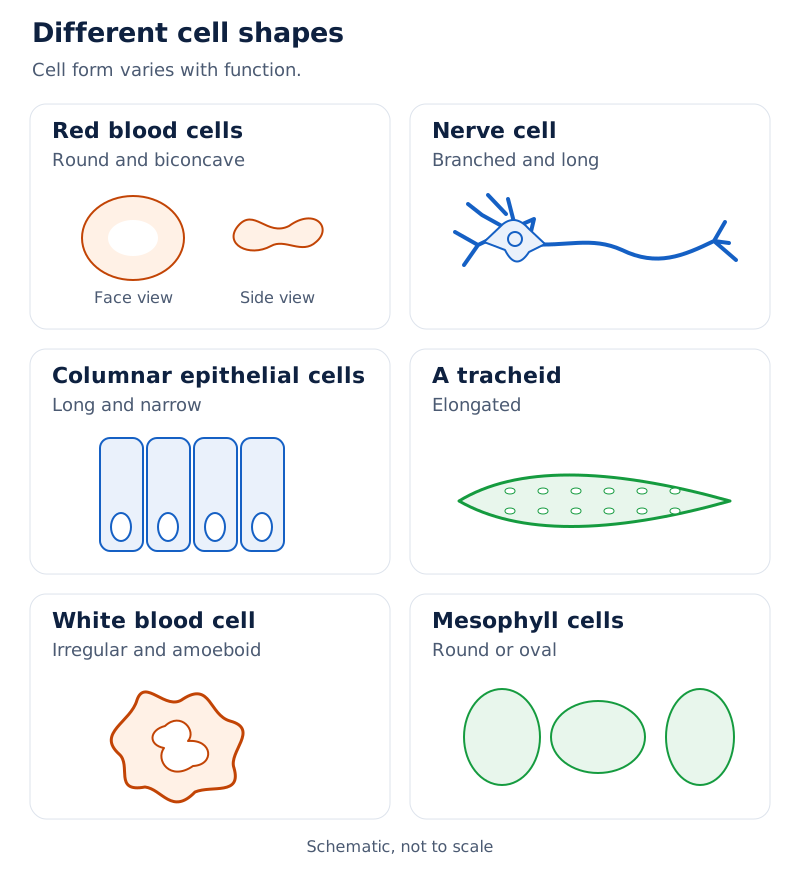
The drawings show round, biconcave red blood cells, irregular amoeboid white blood cells, long narrow columnar epithelial cells and a branched, long nerve cell. An elongated tracheid and round or oval mesophyll cells are also shown.
Drawn by One Young India. See Fig. 8.1 in your NCERT textbook
Biconcave describes a shape hollowed inward on both faces; amoeboid describes an irregular, Amoeba-like shape. Columnar epithelial cells are column-shaped cells of a covering or lining tissue. Tracheids are elongated water-conducting plant cells, while mesophyll cells form the internal leaf tissue.
Shared organisation and important differences
Cytoplasm is the semi-fluid matrix occupying the cell interior and supporting many cellular chemical reactions. An organelle is a distinct cellular structure with a particular function. Ribosomes, the structures that synthesise proteins, have no surrounding membrane and occur in both major cell types.
Eukaryotic cells possess a membrane-bound nucleus. Prokaryotic cells lack a membrane-bound nucleus. DNA (deoxyribonucleic acid) is their genetic material; in eukaryotes it is organised into chromosomes, the structures carrying this material within the nucleus.
| Feature | Prokaryotic organisation | Eukaryotic organisation |
|---|---|---|
| Nuclear boundary | No nuclear membrane around the genetic material | An organised nucleus with a nuclear envelope |
| Membrane-bound organelles | Absent | Present, compartmentalising the cytoplasm |
| Ribosomes | Present without enclosing membranes; 70S, with 50S and 30S subunits | Present without enclosing membranes; 80S in the cytoplasm, with 60S and 40S subunits |
| Relative size and multiplication | Generally smaller and multiply more rapidly | Generally larger and multiply less rapidly |
| Examples | Bacteria, blue-green algae and mycoplasma | Protists, plants, animals and fungi |
What structures characterise prokaryotic cells?
Genetic material and bacterial shapes
Prokaryotes include bacteria, blue-green algae, mycoplasma and PPLO, meaning Pleuro Pneumonia Like Organisms. Their organisation is fundamentally similar despite their varied forms. The four basic bacterial shapes are bacillus, meaning rod-like; coccus, spherical; vibrio, comma-shaped; and spirillum, spiral.
Prokaryotic genetic material is basically naked, meaning it is not enclosed by a nuclear membrane. Besides the main circular genetic material, many bacteria contain plasmids, smaller circular DNA molecules outside the main chromosome. Plasmid DNA confers particular observable characters on such bacteria. One example is antibiotic resistance.
The cell envelope and its modifications
Most prokaryotic cells, particularly bacteria, have a chemically complex cell envelope. Its three tightly associated layers are the outer glycocalyx, the cell wall and the plasma membrane. They perform distinct functions while acting together as a protective unit. Mycoplasma lacks a cell wall.
The glycocalyx is the outer envelope covering. It may form a loose slime layer or a thick, tough capsule. The wall determines cell shape and supplies structural support against bursting or collapse. The plasma membrane is selectively permeable, allowing the passage of some substances.
Gram-positive bacteria take up the Gram stain; Gram-negative bacteria do not. This distinction reflects differences in the cell envelope and its response to the staining procedure developed by Gram.
Mesosomes are plasma-membrane extensions into the cell, appearing as vesicles, tubules or lamellae: small sacs, tubes or sheet-like structures. They help with cell-wall formation, DNA replication and distribution to daughter cells, respiration and secretion. They also increase membrane surface area and enzymatic content.
Some prokaryotes, such as cyanobacteria, contain pigment-bearing membrane extensions called chromatophores. Motile bacteria have flagella, thin filamentous extensions with a filament, hook and basal body. The filament is the longest portion and projects outward from the cell surface.
Pili are elongated protein tubes, while fimbriae are small bristle-like fibres. Neither serves bacterial motility. In some bacteria, fimbriae help attachment to rocks in streams and host tissues.
Inclusion bodies are membrane-free stores of reserve material in the cytoplasm. Examples include phosphate, cyanophycean and glycogen granules. Gas vacuoles occur in blue-green bacteria and in purple and green photosynthetic bacteria, which use light in food synthesis.
How does the plasma membrane control movement of substances?
Structure and fluidity
The plasma membrane forms the cellular boundary and is composed mainly of lipids and proteins. Phospholipids, its major lipids, form a bilayer: two molecular layers. Their polar heads face the aqueous surroundings, while their hydrophobic, water-avoiding tails point inward, protected from water.
Membranes also contain cholesterol and carbohydrates. Protein-to-lipid proportions vary considerably between cell types. The human erythrocyte membrane contains approximately 52 per cent protein and 40 per cent lipids. Peripheral proteins lie on the surface; integral proteins are partly or wholly buried in the membrane.
Detailed membrane structure became accessible through electron microscopy in the 1950s. Singer and Nicolson proposed the fluid mosaic model in 1972. The quasi-fluid lipid layer allows proteins to move laterally within the bilayer; this capacity for movement expresses membrane fluidity.
What the figure shows
Fluid mosaic model
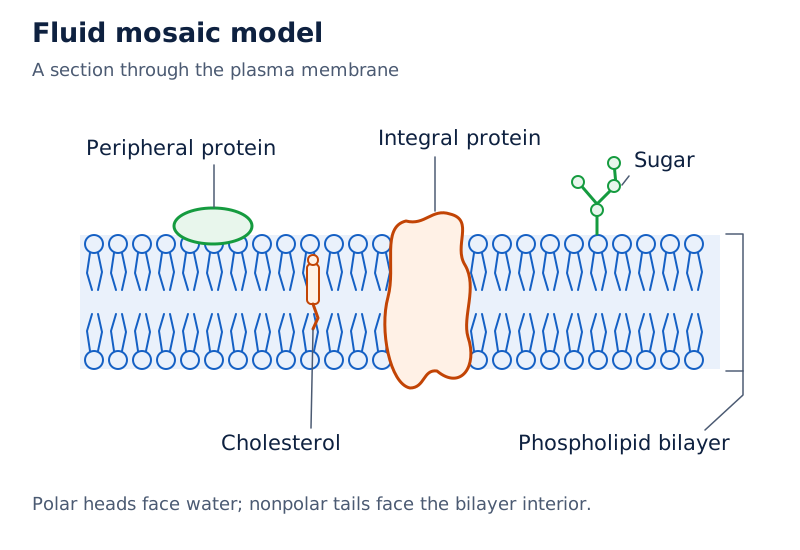
A phospholipid bilayer is drawn with proteins on its surface and embedded within it. Labels identify peripheral protein, integral protein, cholesterol, sugar and the phospholipid bilayer.
Drawn by One Young India. See Fig. 8.4 in your NCERT textbook
Fluidity is important for growth, cell division, secretion, intercellular junctions that connect cells, and endocytosis, the uptake of material into a cell through its membrane.
Passive and active transport
A concentration gradient is a difference in concentration between regions. Passive transport requires no energy expenditure. Simple diffusion is movement down a concentration gradient; osmosis is the movement of water by diffusion across the membrane.
- A neutral solute may be present at a higher concentration on one side of the membrane than on the other.
- It may cross the membrane by simple diffusion.
- The direction of movement is along the gradient, from higher concentration towards lower concentration.
- This movement requires no energy expenditure and is therefore passive transport.
Polar molecules cannot cross the nonpolar lipid bilayer in the same way. They require membrane carrier proteins to facilitate transport. A few ions or molecules move against their concentration gradient, from lower to higher concentration, by active transport.
Active transport uses ATP, adenosine triphosphate, as an energy source. An example is the sodium-potassium pump, written Na⁺/K⁺ pump. Na⁺ denotes a positively charged sodium ion and K⁺ a positively charged potassium ion.
How do cell walls and eukaryotic cell features differ?
Plant and animal cells
Plant and animal cells share eukaryotic organisation but are not identical. Plant cells possess a cell wall, plastids and a large central vacuole. Plastids include light-trapping and storage organelles; a vacuole is a membrane-bound space in the cytoplasm.
| Feature | Plant cells | Animal cells |
|---|---|---|
| Cell wall | Present outside the plasma membrane | Absent |
| Plastids | Present | Absent |
| Large central vacuole | Present | Absent |
| Centrioles, cylindrical cell-division structures | Absent in almost all plant cells | Present |
| Nuclear organisation | A membrane-bound nucleus | A membrane-bound nucleus |
What the figure shows
Plant and animal cells
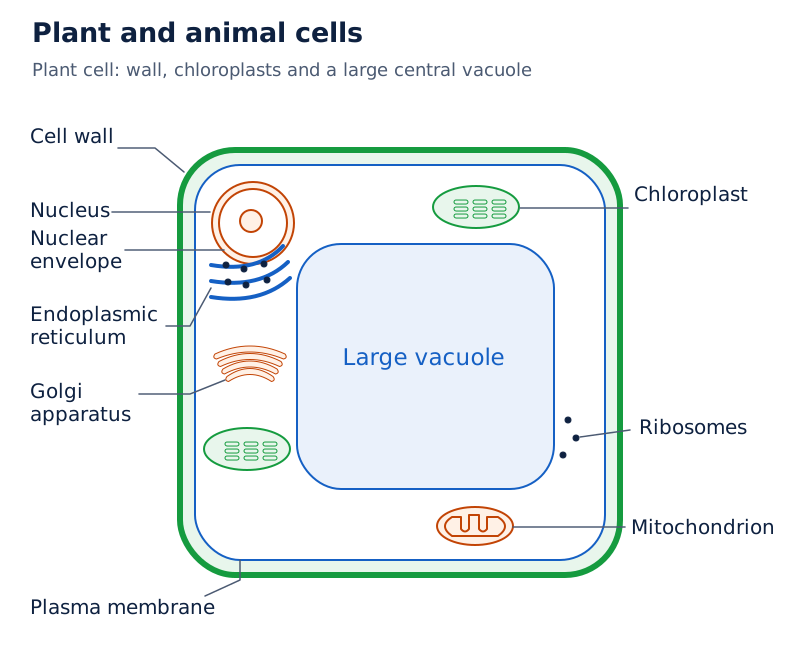
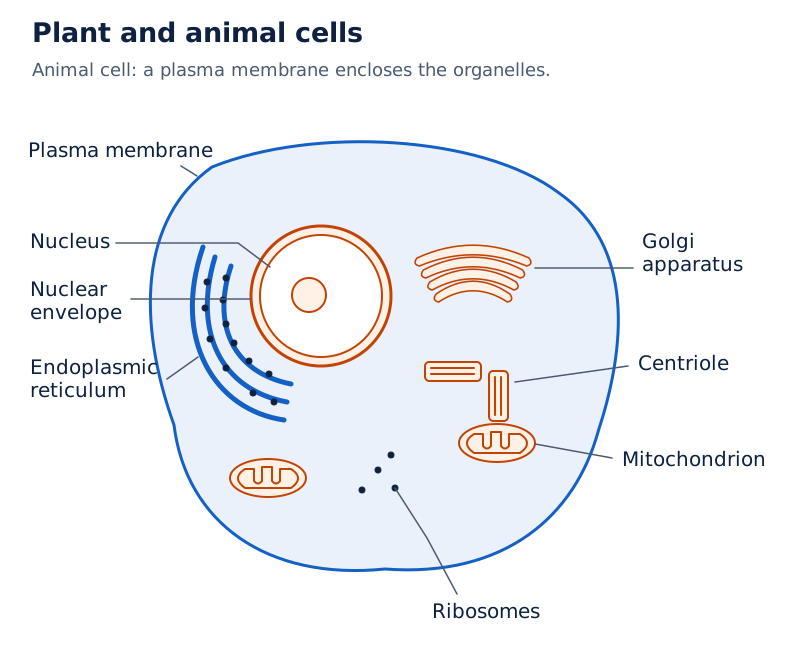
The plant-cell drawing shows a cell wall, chloroplasts and a large vacuole. The animal-cell drawing labels a centriole. Both drawings label the nucleus, nuclear envelope, mitochondria, ribosomes, Golgi apparatus and endoplasmic reticulum.
Drawn by One Young India. See Fig. 8.3 in your NCERT textbook
Wall composition and development
The cell wall is a rigid, non-living covering outside the plasma membrane in plants and fungi. It supplies shape, protection from mechanical damage and infection, cell-to-cell interaction and a barrier to undesirable large molecules, or macromolecules.
Algal walls contain cellulose, galactans, mannans and minerals such as calcium carbonate. In other plants, wall materials include cellulose, hemicellulose, pectins and proteins. These names identify constituents of the structural wall rather than its separate layers.
- The young plant cell has a primary wall, its initially formed wall.
- This primary wall is capable of growth.
- Its capacity for growth gradually diminishes as the cell matures.
- A secondary wall forms on the inner side, towards the plasma membrane.
The middle lamella, composed mainly of calcium pectate, holds neighbouring cells together. Plasmodesmata are connections that may traverse the wall and middle lamella, linking the cytoplasm of neighbouring cells. The wall therefore participates in cellular interaction as well as protection.
How do the endoplasmic reticulum and Golgi apparatus work together?
The coordinated endomembrane system
The endomembrane system comprises the endoplasmic reticulum, Golgi complex, lysosomes and vacuoles, whose functions are coordinated. Mitochondria, chloroplasts and peroxisomes are excluded because their functions are not coordinated with these components. Peroxisomes are enzyme-containing microbodies, small membrane-bound vesicles.
The endoplasmic reticulum, abbreviated ER, is a network of tiny tubular structures in the cytoplasm. It separates intracellular space into the luminal compartment inside the ER and the extra-luminal compartment outside it in the cytoplasm.
Rough endoplasmic reticulum, or RER, bears ribosomes on its outer surface. It is frequently seen in cells active in protein synthesis and secretion. It is extensive and continuous with the outer nuclear membrane.
Smooth endoplasmic reticulum, or SER, lacks surface ribosomes. It is the major site of lipid synthesis. In animal cells, it also synthesises steroidal hormones, lipid-like chemical messengers.
Golgi structure and packaging
Camillo Golgi observed densely stained network-like structures near the nucleus in 1898. The Golgi apparatus consists of stacks of flattened, disc-shaped sacs called cisternae. These measure 0.5 to 1.0 µm in diameter, and their number varies.
The cisternae are concentrically arranged near the nucleus. The convex cis face is the forming face, while the concave trans face is the maturing face. The two faces differ but are interconnected. Packaging explains the close association between the Golgi apparatus and ER.
- Ribosomes on the ER synthesise proteins, a number of which undergo subsequent Golgi modification.
- Materials destined for packaging travel from the ER in vesicles, small membrane-bound sacs.
- These vesicles fuse with the cis face of the Golgi apparatus.
- Materials move towards the maturing face; a number of proteins are modified within the cisternae.
- Packaged material leaves the trans face for destinations within the cell or secretion outside it.
The Golgi apparatus is also an important site for forming glycoproteins and glycolipids, proteins and lipids respectively associated with carbohydrate groups. Its packaging activity also produces lysosomes.
What the figure shows
Endoplasmic reticulum and Golgi apparatus
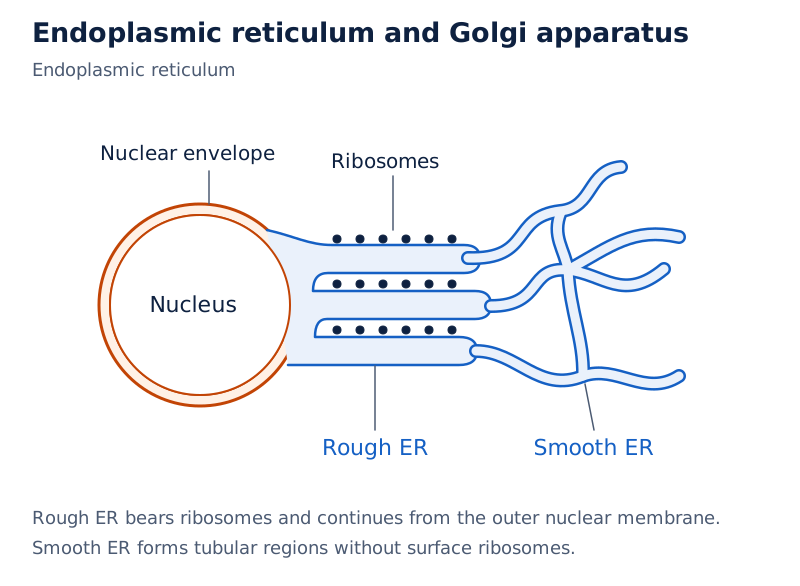
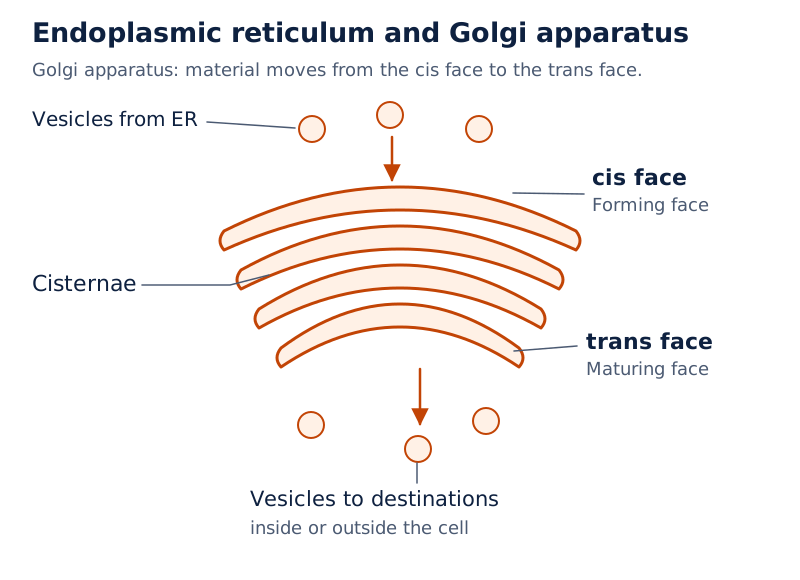
The ER drawing shows rough membranes bearing ribosomes beside the nucleus and smooth tubular regions. The Golgi drawing shows a curved stack of flattened sacs labelled cisternae.
Drawn by One Young India. See Figs. 8.5 and 8.6 in your NCERT textbook
What are the functions of lysosomes, vacuoles and microbodies?
Digestion within lysosomes
Lysosomes are membrane-bound vesicles produced through Golgi packaging. Isolated lysosomal vesicles are rich in almost all types of hydrolytic enzymes, or hydrolases, which break down substances with the participation of water. These enzymes work optimally at acidic pH; pH expresses how acidic or alkaline a medium is.
Their enzymes include lipases, proteases and carbohydrases, which digest lipids, proteins and carbohydrates respectively. Lysosomal enzymes can also digest nucleic acids, the group that includes DNA and RNA. RNA means ribonucleic acid.
Storage, transport and regulation in vacuoles
A vacuole can contain water, sap, excretory products and other materials not useful to the cell. Its single surrounding membrane is the tonoplast. Plant-cell vacuoles can occupy up to 90 per cent of the cell's volume.
In plants, the tonoplast facilitates movement of several ions and other materials into the vacuole against their concentration gradients. Consequently, these materials reach significantly higher concentrations in the vacuole than in the cytoplasm.
In Amoeba, the contractile vacuole participates in excretion and osmoregulation, the regulation of water balance. In many cells, as in protists, food vacuoles form when food particles are engulfed. Vacuoles therefore have functions beyond simply occupying internal space.
| Structure | Organisation | Function or contents |
|---|---|---|
| Lysosome | Membrane-bound vesicle formed through Golgi packaging | Enzymatic digestion of carbohydrates, proteins, lipids and nucleic acids |
| Plant vacuole | A space enclosed by the tonoplast | Contains sap and other materials; accumulates several substances against their gradients |
| Contractile vacuole in Amoeba | A specialised vacuole | Osmoregulation and excretion |
| Food vacuole | Forms through engulfing food particles | Contains engulfed food |
| Microbody | A minute membrane-bound vesicle | Contains various enzymes |
Microbodies occur in both plant and animal cells. Their defining features are their small vesicular organisation, enclosing membrane and enzyme contents. They should be distinguished from prokaryotic inclusion bodies, which store reserves without an enclosing membrane system.
How is mitochondrial structure related to its function?
Membranes, compartments and cristae
Mitochondria, singular mitochondrion, are double-membrane organelles that carry out aerobic respiration, respiration involving oxygen. They produce cellular energy in the form of ATP and are therefore called the power houses of the cell.
Their number depends on cellular physiological activity, and their shapes and sizes vary considerably. Typically, a mitochondrion is sausage-shaped or cylindrical, with a diameter of 0.2 to 1.0 µm, averaging 0.5 µm, and a length of 1.0 to 4.1 µm.
Mitochondria are not easily visible under a microscope unless specifically stained. The outer membrane forms a continuous boundary. Together, the two membranes divide the interior into an outer aqueous compartment and an inner aqueous compartment, meaning compartments containing water.
The inner compartment contains a dense, homogeneous material called the matrix. The inner membrane folds towards the matrix to form cristae, singular crista. These folds increase the available membrane surface area. Each membrane has its own enzymes associated with mitochondrial function.
What the figure shows
Mitochondrion in longitudinal section
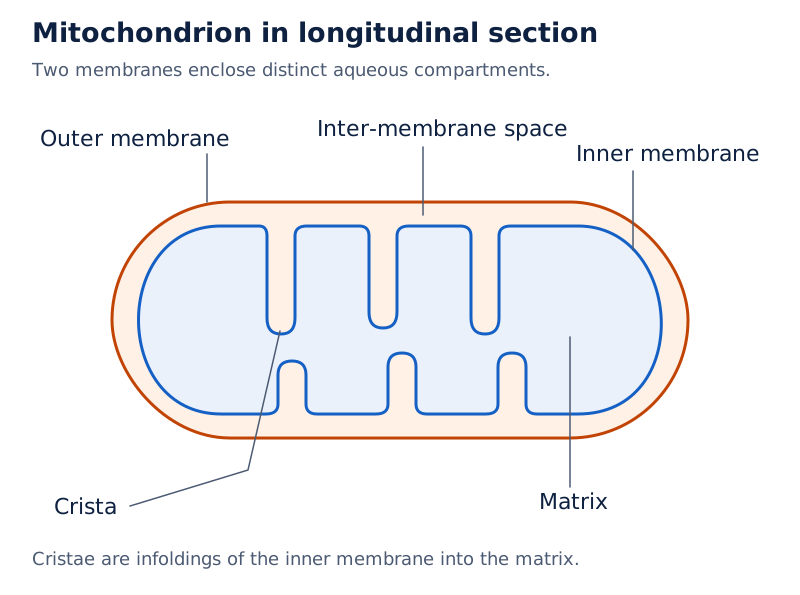
The cut-open drawing labels the outer membrane, inner membrane, inter-membrane space, matrix and a crista. The inner membrane forms repeated folds projecting towards the matrix.
Drawn by One Young India. See Fig. 8.7 in your NCERT textbook
Internal machinery and multiplication
The matrix contains a single circular DNA molecule, a few RNA molecules, ribosomes and components needed for protein synthesis. Mitochondria divide by fission, division into separate units. Their internal genetic and protein-synthesising components distinguish them from many other membrane-bound organelles.
Mitochondrial ribosomes are designated 70S. Here S means Svedberg's unit, representing the sedimentation coefficient, an indirect measure of density and size. This designation describes how particles settle during centrifugation, rather than an ordinary length measurement.
How are plastids and chloroplasts organised?
Types of plastid
Plastids occur in all plant cells and in euglenoides, a group of eukaryotic organisms. They are large enough to be easily observed under a microscope. Their pigments, colour-imparting substances, provide a basis for distinguishing chloroplasts, chromoplasts and leucoplasts.
| Plastid | Pigment or stored material | Feature or example |
|---|---|---|
| Chloroplast | Chlorophyll and carotenoid pigments | Traps light energy needed for photosynthesis |
| Chromoplast | Fat-soluble carotenoids such as carotene and xanthophylls | Imparts yellow, orange or red colour |
| Amyloplast | Starch | A colourless storage plastid, as in potato |
| Elaioplast | Oils and fats | A colourless storage plastid |
| Aleuroplast | Proteins | A colourless storage plastid |
The last three are types of leucoplast, a colourless plastid storing nutrients. Leucoplasts vary in size and shape. Chlorophyll and carotenoids in chloroplasts capture light for photosynthesis, the process using light energy in food synthesis.
Chloroplast membranes and internal spaces
The majority of chloroplasts in green plants occur in leaf mesophyll cells. Chloroplasts may be lens-shaped, oval, spherical, discoid or ribbon-like. Their length varies from 5 to 10 µm and width from 2 to 4 µm.
Numbers range from one per cell in the green alga Chlamydomonas to 20 to 40 per mesophyll cell. A chloroplast has two membranes, with the inner one relatively less permeable. The inner membrane encloses the stroma, the internal space containing enzymes and membrane structures.
Flattened membrane sacs called thylakoids form stacks termed grana, singular granum. Stroma lamellae are flat membranous tubules connecting thylakoids of different grana. Each thylakoid membrane surrounds an internal space called its lumen. Chlorophyll pigments occur in the thylakoids.
The stroma contains enzymes for carbohydrate and protein synthesis, small double-stranded circular DNA molecules and ribosomes. Chloroplast ribosomes are 70S, smaller than the 80S ribosomes in eukaryotic cytoplasm.
What the figure shows
Chloroplast in section
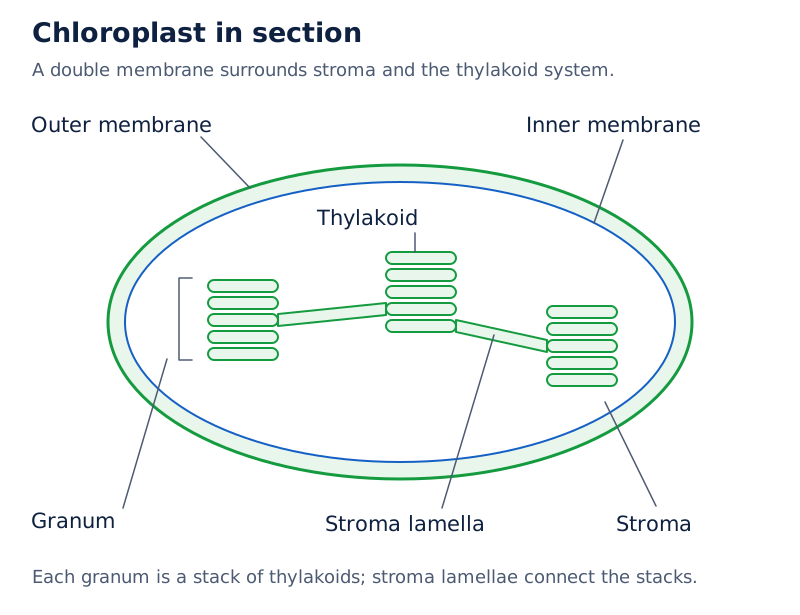
The drawing labels outer and inner membranes surrounding the stroma. Disc-like thylakoids form stacks labelled granum, and stroma lamellae link the stacks across the interior.
Drawn by One Young India. See Fig. 8.8 in your NCERT textbook
What do ribosomes and the cytoskeleton do?
Ribosome structure and protein synthesis
George Palade first observed ribosomes as dense particles under the electron microscope in 1953. Ribosomes contain RNA and proteins, without an enclosing membrane. Their function is protein synthesis, and each consists of a larger and a smaller subunit.
Eukaryotic cytoplasmic ribosomes are 80S, with 60S and 40S subunits. Prokaryotic ribosomes are 70S, with 50S and 30S subunits. These S designations refer to sedimentation coefficients and should not be treated as ordinary additive measurements.
Prokaryotic ribosomes are about 15 by 20 nanometres; a nanometre, abbreviated nm, is one-billionth of a metre. They are associated with the plasma membrane. In eukaryotic cells, ribosomes occur in the cytoplasm, on rough ER and inside mitochondria and chloroplasts, where they are 70S.
Several ribosomes can attach to one molecule of messenger RNA, abbreviated mRNA, forming a chain called a polyribosome or polysome. The ribosomes translate this RNA into proteins: translation is the process of synthesising protein using the mRNA message.
Support, movement and cell shape
The cytoskeleton is an extensive network of protein filaments in the cytoplasm. Its components are microtubules, microfilaments and intermediate filaments, three types of proteinaceous structural elements. Together they provide mechanical support, help movement and maintain cell shape.
The cytoskeleton and ribosomes are therefore functionally distinct. Ribosomes produce proteins, while the cytoskeletal network supplies structural organisation and contributes to motility, meaning the capacity for movement. Microtubules also form important parts of eukaryotic cilia, flagella and centrioles.
Note: Prokaryotes lack membrane-bound organelles, but they do possess ribosomes. Likewise, a structure inside a eukaryotic cell need not have its own membrane: ribosomes and the centrosome are non-membrane-bound structures.
How do cilia, flagella and centrioles differ?
The axoneme of cilia and flagella
Cilia and flagella are hair-like extensions of the cell membrane. Cilia are small and work like oars, moving the cell or surrounding fluid. Flagella are comparatively longer and bring about cell movement. Bacterial flagella differ structurally from eukaryotic flagella.
The membrane-covered core of a eukaryotic cilium or flagellum is the axoneme. Its microtubules run parallel to the long axis. It usually contains nine peripheral doublets, each a pair of microtubules, and two central microtubules: the 9+2 array.
Bridges connect the central microtubules, and a central sheath surrounds them. Nine radial spokes connect this sheath to one microtubule in each peripheral doublet. Linkers connect neighbouring peripheral doublets. Both cilia and flagella emerge from centriole-like basal bodies.
What the figure shows
Cilium or flagellum in section
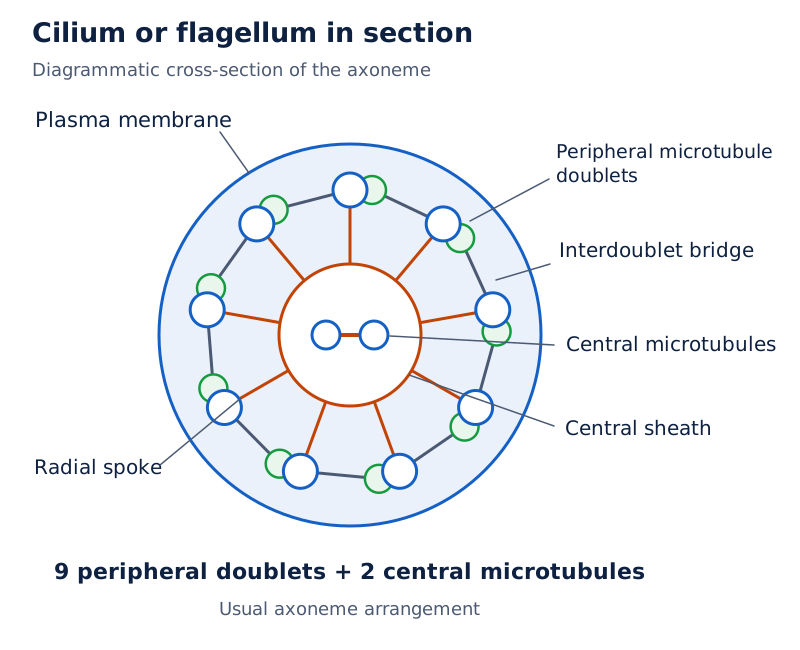
An electron micrograph appears beside a diagrammatic cross-section. The diagram labels the plasma membrane, peripheral microtubule doublets, central microtubules, central sheath, radial spoke and interdoublet bridge.
Drawn by One Young India. See Fig. 8.10 in your NCERT textbook
The centrosome and its centrioles
The centrosome usually contains two cylindrical centrioles surrounded by amorphous pericentriolar material, material without a definite shape around them. The centrioles lie perpendicular to each other. Each has a cartwheel-like organisation.
A centriole contains nine evenly spaced peripheral fibrils made of tubulin, a structural protein. Each fibril is a triplet of microtubules, and adjacent triplets are linked. The central proteinaceous hub in the proximal region connects to peripheral triplets through protein radial spokes.
Centrioles form basal bodies of cilia and flagella. They also form the spindle fibres that give rise to the spindle apparatus, the cellular structure involved in chromosome movement during division in animal cells. Peripheral triplets in a centriole must be distinguished from peripheral doublets in an axoneme.
How are the nucleus and chromosomes organised?
Nuclear envelope, pores and nucleolus
The nucleus controls organelle activities and has a major role in heredity, the transmission of inherited characteristics. Robert Brown described it in 1831. Flemming later named the nuclear material stained by basic dyes chromatin, the complex of DNA, proteins and RNA.
The interphase nucleus, the nucleus when a cell is not dividing, contains extended chromatin fibres, nuclear matrix and one or more nucleoli. Its envelope consists of two parallel membranes separated by a perinuclear space of 10 to 50 nm.
The outer membrane usually continues into the ER and bears ribosomes. At certain sites the two membranes fuse, forming nuclear pores. These passages permit RNA and protein movement in both directions between the nucleus and cytoplasm.
The nucleoplasm, or nuclear matrix, contains chromatin and the nucleolus. A nucleolus is a spherical, non-membrane-bound site of active ribosomal RNA synthesis. Cells actively synthesising proteins have larger and more numerous nucleoli.
Normally a cell has one nucleus, although variations are frequently observed. Some mature cells lack a nucleus, including erythrocytes of many mammals and the sieve tube cells of vascular plants, which are conducting cells in the food-transport system.
Chromatin and chromosome structure
Chromatin contains DNA, basic proteins called histones, non-histone proteins and RNA. During cell division, structured chromosomes become visible. A human cell has approximately two metres of DNA distributed among 46 chromosomes, arranged in 23 pairs.
A chromosome has a primary constriction called the centromere, which holds its two chromatids, the two portions joined there. Disc-shaped kinetochores occur on the sides of the centromere. Centromere position provides the basis for four chromosome types.
| Chromosome type | Centromere position | Arm lengths |
|---|---|---|
| Metacentric | In the middle | Two equal arms |
| Sub-metacentric | Slightly away from the middle | One shorter and one longer arm |
| Acrocentric | Close to an end | One extremely short and one very long arm |
| Telocentric | Terminal | Centromere at the very end, leaving essentially a single long arm |
Sometimes a few chromosomes contain non-staining secondary constrictions, additional narrowed regions at constant locations. These produce the appearance of a small fragment called a satellite. A satellite is distinct from the chromosome's primary constriction.
What the figure shows
Chromosome types
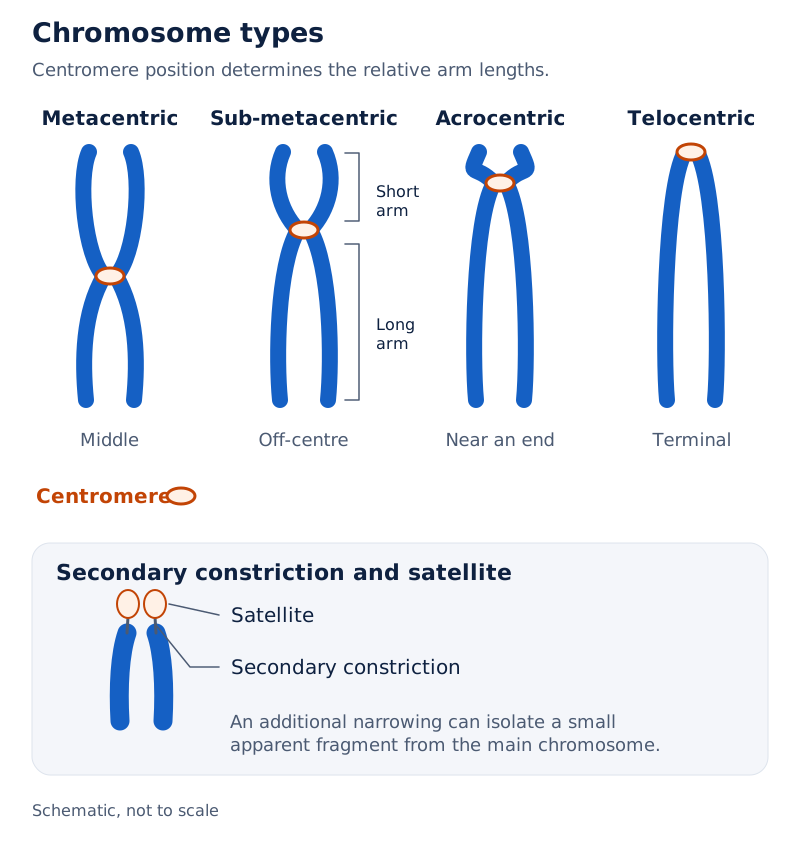
Four chromosome drawings show different centromere positions and arm proportions. Labels identify the centromere, short arm, long arm, secondary constriction and satellite.
Drawn by One Young India. See Fig. 8.13 in your NCERT textbook
Glossary
- Cell — The fundamental structural and functional unit that provides the organisation necessary for independent life.
- Cytoplasm — Semi-fluid cellular matrix containing structures and supporting many chemical reactions that maintain life.
- Plasmid — A small circular DNA molecule outside the main genomic DNA in many bacteria.
- Mesosome — An inward extension of the prokaryotic plasma membrane forming vesicles, tubules or lamellae.
- Fluidity — The capacity for movement within the membrane, associated with its quasi-fluid lipid organisation.
- Osmosis — Movement of water by diffusion across a membrane along its concentration gradient.
- Tonoplast — The single membrane surrounding a vacuole and facilitating transport of materials into it.
- Cisternae — Flattened, disc-shaped sacs arranged in parallel stacks within the Golgi apparatus.
- Cristae — Infoldings of the inner mitochondrial membrane projecting towards the matrix and increasing surface area.
- Thylakoid — A flattened membrane sac within a chloroplast, containing chlorophyll and enclosing a lumen.
- Polysome — A chain of ribosomes attached to one messenger RNA molecule and translating it into protein.
- Axoneme — The microtubule-containing core of a eukaryotic cilium or flagellum, usually showing a 9+2 arrangement.
- Nucleolus — A spherical, non-membrane-bound nuclear structure that actively synthesises ribosomal RNA.
- Centromere — The primary chromosome constriction holding two chromatids and providing a basis for chromosome classification.
- Satellite — A small apparent chromosome fragment associated with a non-staining secondary constriction at a constant location.
Common errors and misconceptions
- Misconception: Robert Brown first described a living cell. Correct: Leeuwenhoek first saw and described a living cell; Brown described the nucleus.
- Misconception: Prokaryotes lack every kind of organelle. Correct: They lack membrane-bound organelles but contain non-membrane-bound ribosomes.
- Misconception: Every prokaryotic cell has a wall. Correct: Mycoplasma lacks a cell wall around its plasma membrane.
- Misconception: Every membrane-bound organelle belongs to the endomembrane system. Correct: Mitochondria, chloroplasts and peroxisomes are excluded because their functions are not coordinated with its components.
- Misconception: Active transport moves substances down their concentration gradient without energy. Correct: It uses ATP to move a few ions or molecules against the gradient.
- Misconception: Chloroplast ribosomes are 80S because chloroplasts occur in eukaryotes. Correct: Chloroplast ribosomes are 70S; the eukaryotic cytoplasmic ribosomes are 80S.
- Misconception: Centrioles and ciliary axonemes both have nine peripheral doublets. Correct: Centrioles have peripheral triplets; the axoneme usually has nine peripheral doublets and two central microtubules.
- Misconception: Every mature cell has a nucleus. Correct: Erythrocytes of many mammals and sieve tube cells of vascular plants lack a nucleus.
Exam-style questions with model answers
Q1. State the two propositions of cell theory. [2 marks]
- All living organisms consist of cells and products of cells, establishing cellular organisation as their common structural basis.
- All cells arise from pre-existing cells, rather than originating independently of previously existing cellular structures.
Q2. Explain three differences between prokaryotic and eukaryotic cellular organisation: nuclear boundary, membrane-bound organelles and cytoplasmic ribosomes. [3 marks]
- Prokaryotes lack a nuclear membrane around their genetic material. Eukaryotes possess an organised nucleus enclosed by a nuclear envelope.
- Prokaryotes lack membrane-bound organelles, whereas eukaryotes contain these structures and consequently show extensive compartmentalisation of their cytoplasm.
- Prokaryotic ribosomes are 70S, comprising 50S and 30S subunits. Eukaryotic cytoplasmic ribosomes are 80S, comprising 60S and 40S subunits.
Q3. A neutral solute moves across a plasma membrane from higher to lower concentration without energy expenditure. Explain this movement, then distinguish water movement, polar-molecule transport and ATP-dependent movement against a gradient. [4 marks]
- The neutral solute undergoes simple diffusion along its concentration gradient. Because the movement requires no energy expenditure, it is passive transport.
- Movement of water by diffusion across the membrane is called osmosis.
- Polar molecules cannot pass through the nonpolar lipid bilayer in the same way. Membrane carrier proteins facilitate their transport.
- ATP-dependent movement from lower to higher concentration is active transport. It works against the concentration gradient, as exemplified by the sodium-potassium pump.
Q4. Describe the Golgi apparatus under five points: cisternae, faces, receipt of materials, protein processing, and additional formation functions. [5 marks]
- The Golgi apparatus consists of flattened, disc-shaped cisternae measuring 0.5 to 1.0 µm in diameter. These sacs form parallel stacks, and their number varies.
- It has a convex cis or forming face and a concave trans or maturing face. These distinct faces remain interconnected.
- Vesicles carrying material from the endoplasmic reticulum fuse with the cis face. Their contents move towards the maturing face for packaging and delivery.
- A number of proteins made by ER-bound ribosomes undergo modification in Golgi cisternae before release from the trans face towards intracellular destinations or outside the cell.
- The Golgi apparatus is an important site of glycoprotein and glycolipid formation. Its packaging process also produces membrane-bound lysosomal vesicles.
Q5. Describe a mitochondrion using five points covering its boundaries, internal compartments, cristae, function and matrix contents. [5 marks]
- A mitochondrion has two surrounding membranes. The outer membrane forms its continuous limiting boundary, and both membranes possess enzymes associated with mitochondrial functions.
- The membranes establish outer and inner aqueous compartments. The inner compartment contains a dense, homogeneous substance called the matrix.
- The inner membrane forms infoldings called cristae that project towards the matrix. These folds increase the membrane surface area.
- Mitochondria are sites of aerobic respiration and produce cellular energy in the form of ATP, explaining their description as the cell's power houses.
- The matrix contains one circular DNA molecule, a few RNA molecules, 70S ribosomes and other components required for protein synthesis.
Q6. Give four structural and functional features of the nuclear envelope and nucleolus. Include envelope membranes, outer-membrane continuity, nuclear pores and nucleolar activity. [4 marks]
- The nuclear envelope has two parallel membranes separated by a perinuclear space measuring 10 to 50 nm.
- The outer nuclear membrane usually remains continuous with the endoplasmic reticulum and bears ribosomes on its surface.
- Nuclear pores form where the two envelope membranes fuse. They permit RNA and protein movement in both directions between nucleus and cytoplasm.
- The nucleolus lacks a surrounding membrane and actively synthesises ribosomal RNA. Cells with active protein synthesis have larger and more numerous nucleoli.
Q7. Distinguish metacentric, sub-metacentric, acrocentric and telocentric chromosomes using centromere position and the resulting arm arrangement. [4 marks]
- A metacentric chromosome has its centromere in the middle, producing two arms of equal length on either side.
- A sub-metacentric chromosome has its centromere slightly away from the middle, producing one shorter and one longer arm.
- An acrocentric chromosome has its centromere close to an end, producing one extremely short arm and one very long arm.
- A telocentric chromosome has a terminal centromere, at the very end of the chromosome, so essentially only one long arm lies on one side of it.
Q8. Explain the usual 9+2 arrangement of a eukaryotic cilium or flagellum and distinguish it from a centriole's peripheral organisation. [2 marks]
- The axoneme usually contains nine peripheral microtubule doublets and two centrally located microtubules, giving the 9+2 array.
- A centriole instead has nine evenly spaced peripheral fibrils, each comprising a triplet of microtubules.
Key takeaways
- Cells provide the basic structural and functional organisation of life, and new cells arise from pre-existing cells.
- Prokaryotes lack membrane-bound nuclei and organelles but possess ribosomes; many bacteria also contain small circular plasmids.
- The membrane's lipid bilayer contains proteins, and its fluidity supports movement within the membrane and several cellular functions.
- Passive transport requires no energy expenditure, whereas active transport uses ATP to move substances against their concentration gradients.
- The endomembrane system coordinates the functions of the endoplasmic reticulum, Golgi complex, lysosomes and vacuoles.
- Mitochondria produce ATP through aerobic respiration; chloroplasts contain light-trapping pigments and an internal system of thylakoids.
- Ribosomes synthesise proteins, while cytoskeletal structures provide mechanical support, contribute to motility and maintain cell shape.
- Nuclear pores permit exchange with the cytoplasm, nucleoli synthesise ribosomal RNA, and centromere position distinguishes four chromosome types.
Test yourself
What limitation of the original cell theory did Virchow address?
It did not explain how new cells formed. Virchow explained that new cells arise through division of pre-existing cells.
How do a slime layer and a capsule differ?
Both are forms of glycocalyx. A slime layer is a loose sheath, whereas a capsule is thick and tough.
Why are mitochondria excluded from the endomembrane system?
Their functions are not coordinated with those of the endoplasmic reticulum, Golgi complex, lysosomes and vacuoles.
What connects the cytoplasm of neighbouring plant cells?
Plasmodesmata may traverse the cell wall and middle lamella, connecting the cytoplasm of neighbouring cells.
What do amyloplasts, elaioplasts and aleuroplasts store?
Amyloplasts store starch, elaioplasts store oils and fats, and aleuroplasts store proteins. These are colourless leucoplasts.
What is the difference between a granum and a stroma lamella?
A granum is a stack of thylakoids. Stroma lamellae are membranous tubules connecting thylakoids of different grana.
Which structures distinguish a centriole's peripheral organisation from an axoneme's?
A centriole has nine peripheral triplets. An axoneme usually has nine peripheral doublets and two central microtubules.
How does a nucleolus differ from the nucleus in membrane organisation?
The nucleus is enclosed by a double-membrane envelope, whereas the nucleolus has no surrounding membrane.
Try it
Cell: The Unit of Life (Class 11 Biology) — NCERT/CBSE Study Notes
Test your conceptual understanding of cell organization, compartmentalization, and surface area-to-volume constraints through this 2-step scenario.
1Imagine a cell needs to carry out multiple incompatible chemical reactions simultaneously to maintain its metabolic efficiency. Based on the structural principles in the text, which cellular design allows this to happen, and why?
The text explains that eukaryotic cells possess membrane-bound organelles which act like 'separate workstations' inside one cell. This compartmentalization allows incompatible chemical reactions to occur in different compartments, improving cellular efficiency and control.
According to the text, prokaryotes have no membrane-bound organelles and their DNA sits in the nucleoid. However, running incompatible chemical reactions efficiently requires separate compartments (membrane-bound organelles), which prokaryotes lack.
The text states that cells carry out key life processes within boundaries defined by membranes and organelles, and that compartmentalization into membrane-bound organelles is what enables incompatible reactions to occur efficiently.
2Suppose a metabolically active cell grows significantly larger in size (its side length 'a' increases). According to the mathematical and biological reasoning in the text, what challenge does this cell face regarding exchange efficiency?
The text states that the surface area-to-volume ratio is 6/a. When cell size 'a' becomes larger, 6/a decreases rather than increases.
The text demonstrates that for a cube of side length a, the surface area-to-volume ratio is 6a²/a³ = 6/a. As size increases, 6/a decreases, meaning relatively less surface area is available for nutrient uptake and waste removal compared to the cell's internal volume.
The text explicitly states that cells originate from pre-existing cells rather than spontaneously, and increasing cell dimensions alters the surface area-to-volume ratio (6/a).
Understanding the cell requires recognizing both its structural compartmentalization (which allows diverse biochemical workflows) and its physical scale constraints (where surface area-to-volume ratios dictate transport efficiency and cell size limits).