
Biodiversity and Conservation | CBSE Class 11 Geography Notes
On this page
Watch & explore
Start with a few high-quality watches, then dive into the notes below.
This note covers the meaning and levels of biodiversity, its geographical distribution, ecological, economic and scientific roles, causes of biodiversity loss, threatened species, conservation measures, mega diversity centres and ecological hotspots.
What is biodiversity, and how has it developed?
Definition: Biodiversity is the number and variety of organisms within a specified geographical region. The word combines bio, meaning life, and diversity, meaning variety.
Organisms are living things, including plants, animals and micro-organisms, which are organisms too small to see individually without magnification. Biodiversity includes these life forms, the genes they contain and the ecosystems they form. It is therefore broader than a list of animals.
Genes are the basic building blocks of life forms. An ecosystem is a system of living organisms interacting with one another and their physical surroundings. Biodiversity includes variation within and between species, and within and between ecosystems.
How does evolutionary history explain living wealth?
Evolution means change in life forms over successive generations. Present biodiversity is the result of 2.5 to 3.5 billion years of evolution. This long history makes biodiversity our living wealth, rather than something that appeared suddenly in its present form.
Biodiversity is in constant evolution, both from the viewpoint of species and from that of an individual organism. A species is a group of individual organisms with certain similarities in physical characteristics. New species are regularly discovered, most of which are yet to be classified.
Before humans appeared, the earth supported more biodiversity than in any other period. Since humans emerged, biodiversity has begun a rapid decline, with one species after another suffering extinction through overuse. Extinction means the disappearance of a species.
| Measure | Value and qualification | What it describes |
|---|---|---|
| Evolutionary history | 2.5 to 3.5 billion years | The development of present biodiversity |
| Global species estimates | 2 million to 100 million | The wide range of estimates of species numbers |
| Best estimate | 10 million | The best estimate within that range |
| Unclassified freshwater fishes in South America | About 40 per cent, according to an estimate | The extent of incomplete classification in this example |
Note: The estimate of 10 million species is not an exact count. The estimate of about 40 per cent concerns freshwater fishes from South America, rather than all organisms everywhere.
Why does biodiversity vary from one region to another?
Biodiversity distribution refers to the way the variety of life differs between places. Biodiversity is not evenly distributed over the earth. It is consistently richer in the tropics, the regions around the equator, and tropical forests are particularly rich in biodiversity.
How are solar energy, water and vegetation connected?
Weathering is the breakdown and alteration of rocks where they occur. The weathering mantle is the layer of weathered material. Differences in weathering and in the depth of this mantle across climatic zones provide the basis for differences in vegetation and hence biodiversity.
The basic cause of these weathering variations and the resulting biodiversity is the input of solar energy, energy received from the sun, and water. Areas rich in these inputs support a wide spectrum of biodiversity. The geographical pattern therefore links physical conditions with living diversity.
- Solar energy and water inputs differ between climatic zones.
- Weathering and the depth of the weathering mantle vary under these conditions.
- The weathering mantle provides a basis for the diversity of vegetation, meaning the plant cover of an area.
- Differences in vegetation are associated with differences in biodiversity.
What changes towards the polar regions?
As one approaches the polar regions, the regions around the earth's poles, populations become larger while the number of species becomes smaller. A population here means the individuals of a species in an area. Many individuals and many species are different measures.
Consequently, a large number of organisms does not by itself establish high species diversity. The important distinction is between how many individuals occur and how many different species occur. The tropical to polar pattern concerns this contrast between population size and species variety.
Understanding this unevenness also helps explain why the destruction of species-rich tropical forests has such serious consequences. Loss of habitats in a region containing many species affects a large part of living diversity. A habitat is the place where an organism lives.
How do genetic, species and ecosystem diversity differ?
Biodiversity can be considered at three levels: genetic diversity, the variation of genes within a species; species diversity, the variety of species in an area; and ecosystem diversity, differences among ecosystem types, their habitats and ecological processes.
What varies within a species?
Human beings belong genetically to the Homo sapiens group, the scientific name for the human species. Yet humans differ considerably in height, colour and physical appearance. These differences illustrate genetic diversity within a species, rather than the existence of separate human species.
Genetic diversity is essential for the healthy breeding of a population of a species. It concerns variation among members of the same species. Counting different species in a forest would address another level of biodiversity and would not, by itself, describe variation within each species.
What varies between species and ecosystems?
Species diversity relates to the number of species in a defined area. It can be measured through richness, meaning the number of different species, abundance, meaning their numbers of individuals, and types. Some areas contain more species than others.
Areas rich in species diversity are called hotspots of diversity. Ecosystem diversity, by comparison, includes broad differences between ecosystem types and the variety of habitats and ecological processes within each type. Ecological processes are the activities and interactions through which ecosystems function.
| Level | Focus | Example or identifying feature |
|---|---|---|
| Genetic diversity | Variation of genes within species | Differences in human height, colour and physical appearance |
| Species diversity | Variety of species in a defined area | Differences in richness, abundance and types of species |
| Ecosystem diversity | Ecosystem types, habitats and ecological processes | Grasslands and sholas in the Western Ghats |
Communities are associations of species. The boundaries of communities and ecosystems are not very rigidly defined. Demarcation, meaning the drawing of boundaries, is therefore difficult and complex. Ecosystem diversity cannot be reduced to counting areas with sharply fixed borders.
What the figure shows
Grasslands and sholas
This photograph shows open grassy slopes with darker wooded vegetation below them. Its caption identifies grasslands and sholas, patches of forest, in Indira Gandhi National Park, Annamalai, Western Ghats, as an example of ecosystem diversity.
See Fig. 14.1 in your NCERT textbook
How does biodiversity support the functioning of ecosystems?
The ecological role of biodiversity concerns the work performed by different organisms in ecosystems. Species obtain what they need from an ecosystem and also contribute something useful to other organisms. Their roles link the survival of individual species with the functioning of the whole system.
What functions do species perform?
- Energy capture and storage: species capture and store energy within the ecosystem.
- Production and decomposition: species produce organic materials and break them down. Organic materials here are materials associated with living organisms.
- Water and nutrient cycling: species help circulate water and nutrients, substances needed for life, throughout the ecosystem.
- Atmospheric functions: species fix atmospheric gases, incorporating them into forms used in biological processes, and help regulate climate.
These functions are important both for ecosystems and for human survival. Biodiversity matters because organisms participate in these processes, as well as because they provide useful products. The ecological role therefore goes beyond the direct collection of food, timber or medicinal resources.
Does greater diversity guarantee stability?
The more diverse an ecosystem, the better the chances of species surviving adversities and attacks, and consequently the more productive it is. Loss of species would decrease the system's ability to maintain itself. Diversity contributes to the functioning that supports its continued existence.
An ecosystem with high biodiversity may have a greater chance of adapting to environmental change, just as a species with high genetic diversity may. The more varied its species, the more stable the ecosystem is likely to be.
Note: Greater diversity improves the prospects of adaptation and stability. The phrases “may have a greater chance” and “is likely to be” express probability; they do not promise that a diverse ecosystem will withstand every environmental change.
This relationship also explains why species loss affects more than the missing organism. Since species contribute to ecosystem processes, losing them reduces the capacity of the system to sustain itself. Conservation thus protects the relationships and functions through which different forms of life support one another.
Why does biodiversity have economic, scientific and ethical value?
Biodiversity has contributed to human culture, while human communities have shaped natural diversity at genetic, species and ecological levels. Its importance includes an economic role in supplying resources, a scientific role in understanding life, and an ethical responsibility towards other species.
How is biodiversity an economic resource?
Agro-biodiversity means crop diversity and is an important part of biodiversity. People draw upon biological resources in everyday life. Biodiversity supplies food crops, livestock, forests, fish and medicinal resources, and serves as a reservoir for food, pharmaceutical products (medicines) and cosmetic products (used for personal care or appearance).
The resource view of biodiversity has contributed to its deterioration. It has also created conflicts over rules for dividing and appropriating natural resources, meaning taking them for use.
| Role | Contribution | Central connection |
|---|---|---|
| Ecological | Energy capture, decomposition, nutrient cycling and climate regulation | Organisms contribute to the functioning of ecosystems |
| Economic | Food, livestock, forests, fish and medicinal resources | Human life and production draw on biological resources |
| Scientific | Clues about evolution and how life functions | Each species can help explain life and ecosystem relationships |
What can species teach us, and why protect their existence?
Each species can provide clues about how life evolved and will continue to evolve. Biodiversity also helps explain how life functions and how each species sustains its ecosystem. Human beings are themselves a species within these systems, rather than separate from the relationships being studied.
The ethical responsibility is to recognise that every species has an intrinsic right to exist. Intrinsic means belonging to the species in its own right. Voluntarily causing the extinction of a species is therefore morally wrong.
The level of biodiversity indicates the state of human relationships with other living species. Biodiversity is also integral to many human cultures. Its value consequently includes useful resources and scientific knowledge, together with recognition that other forms of life should be allowed to live.
What causes the loss of biodiversity?
Biodiversity loss includes the loss of species and the damage or destruction of their habitats. During recent decades, human population growth has raised consumption of natural resources. This increased consumption has accelerated losses of species and their living spaces in different parts of the world.
Why is pressure on tropical forests especially serious?
Over-exploitation means excessive use of resources, and deforestation means the removal of forest cover. Both have become widespread in meeting the needs of large populations. Destruction of natural habitats in tropical rainforests is disastrous for the biosphere, the realm of life on earth.
| Geographical measure | Share | Scope of the statement |
|---|---|---|
| Area occupied by tropical regions | About one-fourth | The total area of the world |
| Human population in tropical regions | About three-fourths | The world's human population |
| Species in tropical rainforests | 50 per cent | The species on the earth |
The first two figures concern tropical regions; the third concerns tropical rainforests. These are different geographical descriptions. Together they link population pressure, resource use and the destruction of habitats containing a large share of species.
What other forces damage living diversity?
- Natural calamities: earthquakes, floods, volcanic eruptions, forest fires and droughts damage flora and fauna, meaning plant and animal life, and alter biodiversity in affected regions.
- Pollution: pesticides, substances used to control pests, and pollutants such as hydrocarbons and toxic heavy metals destroy weak and sensitive species. Hydrocarbons are compounds of hydrogen and carbon; toxic metals can harm organisms.
- Exotic species: these are species introduced into a system where they are not natural inhabitants. Their introduction has extensively damaged natural biotic communities, meaning communities of living organisms, in many cases.
- Poaching: unlawful hunting has affected tigers, elephants, rhinoceros, crocodiles, minks and birds. Animals have been hunted for materials such as horns, tusks and hides, rendering certain organisms endangered, meaning in danger of extinction.
These causes involve both natural events and human activities. Habitat destruction, pollution, introduced species and hunting should therefore be distinguished when explaining loss. A complete explanation recognises several pressures rather than attributing every decline to a single cause.
How do endangered, vulnerable and rare species differ?
Threatened species face threats to their continued existence. The International Union of Conservation of Nature and Natural Resources (IUCN) groups threatened plants and animals into endangered, vulnerable and rare categories for conservation. The distinctions concern extinction danger and the size or distribution of populations.
What does each category mean?
| Category | Meaning | Key feature |
|---|---|---|
| Endangered | Species in danger of extinction | A present danger to continued existence |
| Vulnerable | Species likely to be in danger of extinction in the near future if threatening factors continue | Survival is not assured because populations have reduced greatly |
| Rare | Species with very small populations worldwide | Confined to limited areas or thinly scattered over wider areas |
The condition attached to vulnerable species matters: danger is likely in the near future if threatening factors continue. Describing these species as already extinct would erase the distinction. Their reduced populations make survival uncertain, but extinction has not been stated as an accomplished event.
For rare species, the emphasis is a very small world population. A species may be restricted to a limited area or sparsely distributed across a wider one. Rarity does not mean that the species is necessarily found within a single small locality.
How do the examples illustrate these categories?
The IUCN publishes worldwide information about endangered species in the Red List of threatened species. The red panda illustrates an endangered species. Humbodtia decurrens Bedd illustrates a highly rare endemic tree of the Southern Western Ghats in India. Endemic means restricted naturally to a particular region.
What the figure shows
Red panda
The photograph shows two red pandas on a tree, with both faces visible. The caption identifies the red panda as an endangered species.
See Fig. 14.2 in your NCERT textbook
What the figure shows
Rare endemic tree
The photograph shows foliage and hanging pale flowers. The caption identifies Humbodtia decurrens Bedd as a highly rare endemic tree of the Southern Western Ghats in India.
See Fig. 14.3 in your NCERT textbook
How can biodiversity be conserved over the long term?
Conservation of biodiversity means protecting and preserving the variety of life. All life forms are closely interconnected, so disturbance in one produces imbalance in others. Endangerment of plants and animals degrades the environment and may threaten human existence.
Why must communities participate?
People need education in environment-friendly practices and must reorient activities so that development remains harmonious with other life forms and sustainable. Sustainable use means using resources in ways that can continue while maintaining the living systems on which that use depends.
Conservation with sustainable use is possible only with the involvement and cooperation of local communities and individuals. Institutional structures at local levels are necessary. The critical issue is the continuation of conservation, as well as the protection of species and habitats.
What measures support continuing conservation?
- Preserve endangered species: direct efforts towards organisms facing extinction danger.
- Plan and manage: prevention of extinction requires proper planning and management.
- Preserve useful varieties and wild relatives: protect varieties of food crops, forage plants, timber trees, livestock, animals and their wild relatives. Forage plants provide animal feed; wild relatives are related forms living outside domestication.
- Protect habitats of wild relatives: each country should identify these habitats and ensure their protection.
- Safeguard essential habitats: protect places where species feed, breed, rest and nurse their young.
- Regulate international trade: trade across countries in wild plants and animals should be regulated.
These measures address organisms, their living spaces and the human activities affecting them. Preserving a species is connected with protecting the places needed throughout its life. Planning, local institutions and cooperation help make protection an ongoing process.
| Action | Date | Conservation connection |
|---|---|---|
| Wild Life (Protection) Act in India | 1972 | National parks and sanctuaries were established and biosphere reserves declared under the Act |
| Convention of Biodiversity at the Earth Summit | June 1992 | India and 155 other nations signed at Rio de Janeiro, Brazil |
National parks, sanctuaries and biosphere reserves are designated areas for conserving nature. The Indian action aimed to protect, preserve and propagate the variety of species within natural boundaries. Propagate means support reproduction and continued existence. International cooperation complements protection within countries.
What do mega diversity centres and hotspots reveal?
Mega diversity centres occur in countries possessing a large share of the world's species diversity. The 12 countries named are Mexico, Columbia, Ecuador, Peru, Brazil, Democratic Republic of Congo, Madagascar, China, India, Malaysia, Indonesia and Australia.
Biodiversity hotspots help concentrate conservation resources on particularly vulnerable areas. Hotspots are defined according to their vegetation. Plants are important because they determine primary productivity, the rate at which plants produce organic material through photosynthesis per unit area per unit time.
Most, but not all, hotspots rely on species-rich ecosystems for food, firewood, cropland and timber income. The qualification “Most, but not all” matters. The relationship between livelihoods and living diversity should not be stated as identical in every hotspot.
Case study: What makes Madagascar significant?
In Madagascar, about 85 per cent of plants and animals are found nowhere else in the world. This example shows the importance of geographically distinctive biodiversity. The word “about” is part of the estimate and should be retained.
Madagascar is also among the countries named as mega diversity centres. These two facts describe related but different features: its place among countries rich in species, and the large proportion of its plants and animals that occur nowhere else.
Case study: What pressures affect Hawaii?
The islands of Hawaii have many unique plants and animals threatened by introduced species and land development. This example shows the different pressures experienced by hotspots in wealthy countries. It identifies two pressures without attaching a percentage to either.
The examples should be kept distinct. Madagascar illustrates the concentration of plants and animals found nowhere else. Hawaii illustrates threats from introduced species and land development. Together they show why conservation must pay attention to the diversity present and the pressures acting upon it.
How can a map help locate ecological hotspots?
An ecological hotspot map links named areas of rich diversity with their geographical positions. The world map of some ecological hotspots uses shaded patches and labels. It identifies particular areas within regions; the shading should not be read as covering every part of a named continent.
Which labelled areas occur in the Americas?
What the figure shows
Hotspots in the Americas
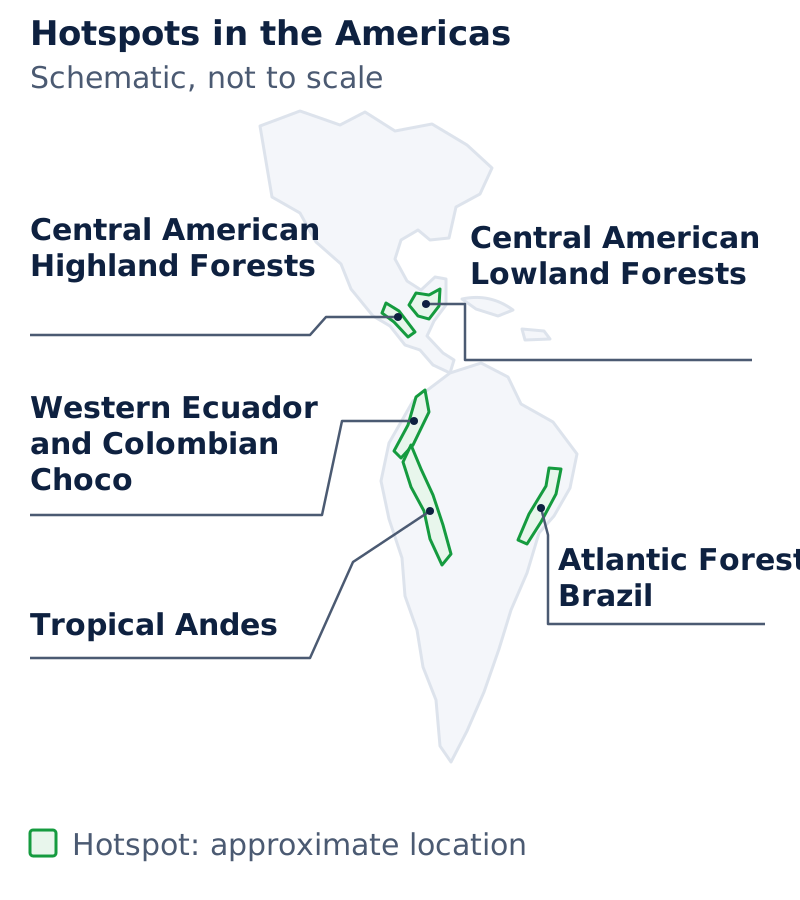
The map labels Central American Highland Forests, Central American Lowland Forests, Western Ecuador and Colombian Choco, Tropical Andes, and Atlantic Forest, Brazil. Shaded areas accompany the labels, with lines connecting names to the mapped locations.
Drawn by One Young India. See Fig. 14.4 in your NCERT textbook
Reading the map involves matching each label to its shaded area. Some labels name forests, while others name a mountain region or a combination of places. Keeping the full name helps distinguish nearby areas, such as the two Central American forest labels.
Which labelled areas occur in Africa and Asia?
What the figure shows
Hotspots in Africa and Asia
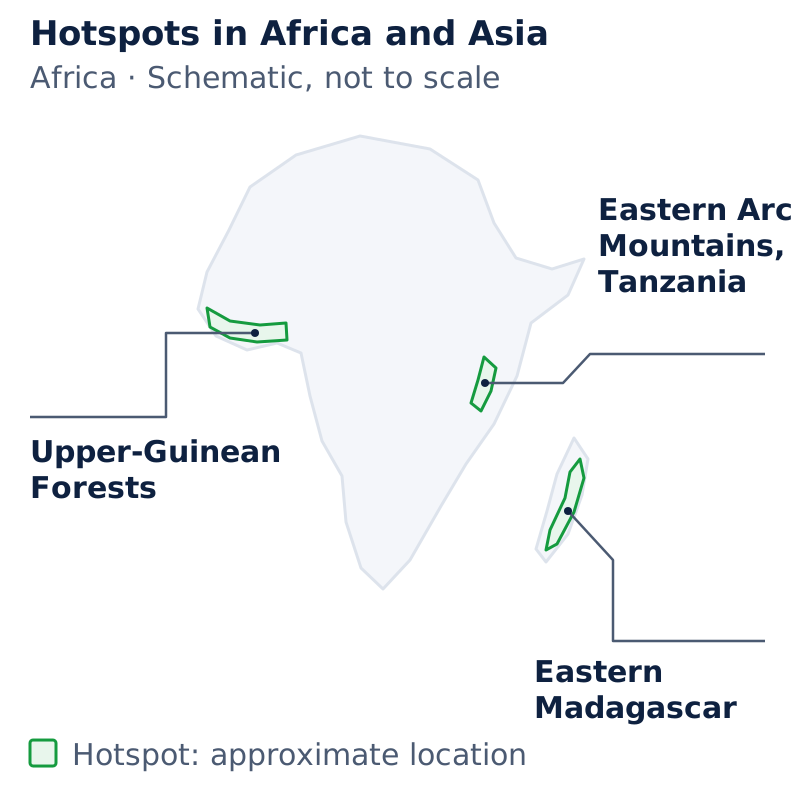
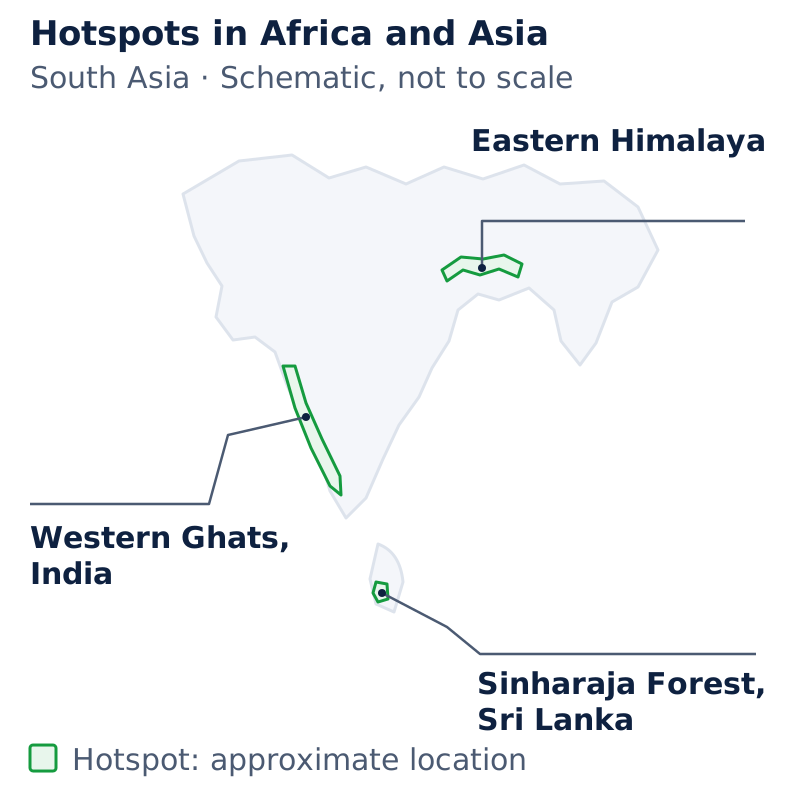
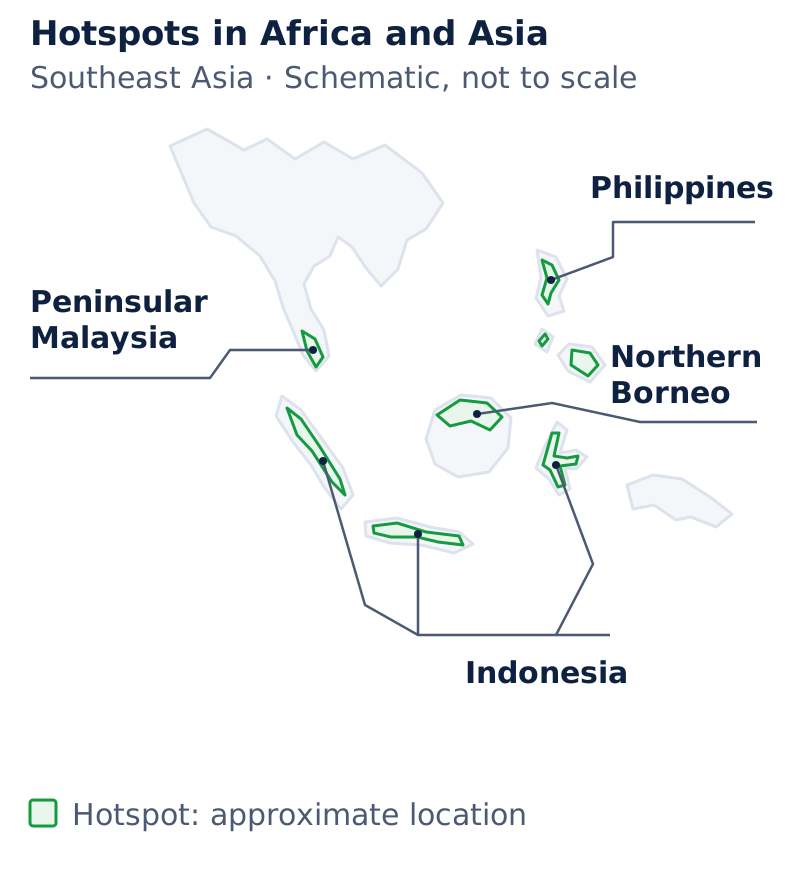
The map labels Upper-Guinean Forests, Eastern Arc Mountains, Tanzania, and Eastern Madagascar. In Asia it labels Western Ghats, India, Eastern Himalaya, Sinharaja Forest, Sri Lanka, Peninsular Malaysia, Philippines, Northern Borneo and Indonesia.
Drawn by One Young India. See Fig. 14.4 in your NCERT textbook
The two Indian labels, Western Ghats and Eastern Himalaya, identify different hotspot areas. Eastern Madagascar is the map label for the shaded area on Madagascar. The named hotspot area should be distinguished from the whole country in the mega diversity list.
For a map exercise, locate a label, follow its pointer where present, and identify the corresponding shaded patch. Then compare the positions of the areas. A map communicates distribution, while the accompanying explanations establish why biodiversity and its conservation matter.
The map is titled “Some ecological ‘hotspots’ in the world”. It is therefore a selection. Use its visible labels to identify the areas represented, while keeping numerical estimates, threats and conservation measures connected to the separate evidence describing them.
Glossary
- Biodiversity — The number and variety of organisms within a specified geographical region, including variation in genes and ecosystems.
- Species — A group of individual organisms having certain similarities in their physical characteristics.
- Genetic diversity — Variation of genes within a species, illustrated by differences in human height, colour and appearance.
- Species diversity — The variety of species in a defined area, considered through richness, abundance and types.
- Ecosystem diversity — Differences among ecosystem types and the variety of habitats and ecological processes within each type.
- Community — An association of species whose boundaries are not very rigidly defined.
- Agro-biodiversity — Crop diversity, an important part of the biological resources used in human life.
- Exotic species — Species introduced into a system where they are not natural inhabitants of the local habitat.
- Endangered species — Species in danger of extinction and therefore requiring efforts directed towards their preservation.
- Vulnerable species — Species likely to face extinction danger in the near future if the factors threatening them continue.
- Rare species — Species with very small world populations, confined to limited areas or thinly scattered over wider areas.
- Mega diversity centres — Centres in countries that possess a large share of the world's species diversity.
- Biodiversity hotspots — Areas rich in species diversity, identified for conservation attention and defined according to their vegetation.
Common errors and misconceptions
- Misconception: Biodiversity means the number of animals alone. Correct: It includes plants, animals, micro-organisms, genes and ecosystems, with variation within and between species and ecosystems.
- Misconception: A large population necessarily means many different species. Correct: Population size and species variety differ. Towards polar regions, larger populations occur alongside fewer species.
- Misconception: Human differences in height illustrate species diversity. Correct: They illustrate genetic diversity within the human species, Homo sapiens.
- Misconception: High biodiversity guarantees stability under every change. Correct: A more diverse ecosystem may have a greater chance of adaptation and is likely to be more stable.
- Misconception: Vulnerable means already extinct. Correct: Vulnerable species are likely to face extinction danger in the near future if the threatening factors continue.
- Misconception: Rare species must occupy one small area. Correct: Their small world populations may be confined to limited areas or thinly scattered across wider areas.
- Misconception: Conservation needs species protection alone. Correct: Habitat protection, planning, regulated trade and continuing community involvement also support conservation.
Exam-style questions with model answers
Q1. Define biodiversity and name its three levels. [2 marks]
- Biodiversity is the number and variety of organisms within a specified geographical region, including the genes they contain and the ecosystems they form.
- Its three levels are genetic diversity, species diversity and ecosystem diversity.
Q2. Explain genetic, species and ecosystem diversity, distinguishing what varies at each level. [3 marks]
- Genetic diversity is variation of genes within a species. Differences in human height, colour and physical appearance illustrate variation within Homo sapiens.
- Species diversity is the variety of species in a defined area. It concerns richness, abundance and types of species.
- Ecosystem diversity includes broad differences between ecosystem types, together with diversity of habitats and ecological processes occurring within each type.
Q3. Describe four ecological functions performed by species in ecosystems. [4 marks]
- Species capture and store energy, contributing to ecosystem functioning and the processes on which human survival depends.
- They produce and decompose organic materials, linking the formation of these materials with their breakdown within ecosystems.
- They help cycle water and nutrients throughout the ecosystem, contributing to the movement of these essential resources.
- They fix atmospheric gases and help regulate climate. These functions form part of the useful contributions organisms make to their ecosystems.
Q4. Distinguish endangered, vulnerable and rare species using extinction danger and population characteristics. [3 marks]
- Endangered species are those in danger of extinction. Their defining feature is the danger to their continued existence.
- Vulnerable species are likely to be in danger of extinction in the near future if threatening factors continue. Their greatly reduced populations make survival uncertain.
- Rare species have very small world populations. They may be confined to limited areas or thinly scattered over wider areas.
Q5. Explain five causes of biodiversity loss: resource pressure and habitat destruction, natural calamities, pollution, exotic species and poaching. [5 marks]
- Growing human populations increase natural resource consumption. Over-exploitation and deforestation destroy habitats, with especially serious consequences in species-rich tropical rainforests.
- Natural calamities, including earthquakes, floods, volcanic eruptions, forest fires and droughts, damage plant and animal life and alter regional biodiversity.
- Pesticides and pollutants such as hydrocarbons and toxic heavy metals destroy weak and sensitive species, reducing living diversity.
- Exotic species are introduced where they are not natural inhabitants. Their introduction has extensively damaged natural communities in many cases.
- Poaching for horns, tusks, hides and other materials has affected animals such as tigers, elephants and rhinoceros, rendering certain organisms endangered.
Q6. State six measures in the world conservation strategy for protecting biodiversity, covering species, planning, useful varieties, habitats and trade. [6 marks]
- Make efforts to preserve endangered species, directing protection towards plants and animals that face the danger of extinction.
- Use proper planning and management to prevent extinction, so that conservation activities are organised around the continued survival of species.
- Preserve varieties of food crops, forage plants, timber trees, livestock, animals and their wild relatives, maintaining this range of living resources.
- Each country should identify habitats of wild relatives and ensure that these living spaces receive protection.
- Safeguard habitats where species feed, breed, rest and nurse their young, protecting places essential to their lives.
- Regulate international trade in wild plants and animals, making cross-country trade part of the conservation effort.
Q7. About 85 per cent of Madagascar's plants and animals occur nowhere else. Hawaii has many unique plants and animals threatened by introduced species and land development. Using only these facts, give two distinct conservation observations. [2 marks]
- Madagascar contains a large proportion of geographically unique life: about 85 per cent of its plants and animals occur nowhere else.
- In Hawaii, conservation must address the stated pressures of introduced species and land development threatening its many unique plants and animals.
Q8. Explain three reasons why conservation must continue through community involvement, habitat protection and ecosystem care. [3 marks]
- Conservation with sustainable use is possible only with the involvement and cooperation of local communities and individuals, supported by local institutional structures.
- Species need protected habitats where they feed, breed, rest and nurse their young. Protecting organisms therefore also requires safeguarding their living spaces.
- Life forms are interconnected. Disturbance in one produces imbalance in others, while environmental degradation may threaten human existence.
Key takeaways
- Biodiversity includes variation in genes, species and ecosystems, extending beyond the number of animals present in a place.
- Biodiversity is consistently richer in the tropics; towards polar regions, larger populations accompany fewer species.
- Genetic diversity varies within species, species diversity concerns different species, and ecosystem diversity includes habitats and ecological processes.
- Species capture energy, cycle nutrients and water, decompose organic materials, fix atmospheric gases and help regulate climate.
- Greater biodiversity may improve adaptation to environmental change, and an ecosystem with more species is likely to be more stable.
- Habitat destruction, over-exploitation, natural calamities, pollutants, exotic species and poaching all contribute to biodiversity loss.
- Endangered, vulnerable and rare species differ in extinction danger, population size and distribution; their definitions should remain distinct.
- Continuing conservation needs protected species and habitats, planning, regulated trade, and the involvement and cooperation of local communities.
Test yourself
What do the two parts of the word biodiversity mean?
Bio means life and diversity means variety, together expressing the variety of living organisms.
Which level of biodiversity explains differences in human height and physical appearance?
Genetic diversity explains these differences within the human species, Homo sapiens.
Why is drawing ecosystem boundaries difficult?
Community and ecosystem boundaries are not very rigidly defined, making their demarcation difficult and complex.
What is agro-biodiversity?
Agro-biodiversity is crop diversity, an important part of biodiversity used by people in everyday life.
What condition belongs in the definition of vulnerable species?
They are likely to face extinction danger in the near future if the factors threatening them continue.
What makes a species exotic in a habitat?
It has been introduced into the habitat and is not a natural inhabitant of that local system.
Where and when was the Earth Summit associated with the Convention of Biodiversity held?
It was held at Rio de Janeiro in Brazil in June 1992.
Why is protecting species alone insufficient for continuing conservation?
Species depend on habitats and interconnected ecosystems. Conservation also requires planning, sustained local cooperation and protection of the places where organisms live.
Write about it
Turn a question from this chapter into a paper.
The Writing Studio has a structure guide, a rubric and citation tools for 15 formats, from essays to research papers. Drafting is free with an account. Learnacy Essential adds feedback from an AI writing coach and submission to The OYI Review.
Learnacy Essential is ₹1,499 for the year. Publication depends on review and is not guaranteed.