
Life Processes | CBSE Class 10 Science Notes
On this page
Watch & explore
Start with a few high-quality watches, then dive into the notes below.
This note covers life processes, autotrophic and heterotrophic nutrition, photosynthesis, human digestion, cellular respiration, breathing, blood circulation, transport in plants, human excretion and waste removal in plants.
What are life processes, and why are they necessary?
Definition: Life processes are the processes that together maintain living organisms, including nutrition, respiration, transportation and excretion.
Living organisms have an organised structure. Environmental effects are very likely to break down this order over time. Organisms therefore need continuous repair and maintenance, even while resting or sleeping. Maintaining structures requires movement of the molecules from which those structures are made.
Is visible movement enough to identify life?
Visible movement is useful evidence of life, but it is insufficient as a defining characteristic. A plant that is not visibly growing is still alive, and some animals breathe without visible movement. Molecular movements occur on scales too small for the naked eye.
Viruses show no molecular movement until they infect a cell. This is partly why there is controversy about whether they are truly alive. The absence of visible movement alone cannot settle whether something is living.
How do the maintenance processes work together?
| Process | Contribution to maintenance |
|---|---|
| Nutrition | Transfers food from outside the organism into its body, supplying energy sources and materials for growth. |
| Respiration | Breaks down food sources for cellular energy needs; many organisms acquire oxygen for this process. |
| Transportation | Carries food, oxygen and other substances between different parts of the body. |
| Excretion | Removes harmful waste products formed by the body's chemical activities. |
In a single-celled organism, the entire surface contacts the environment, so specific organs may not be needed. In a multicellular organism, many cells are far from the surface. Diffusion, the movement by which substances spread between regions, cannot alone meet every cell's requirements.
How do plants make food by photosynthesis?
Autotrophs are organisms that use simple inorganic materials, such as carbon dioxide and water, to make food. Green plants and some bacteria are examples. Photosynthesis converts these materials into carbohydrates using sunlight and chlorophyll, the green pigment that absorbs light energy.
Carbohydrates provide energy to the plant. Carbohydrates not used immediately are stored as starch, an internal energy reserve. In humans, some energy derived from food is stored in the form of glycogen, a storage substance in the body.
What are the main events in photosynthesis?
- Chlorophyll absorbs light energy.
- Light energy becomes chemical energy, and water molecules split into hydrogen and oxygen.
- Carbon dioxide is reduced, or converted in this process, to carbohydrates.
The overall reaction is 6CO₂ + 12H₂O → C₆H₁₂O₆ + 6O₂ + 6H₂O, in the presence of sunlight and chlorophyll. Here CO₂ means carbon dioxide, H₂O water, C₆H₁₂O₆ glucose and O₂ oxygen. The arrow means “forms”; the numbers before formulae give relative molecule counts. Subscripts count atoms of the preceding element in each molecule.
These events need not occur immediately one after another. Desert plants take up carbon dioxide at night and prepare an intermediate substance. Energy absorbed by chlorophyll during the day then acts on this intermediate.
Where do the required materials come from?
Chloroplasts are cell organelles containing chlorophyll. Stomata are tiny pores on leaf surfaces through which large amounts of gases are exchanged. Gas exchange also occurs across the surfaces of stems, roots and leaves.
Guard cells control each stomatal pore. They swell when water enters, opening the pore, and shrink when water leaves, closing it. Plants close these pores when carbon dioxide is not needed for photosynthesis, reducing the associated loss of water.
Roots of terrestrial plants absorb water from soil. Soil also supplies nitrogen, phosphorus, iron and magnesium. Nitrogen, needed to build proteins and other compounds, is absorbed as inorganic nitrates or nitrites, or as organic compounds prepared by bacteria from atmospheric nitrogen.
What the figure shows
Open and closed stomatal pores
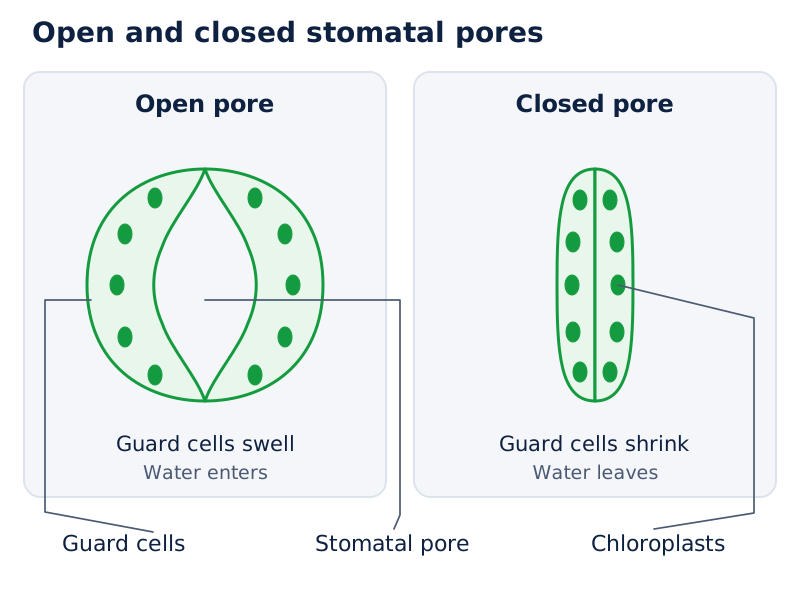
The paired drawings show guard cells around an open pore and a closed pore. Labels identify guard cells, the stomatal pore and chloroplasts inside the guard cells.
Drawn by One Young India. See Fig. 5.3 in your NCERT textbook
How do experiments investigate the requirements for photosynthesis?
A variegated leaf has green and non-green areas. Comparing these regions after a starch test helps investigate the role of chlorophyll. Comparing plants supplied with different amounts of carbon dioxide investigates another requirement for photosynthesis.
How is a variegated leaf tested?
- Take a potted plant with variegated leaves, such as money plant or crotons. Keep it in a dark room for three days so that its starch is used up.
- Place it in sunlight for about six hours. Pluck a leaf, mark its green areas and trace them on paper.
- Dip the leaf in boiling water for a few minutes. Then immerse it in alcohol in a beaker, heating the beaker carefully in a water-bath until the alcohol begins to boil.
- Dip the leaf in dilute iodine solution for a few minutes, rinse it and compare its colour pattern with the tracing.
Iodine solution is used here to test for starch. The coloured starch-test regions correspond to the previously green parts of the leaf, linking starch formation with chlorophyll. The comparison concerns regions of the same leaf exposed to the same sunlight.
What the figure shows
Variegated leaf before and after the starch test
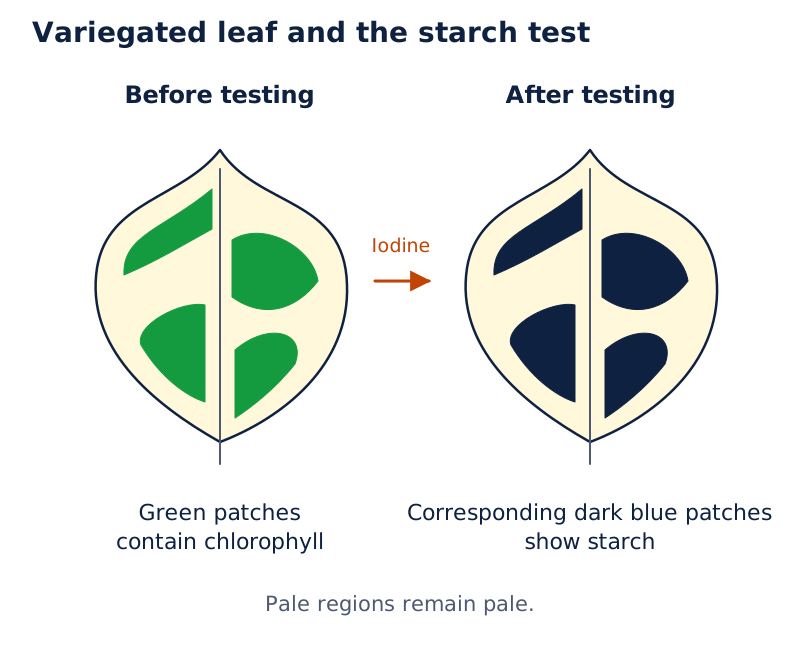
Two leaf drawings show green patches before testing and dark blue patches in corresponding regions afterwards. The remaining areas retain a pale colour.
Drawn by One Young India. See Fig. 5.2 in your NCERT textbook
How is the role of carbon dioxide investigated?
Use two healthy potted plants of nearly the same size, kept in darkness for three days. Place them on separate glass plates under separate bell-jars. Beside one plant, place a watch-glass containing potassium hydroxide, a substance that absorbs carbon dioxide.
Seal both jars to the plates with vaseline to make them air-tight. Keep the plants in sunlight for about two hours, then test a leaf from each for starch. The comparison links access to carbon dioxide with starch formation; the second jar has no potassium hydroxide.
How do organisms obtain food through heterotrophic nutrition?
Heterotrophs use complex food substances obtained from other organisms and depend directly or indirectly on autotrophs. Animals and fungi are examples. Complex substances must be broken into simpler ones before the body can use them for maintenance and growth.
Enzymes are biological catalysts, substances that help the chemical reactions involved in this breakdown. The way an organism obtains and processes food depends on its body design, environment and the availability of food.
How do feeding strategies differ?
| Organism or group | Method of obtaining or processing food |
|---|---|
| Bread moulds, yeast and mushrooms | Break down food outside the body and then absorb it. |
| Animals taking in whole food | Take material into the body and break it down internally. |
| Cuscuta, ticks, lice, leeches and tapeworms | Use a parasitic strategy, deriving nutrition from plants or animals without killing them. |
| Amoeba | Encloses food using temporary extensions of its cell surface. |
| Paramoecium | Moves food to a particular spot using cilia, small structures covering its surface. |
What happens during nutrition in Amoeba?
- Temporary finger-like extensions called pseudopodia surround the food particle and fuse over it.
- A food vacuole, a compartment enclosing food, forms inside the cell.
- Complex substances are broken into simpler substances inside the food vacuole.
- The simpler substances diffuse into the cytoplasm, the material inside the cell surrounding its internal structures.
- Undigested material moves to the cell surface and is thrown out.
Paramoecium is also single-celled, but its definite shape and fixed food-entry site distinguish its feeding arrangement from that of Amoeba. As body complexity increases, different parts become specialised for different stages of obtaining and processing nutrition.
How is food digested and absorbed in human beings?
The alimentary canal is the long tube from mouth to anus in which food is processed. Digestion breaks complex food into simpler substances. Absorption is the uptake of digested food through the intestinal wall.
What happens in the mouth and stomach?
Teeth crush food, and the tongue mixes it with saliva, the fluid released by salivary glands. Saliva wets food and contains salivary amylase, an enzyme that breaks starch into simple sugar.
Peristalsis is the rhythmic contraction of muscles along the alimentary canal that pushes food forwards. Food passes through the oesophagus, or food-pipe, into the stomach. The stomach expands and its muscular walls mix food with digestive juices.
Gastric glands, glands in the stomach wall, release hydrochloric acid, pepsin and mucus. Hydrochloric acid provides the acidic medium needed by pepsin, a protein-digesting enzyme. Mucus protects the inner stomach lining from acid under normal conditions.
A sphincter, a muscle controlling an opening, releases food from the stomach in small amounts. The small intestine is extensively coiled and is the longest part of the alimentary canal.
How is digestion completed in the small intestine?
| Secretion or enzyme | Source | Action |
|---|---|---|
| Bile | Liver | Makes acidic food alkaline for pancreatic enzymes and breaks large fat globules into smaller globules. |
| Trypsin | Pancreatic juice from the pancreas | Digests proteins. |
| Lipase | Pancreatic juice from the pancreas | Breaks down emulsified fats, meaning fats divided into small globules. |
| Intestinal enzymes | Glands in the small-intestinal wall | Complete conversion to amino acids, glucose, fatty acids and glycerol. |
Amino acids are the simpler products of protein digestion. Glucose is the simple carbohydrate product; fatty acids and glycerol are products of fat digestion. Dividing fat into small globules increases the efficiency of enzyme action.
Villi are numerous finger-like projections lining the small intestine. They increase the surface area for absorption and contain a rich supply of blood vessels. Absorbed food reaches cells for energy, growth and repair.
The large intestine absorbs more water from unabsorbed food. Remaining material leaves through the anus, controlled by the anal sphincter. Herbivores eating grass need longer small intestines to digest cellulose, a component of their plant food; carnivores such as tigers have shorter ones because meat is easier to digest.
What the figure shows
Human alimentary canal
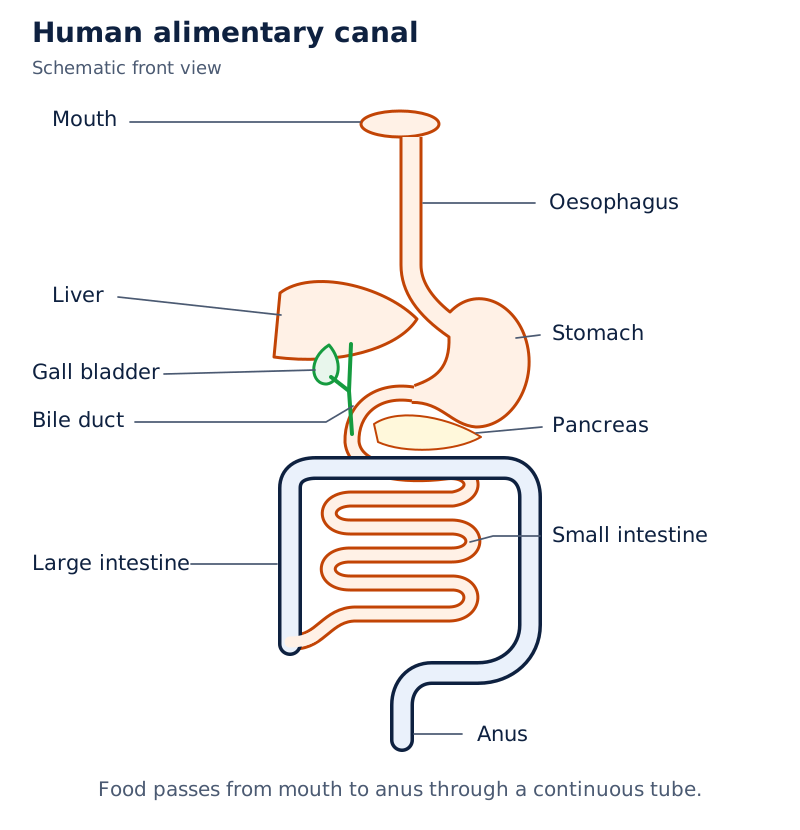
The drawing traces the mouth, oesophagus, stomach, coiled small intestine, surrounding large intestine and anus. It also labels the liver, pancreas, bile duct and gall bladder, which stores bile.
Drawn by One Young India. See Fig. 5.6 in your NCERT textbook
What do saliva testing and tooth decay show?
To investigate saliva, take one millilitre, written as 1 mL, of 1% starch solution, where % means per cent, in each of two tubes, A and B. Add 1 mL saliva to A. After 20 to 30 minutes, test both with dilute iodine to compare the starch remaining.
Dental caries, or tooth decay, begins when bacteria act on sugars and produce acids that soften tooth enamel. Dental plaque consists of bacterial cells and food particles sticking to teeth; it prevents saliva from reaching the surface to neutralise acid.
Brushing after eating removes plaque before bacteria produce acids. If decay remains untreated, microorganisms may invade the pulp, the inner region of the tooth, causing inflammation and infection.
How does cellular respiration release energy from food?
Cellular respiration breaks down food substances such as glucose to provide usable energy. Its first step is the breakdown of glucose, a six-carbon molecule, into pyruvate, a three-carbon molecule, in the cytoplasm. Subsequent pathways depend on oxygen availability.
How do the pathways of glucose breakdown differ?
| Feature | Aerobic pathway | Yeast fermentation | Muscle pathway with insufficient oxygen |
|---|---|---|---|
| Oxygen condition | Oxygen is present. | Oxygen is absent. | Oxygen is lacking in muscle cells. |
| Fate of pyruvate | Broken down using oxygen. | Converted into ethanol and carbon dioxide. | Converted into lactic acid. |
| Products | Carbon dioxide, water and energy. | Ethanol, carbon dioxide and energy. | Lactic acid and energy. |
| Relevant location or example | Mitochondria, the cell structures where this oxygen-using breakdown occurs. | Yeast. | Human muscle cells. |
| Important consequence | Releases much more energy than the anaerobic process. | Provides a pathway without oxygen. | Lactic acid build-up during sudden activity causes cramps. |
Aerobic respiration occurs with oxygen; anaerobic respiration occurs without it. Fermentation is the process in yeast that converts pyruvate into ethanol and carbon dioxide. Ethanol is the two-carbon product; lactic acid in the muscle pathway contains three carbon atoms.
What the figure shows
Pathways of glucose breakdown
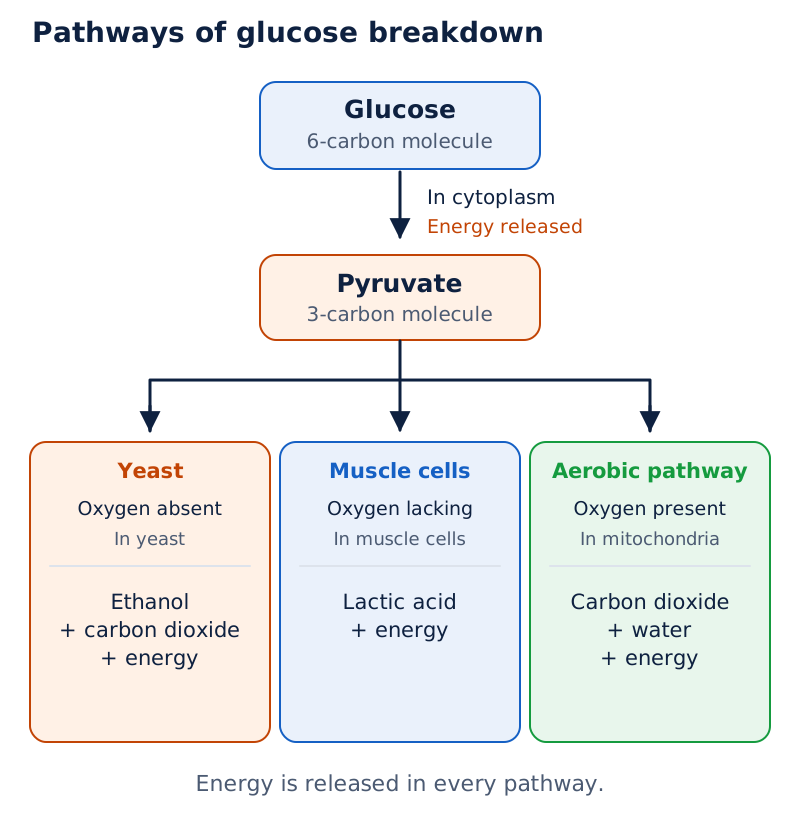
Glucose leads to pyruvate and energy in the cytoplasm. Three branches then show ethanol and carbon dioxide in yeast, lactic acid in muscle cells, and carbon dioxide and water in mitochondria, with energy released in each pathway.
Drawn by One Young India. See Fig. 5.8 in your NCERT textbook
How is the released energy used?
ATP (adenosine triphosphate) is the molecule that serves as the energy currency for most cellular processes. Energy from respiration is used to form it from ADP (adenosine diphosphate), its precursor molecule, and inorganic phosphate. Breaking ATP down supplies energy to other cellular activities.
When water breaks the terminal phosphate linkage, energy equivalent to 30.5 kilojoules per mole, written as 30.5 kJ/mol, is released. A mole is a unit for an amount of substance. Endothermic reactions, which require an energy input, can be driven by this energy.
In a fermentation investigation, yeast is added to fruit juice or sugar solution in a corked test tube. A bent tube leads into fresh lime water, a solution used to detect carbon dioxide. Changes in the lime water help investigate the gaseous product.
How do plants and animals exchange respiratory gases?
Plants exchange oxygen and carbon dioxide by diffusion. Large spaces between cells allow contact with air. The direction of exchange depends on environmental conditions and the plant's requirements; gas movement is not fixed in one direction throughout the day.
At night, when photosynthesis is absent, carbon dioxide elimination is the major exchange activity. During the day, carbon dioxide generated by respiration is used in photosynthesis, so there is no carbon dioxide release; oxygen release is the major event.
Why do aquatic organisms breathe faster?
Aquatic animals obtain oxygen dissolved in water, whereas terrestrial animals obtain it from the atmosphere. Dissolved oxygen is fairly low compared with oxygen in air, so aquatic organisms breathe much faster. Fish take water through the mouth and force it past the gills, organs that transfer dissolved oxygen into blood.
Respiratory surfaces have a large area and are fine and delicate. In terrestrial animals these surfaces are usually inside the body for protection. Passages and breathing movements bring air to them.
How do breathing and gas exchange occur in humans?
- Air enters through the nostrils. Fine hairs and mucus filter it as it passes towards the throat and lungs.
- Rings of cartilage, supporting tissue in the air passage, prevent the passage from collapsing.
- During inhalation, the ribs lift and the diaphragm, the muscular structure below the lungs, flattens. This enlarges the chest cavity and draws air into the lungs.
- Branching passages end in alveoli, balloon-like structures providing a large surface for gas exchange.
- Oxygen passes from alveolar air into blood, while carbon dioxide brought by blood passes into the alveoli for removal.
Alveolar walls have an extensive blood-vessel network. The lungs always retain a residual volume, meaning air remaining during the breathing cycle, allowing sufficient time for gas exchange. Spread out, the alveolar surface would cover about 80 square metres, written as 80 m².
Haemoglobin is the oxygen-carrying respiratory pigment in red blood corpuscles, or red blood cells. It has a very high affinity for oxygen and carries it to tissues deficient in oxygen. Carbon dioxide is more soluble in water and is mostly transported dissolved in blood.
In the upper respiratory tract, cilia are small hair-like structures that help remove germs, dust and harmful particles. Smoking destroys these structures, allowing harmful material to enter the lungs and cause infection, cough and even lung cancer.
How does the heart produce double circulation?
The circulatory system consists of the heart, blood and blood vessels. The heart is a muscular organ about the size of a fist. Its chambers keep oxygen-rich, or oxygenated, blood separate from oxygen-poor, or deoxygenated, blood returning from the body.
An atrium is an upper heart chamber; a ventricle is a lower chamber. Ventricles have thicker muscular walls than atria because they pump blood to other organs. Valves prevent backward flow when the chambers contract.
What route does blood follow?
- Oxygen-rich blood from the lungs enters the left atrium while that chamber relaxes.
- The left atrium contracts as the left ventricle relaxes, transferring blood into the ventricle.
- The left ventricle contracts and pumps blood to the body.
- Deoxygenated blood from the body enters the relaxed right atrium.
- The right atrium contracts as the right ventricle expands, transferring blood into it.
- The right ventricle pumps blood to the lungs for oxygenation, after which blood returns to the left side.
Double circulation means blood passes through the heart twice during each complete circuit through the body. One passage sends it towards the lungs, and the other sends oxygenated blood towards body tissues.
What the figure shows
Human heart and circulation
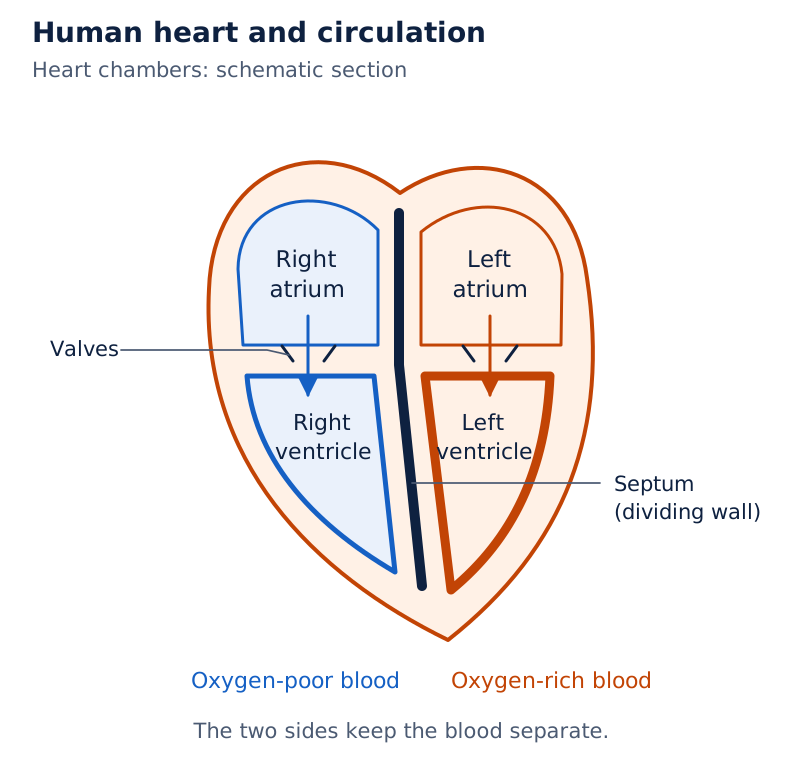
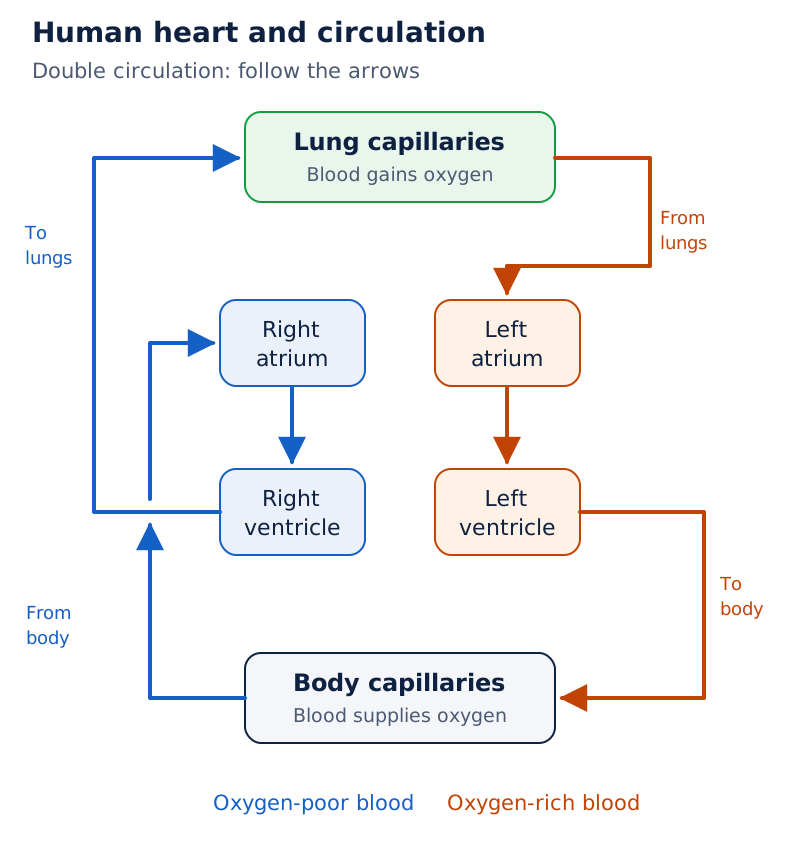
The sectional drawing labels both atria, both ventricles and the septum, the dividing wall. The circulation drawing connects the heart with lung capillaries above and body capillaries below, with arrows indicating blood flow.
Drawn by One Young India. See Figs. 5.10 and 5.11 in your NCERT textbook
Why is separation useful, and how do other hearts differ?
Separation allows an efficient oxygen supply in birds and mammals, which have high energy needs and constantly use energy to maintain body temperature. Amphibians and many reptiles have three-chambered hearts and tolerate some mixing of oxygenated and deoxygenated blood.
Fish have two-chambered hearts. Blood travels from the heart to the gills, becomes oxygenated and then passes directly to the body. It therefore passes through the heart only once in a complete cycle.
How do blood, blood vessels and lymph transport materials?
Plasma is the fluid medium of blood in which blood cells are suspended. It carries food, carbon dioxide and nitrogenous wastes in dissolved form. Red blood cells carry oxygen; blood also transports substances such as salts.
How do arteries, veins and capillaries differ?
| Feature | Arteries | Veins |
|---|---|---|
| Direction | Carry blood away from the heart. | Bring blood towards the heart. |
| Connection with organs | Deliver blood towards organs and tissues. | Collect blood returning from organs and tissues. |
| Pressure | Receive blood at high pressure from the heart. | Carry blood at much lower pressure. |
| Walls | Have thick, elastic walls. | Do not need walls as thick as those of arteries. |
| Flow arrangement | Divide into smaller vessels towards tissues. | Have valves ensuring flow in one direction towards the heart. |
Capillaries are the smallest blood vessels, with walls one cell thick. Materials pass across these thin walls between blood and surrounding cells. Capillaries join to form veins carrying blood away from the tissues.
Platelets are blood components that help clot blood at injuries, plugging leaks. This limits blood loss and prevents loss of pressure that would reduce the efficiency of circulation.
What are blood pressure and lymph?
Blood pressure describes the pressure exerted by blood against vessel walls. Systolic pressure is arterial pressure during ventricular contraction; diastolic pressure is arterial pressure during ventricular relaxation. Normal values are about 120 and 80 millimetres of mercury, respectively, written as mm of Hg.
A sphygmomanometer measures blood pressure. Hypertension means high blood pressure. Constriction of arterioles, the smaller arteries, increases resistance to flow and causes hypertension, which can lead to arterial rupture and internal bleeding.
Lymph, or tissue fluid, forms when some plasma, proteins and blood cells escape through capillary-wall pores into spaces between cells. It resembles plasma but is colourless and contains less protein. Lymphatic vessels return it to larger veins.
Lymph carries digested and absorbed fat from the intestine and returns excess fluid from the spaces outside cells to the blood. It therefore supplements transport through the blood circulation.
How do xylem and phloem transport materials in plants?
Plants need transport between roots, leaves and other organs when diffusion over the distances involved is insufficient. Their relatively low energy needs allow relatively slow transport systems. Two independently organised conducting tissues carry different materials.
Xylem carries water and minerals obtained from soil. Phloem transports products of photosynthesis and other substances. Translocation is the movement of soluble products of photosynthesis through phloem.
How does water reach the leaves?
- Root cells in contact with soil actively take up ions, electrically charged particles of mineral substances.
- This creates a difference between ion concentrations in the root and soil. Water moves into the root, providing a steady supply to root xylem.
- The resulting root pressure pushes a column of water upwards, but by itself is unlikely to move water through the heights commonly found in plants.
- Evaporation from leaf cells creates suction that pulls water upwards from root xylem. Provided water supply is adequate, water lost through stomata is replaced from leaf xylem.
Transpiration is the loss of water vapour from aerial, or above-ground, plant parts. It helps absorption and upward movement of water and dissolved minerals, and regulates temperature. Root pressure is more important at night; transpiration pull is the major driving force during the day when stomata are open.
How does food move through phloem?
Sieve tubes are the conducting structures of phloem, assisted by neighbouring companion cells. They move food upwards and downwards. Phloem also carries amino acids and other substances, especially to growing parts and storage organs such as roots, fruits and seeds.
In spring, sugar stored in roots or stems can move to buds needing energy for growth. Sucrose, a sugar, is transferred into phloem using ATP energy. This increases osmotic pressure, the pressure associated here with dissolved substances that causes water to enter the tissue. The increased pressure moves material towards tissues at lower pressure.
| Feature | Xylem | Phloem |
|---|---|---|
| Principal material | Water and minerals from soil. | Soluble products of photosynthesis, amino acids and other substances. |
| Conducting structures | Vessels and tracheids, interconnected water-conducting channels. | Sieve tubes assisted by companion cells. |
| Movement described | Water moves upwards from roots towards leaves. | Materials move both upwards and downwards. |
| Driving mechanism | Root pressure and transpiration pull. | Pressure differences established through energy-dependent loading. |
| Energy relationship | Transport can largely be explained by physical forces. | Translocation uses energy from ATP. |
How do kidneys form urine and remove metabolic wastes?
Excretion removes harmful wastes produced by metabolism, the body's chemical activities. Many unicellular organisms remove wastes by diffusion into surrounding water. Complex multicellular organisms use specialised organs. In humans, kidneys remove nitrogen-containing wastes such as urea and uric acid from blood.
The urinary system contains two kidneys, two ureters, a urinary bladder and a urethra. Ureters carry urine from kidneys to the bladder, where it is stored. The urethra carries it out of the body.
How does a nephron function?
A nephron is a filtration unit of the kidney. Each kidney contains large numbers packed close together. A cluster of thin-walled capillaries is associated with Bowman's capsule, the cup-shaped end of a coiled tube that collects filtered fluid.
- Blood is filtered through the capillary cluster, and Bowman's capsule collects the filtrate, the fluid formed by filtration.
- As the filtrate passes along the tube, useful substances including glucose, amino acids, salts and a major amount of water are selectively reabsorbed.
- The amount of water reabsorbed depends on excess water in the body and the amount of dissolved waste requiring excretion.
- Urine formed in the kidneys enters the ureters and is stored in the bladder until it is passed through the urethra.
The expanded bladder produces the urge to urinate. Because the muscular bladder is under nervous control, we can usually control this urge. Urine volume therefore depends on selective reabsorption, rather than simply on the amount initially filtered.
What the figure shows
Structure of a nephron
The drawing labels Bowman's capsule around the glomerulus, the capillary cluster. It shows the coiled tubular part, surrounding capillaries, branches of the renal artery and vein, and the collecting duct into which the tubule leads.
See Fig. 5.14 in your NCERT textbook
How does an artificial kidney work?
Dialysis removes nitrogenous wastes from blood using an artificial kidney. Blood passes through tubes with a semi-permeable lining, meaning a lining that allows selective passage, surrounded by dialysing fluid. The fluid has the same osmotic pressure as blood but lacks nitrogenous wastes.
Wastes diffuse into the fluid, and purified blood returns to the patient. Unlike a kidney, this arrangement involves no reabsorption. Normally, a healthy adult produces about 180 litres of initial filtrate daily, but excretes only a litre or two of urine because the remaining filtrate is reabsorbed.
Note: Filtration and urine output are different quantities. Useful substances and much of the water in the initial filtrate return to the body before the remaining fluid is excreted.
How do plants remove wastes, and how can organ donation help people?
Plants use several strategies to remove or store wastes. They do not depend on the human pattern of kidneys forming urine. Gas exchange, water loss, storage in cells and the shedding of plant parts all contribute.
What are the main waste-management methods in plants?
- Oxygen generated during photosynthesis can be considered a waste product and released through gas exchange.
- Excess water is lost by transpiration.
- Many waste products are stored in cellular vacuoles, compartments within cells.
- Waste products may be stored in leaves that later fall off.
- Other wastes are stored as resins and gums, waste-containing substances found especially in old xylem.
- Some wastes are excreted into the surrounding soil.
What is organ donation?
Organ donation supplies an organ to someone whose organ is not functioning. In transplantation, an organ is surgically removed from a donor and placed in a recipient, the person receiving it. Damage or failure caused by disease or injury can create this need.
Common transplantations include corneas, the transparent fronts of the eyes; kidneys; heart; liver; pancreas; lungs; intestines; and bone marrow, the tissue inside bones. Most organ and tissue donations occur just after the donor has died or when a doctor declares the person brain dead, meaning brain function has permanently ceased. Some organs and tissues can be donated while the donor is alive.
Examples of living donation include a kidney and part of a liver or lung. Donation may be made with the consent of the donor and family. Transplantation can save or transform a recipient's life.
Glossary
- Life processes — Processes that together maintain living organisms, including nutrition, respiration, transport and excretion.
- Autotroph — Organism that makes food from simple inorganic substances using an external energy source.
- Photosynthesis — Conversion of carbon dioxide and water into carbohydrates using sunlight and chlorophyll.
- Stomata — Tiny leaf-surface pores whose opening and closing are controlled by guard cells.
- Heterotroph — Organism using complex food obtained from other organisms for growth and maintenance.
- Peristalsis — Rhythmic muscular contractions that move food forwards along the alimentary canal.
- Villi — Finger-like projections increasing the small intestine's surface area for absorbing digested food.
- ATP — Cellular energy-carrying molecule formed using energy released by respiration and used in cellular activities.
- Alveoli — Balloon-like lung structures providing a large surface for gas exchange with blood.
- Double circulation — Passage of blood through the heart twice during one complete circuit through the body.
- Lymph — Colourless tissue fluid carrying absorbed fat and returning excess tissue fluid to blood.
- Transpiration — Loss of water as vapour from the aerial parts of a plant.
- Translocation — Movement of soluble products of photosynthesis through phloem to other plant parts.
- Nephron — Kidney filtration unit consisting of a capillary cluster associated with a capsule and tubule.
- Excretion — Biological process removing harmful wastes generated by chemical activities within the body.
Common errors and misconceptions
- Misconception: A living organism must show visible movement. Correct: A plant may be alive without visible growth, and essential molecular movements are invisible to the naked eye.
- Misconception: Plants stop respiring during the day. Correct: Daytime photosynthesis uses carbon dioxide generated by respiration; oxygen release is the major gas-exchange event.
- Misconception: Bile is a fat-digesting enzyme. Correct: Bile salts divide large fat globules into smaller ones, increasing the efficiency of enzyme action.
- Misconception: Every pathway of glucose breakdown requires oxygen. Correct: Yeast fermentation occurs without oxygen, and muscles use another pathway when oxygen is lacking.
- Misconception: Arteries are defined by carrying oxygenated blood. Correct: Arteries carry blood away from the heart; blood pumped towards the lungs requires oxygenation.
- Misconception: Phloem transports food only downwards. Correct: Translocation takes place both upwards and downwards according to the plant's needs.
- Misconception: All kidney filtrate becomes urine. Correct: Glucose, amino acids, salts and a major amount of water are selectively reabsorbed.
- Misconception: All reptiles have three-chambered hearts. Correct: Amphibians and many reptiles have three-chambered hearts; the qualification “many” matters.
Exam-style questions with model answers
Q1. Give two reasons why simple diffusion cannot meet all the oxygen requirements of humans. [2 marks]
- Many cells lie inside the multicellular body and are not in direct contact with the surrounding environment.
- The large distances involved make diffusion alone insufficient, so specialised uptake and transport systems deliver oxygen to tissues.
Q2. State the three principal events of photosynthesis. [3 marks]
- Chlorophyll absorbs light energy, making energy from sunlight available for the process by which the plant prepares food.
- Light energy is converted into chemical energy, and water molecules are split into hydrogen and oxygen during the process.
- Carbon dioxide is reduced to carbohydrates. These events need not occur immediately one after another, as the desert-plant example shows.
Q3. Two similar plants are kept in darkness for three days, then sealed separately under bell-jars in sunlight for about two hours. One jar contains potassium hydroxide, which absorbs carbon dioxide; the other does not. Explain the dark treatment, the potassium hydroxide, the sealing and the purpose of testing both leaves for starch. [4 marks]
- Keeping both plants in darkness for three days uses up stored starch before they are exposed to the experimental conditions.
- Potassium hydroxide absorbs carbon dioxide in one jar, making carbon dioxide availability the condition being investigated.
- Sealing each bell-jar to its glass plate with vaseline makes the enclosure air-tight and maintains the separate conditions.
- Testing leaves from both plants for starch compares food formation with and without the carbon dioxide absorber under otherwise similar conditions.
Q4. Explain five features of digestion and absorption in the human small intestine: the roles of bile, pancreatic enzymes, intestinal enzymes, villi and blood vessels. [5 marks]
- Bile from the liver makes acidic food alkaline for pancreatic enzymes and divides large fat globules into smaller globules, improving enzyme action.
- Pancreatic juice supplies trypsin for digestion of proteins and lipase for breakdown of fats that have been divided into small globules.
- Intestinal enzymes complete digestion, producing amino acids from proteins, glucose from complex carbohydrates, and fatty acids and glycerol from fats.
- Numerous finger-like villi on the inner intestinal lining increase the available surface area through which digested food can be absorbed.
- Blood vessels richly supplying the villi carry absorbed food towards body cells, where it supports energy production, growth and tissue repair.
Q5. Explain the common first step in glucose breakdown and the subsequent pathways in yeast, in oxygen-supplied cells and in muscle cells lacking oxygen. [4 marks]
- Glucose, a six-carbon molecule, first breaks down into three-carbon pyruvate in the cytoplasm, with energy released.
- In yeast without oxygen, pyruvate forms ethanol and carbon dioxide with release of energy; this process is fermentation.
- With oxygen, pyruvate breaks down in mitochondria into carbon dioxide and water, releasing much more energy than the anaerobic process.
- When muscle cells lack oxygen, pyruvate forms lactic acid with release of energy; its build-up during sudden activity causes cramps.
Q6. Trace double circulation in humans and explain its importance, using six points. [6 marks]
- Oxygen-rich blood returns from the lungs and enters the thin-walled left atrium while that upper chamber is relaxed.
- The left atrium contracts and transfers blood into the relaxed left ventricle, which then contracts to pump it towards the body.
- Blood returning from body tissues enters the relaxed right atrium; contraction of this chamber transfers it to the expanding right ventricle.
- The right ventricle pumps the blood to the lungs for oxygenation, and blood subsequently returns to the left side of the heart.
- Blood therefore passes through the heart twice during a complete circuit, with the two sides preventing mixing of oxygenated and deoxygenated blood.
- Efficient oxygen delivery supports high energy needs, including the continuous use of energy by mammals to maintain their body temperature.
Q7. Explain how energy use produces movement of food through phloem, giving four linked steps. [4 marks]
- Material such as sucrose is transferred into the phloem tissue using energy supplied by ATP, the cellular energy-carrying molecule.
- This loading raises the osmotic pressure of the tissue and causes water to enter the phloem.
- The resulting pressure moves dissolved material towards other tissues in which the pressure is lower.
- This arrangement distributes food according to the plant's needs, with movement occurring upwards or downwards through sieve tubes assisted by companion cells.
Q8. Describe urine formation and its regulation in five points, including filtration, reabsorption, water balance, transport and storage. [5 marks]
- Thin-walled blood capillaries in each nephron form a filtration cluster, and the associated cup-shaped Bowman's capsule collects the fluid filtered from blood.
- As filtrate flows along the tubule, glucose, amino acids, salts and a major amount of water are selectively reabsorbed into the body.
- Water reabsorption depends on the amount of excess water present and the amount of dissolved waste that must be excreted.
- The urine remaining after this processing leaves each kidney through a ureter, which carries it to the urinary bladder.
- The bladder stores urine until expansion produces the urge to pass it through the urethra; nervous control usually allows this urge to be controlled.
Key takeaways
- Life processes maintain the organised structure of organisms and continue during rest, including nutrition, respiration, transport and excretion.
- Photosynthesis uses carbon dioxide, water, sunlight and chlorophyll to produce carbohydrates; unused carbohydrate is stored as starch.
- Human digestion breaks food into absorbable substances, and small-intestinal villi provide a large surface for their uptake.
- Glucose first forms pyruvate in the cytoplasm; oxygen availability influences subsequent pathways and the amount of energy released.
- Alveoli provide a large gas-exchange surface, haemoglobin carries oxygen, and carbon dioxide travels mostly dissolved in blood.
- Double circulation separates oxygenated and deoxygenated blood and supports the high energy requirements of birds and mammals.
- Xylem carries water and minerals, while energy-dependent translocation in phloem distributes food according to plant needs.
- Nephrons filter blood and selectively reabsorb useful materials; plants remove wastes through several storage and release strategies.
Test yourself
Why does a stomatal pore open when its guard cells take up water?
Water entering the guard cells makes them swell, and this change opens the pore. Shrinking of the guard cells closes it.
How does the feeding method of Paramoecium differ from that of Amoeba?
Paramoecium uses cilia to move food to a specific entry spot. Amoeba surrounds food with temporary extensions that fuse to form a food vacuole.
What prevents hydrochloric acid from damaging the stomach lining under normal conditions?
Mucus released by gastric glands protects the inner stomach lining from the action of hydrochloric acid under normal conditions.
Why is the small intestine longer in grass-eating herbivores than in carnivores such as tigers?
Grass-eating herbivores need a longer small intestine to allow cellulose digestion. Meat is easier to digest, so carnivores have a shorter small intestine.
Why are alveoli well suited to gas exchange?
Alveoli provide a large surface area and have an extensive network of blood vessels, allowing oxygen uptake and carbon dioxide release.
What are the two main transport functions of lymph?
Lymph carries digested and absorbed fat from the intestine and returns excess fluid from spaces outside cells to the blood.
When are root pressure and transpiration pull particularly important?
Root pressure is more important at night. During the day, when stomata are open, transpiration pull becomes the major driving force for xylem water movement.
Why does a healthy adult excrete only a litre or two of urine despite forming about 180 litres of initial filtrate daily?
The kidney tubules reabsorb the remaining filtrate, including a major amount of water and useful substances, before the final urine is excreted.