
Meeting Life Challenges | CBSE Class 12 Psychology Notes
On this page
This note covers the nature, types and sources of stress, appraisal, effects on functioning and health, the general adaptation syndrome, coping strategies, stress management, life skills, resilience and positive health.
What is stress, and when can it help performance?
Definition: Stress is the pattern of responses to an event that disturbs equilibrium, or balance, and exceeds a person's ability to cope. Coping means responses intended to resolve a stressful problem and reduce stress.
Stressors are events that produce a stress response, such as noise, crowding, difficult relationships or daily commuting. Strain is the reaction to external stressors. Homeostasis means the state of balance whose disruption creates a need to restore it.
How do eustress and distress differ?
Eustress is a beneficial level of stress that helps peak performance and the management of minor crises. It can turn into distress, the form of stress associated with bodily wear and tear.
Stress can mobilise effort, resources and support when a challenge arises. Alertness while crossing a busy road can help a person cross safely. If handled properly, stress increases the probability of survival.
High stress can produce unpleasant effects and reduce performance. Conversely, too little stress may leave a person somewhat listless and low on motivation, which may make performance slower and less efficient. A challenge is therefore not necessarily harmful.
Why is stress a process?
Hans Selye described stress as the body's non-specific response to any demand. Many researchers disagree with the extent of this generalisation: different stressors may produce somewhat different reactions, and individuals may have characteristic ways of responding.
Stress involves an ongoing transaction between a person and the social and cultural environment. Appraisal, meaning the interpretation and evaluation of an encounter, helps determine whether demands seem manageable. Stress cannot be understood simply as an event outside the person or a response inside the person.
What the figure shows
Psychological Meaning of Stress
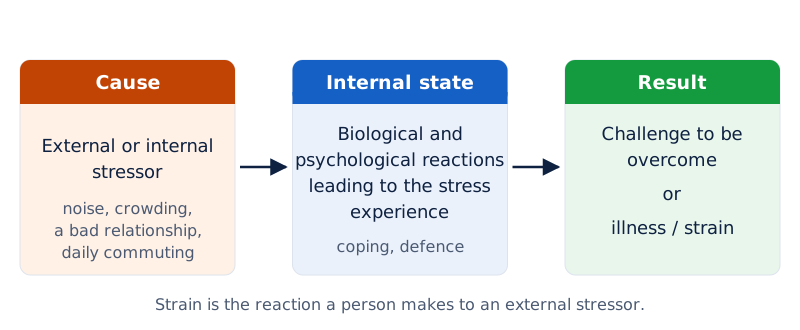
Three boxes linked by arrows show an external or internal stressor, biological and psychological reactions, and a result described as a challenge to overcome or illness/strain.
Drawn by One Young India. See Fig. 3.1 in your NCERT textbook
How does appraisal shape the stress response?
Lazarus's cognitive theory of stress emphasises how people interpret events and assess the resources available to deal with them. A person's response largely depends on these perceptions. The same demand can therefore be experienced differently by different people.
What are primary and secondary appraisal?
| Appraisal | What is assessed? | Key distinction |
|---|---|---|
| Primary appraisal | Whether a new or changing environment has positive, neutral or negative consequences | Negative events are assessed for harm, threat or challenge. |
| Secondary appraisal | Whether coping abilities and resources are sufficient | Resources may be mental, physical, personal or social. |
Harm concerns damage that has already occurred. Threat concerns possible future damage. Challenge involves more confident expectations of coping, overcoming the event and possibly benefiting from it. When an event seems stressful, a person is likely to assess available coping resources.
Appraisal affects emotional responses, bodily responses, behaviour and cognitive responses, meaning responses involving thought and interpretation. Previous success in handling a similar situation can make it less threatening. Believing that a negative situation or its consequences can be controlled reduces the stress experienced.
Which features of a stressor matter?
Intensity concerns how strong the stress is; duration concerns how long it lasts. Complexity distinguishes less complex from more complex demands, while predictability distinguishes unexpected from expected stress. Usually, more intense, prolonged, complex and unanticipated stresses have more negative consequences.
Physical health and bodily vulnerabilities also matter. Psychological features, including mental health, temperament and self-concept, are relevant. Here, temperament concerns a person's characteristic disposition, and self-concept concerns their view of themselves. Cultural meanings influence how events are interpreted and how people are expected to respond.
Resources include money, skills, ways of coping, support networks and professional help. A person who believes that health, skills, a positive attitude and support are available to meet a crisis will feel less stressed.
What the figure shows
A General Model of the Stress Process
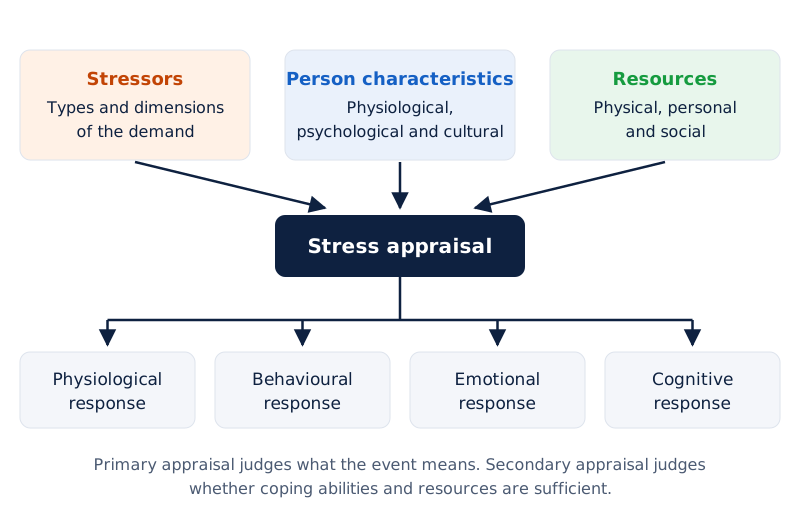
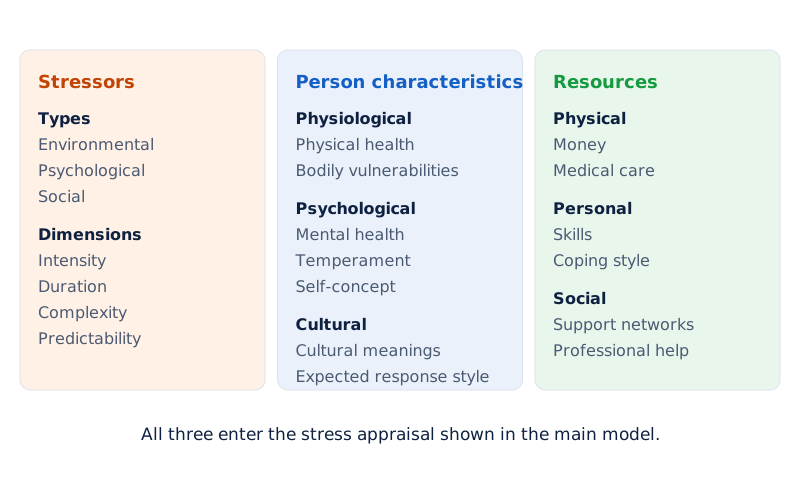
The diagram links stressors, person characteristics and resources with stress appraisal. Below appraisal, arrows lead to physiological, behavioural, emotional and cognitive responses. Physiological responses are changes in bodily functioning.
Drawn by One Young India. See Fig. 3.2 in your NCERT textbook
What are the major types of stress?
The three major types are physical and environmental stress, psychological stress and social stress. They are interrelated. Distinguishing them helps identify whether a demand concerns bodily conditions, surroundings, internally generated pressures or interaction with other people.
How do physical, environmental and social stresses differ?
| Type | Meaning | Examples |
|---|---|---|
| Physical stress | Demands that change the body's state | Physical overexertion, inadequate nutritious food, injury or insufficient sleep |
| Environmental stress | Stress arising from conditions in the surroundings | Air pollution, crowding, noise, heat, cold, fire, earthquakes or floods |
| Psychological stress | Stress generated within a person's mind | Frustration, conflicting motives and internal pressures |
| Social stress | Externally induced stress arising from interaction with others | Death or illness in the family, strained relationships or trouble with neighbours |
Environmental pressures such as noise and air pollution are often unavoidable. Social stresses vary widely between individuals. Attending parties may trouble someone who prefers quiet evenings at home, whereas an outgoing person may find staying at home stressful.
Which pressures generate psychological stress?
- Frustration occurs when someone or something blocks needs and motives, preventing a desired goal. Social discrimination, interpersonal hurt and low school grades can produce frustration.
- Conflict arises between incompatible needs or motives, such as choosing between studying dance and psychology, or between further study and a job. Pressure to act against one's values can also create conflict.
- Internal pressures arise from expectations directed at oneself, such as the demand to do everything perfectly. Unrealistically high standards can lead to disappointment.
- Social pressures arise when other people make excessive demands. Working with such people and experiencing interpersonal difficulties can increase pressure.
Worry, anxiety and feeling depressed can be symptoms of stress, but they can also create further stress. Psychological stress is personal and unique to the individual experiencing it.
How do life events, daily hassles and trauma create stress?
Life events are changes that may disturb routines and cause upheaval. They can be planned, such as moving into a new house, or unpredicted, such as a relationship breaking up. Several major changes within a short period can make coping difficult.
Hassles are the frequent personal stresses of everyday life: commuting, quarrelsome neighbours, traffic congestion, noise, and shortages of electricity or water. They may sometimes have devastating consequences, particularly when a person copes alone and others do not recognise the burden.
Traumatic events are extreme experiences such as fires, robberies, road or train accidents, earthquakes and tsunamis. Their effects may emerge after a delay and sometimes persist as anxiety, distressing dreams or intrusive thoughts, meaning thoughts that enter awareness unwanted.
Severe trauma can strain relationships. Professional help will be needed to cope with these effects, especially when they persist for many months after the event has ended.
What does a stressful life-events score measure?
Holmes and Rahe developed a life-event measure of stress. Singh, Kaur and Kaur developed the Presumptive Stressful Life Events Scale for the Indian population. This self-rating questionnaire contains fifty-one life changes, each assigned a numerical value reflecting severity.
Both positive and negative changes are included. A respondent's score is the weighted sum, meaning the sum of the assigned values, of the life events checked for the past year. Sample mean stress scores are:
| Life Events | Mean Stress Score |
|---|---|
| Death of a close family member | 66 |
| Unexpected accident or trauma | 53 |
| Illness of a family member | 52 |
| Break-up with friend | 47 |
| Appearing for examinations | 43 |
| Change in eating habits | 27 |
The mean number of stressful life events experienced in a year without overt physical or mental illness is approximately two. However, the association between life events and susceptibility to any particular illness is low.
Note: The impact of most life events varies from person to person. Age at first experience, frequency, duration and social support, meaning care and assistance from reliable people, matter. The relationship does not settle whether life events caused stress-related illness or stress contributed to both events and illness.
How does stress affect psychological functioning?
Stress has emotional, physiological, cognitive and behavioural effects. Warning signs and their intensity vary with personality, upbringing and life experience. Recognising a person's pattern involves noticing changes in feelings, bodily functioning, thinking and behaviour.
| Effect | What changes? | Examples |
|---|---|---|
| Emotional | Feelings and emotional stability | Anxiety, depression, tension and mood swings |
| Physiological | Bodily activity during the stress response | Increased heart rate, slower digestion, expanded air passages and constricted blood vessels |
| Cognitive | Concentration, memory and decision-making | Poor concentration, reduced short-term memory capacity and faulty decisions |
| Behavioural | Actions and habits | Disrupted sleep, increased absenteeism and reduced work performance |
Stress increases production of hormones such as adrenaline and cortisol, chemicals involved in the body's stress response. The resulting physical changes help functioning under pressure for short periods but can be extremely damaging in the long term.
Continuing pressure may produce mental overload and impair sound decisions. Erratic behaviour may alienate family and friends. In some cases, declining confidence can then contribute to more serious emotional problems.
How does examination anxiety affect performance?
Examination anxiety is tension or uneasiness before, during or after an examination. Many people find some anxiety motivating because it helps them focus. High anxiety, however, can interfere with preparation, concentration and performance.
People high in test anxiety tend to view evaluation as personally threatening. Negative thoughts about themselves distract attention. Generally, highly test-anxious people turn attention inward, neglect or misinterpret available information, or experience attentional blocks.
How can examination preparation be organised?
- Allow enough time for studying.
- Review personal strengths and weaknesses.
- Discuss difficulties with teachers and classmates.
- Plan a timetable for revision.
- Condense notes to support revision.
- Space out periods of revision.
- On the examination day, concentrate on staying calm.
Burnout is physical, emotional and psychological exhaustion. When environmental demands are high and support is limited, physical exhaustion can include chronic fatigue, weakness and low energy. Mental exhaustion can involve irritability, anxiety, helplessness and hopelessness.
What are the stages of the general adaptation syndrome?
General Adaptation Syndrome (GAS) is Selye's model of the bodily response to prolonged stress. He studied animals exposed to different stressors and observed hospital patients with injuries and illnesses, identifying a similar pattern of bodily responses.
How does the response develop?
- Alarm reaction: A harmful stimulus activates the adrenal-pituitary-cortex system, the bodily system involved here in triggering stress-hormone release. The resulting response prepares the individual for fight or flight, meaning confrontation or withdrawal from the threat.
- Resistance: If stress continues, the body attempts to cope with the threat. The parasympathetic nervous system, identified here with the more cautious use of bodily resources, becomes involved. Coping may take the form of confrontation.
- Exhaustion: Continued exposure to the same stressor or additional stressors drains resources. Systems involved in alarm and resistance become ineffective, and susceptibility to stress-related diseases such as high blood pressure becomes more likely.
What the figure shows
The General Adaptation Syndrome
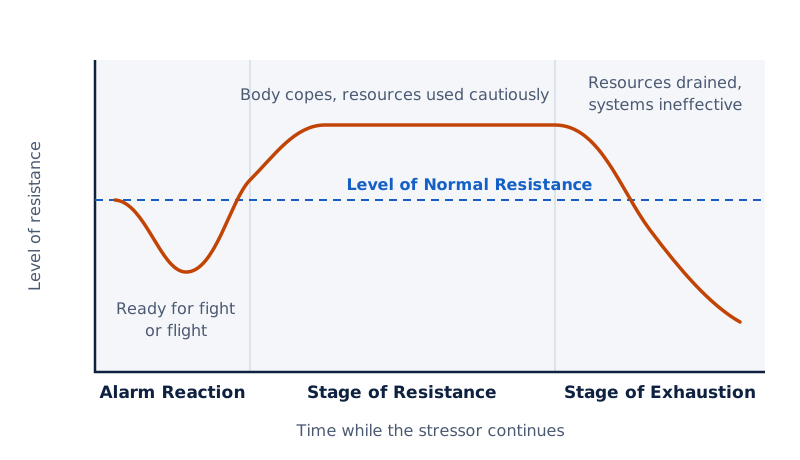
The curve first dips below the line labelled Level of Normal Resistance, then rises above it. It remains elevated during resistance and falls during exhaustion. The three labelled stages are Alarm Reaction, Stage of Resistance and Stage of Exhaustion.
Drawn by One Young India. See Fig. 3.3 in your NCERT textbook
What is the model's limitation?
The model gives psychological factors a very limited role. Psychological appraisal is important in determining stress, and responses are substantially influenced by perceptions, personalities and biological constitutions. The bodily sequence must therefore be considered alongside how people interpret demands.
How are stress, the immune system and lifestyle connected?
The immune system protects the body against attackers from inside and outside. Stress can impair its functioning and increase the likelihood of illness. Psychoneuroimmunology studies links between the mind, brain and immune system, including stress-related changes in immunity.
Which cells provide protection?
Leucocytes are white blood cells that identify and destroy foreign bodies, called antigens, such as viruses. Several kinds of these cells participate in immune activity.
| Cell type | Role |
|---|---|
| T cells | Destroy invaders |
| T-helper cells | Increase immune activity |
| B cells | Produce antibodies, immune-system products involved in protection |
| Natural killer cells | Help fight viruses and tumours |
Natural killer cell cytotoxicity means these cells' cell-killing activity. Reduced activity has been found in highly stressed people, including students facing important examinations, bereaved people and severely depressed people. Changes in immunity affect health more when the immune system is already weakened.
Studies reveal better immune functioning in people receiving social support, meaning care and assistance from people they can rely on. Negative emotions appear to be related to immune functioning, and negative moods have been associated with poorer health outcomes.
What the figure shows
Relation of Stress with Illness
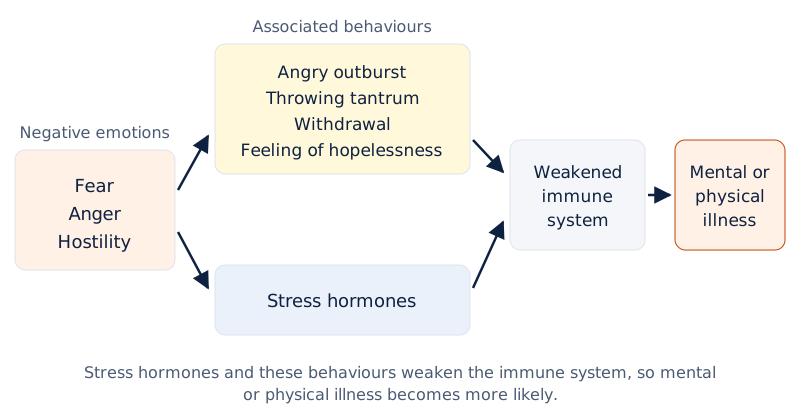
Fear, anger and hostility branch towards stress hormones and a box listing angry outburst, throwing tantrum, withdrawal and feeling of hopelessness. Arrows connect these with a weakened immune system and mental or physical illness.
Drawn by One Young India. See Fig. 3.4 in your NCERT textbook
Why does lifestyle matter?
Lifestyle is the overall pattern of decisions and behaviours shaping health and quality of life. Stressed individuals may be more likely to encounter pathogens, agents that cause physical illness. Poor eating, less sleep, smoking and alcohol abuse can further damage health.
Health-impairing habits develop gradually and can provide temporary pleasure, encouraging people to overlook long-term damage and underestimate risk. A balanced low-fat diet, regular exercise, continued activity, family support and positive thinking contribute to health and longevity.
How do the main coping strategies differ?
Coping is a dynamic response to a particular stressful situation. It includes actions and thought processes intended to manage demands and reduce stress. Deep-seated beliefs often influence coping, so managing stress often requires reassessing how a situation is understood.
What strategies did Endler and Parker identify?
| Strategy | Central approach | Examples |
|---|---|---|
| Task-oriented | Gather information, consider alternatives and probable outcomes, set priorities and act directly on the problem | Scheduling time better or recalling how similar problems were solved |
| Emotion-oriented | Try to maintain hope or control emotions; this can also involve venting feelings or deciding nothing can change | Worrying about what to do or telling oneself the event is not really happening |
| Avoidance-oriented | Deny or minimise the situation and consciously replace stressful thoughts with self-protective thoughts | Watching television, telephoning a friend or seeking other people's company |
People show consistent individual differences in their preferred coping strategies. Yet Lazarus and Folkman emphasise coping as a changing process rather than an individual trait. Their account concerns constantly changing thoughts and behaviours used to master, reduce or tolerate stressful demands.
What distinguishes problem-focused and emotion-focused coping?
Problem-focused coping addresses the problem itself. It seeks information, changes the event, or alters beliefs and commitments. It broadens knowledge and coping options and can reduce the event's threat value. Making a plan of action and following it is an example.
Emotion-focused coping primarily changes emotional responses, limiting the disruption caused by an event while making minimal effort to change the event itself. Letting feelings out is an example. Both approaches are necessary when facing stressful situations.
Research suggests that people generally tend to use problem-focused coping more often than emotion-focused coping. The distinction concerns whether efforts address the stressful problem or primarily regulate its emotional effects.
Which techniques help in managing stress?
Stress management uses techniques to reduce stress responses and improve the ways people handle demanding situations. These techniques work through bodily relaxation, attention, feedback about bodily activity, imagination, thought patterns and exercise.
How do relaxation, meditation and biofeedback work?
Relaxation is an active skill that reduces stress symptoms. Usually, muscle relaxation starts in the lower body and moves upwards to the facial muscles. Deep breathing accompanies it to calm the mind and relax the body.
Meditation, in its yogic form, involves learned techniques for refocusing attention. Thorough concentration brings an altered state of consciousness in which the meditator becomes unaware of outside stimulation.
Biofeedback provides information about current physiological activity so that a person can monitor and reduce bodily aspects of stress. It is often accompanied by relaxation training. Training has three stages:
- Become aware of a particular physiological response, such as heart rate.
- Learn to control that response in quiet conditions.
- Transfer this control to everyday situations.
How do imagination and thought changes help?
Creative visualisation uses imagery and imagination. Begin with a realistic goal to build confidence. Visualisation is easier with a quiet mind, a relaxed body and closed eyes. These conditions reduce interference from unwanted thoughts.
Cognitive behavioural techniques address patterns of thought and behaviour. Meichenbaum's stress inoculation training aims to prepare people against stress by replacing negative, irrational thoughts with positive, rational ones. It has three phases:
- Assessment: Discuss the problem and understand it from the person's viewpoint.
- Stress reduction: Learn techniques such as relaxation and self-instruction, meaning instructions directed to oneself.
- Application and follow-through: Put the stress-management learning into use and carry it through.
What role does exercise play?
Exercise can provide an active outlet for the body's stress-related arousal, or activation. Walking, running, swimming, cycling and skipping help reduce stress. Regular exercise improves heart and lung functioning, circulation and immunity, and lowers blood pressure and fat in the blood.
The exercise routine involves practice at least four times a week for 30 minutes at a time. Each session includes a warm-up, exercise and cool-down phase. These are the preparatory, activity and concluding phases of the session.
How do hardiness and resilience help people face challenges?
Hardiness is a set of beliefs about oneself, the world and their interaction. Kobasa's studies found that people experiencing high stress but low illness shared three characteristics: commitment, control and challenge, commonly called the three Cs.
What are the three Cs?
- Commitment: Personal involvement in activities such as work, family, hobbies and social life.
- Control: A sense of control over one's life, together with purpose and direction.
- Challenge: Viewing life's changes as normal and positive rather than as threats.
Not everyone has these characteristics. Specific skills such as rational thinking, which challenges distorted thoughts, and assertiveness, which expresses feelings and needs clearly and confidently, can be learned to improve the ability to meet everyday demands. Constructive attitudes and available emotional and social support are associated with rebuilding life positively after crises.
What does resilience involve?
Resilience is a dynamic developmental process of maintaining positive adjustment under challenging conditions. It is the capacity to recover when facing stress and adversity. It includes self-worth, self-confidence, independence, problem-solving, creativity, flexibility and a sense that life has purpose.
| Resource | Meaning | Illustration |
|---|---|---|
| I HAVE | Social and interpersonal strengths | Having trusted people who offer love and support |
| I AM | Inner strengths | Respecting oneself and other people |
| I CAN | Interpersonal and problem-solving skills | Finding ways to solve the problems one faces |
A child needs more than one of these strengths to be resilient. Self-esteem, meaning a sense of personal worth, is insufficient on its own when support and problem-solving capacity are absent. Studies following children over time show that many develop into capable, caring adults despite poverty and other social disadvantages.
Which life skills help meet everyday demands?
Life skills are abilities for adaptive, positive behaviour that enable people to deal effectively with daily demands and challenges. They can be learned and improved. They help people prepare for pressures and maintain balance in their lives.
How can communication and planning improve?
Assertiveness means communicating feelings, needs, wants and thoughts clearly and confidently. It includes saying no to requests, expressing an opinion without self-consciousness and openly expressing emotions. It is associated with confidence, self-esteem and a firm sense of identity.
Time management involves planning time and delegating tasks to relieve pressure. Its central principle is to spend time on valued activities or activities that help achieve goals. It requires realism about what must be done within the available time.
Improving relationships depends on communication. Three essential skills are listening to others, expressing one's own feelings and thoughts, and accepting other people's opinions and feelings even when they differ. Avoiding misplaced jealousy and sulking also matters.
How can thinking and self-care improve?
Rational thinking involves challenging distorted thoughts and irrational beliefs. Stress creates a selective bias towards negative thoughts and images from the past, which affect views of the present and future. Replacing intrusive anxiety-provoking thoughts with positive statements helps address this pattern.
Self-care means maintaining health, fitness and relaxation to prepare physically and emotionally for daily stress. Under stress, breathing tends to become rapid and shallow. Relaxed breathing is slow and centred around the diaphragm, the dome-like muscle between the chest and abdominal cavity.
Environmental conditions such as noise, pollution, space, light and colour influence mood, coping and well-being. Self-care therefore concerns both bodily condition and the surroundings that affect daily experience.
Which habits need to be overcome?
Perfectionism is the demand to get everything exactly right. Perfectionists struggle to adjust standards to available time, effort and the consequences of continuing work. They are more likely to feel tense and may become inclined to avoid challenges.
Avoidance means refusing to accept or face an issue. Procrastination means postponing what one knows needs doing. These habits help in the short term but make a person more vulnerable to stress.
How can positive health and social support be promoted?
Positive health includes physical, mental, social and spiritual well-being, rather than simply the absence of disease. It involves a healthy body, good personal relationships, purpose, self-regard, mastery of life's tasks and resilience to stress, trauma and change.
Which habits and attitudes support health?
A balanced diet can improve mood, energy, circulation and immunity, helping people cope with stress. Nutritional needs depend on activity, genetic make-up, climate and health history. Under stress, people seek comfort foods high in fats, salt and sugar.
Regular exercise helps manage weight and stress and has a positive effect on reducing tension, anxiety and depression. Stretching exercises such as yogic postures have a calming effect. Aerobic exercises, illustrated by jogging, swimming and cycling, increase the body's arousal level.
A positive attitude involves a fairly accurate view of reality, purpose, responsibility, acceptance of different viewpoints, openness to ideas and humour. It also involves accepting responsibility for failure as well as taking credit for success.
Optimism is the inclination to expect favourable outcomes. It has been linked to psychological and physical well-being. Optimists tend to assume adversity can be handled successfully; they use more problem-focused coping and seek advice and help.
What forms can social support take?
| Form | Nature of support | Example |
|---|---|---|
| Tangible support | Material assistance, including goods, money or services | Giving notes to a friend who missed school through sickness |
| Informational support | Information that helps someone understand an event and available coping resources | A friend explaining examination procedures after facing a similar examination |
| Emotional support | Reassurance that a person is loved, valued and cared for | Supportive family members and friends offering reassurance during stress |
Perceived support, the quality of support experienced, is positively related to health and well-being. The quantity represented by a large social network is unrelated to well-being, because maintaining it is very demanding and time-consuming.
People with high support from family and friends may experience less stress and may cope more successfully. Generally, social support benefits the mental health of both giver and receiver. Positive health also requires overall harmonious conditions in society.
Glossary
- Stress — A pattern of responses to events that disturb balance and exceed a person's ability to cope.
- Stressor — An event that causes the body to produce a stress response.
- Strain — The reaction that a person makes to external stressors.
- Eustress — A beneficial level of stress that supports peak performance and managing minor crises.
- Distress — The form of stress associated with wear and tear in the body.
- Primary appraisal — Evaluating a new or changing environment as positive, neutral or negative in its consequences.
- Secondary appraisal — Assessing whether coping abilities and available resources can meet the demands of an event.
- Burnout — A state of physical, emotional and psychological exhaustion associated with excessive demands and limited support.
- General Adaptation Syndrome — Selye's model describing alarm reaction, resistance and exhaustion during the body's response to prolonged stress.
- Psychoneuroimmunology — The study of links between mind, brain and immunity, including stress effects on the immune system.
- Coping — Changing responses to stressful situations intended to manage demands, resolve problems and reduce stress.
- Hardiness — Beliefs about oneself and the world involving commitment, control and challenge.
- Resilience — A dynamic developmental process involving positive adjustment under challenging conditions and recovery from adversity.
- Life skills — Abilities for adaptive, positive behaviour that enable effective responses to everyday demands and challenges.
- Optimism — An inclination to expect favourable life outcomes, linked to psychological and physical well-being.
Common errors and misconceptions
- Misconception: Every kind of stress damages performance. Correct: Eustress can support peak performance, while excessive stress can impair it; too little stress may also reduce motivation.
- Misconception: A stressor produces the same experience for everyone. Correct: Appraisal, previous experience, perceived control, health and resources influence how an individual experiences the situation.
- Misconception: Harm and threat both mean damage already suffered. Correct: Harm concerns damage already done, whereas threat concerns possible future damage; challenge involves more confident coping expectations.
- Misconception: A life-events score establishes which illness a person will develop. Correct: Associations with susceptibility to particular illnesses are low, and most events affect people differently.
- Misconception: Emotion-focused coping has no useful role. Correct: Both problem-focused and emotion-focused coping are necessary when facing stressful situations; they address different aspects of the experience.
- Misconception: Resilience requires self-esteem alone. Correct: A child needs more than one resilience resource; inner strengths without support or problem-solving capacity are insufficient.
- Misconception: Having a larger social network necessarily improves well-being. Correct: The quality of perceived support is positively related to well-being, whereas the quantity of contacts is unrelated.
Exam-style questions with model answers
Q1. Distinguish between eustress and distress in two points. [2 marks]
- Eustress is a beneficial level of stress that helps peak performance and the management of minor crises.
- Distress is the form associated with bodily wear and tear; eustress has the potential to turn into distress.
Q2. Explain primary appraisal and secondary appraisal, distinguishing harm, threat and challenge within your answer. [4 marks]
- Primary appraisal evaluates whether a new or changing environment has positive, neutral or negative consequences for the person.
- Harm and threat are appraisals of negative events: harm concerns damage already done, while threat concerns possible future damage.
- Challenge involves more confident expectations of coping with the stressful event and potentially overcoming or benefiting from it.
- Secondary appraisal evaluates whether coping abilities and mental, physical, personal or social resources are sufficient to meet the event's demands.
Q3. Explain the three stages of Selye's General Adaptation Syndrome in sequence. [3 marks]
- Alarm reaction: A harmful stressor activates the bodily stress-response system, triggering hormone release and preparing the individual for fight or flight.
- Resistance: If stress continues, the parasympathetic nervous system encourages more cautious use of resources while the organism tries to cope with the threat.
- Exhaustion: Continued exposure to the same or additional stressors drains resources. The systems involved in alarm and resistance become ineffective, making stress-related disease more likely.
Q4. Raj feels tense before his examination, has a pounding heart and sweaty hands, cannot concentrate, and has difficulty sleeping. Identify and explain one emotional, one physiological, one cognitive and one behavioural effect shown in this account. [4 marks]
- Emotional effect: Raj's tension reflects the emotional disturbance associated with examination stress, which involves feelings of uneasiness around evaluation.
- Physiological effect: His pounding heart and sweaty hands show changes in bodily functioning during the stress response.
- Cognitive effect: His inability to concentrate shows disruption of the mental processes needed to attend to examination work.
- Behavioural effect: His difficulty sleeping shows a disrupted sleep pattern, one of the behavioural effects associated with stress.
Q5. Explain Endler and Parker's three coping strategies, giving one characteristic example of each. Present a separate explanation and example for each strategy. [6 marks]
- Task-oriented strategy: This gathers information about the stressful situation, considers alternatives and probable outcomes, sets priorities and directly addresses the problem.
- Task-oriented example: Scheduling one's time better addresses the demands of the situation through planning rather than leaving the pressure unmanaged.
- Emotion-oriented strategy: This can maintain hope or control emotions, but can also involve venting anger and frustration or deciding nothing can be changed.
- Emotion-oriented example: Worrying about what one is going to do is an example of an emotionally directed response to the stressful situation.
- Avoidance-oriented strategy: This denies or minimises the seriousness of the situation and suppresses stressful thoughts, replacing them with self-protective thoughts.
- Avoidance-oriented example: Watching television is an example when it forms part of avoiding the stressful situation and its associated thoughts.
Q6. Explain the three stages of biofeedback training, using heart rate as the physiological response being monitored. [3 marks]
- Awareness: Feedback about current physiological activity helps the person become aware of heart rate as the particular bodily response to be monitored.
- Control in quiet conditions: The person learns ways to control that physiological response while working in quiet conditions; biofeedback is often accompanied by relaxation training.
- Transfer: The person transfers the control learned in quiet conditions to everyday life, applying the acquired control of the response in daily situations.
Q7. Explain how diet, exercise, positive attitude, positive thinking and social support can promote positive health. Give one developed point for each factor. [5 marks]
- Diet: A varied, balanced diet can improve mood, energy, circulation and immune functioning, helping people face the stresses of life.
- Exercise: Regular physical exercise helps manage weight and stress and has a positive effect on reducing tension, anxiety and depression.
- Positive attitude: A fairly accurate view of reality, purpose, responsibility, tolerance of others' viewpoints and openness to ideas support positive health and well-being.
- Positive thinking: Optimism is linked to psychological and physical well-being; optimists tend to expect successful coping and seek advice and help.
- Social support: Available, caring people provide practical assistance, information and reassurance. High support may reduce experienced stress and help people cope more successfully.
Q8. Explain six life skills that help people meet everyday challenges: assertiveness, time management, rational thinking, improving relationships, self-care and overcoming unhelpful habits. [6 marks]
- Assertiveness: Communicating feelings, needs and thoughts clearly and confidently allows a person to express opinions and say no to requests.
- Time management: Planning, delegating and using time for valued activities or goals help relieve pressure while recognising what can realistically be completed.
- Rational thinking: Challenging distorted beliefs and replacing intrusive negative thoughts with positive statements addresses thinking patterns that contribute to stress.
- Improving relationships: Listening, expressing one's feelings and accepting different opinions strengthen communication, which is central to sound, lasting relationships.
- Self-care: Maintaining health, fitness and relaxation prepares a person physically and emotionally to tackle the pressures of everyday life.
- Overcoming unhelpful habits: Addressing perfectionism, avoidance and procrastination reduces reliance on habits that help in the short term but increase vulnerability to stress.
Key takeaways
- Stress develops through an ongoing interaction between the person and environment, involving appraisal, resources and coping.
- Eustress can support performance, while distress causes wear and tear; excessive stress can impair functioning.
- Primary appraisal evaluates an event's significance, while secondary appraisal assesses whether available abilities and resources are sufficient.
- Physical and environmental, psychological and social stresses are interrelated; life events, daily hassles and trauma are important sources.
- Stress affects emotions, bodily functioning, cognition and behaviour; prolonged stress can also impair immunity and health.
- Selye's general adaptation syndrome describes alarm, resistance and exhaustion, but gives psychological appraisal a limited role.
- Coping includes task-oriented, emotion-oriented and avoidance-oriented strategies; problem-focused and emotion-focused responses are both necessary in stressful situations.
- Life skills, hardiness, resilience, healthy habits and supportive relationships help people manage demands and promote positive health.
Test yourself
How is strain different from a stressor?
A stressor is an event producing a stress response; strain is the reaction to an external stressor.
How do harm and threat differ?
Harm concerns damage already caused by an event, whereas threat concerns possible damage that may occur in the future.
What four dimensions distinguish stressful experiences?
Stressful experiences differ in intensity, duration, complexity and predictability, affecting how demanding and disruptive they may be.
What is burnout?
Burnout is physical, emotional and psychological exhaustion associated with excessive demands and limited support from family and friends.
What are the three Cs of hardiness?
Commitment, control and challenge involve engagement in life, perceived control and viewing changes as normal and positive.
What does the I CAN resource of resilience mean?
It means interpersonal and problem-solving skills, including the ability to find ways of solving the problems one faces.
What is the main aim of emotion-focused coping?
It primarily limits emotional disruption caused by an event, while making minimal effort to change the event itself.
Which aspect of social support is positively related to well-being?
The quality of perceived support is positively related to well-being; the quantity represented by a social network is unrelated.
Write about it
Turn a question from this chapter into a paper.
The Writing Studio has a structure guide, a rubric and citation tools for 15 formats, from essays to research papers. Drafting is free with an account. Learnacy Essential adds feedback from an AI writing coach and submission to The OYI Review.
Publication depends on review and is not guaranteed.